Felipa Dolores Solis
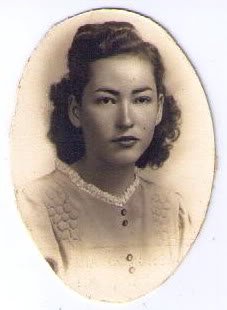
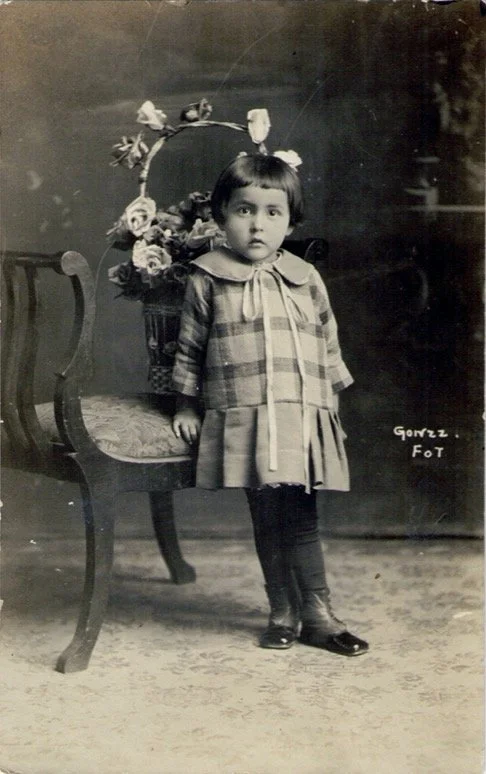
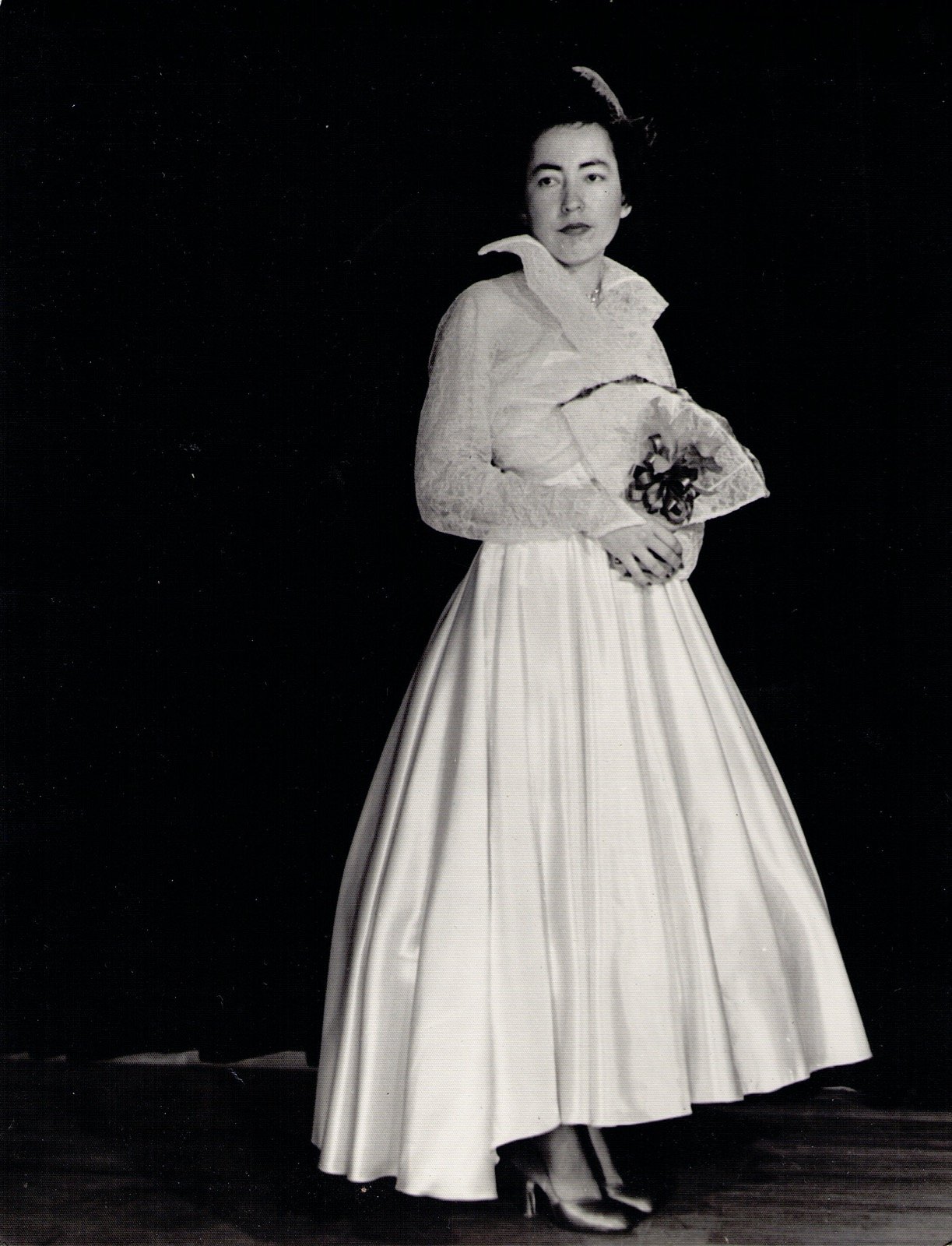
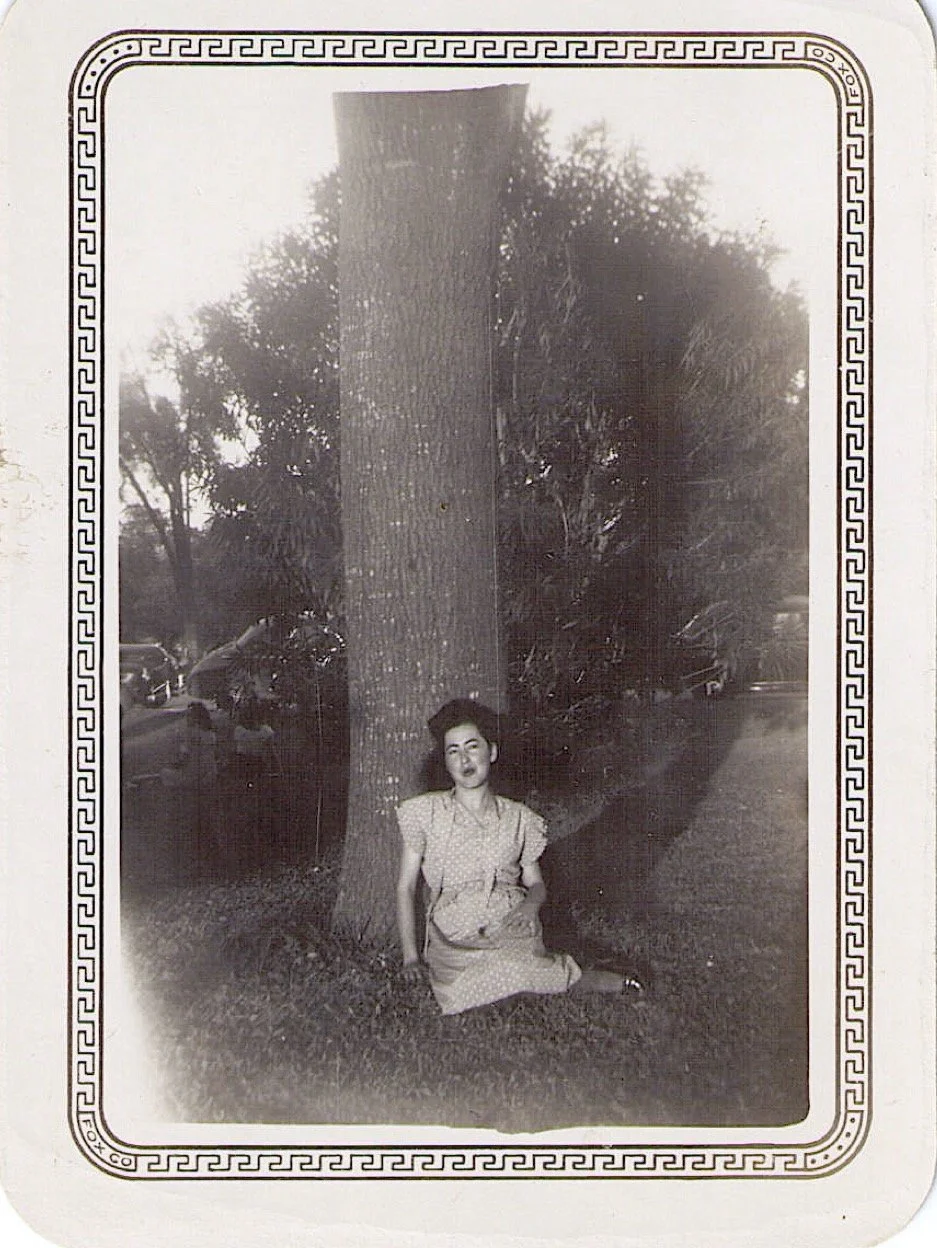
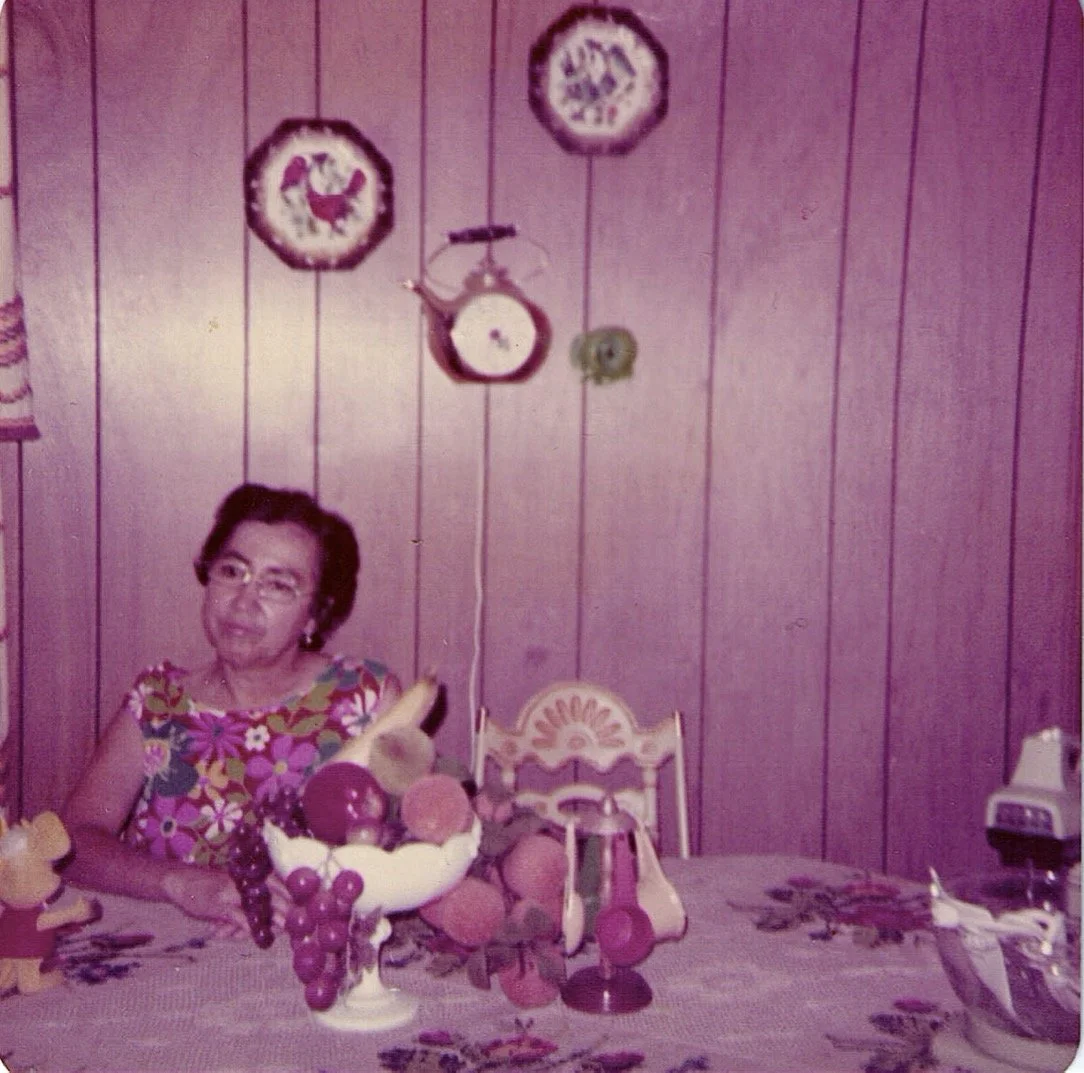
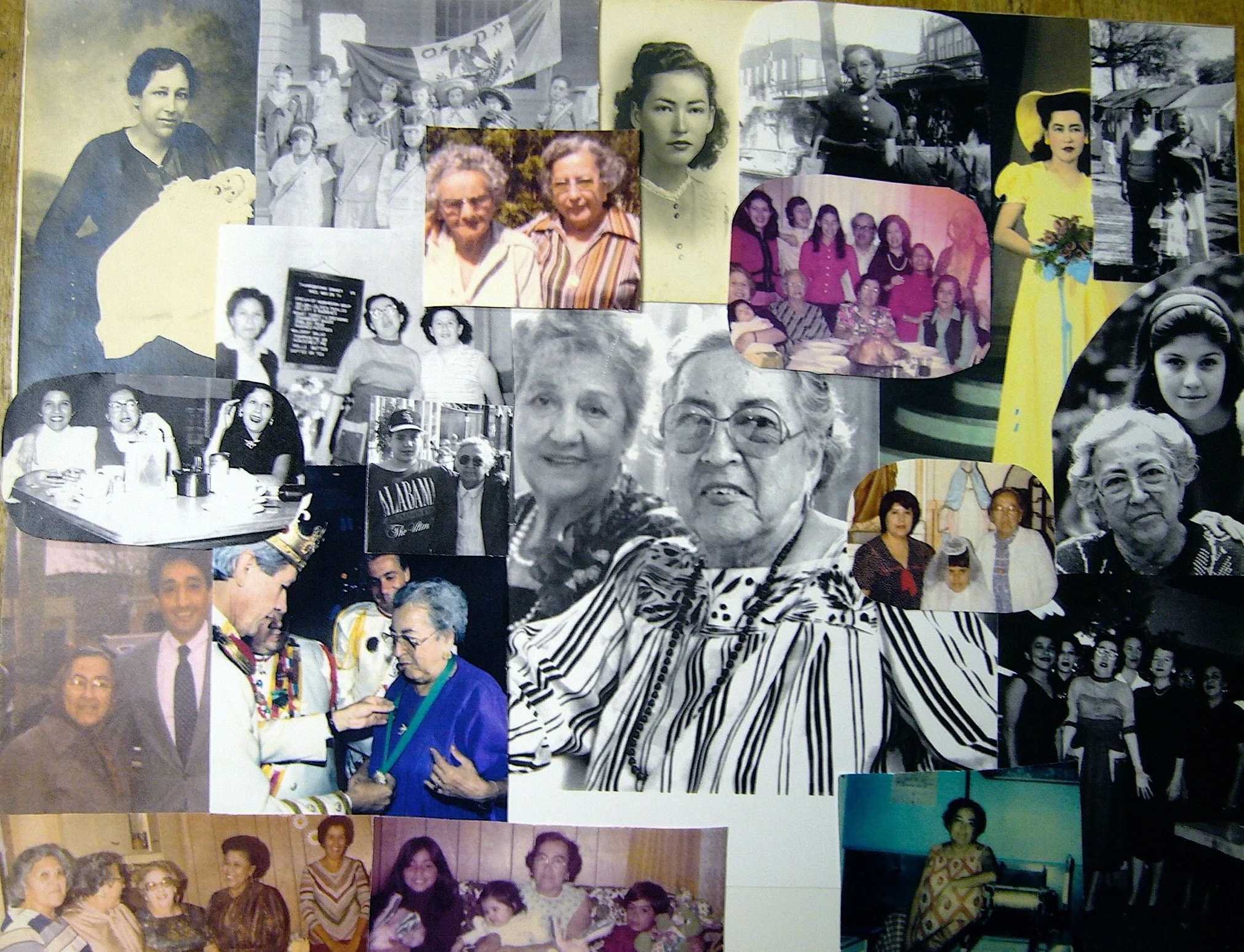
Lola as a young woman, Courtesy of María A. De la Cruz
“Lola’s favorite color was yellow, the color of richness and the sun. Her kindness was deeply rich, and her compassion had the warmth and intensity of the sun.”
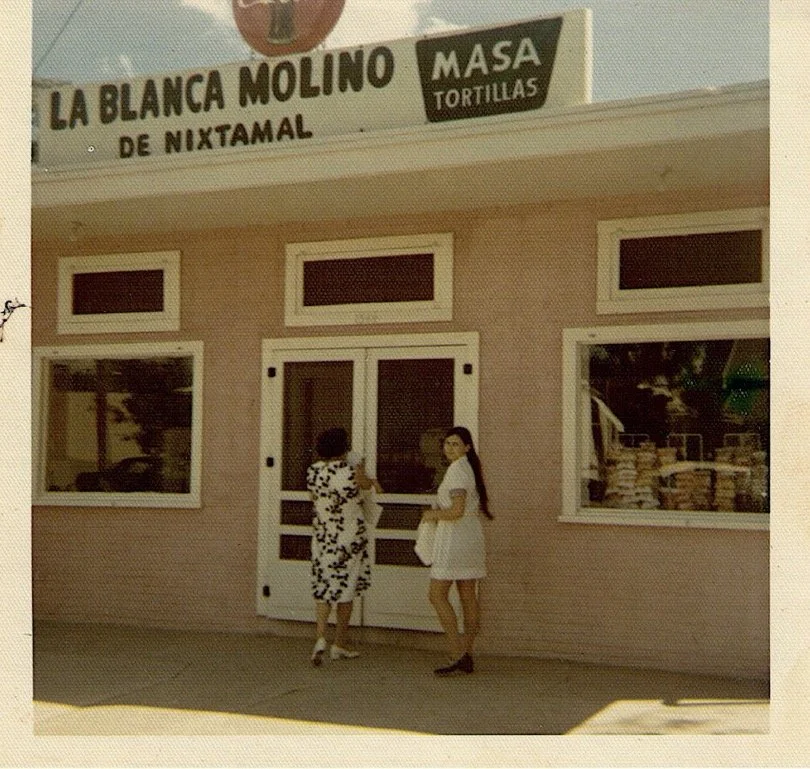
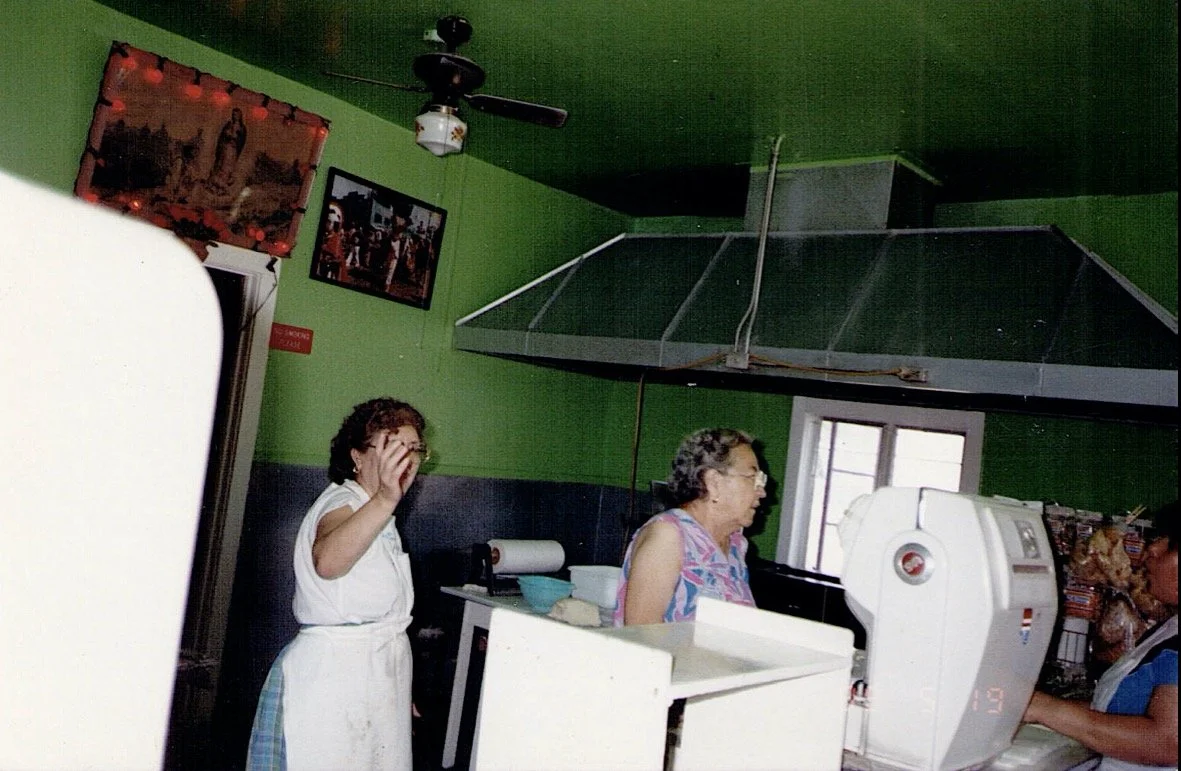
Front of Blanca Molino, Photo courtesy of María A. De la Cruz
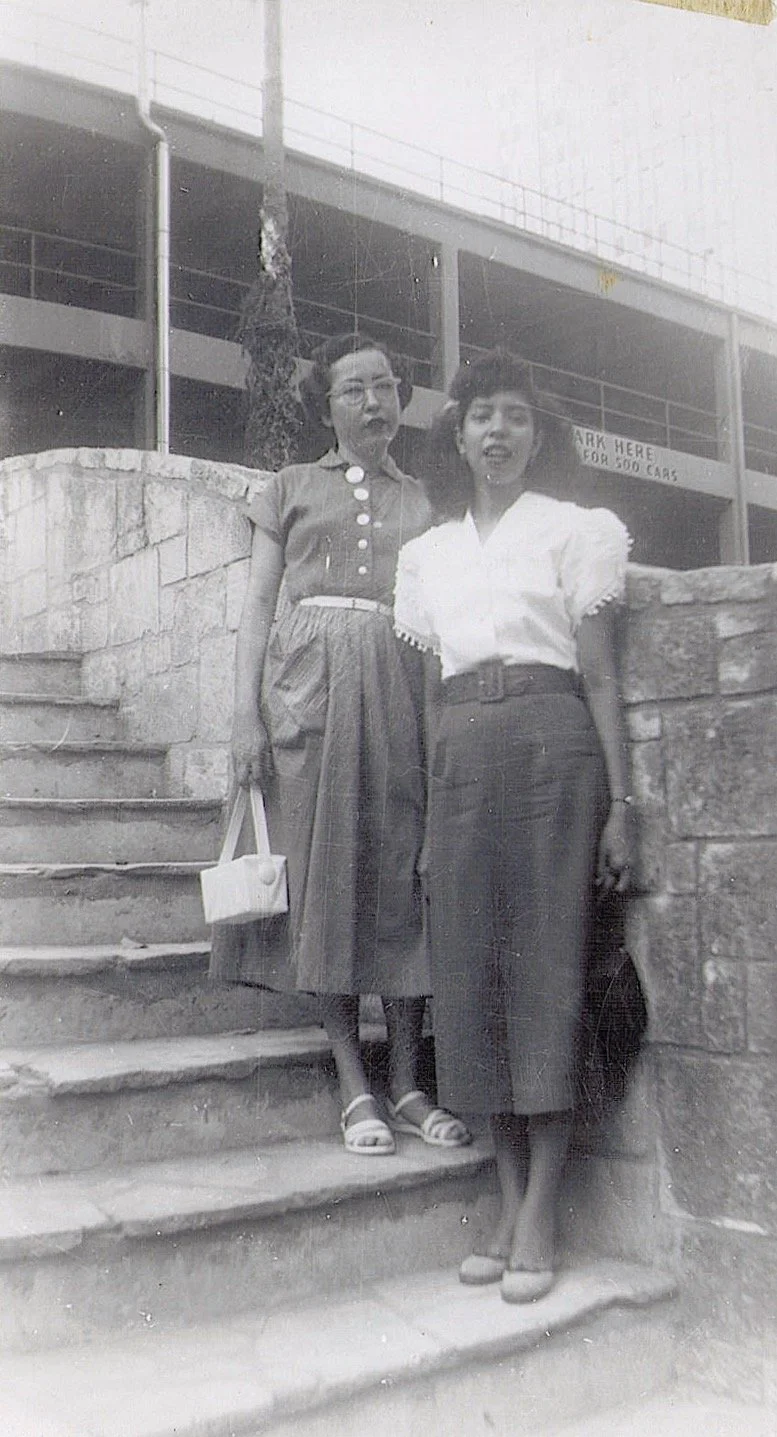
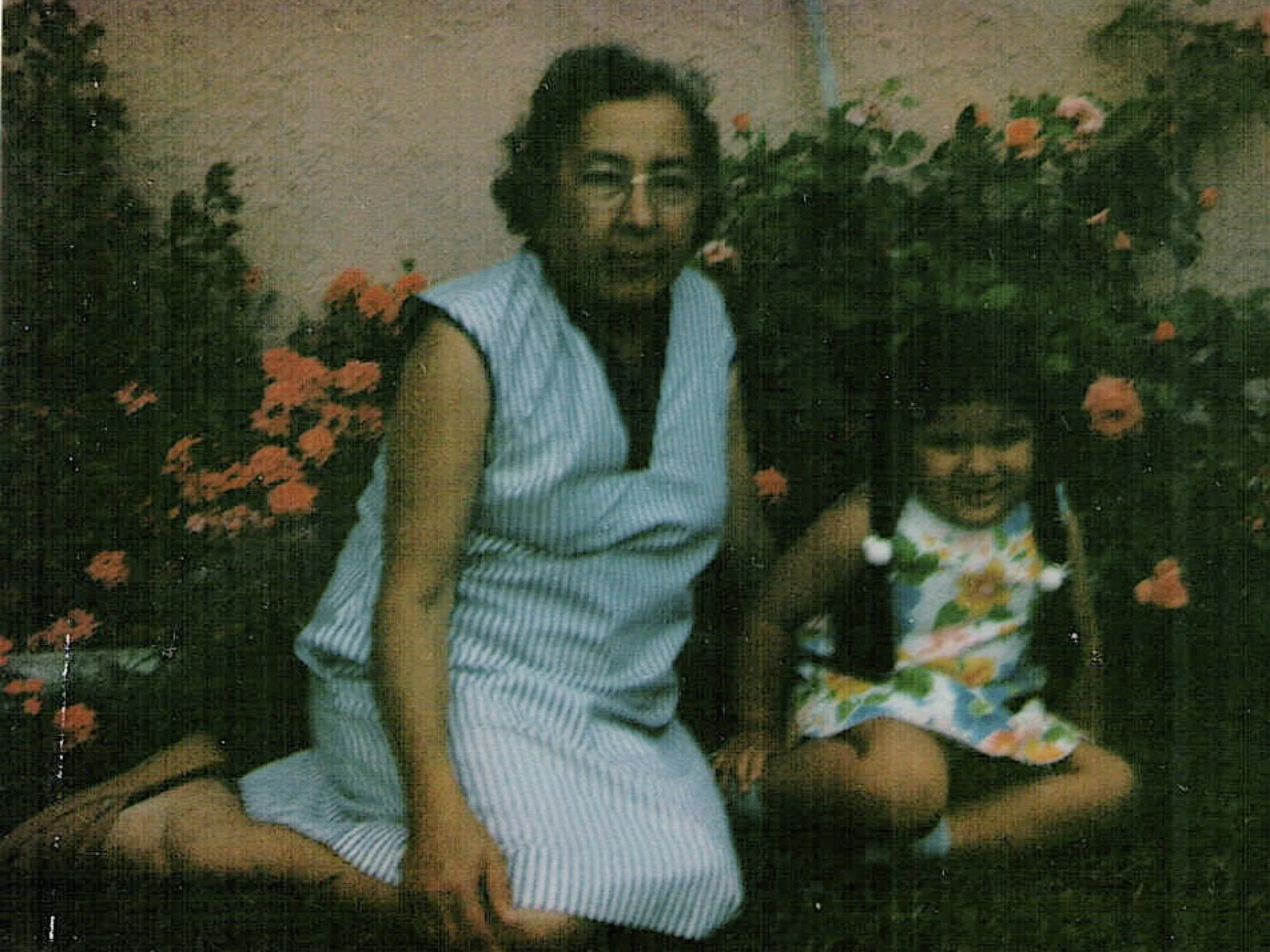
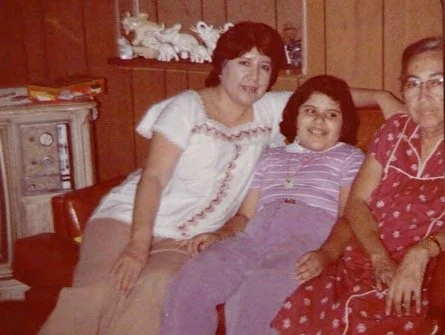
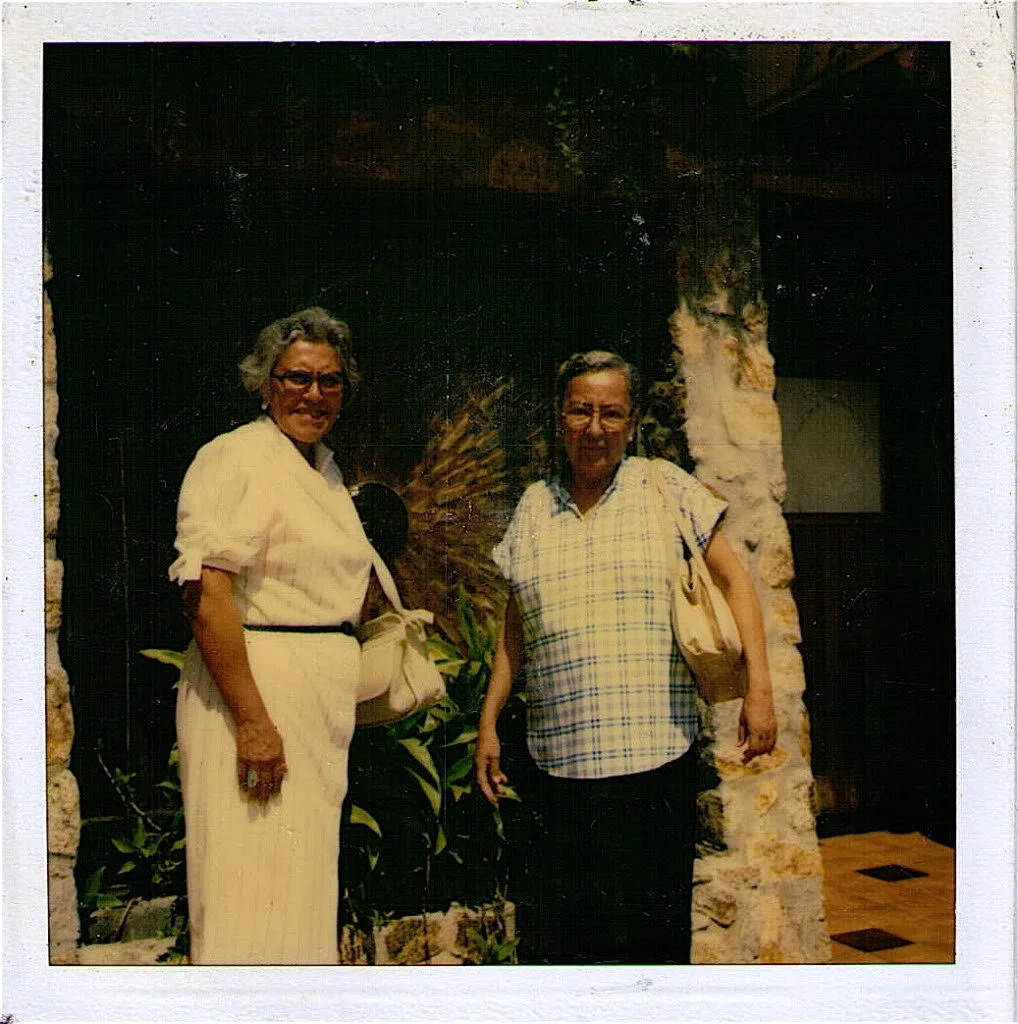
Maria and her nina, in her mom Angelica's garden. Photo courtesy of María A. De la Cruz
“For me, Nina was a second mother and my greatest champion and role model. No one can ever replace her, and my few words here cannot completely retell all my memories of her. ”
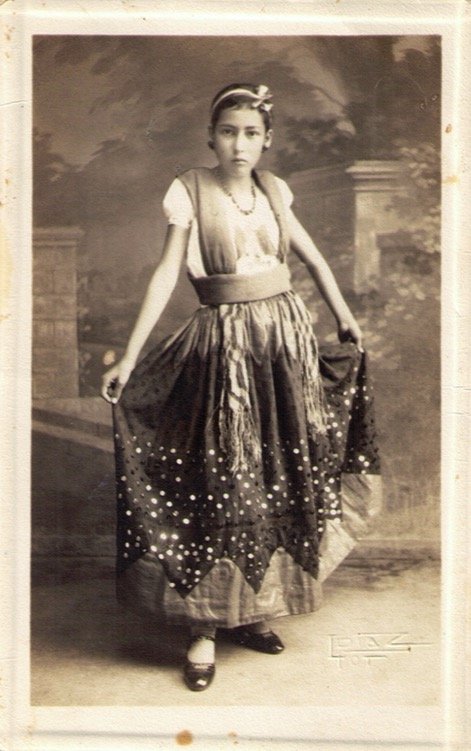
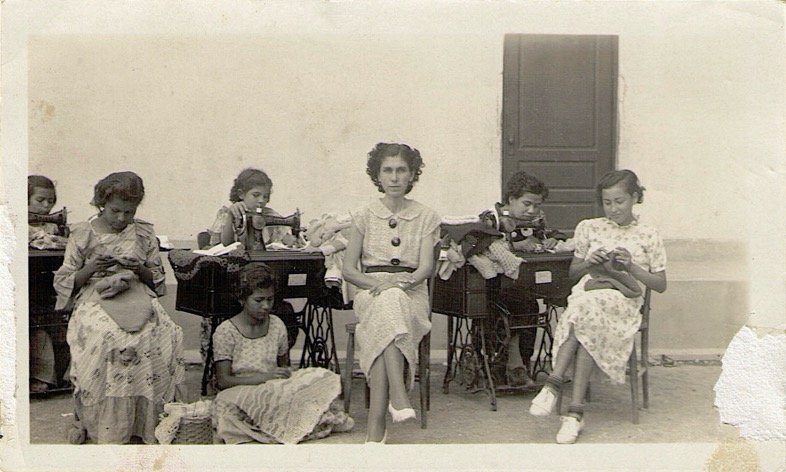
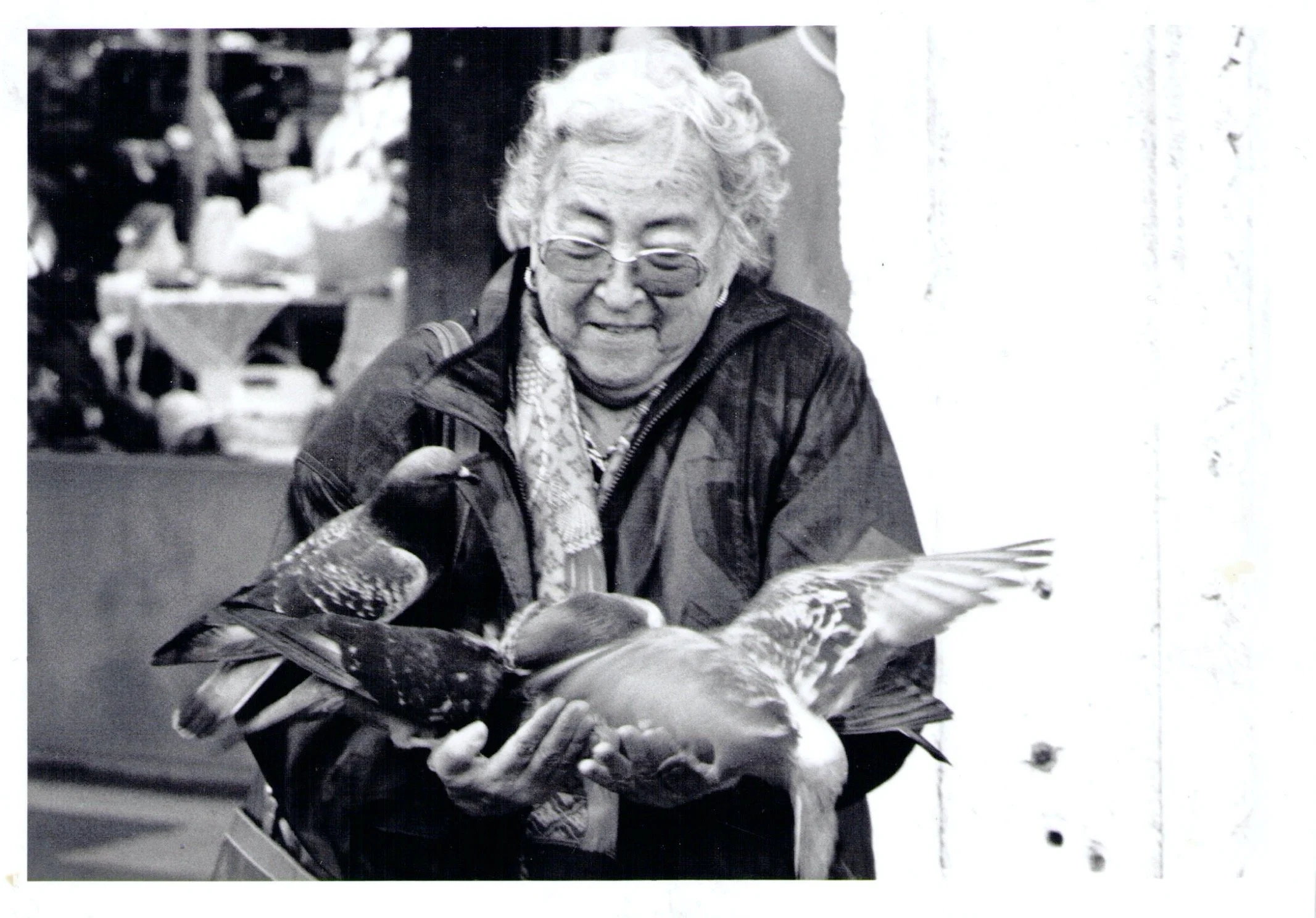
Lola is wearing a dress for Día de la Independencia, Mexico. Photo courtesy of María A. De la Cruz
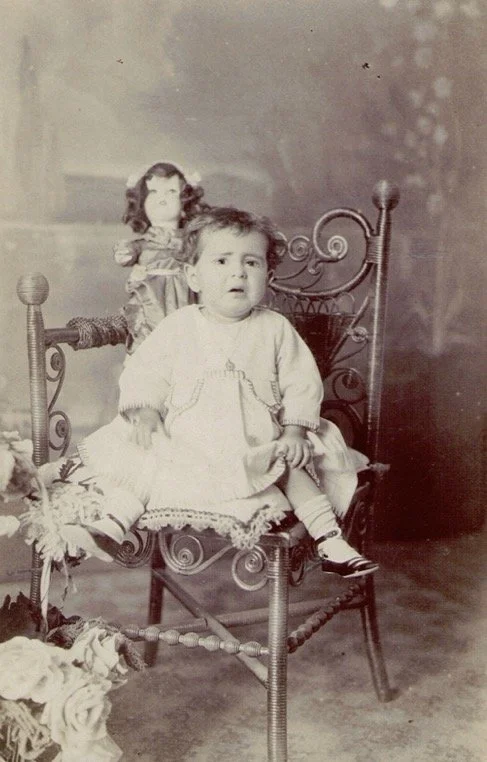
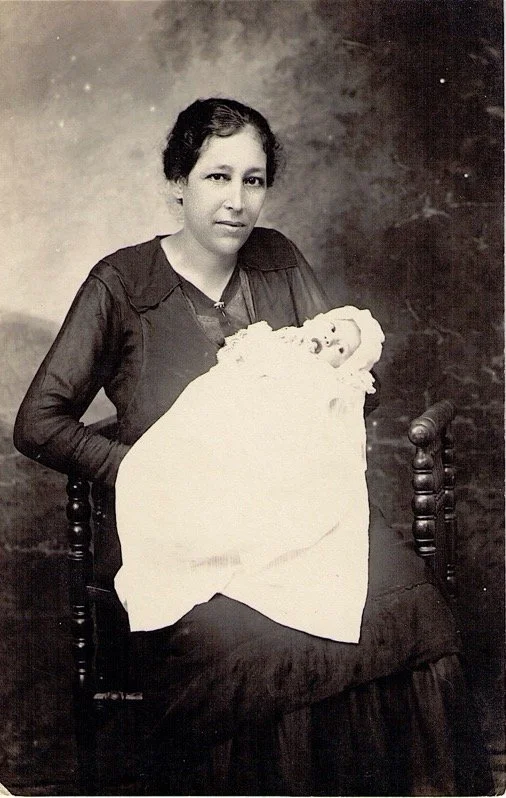
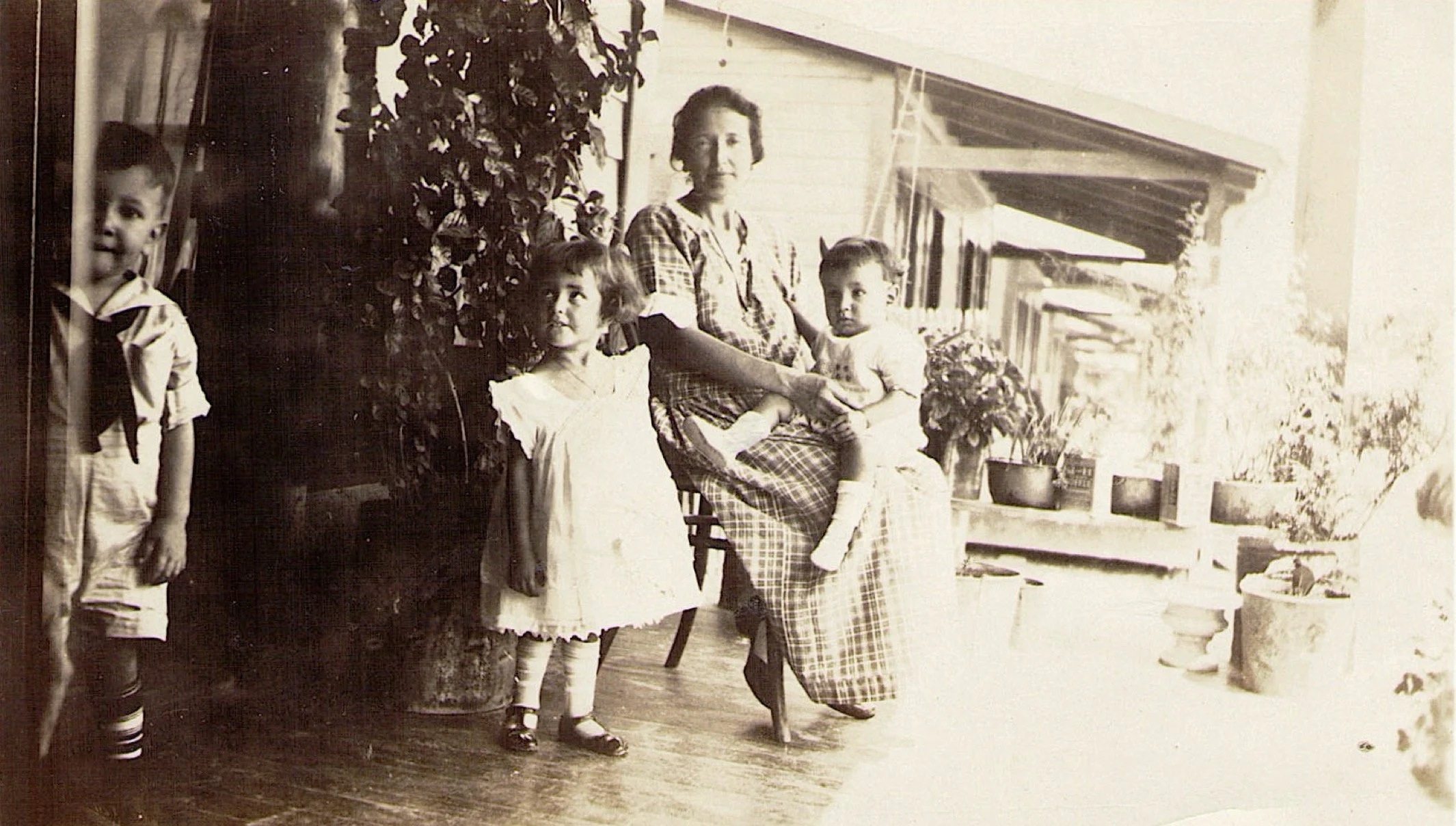
Lola in her mother's arms. Photo courtesy of María A. De la Cruz
Beloved Madrina and Owner of Blanca Molino
1921–1999
This profile is reprinted from La Voz de Esperanza, February 2022, Vol. 35, Issue 1, with deep appreciation to the author, Maria A. De la Cruz, for sharing her Nina’s story.
Mi Nina: The Woman who shaped my life, Dolores Solis
By Maria A. De la Cruz
I had not realized, until the day of, that my madrina had been born 100 years ago in October 2021. Few people recall her story because, even though she was well connected, she was an only child with no family of her own. Our lives intertwined during the last 24 years of yer life, when she helped raise me as if I was her own, and although I lack the knowledge to dig deep into the intricacies of her past, I will do my best, with the help of my mother’s recollections, to tell her story. Her generosity and kindness can be attributed to the rich history of events she lived through, as well as the social life she experienced amidst her cousins and close friends.
In 1921, the world had just come out of World War I and the Spanish Flu pandemic of 1918. The Mexican Revolution had ended 3 years prior. Polio epidemics occurred every summer. Race wars were going on with activity from the KKK. Eight years later, The Great Depression would occur. And 10 years after that, WWII would begin.
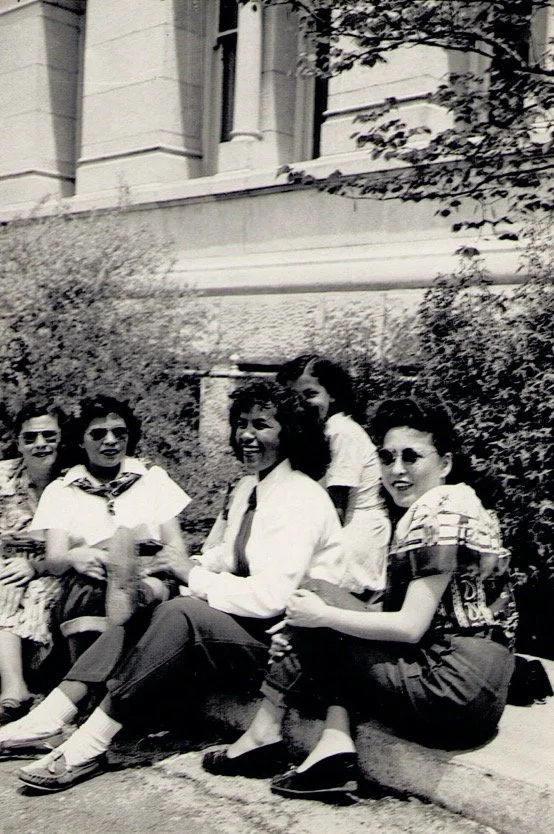
Felipa Dolores Solis, known as “Lola” or “Lolita,” was born in the Westside of San Antonio, TX. The Great Depression forced her family to move to Mexico, where the dollar could stretch further. She had a younger sister, but the baby died and is buried in San Fernando Cemetery I. Much of Lola’s education occurred in Mexico, and her secondary education certified her as a shorthand transcriptionist. She was very close to her mother, María Pabla Barrios Solis, and rarely mentioned her father, Demetrio Solis. Early black and white photos show her in an elementary school play or dance in Mexico for Independence Day; her look seems serious. In youth, she looks joyful and extroverted in the company of otherhappy young women. In the U.S., she worked with eggs and in “La Juvenil,” sewing in the Levis Factory. It seems Lola liked to travel; there are several photos of her young years in Veracruz, Mexico, in what looks like a group trip; whenever she mentioned Veracruz, there was a dreamy fondness in her voice.
Asking mother for more details, she says that Lola knew how to write English well, which means she learned the language during her elementary school years in the U.S. Mother makes her way to where I’m sitting and whispers in my ear, “Estaban huyendo.” It seems Lola’s maternal grandfather or great-grandfather had taken prisoner a president of Mexico, perhaps Madero, and the family had to flee to safety. Because the family was in movement, they spent their time in San Antonio, Laredo, and Monterrey. While in the Westside of San Antonio, she lived “en las casas verdes.” When visiting from Mexico, she would stay with her cousin, Anita Ortiz (married name Sosa). She later lived on Torreon St., in the property of Teresa Navarro’s father, José. (In adulthood, Teresa Navarro, who never married, was a career teacher in the Westside, as well as a landlady, having inherited her father’s property, including along Guadalupe St. Teresa and Lola were close childhood friends and, both being only children, would call each other “prima” even though there was no blood relation.)
For the sake of chronology, I will sidestep into my mother’s story, so I can introduce Lola into the time frame when I knew her. María Angélica De la Cruz (senior), most commonly known as “Angelita,” worked in house labor and office cleaning. Mother’s cousin, Herlinda, had a house catty-cornered to where Botello’s store is located, on El Paso St. and S Smith in San Antonio’s Westside. In 1954, when mother and her Tía María came to San Antonio from the Mexican border, they stayed with Herlinda. While buying tortillas at La Blanca Molino, which at that time was located on S. Brazos, between El Paso and San Fernando, where the present Dollar Tree and Guadalupe Dance Co. are, Tía María asked if they needed workers. The answer was yes; one was needed at the molino, and another at the owner’s house. The name of the lady whorented the space for the molina was Callita (Arcadia Enriquez), and she took Angélica as housekeeper for her and her two daughters. Over time, having built trust, Angélica was brought to work at the molino on weekends, as it seems Callita could not trust the other weekend employees to stay away from the money drawer.
For many years, Callita had rented the building for La Blanca Molino from the owner, el Señor Picini. Picini asked Callita to vacate the property because he wanted to sell it. The land was eventually sold to HEB. Around 1958, Callita relocated the molino across the street from Guadalupe Shrine on El Paso St. She rented the building from la Señora Tules Eguia, who also owned the bakery building still standing in that location on El Paso and Brazos. At that time, tortillas were formed with a small machine similar to a pasta maker. As the tortillas spun out, someone would catch the tortilla and toss it on the comal. Mother says that was Panchita’s job, but she also learned how to do it.
In 1962, one of Callita’s daughters married, and Callita no longer wanted the molino. The employees were temporarily displaced. When Lola took over the property lease and ownership of the business, Callita asked if she could employ the ladies, seeing as how they were already experts at their jobs. Mother doesn’t know whether Lola wanted them or not, but the truth is that Lola had sewing know-how, not tortilla know-how.
The molino, like other small businesses on the Westside, came with living quarters attached. At the time the business exchanged hands, the molino had one small bedroom, a bathroom, and a small kitchen, which was especially cramped because it also served as a storage area for the sacks of corn to be cooked for nixtamal. Eventually, Lola went from renting the property to buying it, along with four additional houses behind it, from la Señora Eguia. Once the property was hers, Lola started making improvements, both to her home and business and to the additional homes she rented out. By 1968, Lola upgraded business production by purchasing a full-scale, automatic tortilla making machine; it shapedtortillas from masa and cooked them without the need for a separate comal.
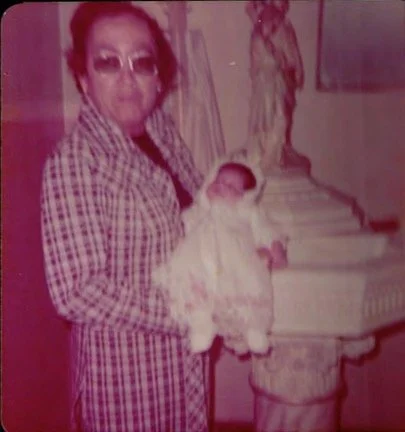
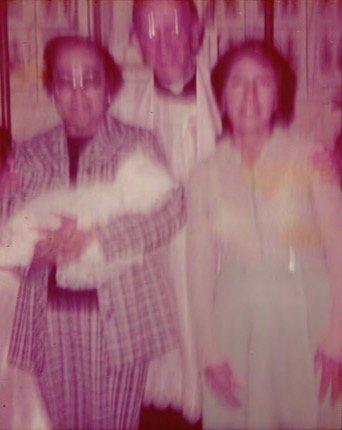
Lola had moved to the molino along with her elderly mother. She would have taken care of Doña María at home until death, but her mother became ill and bedridden to the point of having to be transferred to a nursing home, where she did not last long; separation on top of illness transitioned her quickly. Angélita saw the great vacuum left in Lola’s heart after her mother’s passing early in the 1970’s. A few years later, a shock came into Angélita’s life– me. She lost her job at the molino because the strength and activity needed to perform were too much for a pregnant woman. With lack of support, she had to work extra jobs, and expanded into restaurant support staff; there was no such thing as planning for a baby. Knowing and seeing Lola’s grief and solitude, Angélica asked Lola if she could baptize the child. Saying that Lola was overjoyed would be an understatement. Photos show Lola and the baby as almost inseparable.
Lola became my madrina less than a month after birth. My young tongue could not say “madrina,” so my name for her became “Nina.” Our neighbors in the rental house compound were as follows: Tencha lived next door to Lola on the corner of El Paso St. and Kickaster Alley, Toñita and her son Chuy, the boxer, were in the center facing the callejón, and in the back were two houses. In the one sharing the callejón with Toñita lived a solitary gentleman and his dog, and the house on the inner corner was rented by my mother. Not until I experienced pneumonia three years in a row after birth did Nina realize I needed more warmth and care, so she invited us to live under her roof.
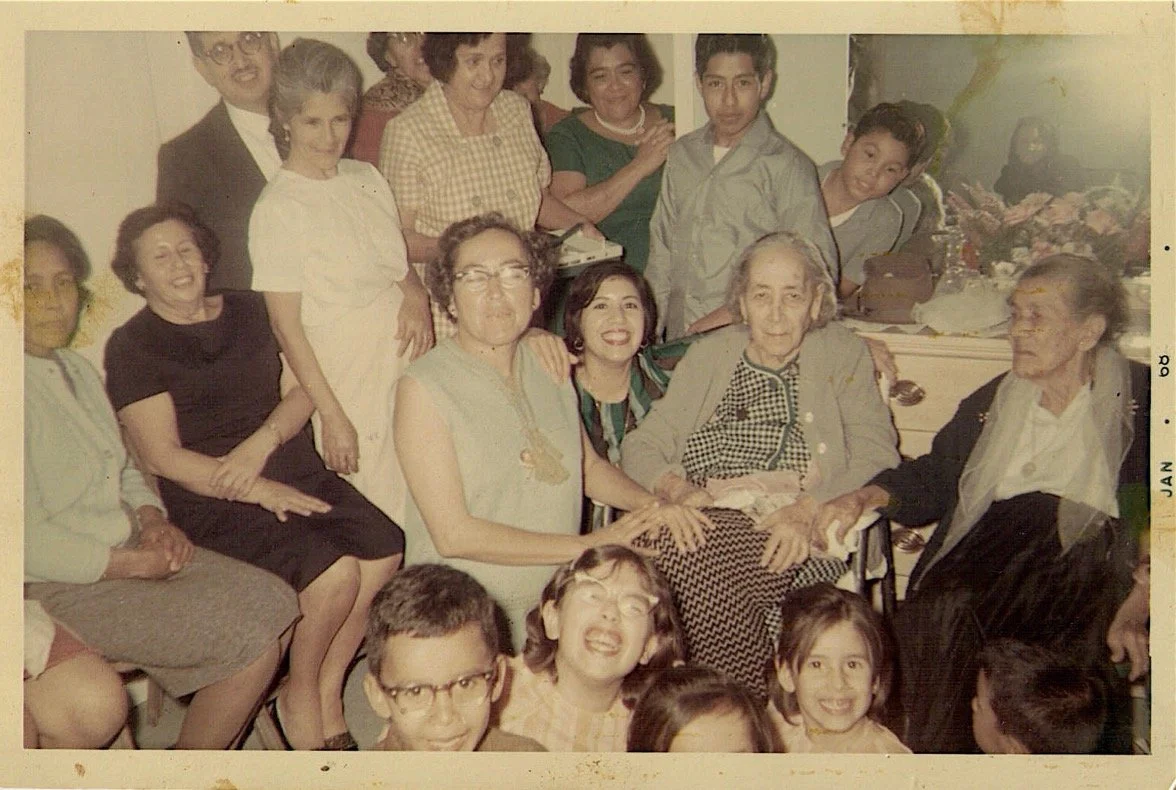
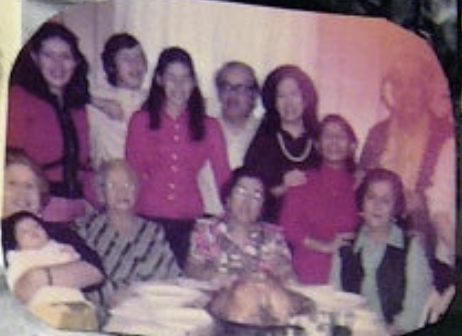
The best summary of our lives together comes in the form of a Thanksgiving photo. In the photo, Olivia Barrios is holding me. There, too, are Viola Barrios and her husband, José, and three children, Diana, Teresita, and Luis Alberto, Anita and Roberto Sosa, parents to Lionel, Robert, Daniel, and Mary Christine, and a few other people I do not recognized offhand, perhaps Beatrice and Gollo (Gregorio) Ortiz, and her best friend, Tere Navarro. (Nina’s signature on any photo she tookwas a finger partially covering the lens, obscuring faces in the process.)
Nina’s life was full of celebration. She would close the business for Thanksgiving, and host dinner for her extended family. During Christmas season, gatherings for rosaries would take place during Advent, the tree would be bulging with gifts for family and friends, and bonuses were in store for her employees, Chonita, Panchita, and Angélica.
During the Epiphany, Toña Barrios and her daughter, Malu, would come over to “levantar el niño.” Easter season saw the most activity during Good Friday, when Guadalupe Shrine would host the Passion of Christ procession in the neighborhood. Easter itself brought lots of Lola’s relatives together around the dining table, where conversation would take place that Sunday with lots of cafecity and pan dulce. New Year’s was more low key, but we would still have a ham for us three.
Aside from cousins, Lola had many ahijados–godchildren that she sponsored for baptism. She baptized employees’ and friends’ children or grandchildren. Christmas gifts, Easter baskets, and birthday cards would be available for them every year. It was my Nina who, with Tere’s encouragement, taught me my colors, numbers and letters before going to school. I learned to count by rolling change in preparation for bank deposits. Once in school, Nina became a “room mother,” and would bring snacks for the class, and spend time with us during recess, teaching us songs and games and how to play fair. The other mothers enjoyed her company, and the teachers and parents were grateful for her presence. For school and church festivals, she would donate masa for gorditas.
Celebration and presents makes it sound like Nina had a very joyful and trouble-free life, but I think it was the Great Depression, years of want and need, that made Nina so generous. That generosity came hand in hand with lots of work and clientele. Weekends were by far the busiest days. It was still dark outside when Nina would get out of bed to receive the delivery of barbacoa. She would put the roasters out to cook it, so she could sell it along with the fresh made corn tortillas. Shortly after the delivery, mother would get up to rinse the nixtamal, which had been cooked the previous evening over giant, open flame burners, and she would start the molino to make masa, carry heavy balls of fresh ground masa to a table to knead it and make sure the consistency was correct for tortilla making, and then either her or Nina would turn on the tortilla making machine, which was a tiered conveyer belt surrounded by fire.
Work was long, hot, and busy. One of the workers would stand at the end of the machine to receive the fresh tortillas, and sort and pile them into a tin baño lined and covered with red and white checkered tablecloths. The full baños would then go to the counter, which was stacked with squares of butcher paper used as wrapping when the tortillas sold.
Being in a neighborhood where family finances were unpredictable meant that Lola offered credit to customers who could not afford to pay at the time of purchase. Her ledger was a lined spiral notepad. In the back pages, she would keep tabs for customers. Although some would pay in a timely fashion, others were always behind. Through it all, I never heard of her denying anyone food, and she never kicked anyone out of their home when they fell behind in rent. Moreover, she sometimes gave small loans to acquaintances who had fallen behind on their electric or water bill, or who needed a few extra items from the grocery store when food stamps did not suffice. Those were the acts of kindness that most stand out in my mind in this day and age, when trust is hard to come by.
La Blanca Molino would get the breakfast crowd, the Church crowd from various Masses, the lunch crowd, and the day would peter out with those looking for tortillas to serve with dinner. Chicharrones were also popular.People begged her to also make flour tortillas, but she remained loyal to corn. During the Christmas season, people would put in orders for masa for tamales. The consistency of masa for tamales is different from that for tortillas. Angélica would work after-hours to make the special masa. For the consistency to change, the stones in the molino had to be shifted; Angélica would have to play with them to get the right kind of grind.
Every now and then, when the machines would act up beyond a common repair, el Señor Escamilla would have to be called. He not only sold the machinery and serviced them, he would also get new customers trained by sending them to Lola, who never charged for demonstrating the equipment and procedures, and answering questions. The most memorable trainees were the Arabes who, after being trained, invited Lola to visit their country and offered to pick her up from the airport in their limousine. The most consequential trainees were the people from HEB. On several occasions, HEB had offered to purchase tortillas from La Blanca Molino to sell at their store, but Lola felt that her small business did not have the capacity to meet their demand. Eventually, a team from the company rolled into the molino, and Lola and Angélica showed them how to make their own tortillas.
Although La Blanca Molino was popular, business started faltering when neighbors were displaced to build La Plaza and other developments in the neighborhood. Streets that used to be filled with playing children and street festivals became quieter. Old customers would come for a visit every now and then to see how the old neighborhood was doing. It wasn’t quite the same.
Even though the Molino was not doing well, Nina held on as long as she could…most likely to retain the semblance of family she had. However, once she became seriously ill, mother could not keep the business going on her own, especially as she was also acting as Lola’s nurse, and I was trying to finish my undergraduate degree, and having difficulty with the stresses at home. With no end in sight to her illness, Lola sold el Molino in 1997.
Although her life expectancy was short after being diagnosed, she lived two additional years at the San Jacinto Senior Community. Illness and age stripping her of strength and independence, she longed for the view to the street she used to have at the Molino, and for the days when her family and friends could stop in any time to visit with her, stepping through the open doors of La Blanca.
Before the years started closing in on Lola, she had a few memorable escapades. Although she and Tere had taken me on trips to the interior of Mexico in the 1980s, during her older years, in the ‘90s, she was able to travel to Europe with her second cousin Lionel Sosa and his family. The trips to Italy and France were foremost in her mind, and stayed with her until the end of her days.
When Nina parted to the next life, she took with her a large chunk of my and mother’s heart. Mother, in her mind, always considered Lola her employer, upon death, her heart informed her that Lola was her closest friend. For me, Nina was a second mother and my greatest champion and role model. No one can ever replace her, and my few words here cannot completely retell all my memories of her.
Lola’s favorite color was yellow, the color of richness and the sun. Her kindness was deeply rich, and her compassion had the warmth and intensity of the sun. This year, 100 years after her birth, I unconsciously surrounded myself with the colors yellow and gold– colors that keep her alive in my memory– by immersing myself in Esperanza’s marigold project at Rinconcito. I hope this spark of memory will ignite Lolita’s memory in others who may have known her and who are reading these words.
Mother adds, “Viola Barrios fue la única que me dio las gracias. No me las tuvo que dar. Dijo, ‘Angelita, estoy muy agradecida contigo y tu hija por haber pasado sus últimos años de vida con Lola.’” Without us, Lola would have spent her last years alone.
Likewise, I am grateful to Lola, for having been in mother’s life when she was alone with child, and for having been mi Nina– my teacher, friend, and protector. I dedicate this writing and all my labors with the Día de los muertos project this year, 2021, to the memory of Dolores Solis, and others like her who shelter, mentor, and help those in need. Be good always, for you do not know whose life you impact.
Born and raised in San Antonio, María is an alumna of UTSA, Seton Hill University, and Peace Corps. She leaves parts of herself in the geographical memory of the lands and the people where she travels and does projects to help others.