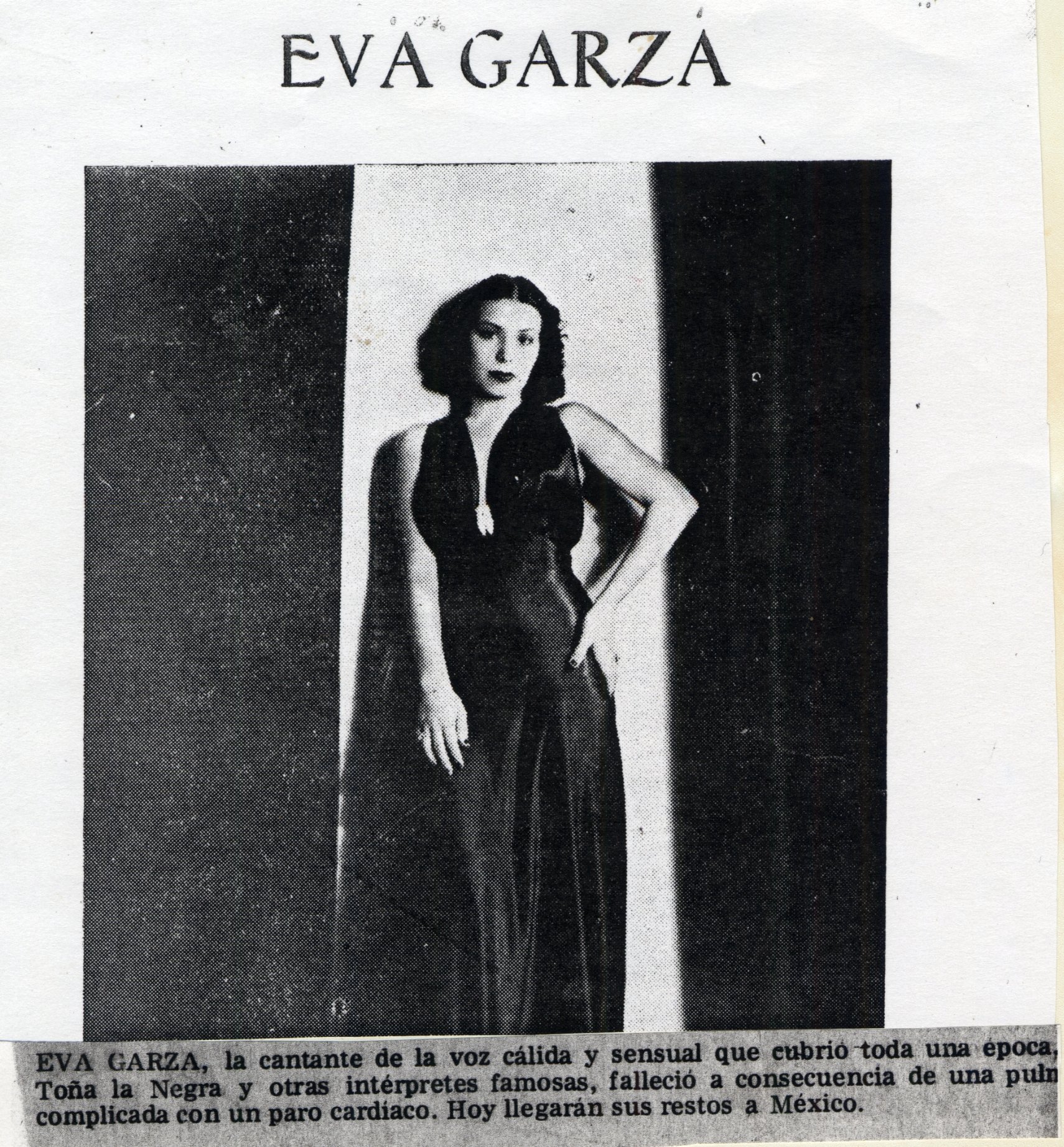
Eva Garza
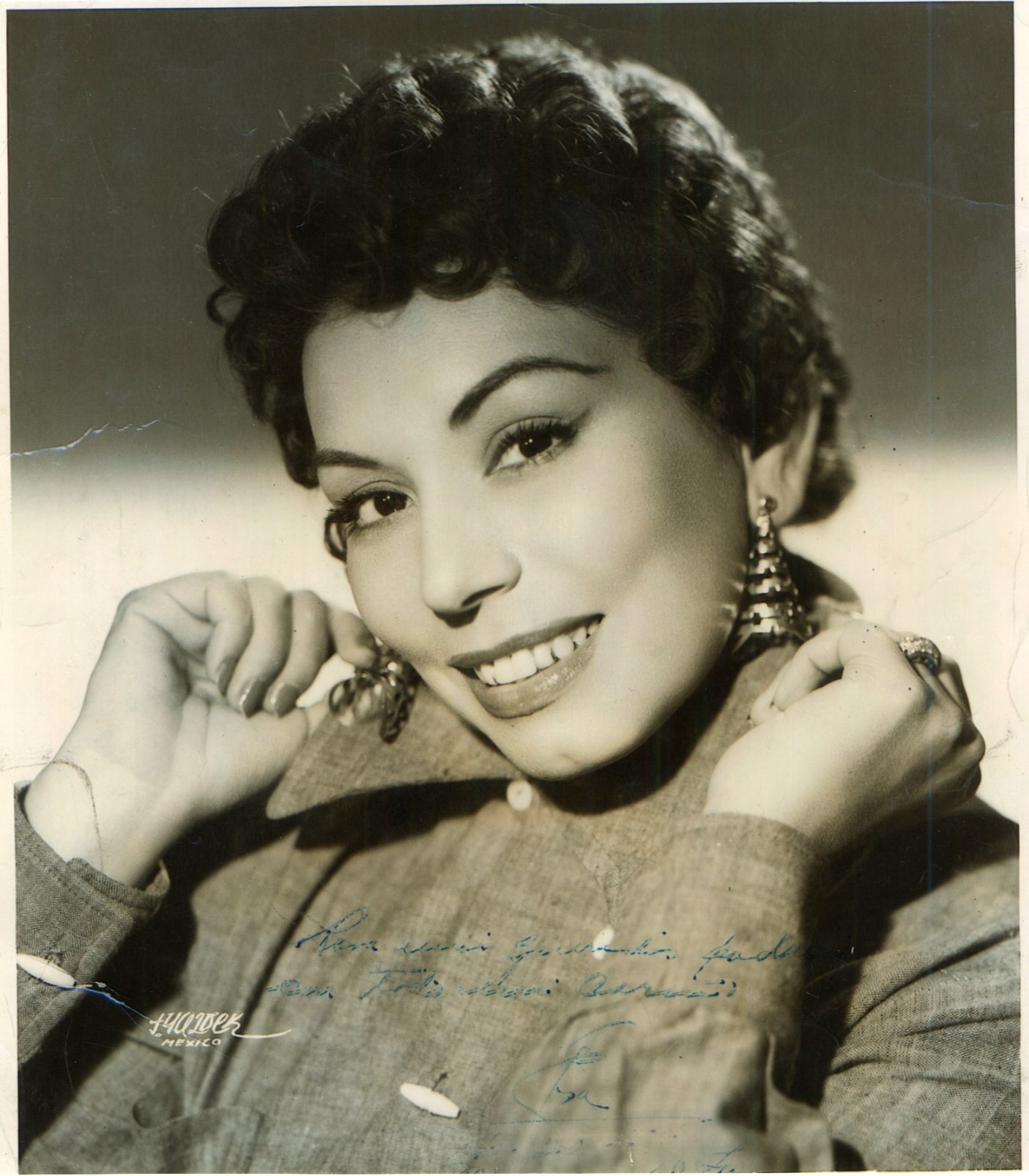
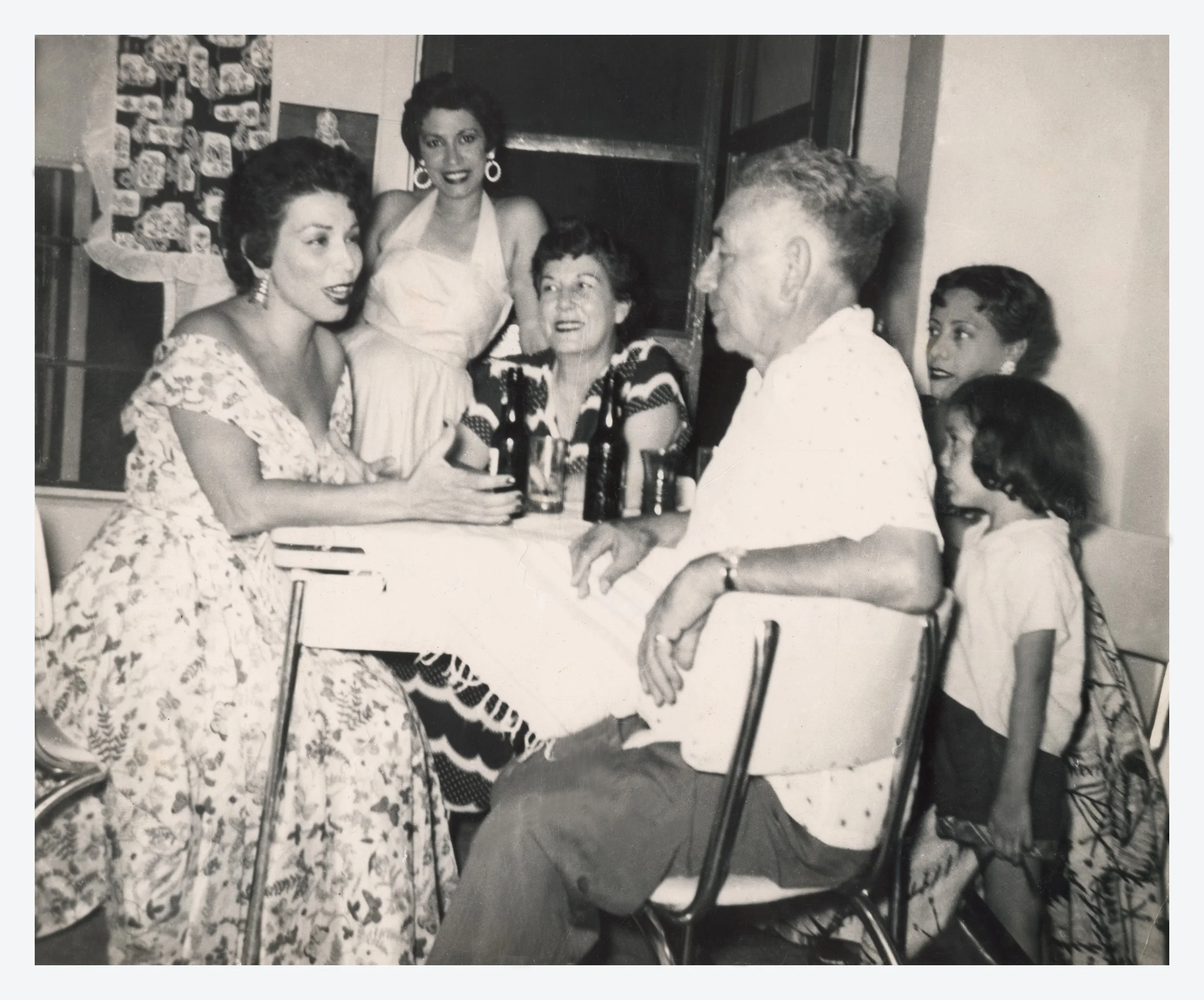
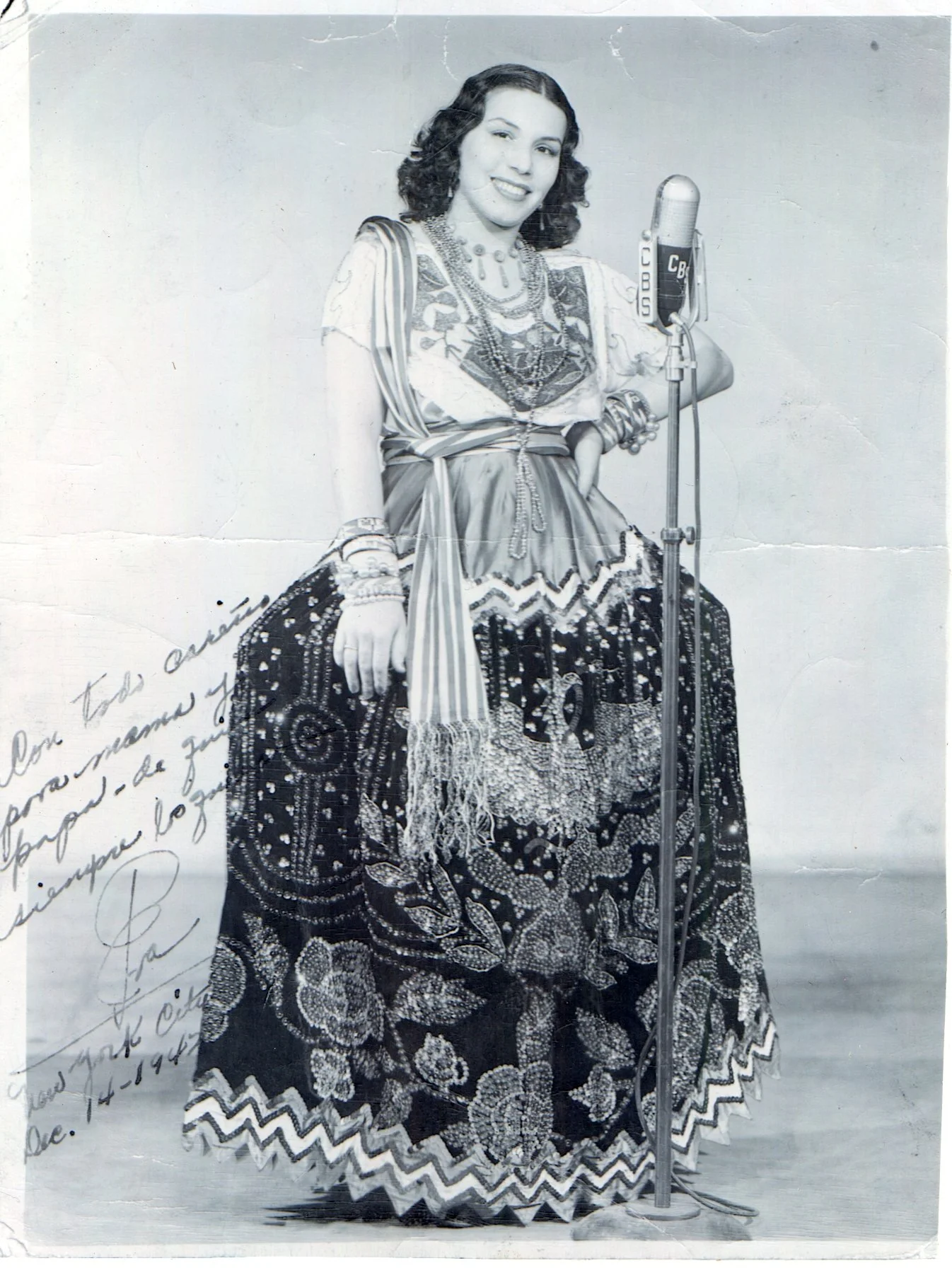
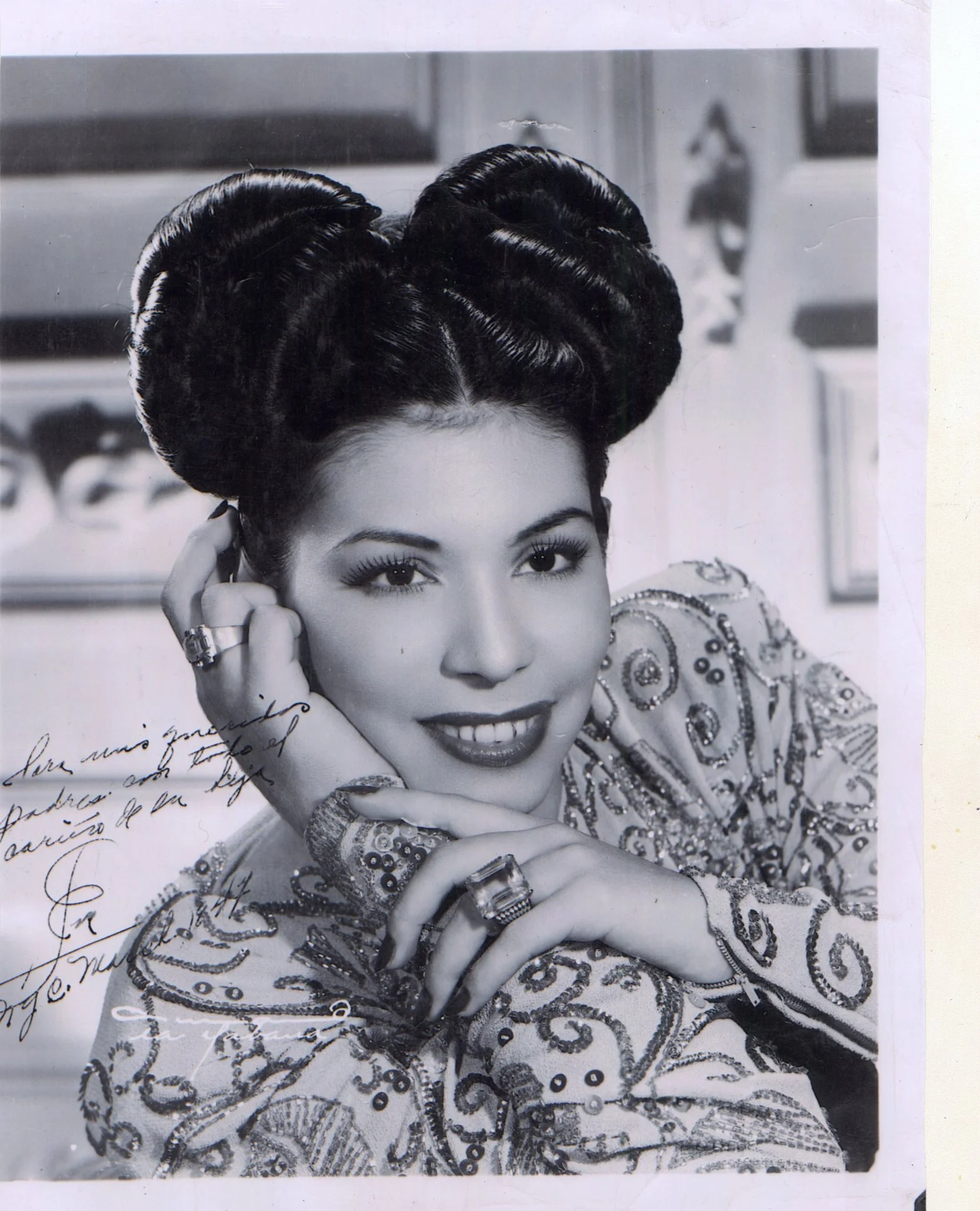
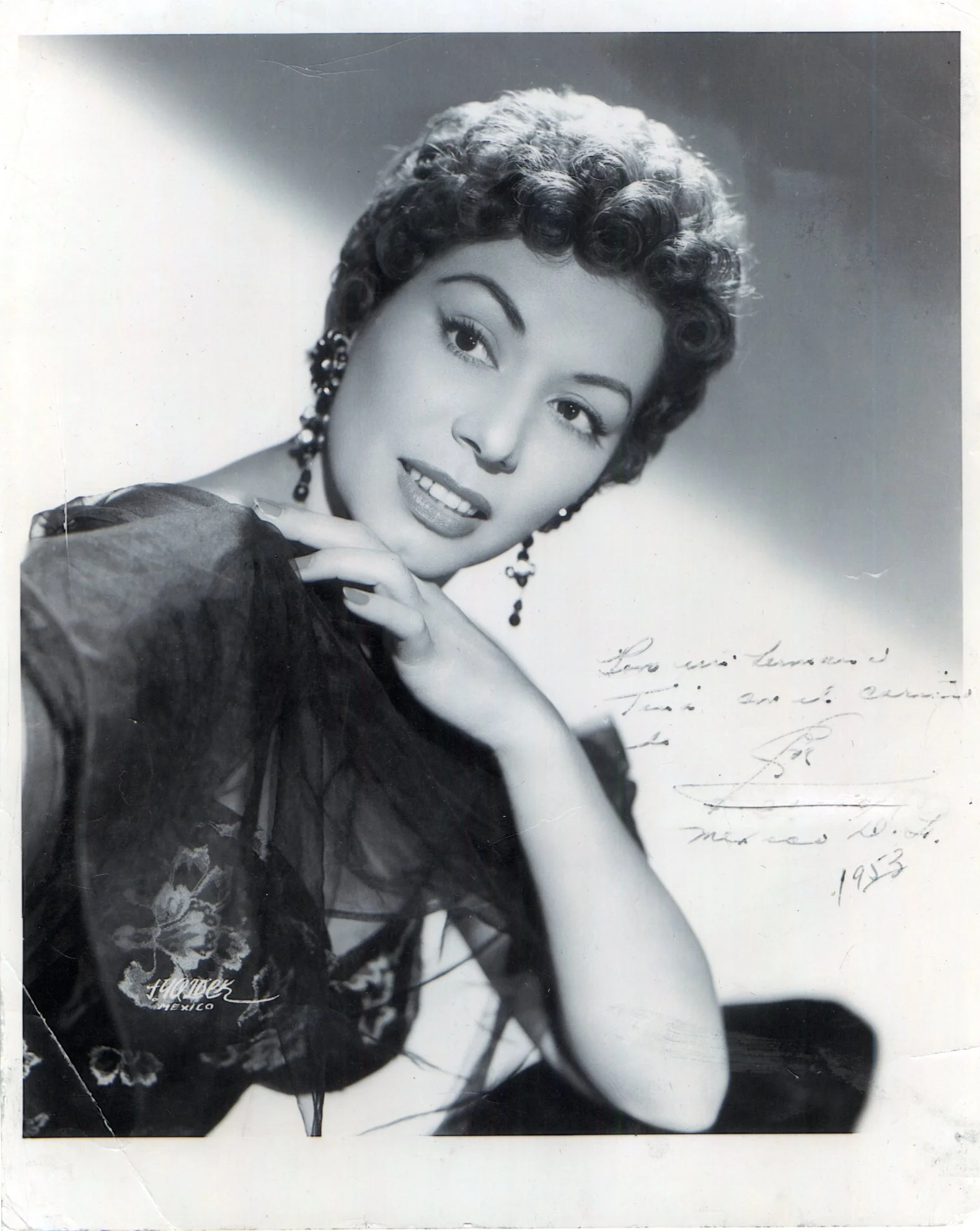
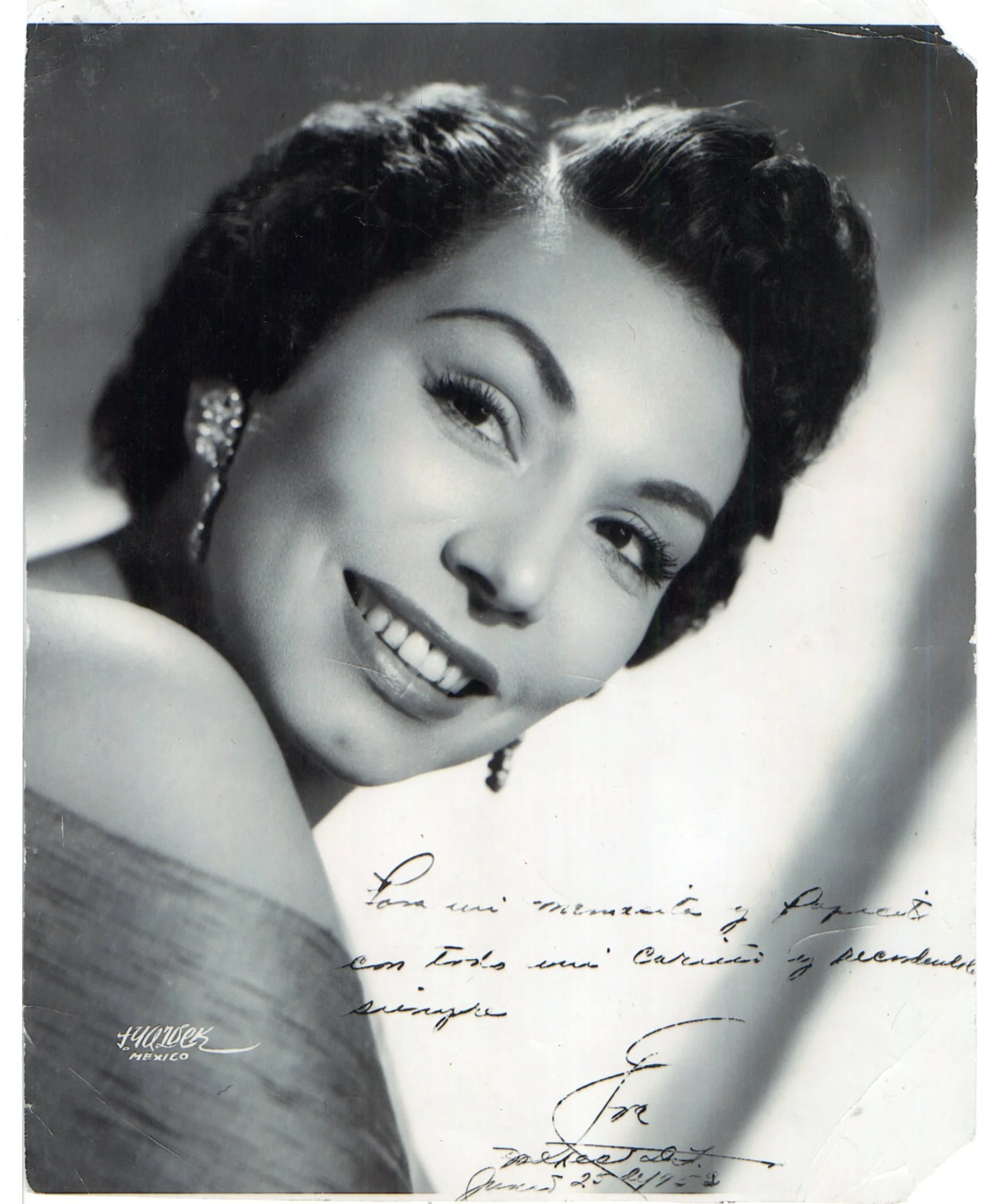
"Para mis queridos....", Courtesy Esperanza Peace and Justice Center, San Antonio, Texas
“Eva Garza, she and I, were International Tejanas.”
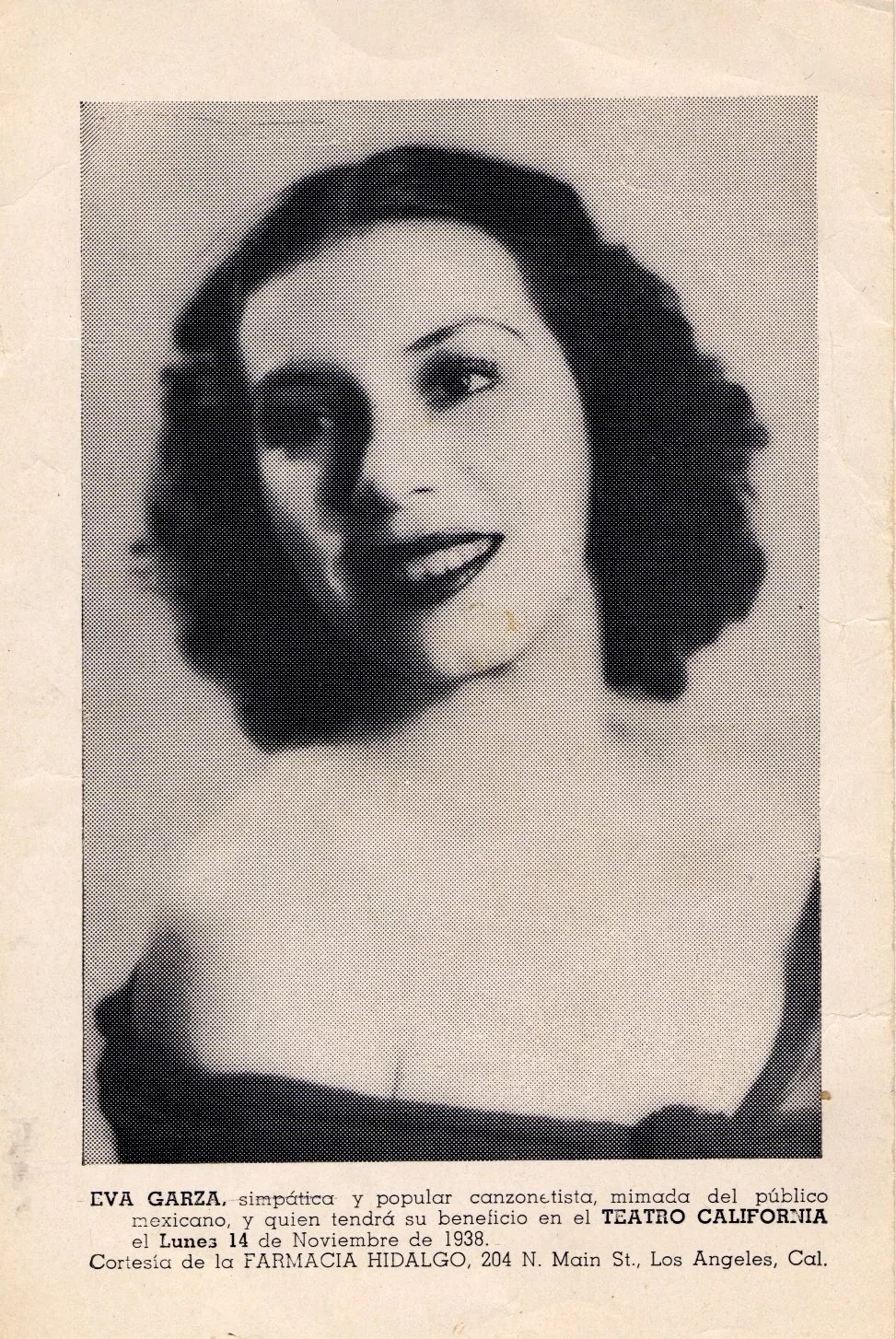
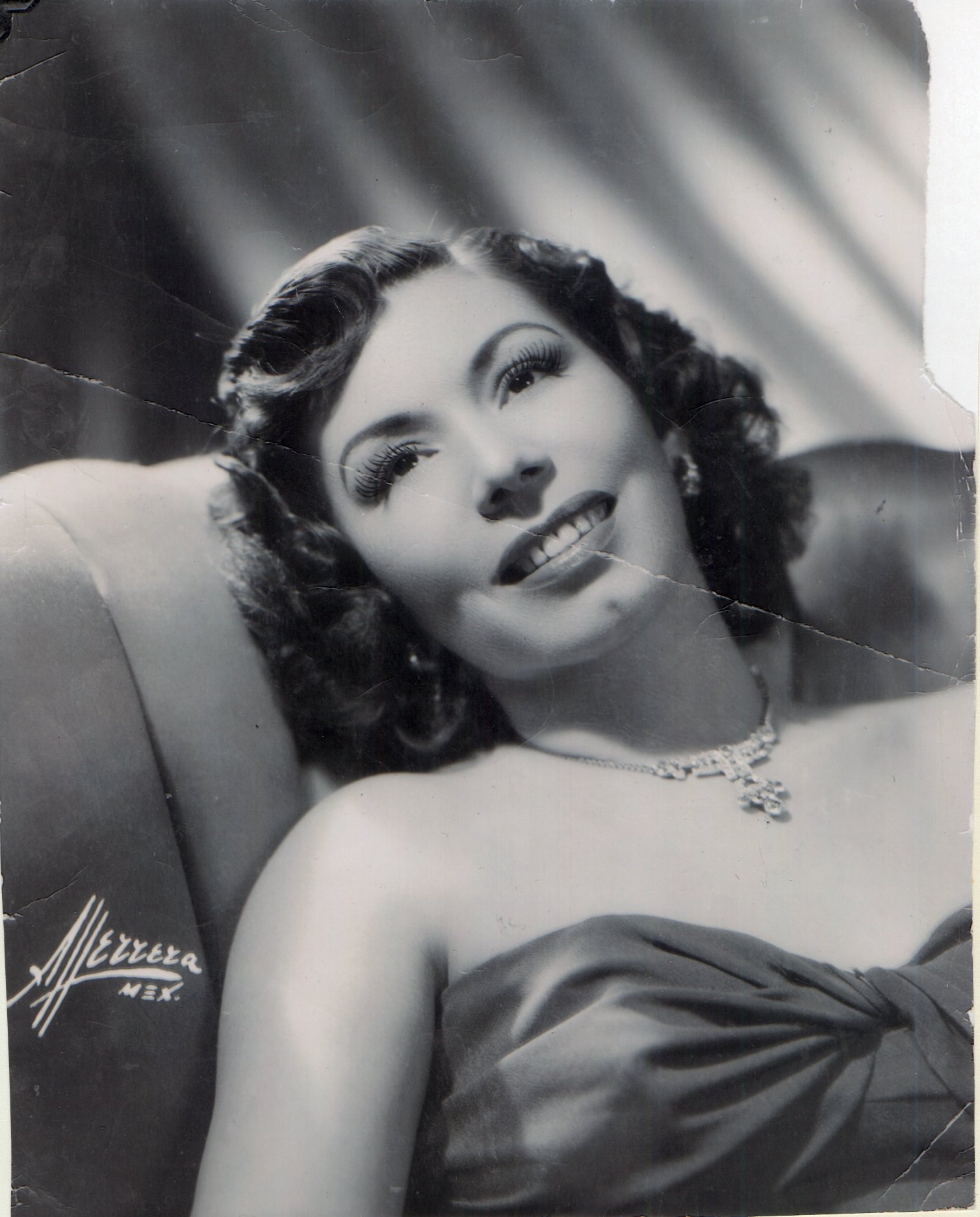
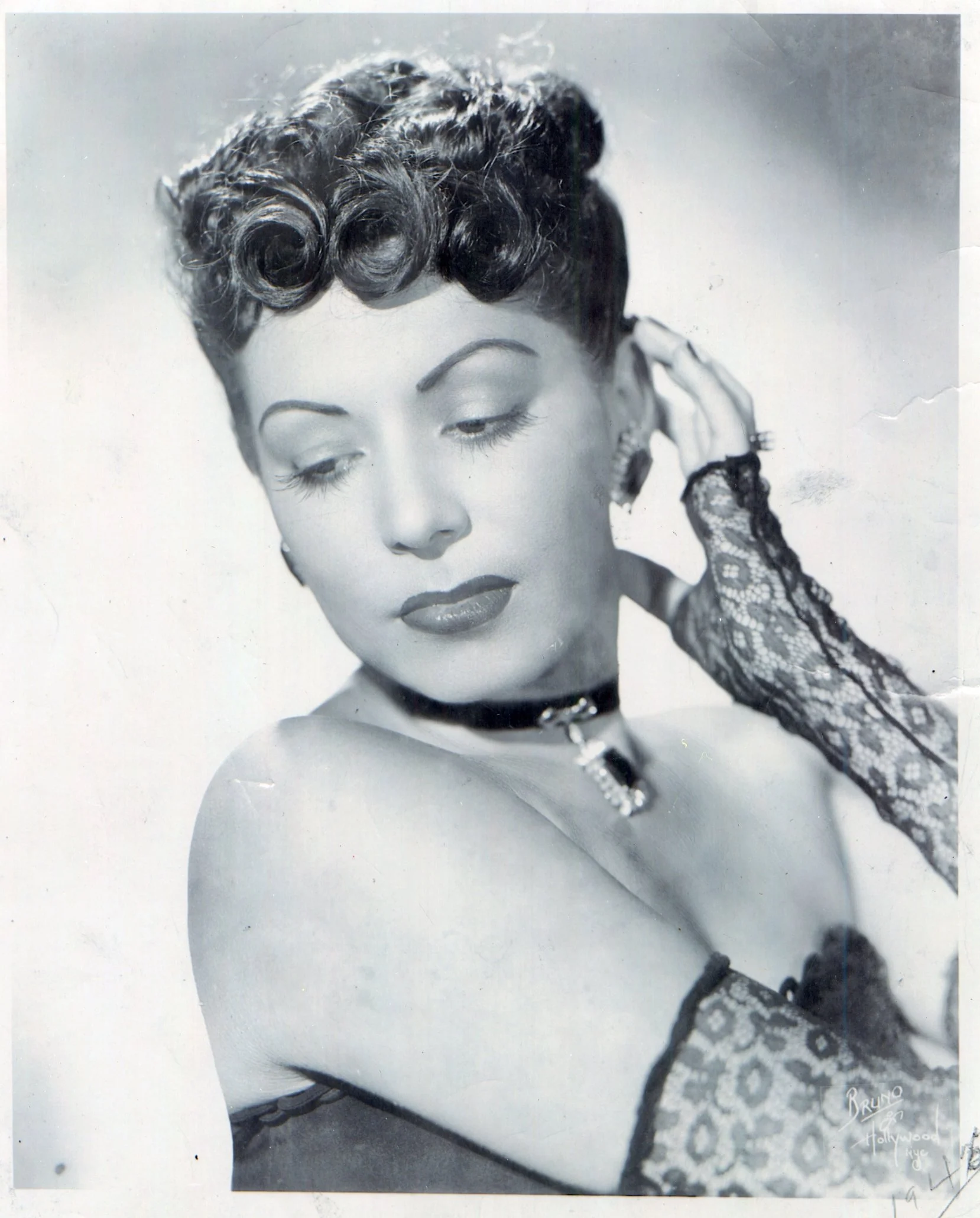
Eva Garza, studio portrait, Courtesy Esperanza Peace and Justice Center, San Antonio, Texas
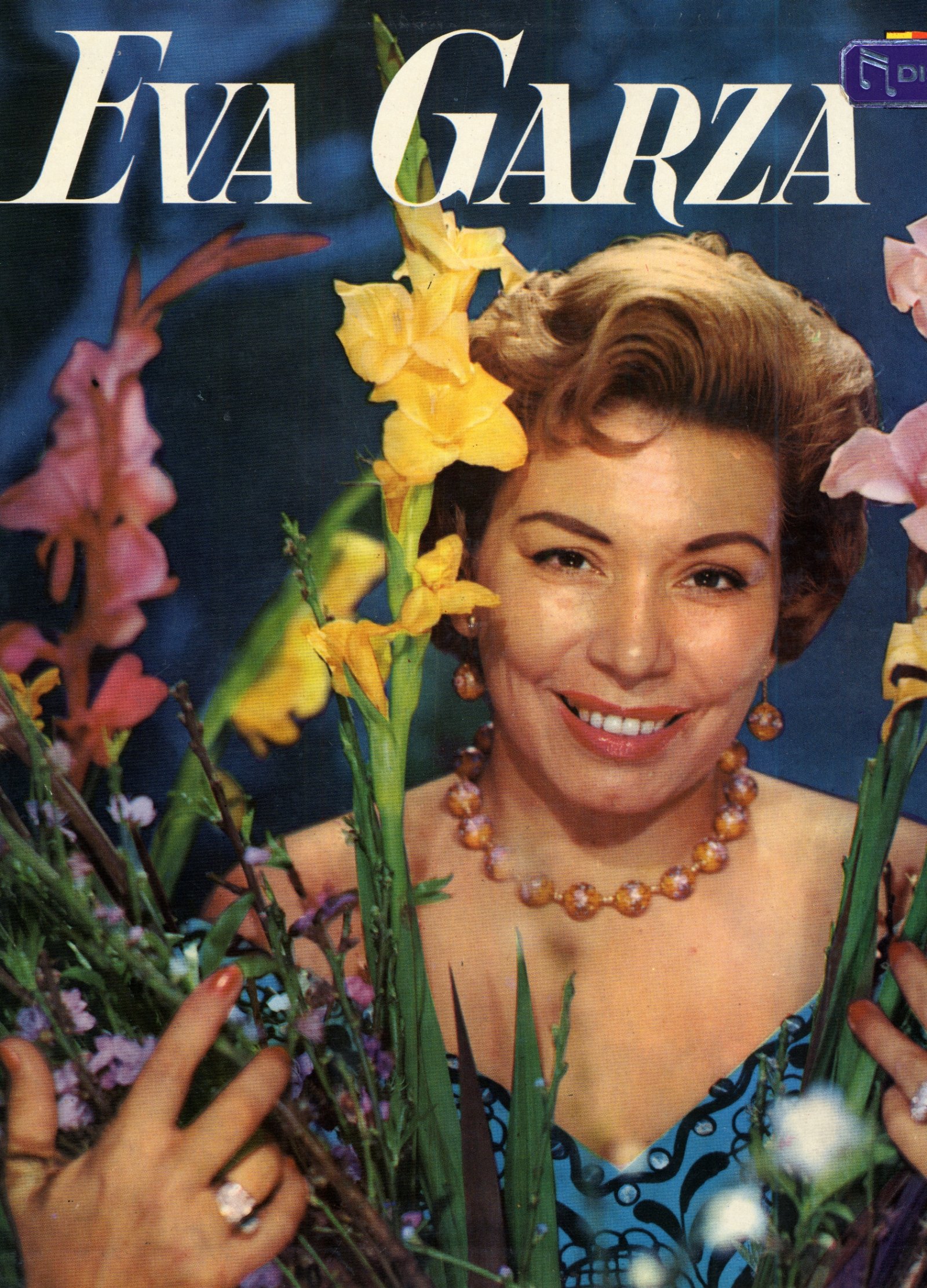
Eva Garza, with a bouquet of gladioli, Courtesy Esperanza Peace and Justice Center, San Antonio, Texas
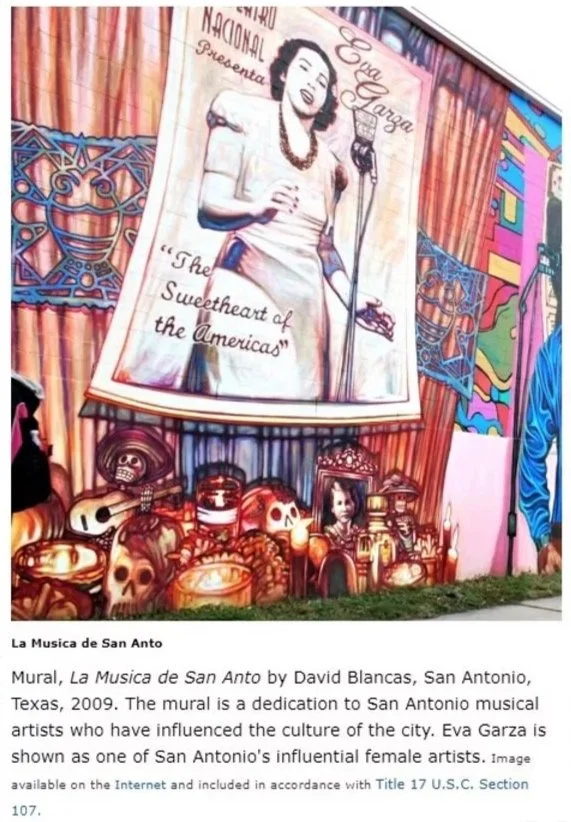
Eva Garza on mural by David Blancas, "La Música de San Anto," located at 1303 W. Commerce St., Courtesy Esperanza Peace and Justice Center, San Antonio, Texas
Pioneer of Mexicana women in theater
1917-1967
This literary ofrenda by Deborah Vargas published in La Voz de Esperanza in November, 2006 observes the passing of “una hija del Westside de San Antonio.”
On one research trip to Mexico City, I sat at the Cineteca Nacional, waiting for the archived film Bolero Inmortal (1958) to begin. Playing the character “Lucha Medina,” Eva Garza came to life. I was able to screen several movies there that Eva appeared in. I recalled Rita Vidaurri’s profound words during my interview with her, “Eva Garza, she and I, were International Tejanas.”
Eva Garza was born May 11, 1917, on Montezuma St. on the Westside of San Antonio. The third oldest of 7 children, she graduated from Lanier High School in 1934. Influenced by the musical talents of her mother and grandmother, her sister, Tina, recalled that one of the first women Eva saw perform was Rosita Fernández, singing with her sister Berta as “Las Dinámicas Estrellas.” Eva’s entrance into public performance occurred in singing contests popular in the 1930s and 1940s. She was 16 when she won a second place prize of $500 for her rendition of “I’m in the Mood for Love” at the Texas Theatre. Soon after, Eva would appear on “La Hora Anáhauc,” a popular radio program. Although in high school, Eva appeared on radio and popular venues like El Teatro Nacional. Her parents became quite protective. What helped was that their father worked as a barber nearby where Eva often performed. Eva’s first recording sessions were held at the Texas Hotel for the Bluebird Records label. Rumbas, sons, and boleros such as “La Jaibera” and “Calientito" were among her first songs recorded in 1936. Her recordings would eventually include well-known composers such as Luis Alcaraz and Chucho Monje.
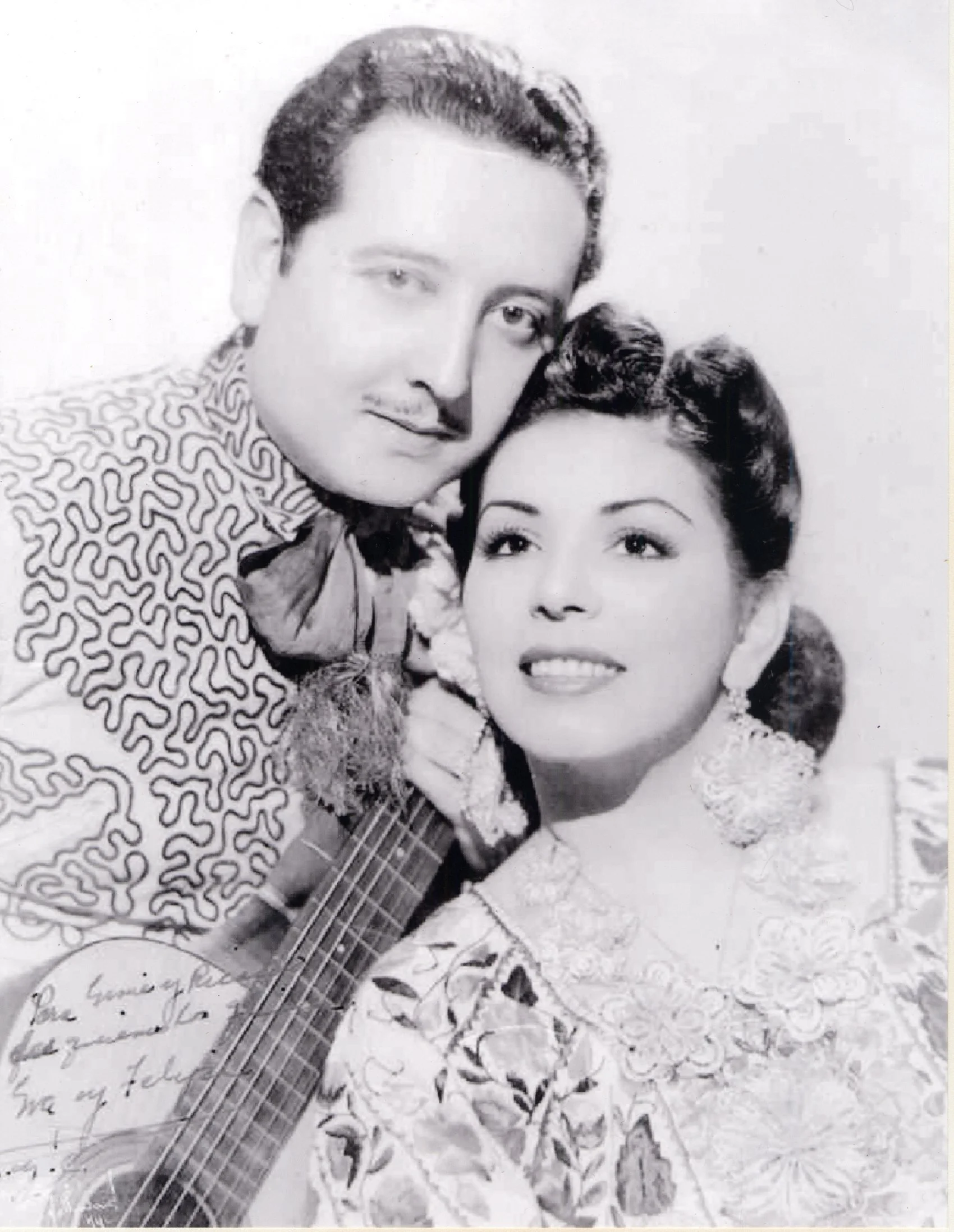
Eva’s most significant career transition came when she auditioned at the local Majestic Theatre for the Sally Rand Dance Revue in 1937. Rand assured Eva’s parents that the dancers would be chaperoned. Eva traveled with the revue for 6 months touring from Texas to Florida and north into Canada. Joining the dance revue changed Eva’s life forever. After touring with Sally Rand, Eva gained popularity, playing some of the most famous nightspots along the Southwest and West Coast, including the Million Dollar Theatre in Los Angeles. On one of these tours she met Felipe “el Charro” Gil (of Charro Gil y Sus Corporales) at a radio show in Juarez, Mexico. Charro, with brother Alfredo Gil, would later form Trío Los Panchos. Charro and Eva married in 1939 and settled in New York where she recorded for Columbia Records and sang for CBS radio shows, including the “Sweetheart of the Americas” programs that were aired for the U.S. troops during World War II.
During the 1940s, Eva’s career was solidified with tours in Latin American cities, including “the Tropicana in Cuba; she also went to Sao Paulo, Brazil; Quito, Ecuador; Bogotá, Columbia; Buenos Aires, Argentina; Nicaragua, and in Perú, too, she was very famous,” shared Tina. By the time Eva moved to Mexico City in 1949, she had gained an international reputation as a singer and thus some of the biggest line-ups on XEW radio in Mexico City, including the likes of Pedro Infante and Pedro Vargas. In 1953, Eva and Charro Gil divorced. Her sister, Tina, filled in as manager and, when Eva traveled, as caregiver for Rosemary and Felipe. This gave Tina a different perspective on how big a star Eva was: “I lived with her on and off for about 12 years in Mexico City. She was the number one leading star in the early 1950s.”
Among Eva’s gold records were “Celosa,” “Sabor de Engaño,” “Sin Motivo,” “Frío en el Alma,” and “La Última Noche.” Eva appeared in over 20 Mexican motion pictures during the late 1940s and 1950s. She appeared with popular singers/musicians such as Trío Los Panchos, Toña La Negra, Luis Alcaraz, José Alfredo Jiménez, Pedro Vargas and Agustín Lara. Some of these films include: Si fuera una cualquiera (1949); Amor Vendido (1950); Arrabalera (1950); Cárcel de mujeres (1951) starring Katy Jurado; Mujeres sin mañana (1951); Paco el elegante(1951); and Acapulco (1951) directed by Emilio Fernández. Eva also appeared in Mujeres que trabajan (1952) and Pistolas de Oro (1957). In 2005, a compilation of songs by Eva Garza was released through Sony Music Entertainment Mexico as part of a series, “Las Estrellas de La Hora Azul,” dedicated to the XEW radio program “La Hora Azul” made famous by Agustín Lara.
Eva Garza passed away much too soon, at the age of 49. Having just returned from a singing engagement in Argentina, Eva Garza passed away in Tucson, Arizona, on November 1, 1966, from complications due to her heart having acquired rheumatic fever as a child. Eva Garza is buried in El Panteón Jardín in Mexico, D.F., with Mexico’s legendary actors and singers. Although laid to rest in Mexico City, marking her enormous musical contributions and achievements as well as the place she made “home,” Eva Garza’s spirit and musical legacy also remain in the heart of the Westside.
This is but a brief glimpse into the dynamic history of Eva Garza and a humble gesture in her honor on this Día de los Muertos. I am greatly indebted to the many friends and family around the country and in Mexico who’ve shared their memories of Eva Garza, especially Eva’s sister Tina Garza Moore, her son Felipe, and her friend Rita Vidaurri, "La Calandria" of San Antonio.
Deborah R. Vargas, a graduate of Fox Tech High School, was born and raised on the Westside of San Antonio. She completed undergraduate studies at the University of Texas at Austin and received her doctorate in Sociology from University of California, Santa Cruz. Currently an Associate Professor and Henry Rutgers Term Chair in Comparative Sexuality, Gender, and Race, her book Dissonant Divas in Chicana Music – The Limits of La Onda, University of Minnesota Press, focused on Mexican origin women singers from Eva Garza to Selena. Her book won The Woody Guthrie Prize for Best Book in Popular Music Studies (International Association for the Study of Popular Music); Best Book in Chicana/o Studies (The National Association for the Study of Chicana and Chicano Studies); and Honorable Mention, Outstanding Book in Latino Studies (Latin American Studies Association, Latino Studies Section).
-
Vargas, Deborah. “Eva Garza.” La Voz de Esperanza (November 2006).
Vargas, Deborah. Dissonant Divas in Chicana Music: The Limits of La Onda. Saint Paul. University of Minnesota Press, 2012.