Sebastiana Ramírez Rodríguez
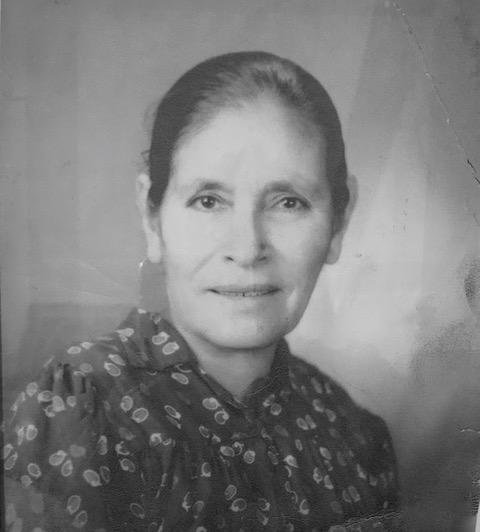
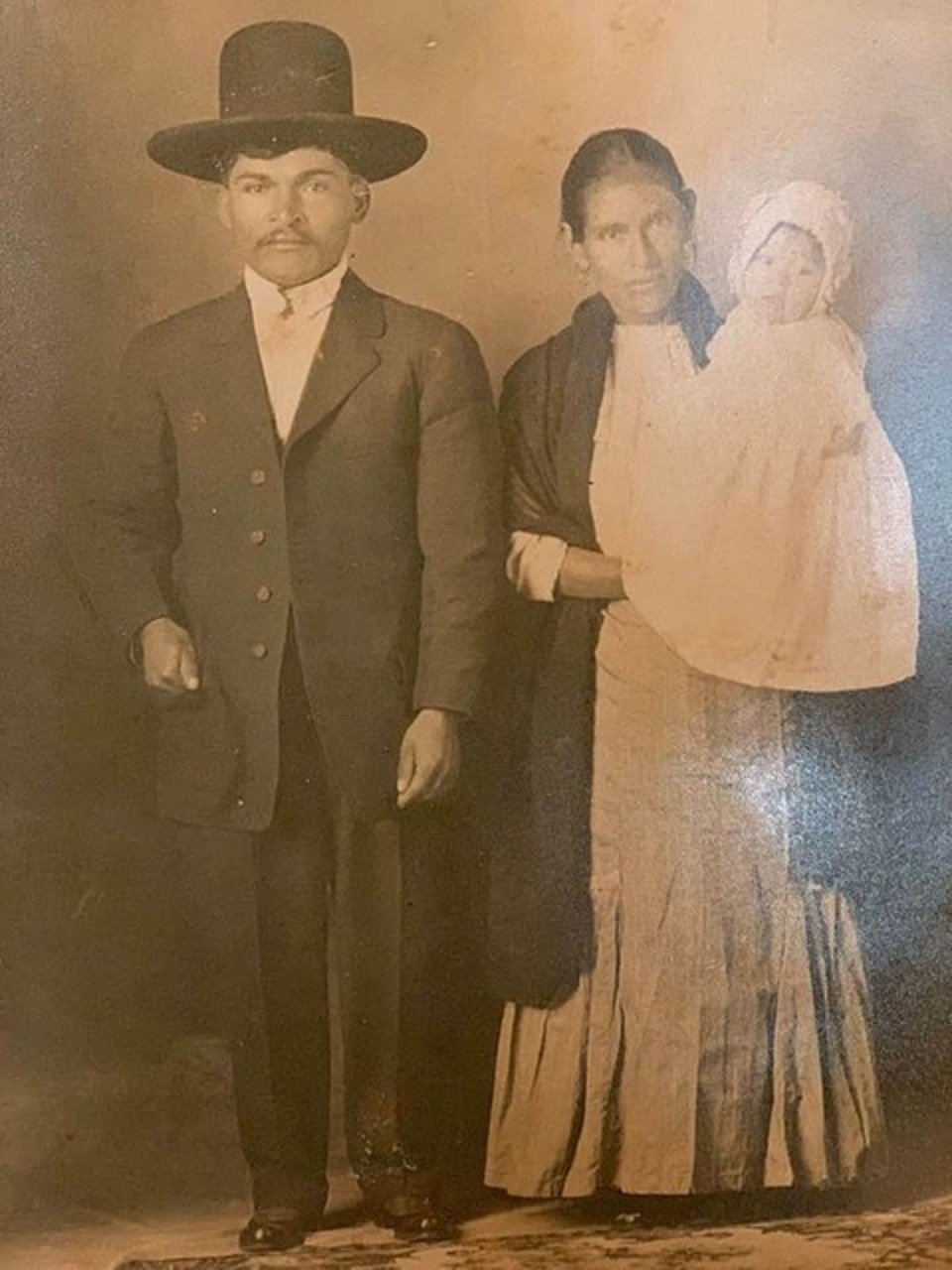
Portrait of Sebastiana Ramírez Rodríguez, undated. Courtesy María Antonietta Berriozábal.
“Of her many dichos the one that I identify with her is: ‘Al cielo mirando y con el mazo dando.’ A literal translation is: ‘To heaven looking and with the mallet giving.’ It means that one looks up to heaven and prays but at the same time one continues to work here on earth.”
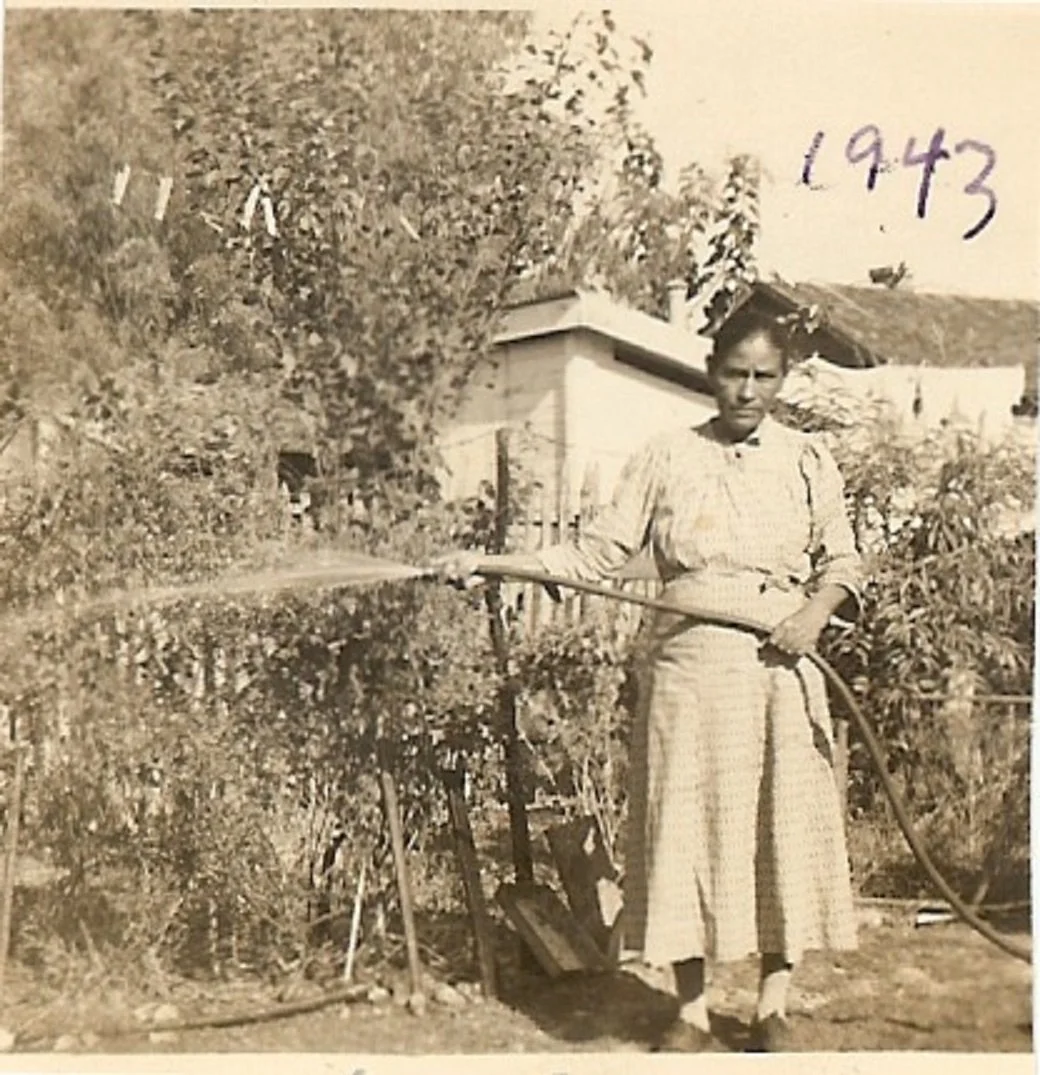
Sebastiana watering her yard, 1943, Courtesy of María Antonietta Berriozábal
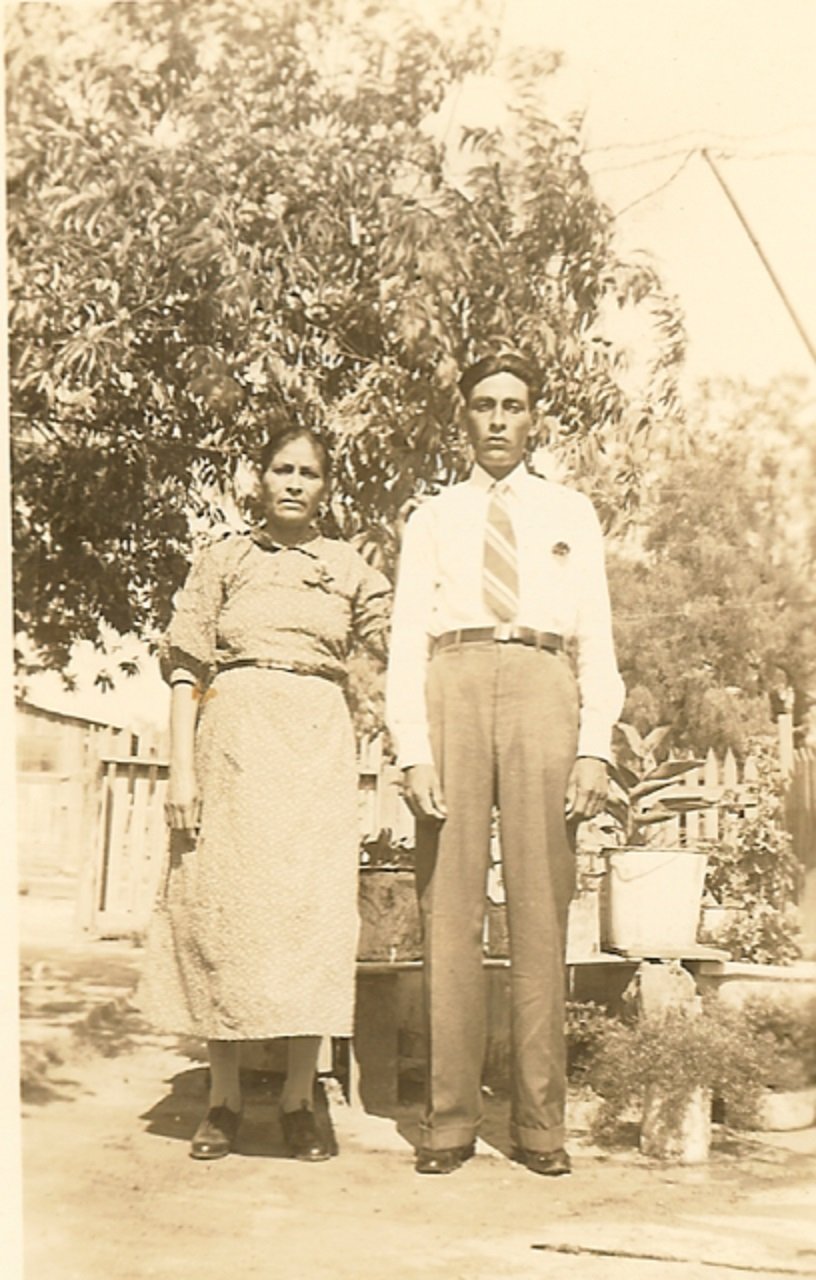
Courtesy of María Antonietta Berriozábal
Community and church activist
1886–1978
My Grandmother, La Señora Sebastiana Ramirez Rodríguez by María Antonietta Rodríguez Berriozábal
Sebastiana Rocha Ramirez was born in Ibarilla, León, Guanajuato, Mexico, on January 20, 1886, in La Hacienda Ibarilla. The hacienda’s history went back to the time of the Spanish Viceroys when large expanses of land were given to families who were connected to the Spanish Crown and in turn they could be of service to that royalty. These haciendas consisted of large and ostentatious homes that could even have their own chapel, schools, “company store” and at times millions of acres of land. They were a working farm with horses, cows, chickens and other animals that helped sustain the compound. The labor for the run of the haciendas was provided by the indigenous peoples of the area. Some could be called tenant farmers who remained indebted to the hacendados (the owners of the hacienda) for life or they could be peons who had almost slave-like existence. The hacendados provided simple houses, actually huts, for the servants to live in. The Ramirez family was part of the population of Chichimecas who worked the hacienda’s fields, took care of its stock and generally did the “outside work” of the hacienda, as opposed to the servants who were the “inside workers” doing the cleaning, cooking and general care of the house. Sebastiana learned to love the outdoors but her existence was still the life of a servant. She did not receive any formal education. Ibarilla’s textile factory was Sebastiana’s workplace when she was a young woman. This work was unusual for women but Sebastiana was ahead of her time. At age 19, Sebastiana was not married and was considered a “spinster.”
That changed when she met Felix Cervantes Rodríguez who also worked at the factory. As a child, Felix had been a shepherd. The only romance story that I have heard is that Felix and Sebastiana sat at the same working table and played “footsie” under that table. The work romance ended in marriage probably at the Church of Señor del Perdón in Ibarilla in León, Guanajuato. Their first child, Glafira, died at a very young age. Their second child, Apolinar, my father, was born on January 8, 1910 – a year that would change the life of the young family and Mexico. In September of 1910 Sebastiana and Felix traveled to Mexico City to participate in the one hundredth anniversary of the Mexican Independence of 1810. For the protection of her baby Sebastiana did not attend the desfile which President Porfirio Díaz led, but my grandfather, Felix, did.
Things moved fast after that. My father’s U.S. Admission Card is dated November 4, 1910, which marks the entry of the parents and son into a new life. It is ironic that the land they would soon call home had been part of Mexico before the Treaty of Guadalupe Hidalgo of 1848. In a way the young family became strangers in their own land. About two weeks after the family’s entry into the U.S. the Mexican Revolutionary War commenced. Millions would die in that war but Felix, Sebastiana and my father along with thousands and thousands of Mexicans would flee to the United States as a result of the war violence. In Martindale, Texas, they joined Felix’s widowed mother María Cervantes Rodríguez who was already in the United States with her other children. She had insisted that Felix join them. Later the family moved to Lockhart, Texas. It is in the stories I heard as a child of my grandmother’s life in Lockhart, Texas, that a picture started to form in my mind of this faith-filled woman who was also a very brave and tenacious woman. For many years I have known that one of those stories shaped my life. It is what was called in whispers when women chatted el tiempo de los enfermos. That my grandmother survived and even thrived after that pain was a great lesson for me in the power women have.
Felix and Sebastiana had eight more children in Lockhart. Six boys and two girls. Six of the children would grow into maturity, some living well into their 90s, but two would die young. Gregorio died in June of 1934 at the age of 18. My grandfather Felix died on March 17, 1937, at the age of 51. My grandmother was 50. She then lost another son, Felix, Jr., on December 17, 1937. They all had caught the dreaded tuberculosis which was a very contagious disease. The symptoms were weight loss, fevers, sweats, wheezing and bloody choking coughs. Sebastiana took care of them until their death. My father built a small hut out in the fields to quarantine the patient when the time came. It was in that hut that Sebastiana fed and tended to the needs of three very ill men. The whole family had to be on uarentena, meaning they all had to be quarantined and away from others.
As a child when I heard the story it made me very sad. I felt very sorry for my grandmother. I wondered what she was thinking as she walked to and from that hut when it was very hot, when it was very cold. I wondered how she was able to do this as a wife and a mother who had to be the doctor and nurse, too. At first little was known about the disease and she and my father had to figure out many things on their own. I wondered how she could go through this horrible ordeal and get to be the woman I got to know. As a widow, Sebastiana was a very independent woman who made up her own mind on the paths she would take.
The answer to my question as I would find out in later life was that Sebastiana had enormous inner strength and that it was her Faith that held her. That Faith was knitted into every facet of her life. It was a trust that God was with her and she was never alone. God would protect her but she had to do her part. Just praying was not enough. What she thought when her husband and sons were so sick, I will never know, but I doubt she ever lost that Faith and that is what kept her going not only then but for her whole life. That is a gift she bequeathed and was available to her children so that they could pass it on to future generations.
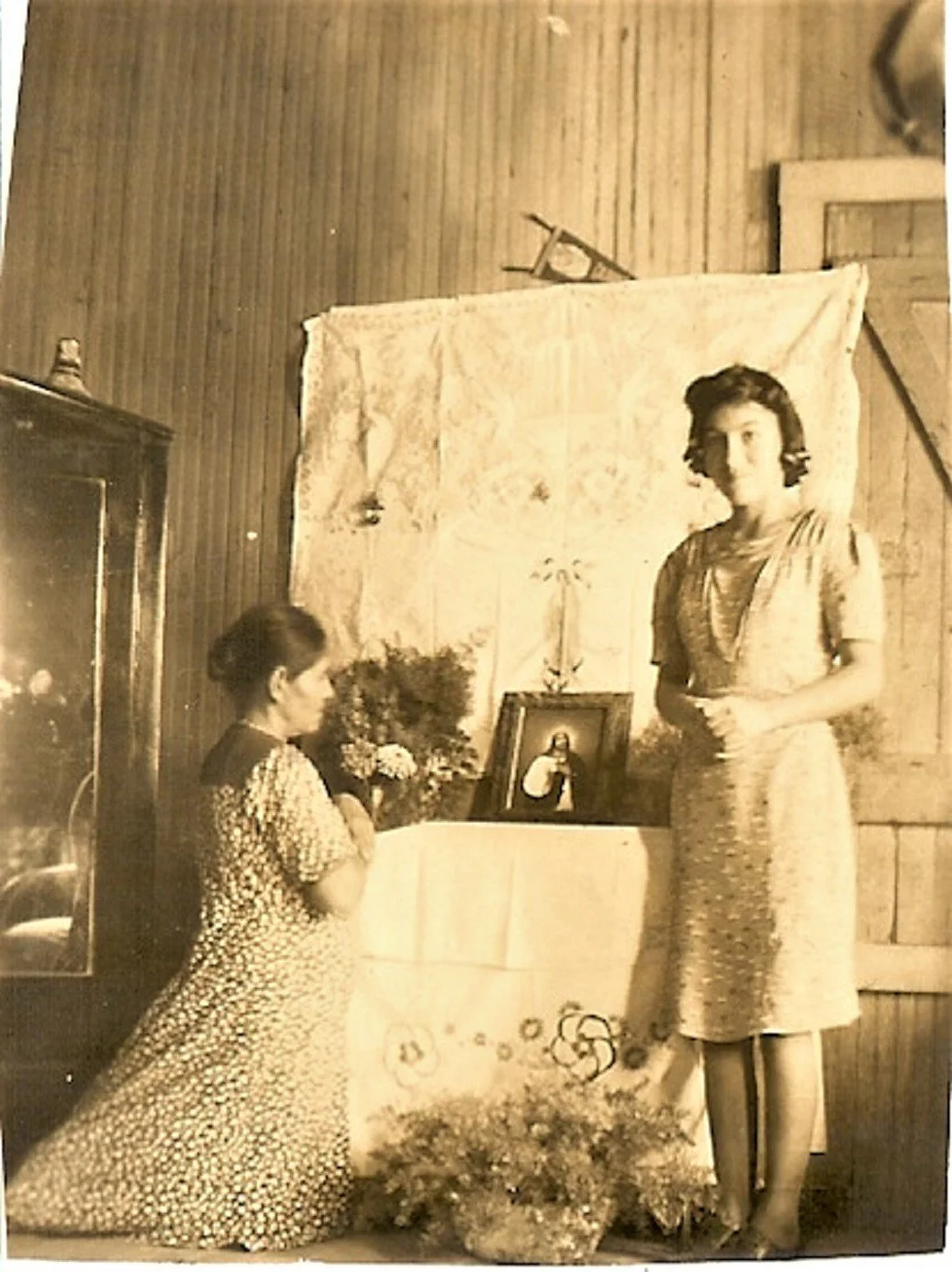
At some point Sebastiana taught herself to read and would read the Bible. She created religious family rituals at home. Faith and values were being taught even though churches were miles from where they lived. One such tradition was the Acostada on Christmas Eve where she would pray the rosary before the Infant Jesus statue which she had ordered from Mexico, followed by a Litany to Mary and lots and lots of memorized prayers. Not until the end of all those prayers could the whole family enjoy her tamales, champurrado and buñuelos probably drenched in cinnamon water. I personally can attest to all this because years later my siblings and I and all the cousins got to enjoy this ritual every Christmas into my 20s when she could no longer host it because we outgrew her second house in San Antonio. After that our immediate family hosted that Infant Jesus and my mother repeated the traditions. To me Christmas has always been The Acostada, large or small. I thank my grandmother for that.
My grandmother had two more sons, Mariano and Cosme, who caught tuberculosis but by that time they had more information and the young men were sent to sanatoria elsewhere in Texas. It must have been a painful day when she had to say goodbye to them and wonder if they would return. Thankfully, both sons returned home and eventually raised large families. In 1940 one of the sons who had survived tuberculosis was offered a job in Laredo, Texas, to use a trait he had learned while at the sanatorium. Sebastiana with all her children followed that one son to Laredo, Texas, where they would live for a few years until a war interrupted their lives. My parents, Apolinar and Sixta, followed with my older brother, Felix. That is where I was born.
World War II tested Sebastiana again when her sons – with the exception of my father – were drafted. The war impacted the lives of many families; widowed Sebastiana was only one of them. Even as a very small, curious child who missed her uncles I knew about la guerra, the war. My family would talk about it. Of that sad time I recall a song that made me think about my grandmother saying goodbye to her sons. To this day this song brings to life the feeling of sadness I had for my abuelita. Daniel Santos’ La Despedida is part of my cultural heritage inspired by Sebastiana.
One particular Christmas when only my older brother and I got to be with our grandmother on Christmas Eve, I recall her being very sad. At some point that night she pointed to a flag with four stars that she had on her front door. She said it was because her sons Mariano, Cosme, Luís and Lupito were in la guerra. The military’s explanation of the flag is: "A service flag or service banner is a banner that family members of those serving in the United States Armed Forces can display. The flag or banner is officially defined as a white field with a red border, with a blue star for each family member serving in the Armed Forces of the United States during any period of war or hostilities.” My grandmother was a four star mother! That is a gift an immigrant mother gave to the U.S. but it is not a story that is honored in telling the history of World War II and the contributions of Mexican Americans in it.
Thankfully, all her sons returned after their active duty in various countries. I have no idea what she saw in them when they returned but I recall her taking care of one son who was very ill with malaria. Once her sons were being drafted, my grandmother left Laredo and came to San Antonio where the family purchased a small house on Pace Alley in the west side of San Antonio. In her early fifties she started another phase of her life in what would become the neighborhood she loved until her death, the Christ the King neighborhood known by the name of the Catholic parish in its midst. This would become her second home. Again, my mother and father followed her.
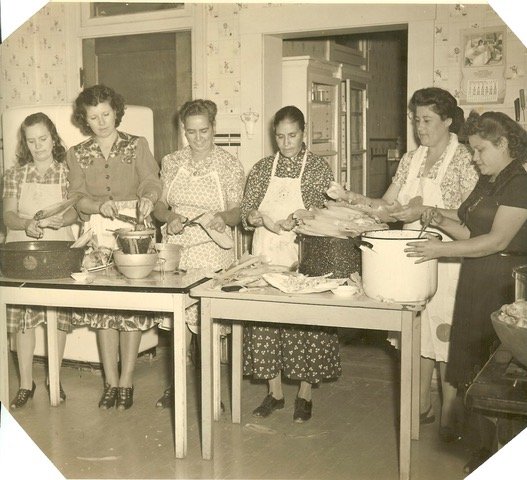
Life was good to Sebastiana after that. Veteran status helped my uncles get good civil service jobs. They all got married and had families. By the time she died she had 40 grandchildren and was starting to have great-grandchildren. Early on in that new barrio she joined other women of the church to embark on a fundraising effort to build a new church. A new church was needed as Santa Isabel Church had become too small for the growing enrollment during the war. While the men were planning how they would rebuild, Sebastiana and her women friends from the church started making and selling tamales. At times they would sell homemade buñuelos. Those funds became the seed money to start building. In 1944 the new church was blessed and Sebastiana was there to witness the continuation of an institution that would have much influence in the lives of a low income area and help grow a Mexican American middle class in San Antonio.
Throughout 2014, my sister Theresa Rodriguez, who is now the most elder person still active at Christ the King Church, led a yearlong effort to celebrate the 70th Anniversary of its founding. At various times it was duly noted that the church was known as The Church That Tamales Built. Great credit went to Sebastiana and other women for being the tamalera fundraisers. Theresa, a retired public school teacher, was the second child to be baptized at Christ the King. All her life she has been active in that church. She is the one family member who continues to carry our grandmother’s legacy of service in that church and larger community, where she is loved and respected.
Making tamales and buñuelos was not Sebastiana’s only contribution to that parish community. She would eventually join every ladies church society. She would be elected Presidenta for almost all the societies to which she belonged. I was amazed that she could do so many things as an organizer and leader not being able to speak English and she wrote very little. From assisting with the elaborate rituals on Holy Week or Christmas to helping with her faithful “Manita” game where children could play and always get a prize at popular church festivals known as Jamaicas, Sebastiana was involved in all aspects of her church’s work. She also belonged to a women’s club out in the community where her talents in sewing and embroidery could shine. She called it el clüb. While she was engaged in all these activities she developed a reputation as an evangelizer, talking about God’s mercy to anyone who would listen, inviting people to church and assisting them in their baptisms, weddings and other rituals. She was also known as a person that people could count on for assistance in their daily lives such as visits when they were ill, advice or simply a listening ear when times were tough, help with material needs and accompaniment when there were deaths in the family.
In my adult years when I started my political work in that same neighborhood, I heard many stories of how my grandmother had helped one family member or another. Her influence extended to the larger community. "O sí, yo me acuerdo de Doña Sebastiana,” and they would relate how she assisted them. Sebastiana carried the indigenous values of caring for Mother Earth from her youth. One might say that she was an early environmentalist. From the time she was able to have a flower-filled garden in her sharecropper home in Lockhart to Pace Alley and at the end off her life on Ruiz Street, she cultivated a garden. There was no room any place in her yards in San Antonio where there was no vegetation. She grew trees, shrubs, flowering plants, and many herbs that could be used in her healing rituals. She knew the names of all the plants and also knew how to use them to cure mal de ojo, stomach ailments or susto. She was available to anyone who needed healing. Sebastiana was not a cookie-baking kind of grandmother, though. She preferred to be outside doing family visits, being at church, planting or watering her plants.
From the fields of her youth that provided for her family to the small yards of her homes, she had great respect for la Madre Tierra that nurtures us. At some point the small Pace Alley house was replaced by a slightly larger one on Ruiz Street still in the westside. That home served as a gathering place for friends and for family members. Mother’s Days, Christmas Eves or birthdays were spent at our grandmother’s house. After the war when all the sons returned home, she hosted her children’s friends at popular parties. Two rooms were cleared of furniture and the house was opened up for the guests. There was a record player blaring songs for dancing. Romantic boleros, paso dobles, danzones gave way to a boogie-woogie every once in a while. Sebastiana was behind the scenes but carefully watching relationships established where weddings would soon follow. Four weddings were held in that house. My siblings and I looked forward to those wedding receptions because we got to eat mole with Big Red. The night before the wedding my grandmother’s backyard became a fascinating place. She would have her sisters-in-law and women friends from church bring their metates to cut, chop, and prepare the food for the next day’s festivities. Several metates were placed on the ground. The women would kneel behind them as indigenous peoples had been doing for generations. They would grind seeds, nuts, dry fruits and all kinds of spices. The friction of the piedras (metapali) against the metate provided a cadence that made me dance. The conversations, laughter and anticipation of the wedding was like a “before party.” My grandmother would give me small pail and as each woman collected a certain amount of paste I would stand by her and she would collect the paste with her hand and with a big slap drop it into my container. I happily ran to the kitchen where my grandmother was in the midst of pots, pans, great smells and more chatter and laughter. The wedding reception the next day was amazing. I do not know how Sebastiana got all those people with room enough for a meal and then for dancing. At times there were tears on the part of some women as the newlyweds left, but I never saw my grandmother shed tears at that time. I believe she was always happy at the choices her children made. She simply gave them her blessing as she launched another family.
Perhaps this one last story reflects the leadership role into which my grandmother evolved over her time in San Antonio. In early 1974 there was an effort for Christ the King Church to be a founding parish of a new organization to be known as Communities Organized for Public Service (COPS). I was well aware of the organization, had been interviewed by organizers as a community leader, and I was in support of investing the church funds it took to be part of the group. However, there was a problem. The older people in the church did not want this organization because they deemed it “political” and not church business. The decision required a vote. I was asked by our pastor to talk to my grandmother about it since she had the trust of the older parishioners. I went for a visit and asked her for her support first and then asked her to talk to the elders of the church whose opinion had much weight. I explained all I could about the need to have our voices heard at City Hall about important issues in our neighborhood. In those years our neighborhood flooded each time it rained. I explained we had needs for drainage, streets, and sidewalks. She listened intently and did not ask any questions. Her only comment was that she had her opinions but that she would vote yes “por los jóvenes.” She said it was us, the young people who should take leadership and that she would ask her friends to also vote yes to help us. The vote was taken some time later and Christ the King parishioners voted to become part of COPS. My grandmother and the other seniors voted yes. When COPS was formed my grandmother was one of the active members of COPS. She would attend meetings at the church, be part of the Christ the King delegation at COPS conventions, and she also went to City Hall and participated in the early actions of COPS. One day I was curious about what COPS was doing at City Hall and I asked her what the issue was. Her reply was: “Yo no sé que estaban diciendo. Yo no mas voy para hacer bulto y quiero ayudar.” She did not know much of the issue to be discussed but she wanted to help make a crowd and be of help to the leaders. One of the last memories I have of my grandmother was seeing her slowly climb the stairs at City Hall hanging on to the banister for one more COPS meeting.
In her last years when going out became more of a challenge, she had time to enjoy her younger grandchildren and they all have wonderful memories of a different kind of grandmother. She slowed down, spent time with them, took them to the grocery store nearby for goodies or downtown on the bus, and she told them stories. Eventually, she went to live with Uncle Cosme and Aunt Lucy for a few years and left her neighborhood. She was a great influence on her family. For several decades now the Rodríguez Family holds an annual family reunion. Most of the time there is a Mass organized for the event and usually a visit to San Fernando Cemetery where our grandmother is buried. It is a beautiful sight to see all those young men and women – her grandchildren and their children – hold hands and form a circle around her grave and pray. The family has now grown to several hundreds living in several states. Their lives and professions form a mosaic of contributions to society and behind them is a great woman named Sebastiana. Of her many dichos the one that I identify with her is: "Al cielo mirando y con el mazo dando." A literal translation is: "To heaven looking and with the mallet giving." It means that one looks up to heaven and prays but at the same time one continues to work here on earth. Sebastiana Rodríguez made herself an instrument of God’s love for those around her and her admonition to all was to follow the narrow road of life until the end. At the end, her illness required that she be moved to a nursing facility where she lived for a short time. It was there that she died peacefully surrounded by her children on May 20, 1978. My grandmother was 92.
!Sebastiana Ramírez Rodríguez, Presente!
-
Berriozábal, Maria Antonietta. María, Daughter of Immigrants. San Antonio: Wings Press, 2012.