Rita Viduarri
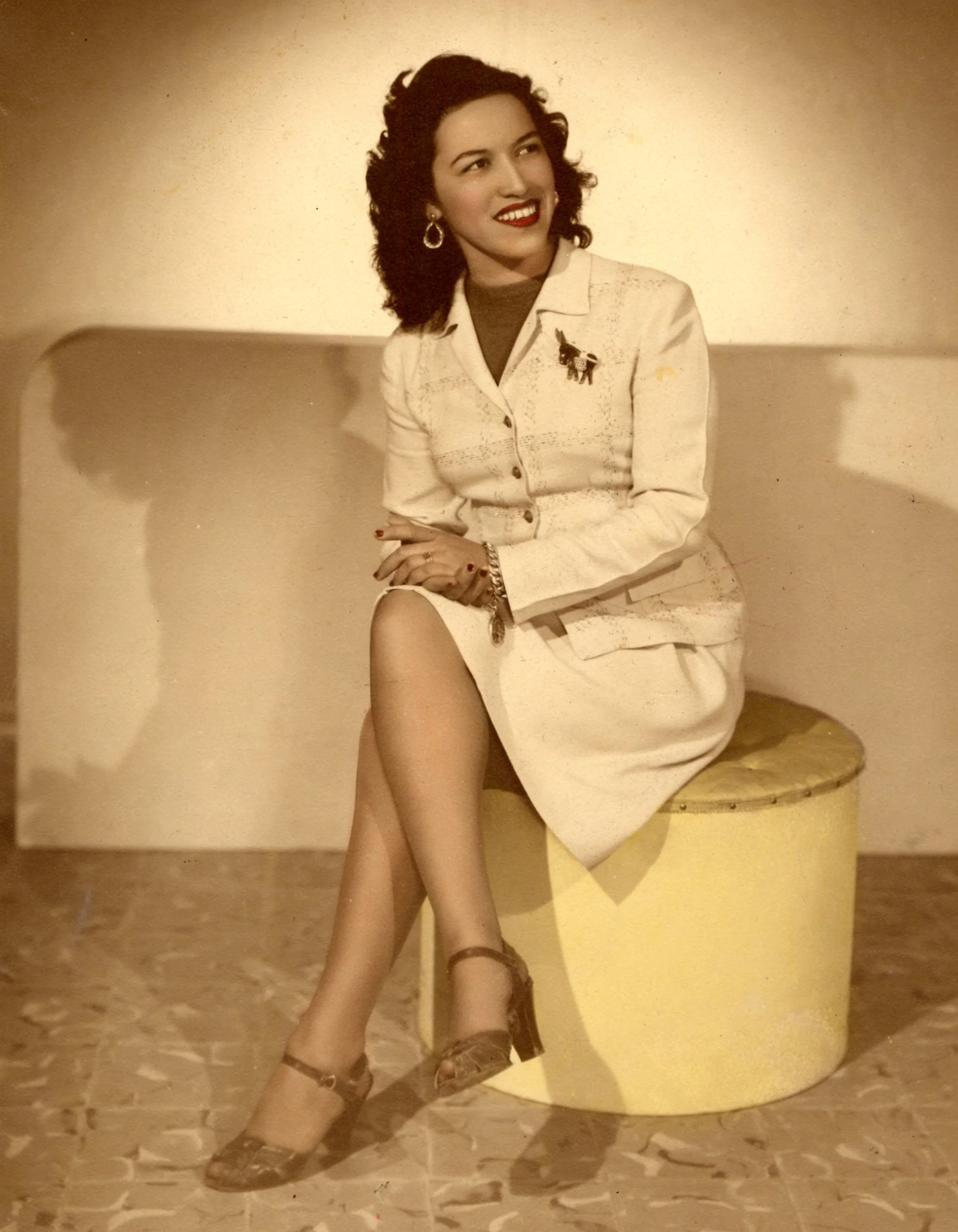
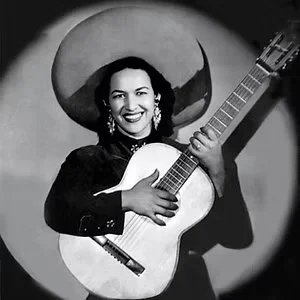
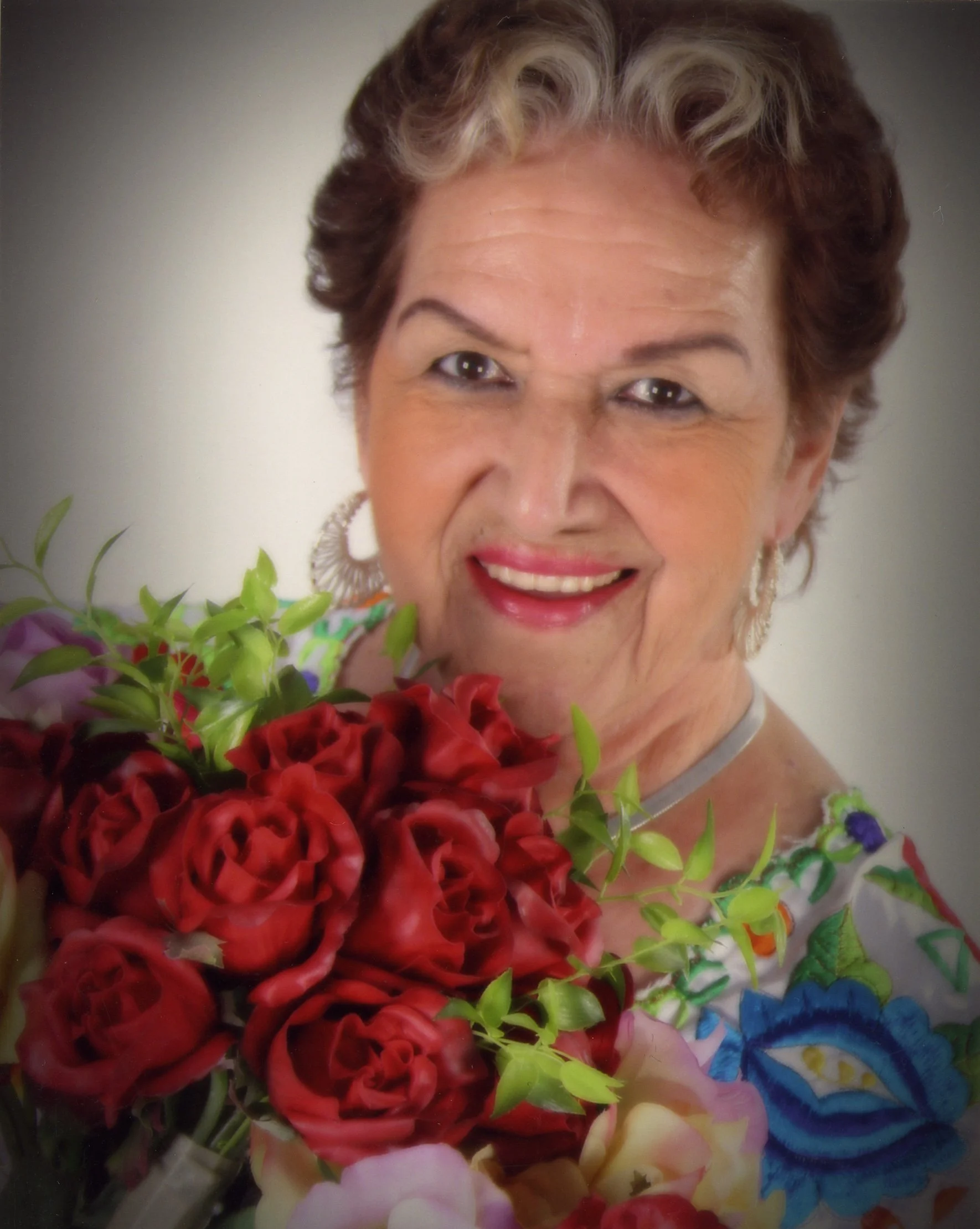
Rita Vidaurri studio portrait, Courtesy Esperanza Peace and Justice Center, San Antonio, Texas
“El corazón recuerda los años después de la Segunda Guerra Mundial y el crecimiento de San Antonio como una cuidad de la modernidad, con una bien establecida colonia mexicana. Durante esos años de los ‘40s y ‘50s... Doña Rita Vidaurri triunfaba en giras artísticas por todo México y através de América del Sur. Algunos recuerdan sus actuaciones en las tardes de las variedades del Teatro Nacional y después en el fabuloso y elegante Teatro Alameda donde Rita Vidaurri fue la gran consentida del público, una grande e inolvidable diva y estrella.”
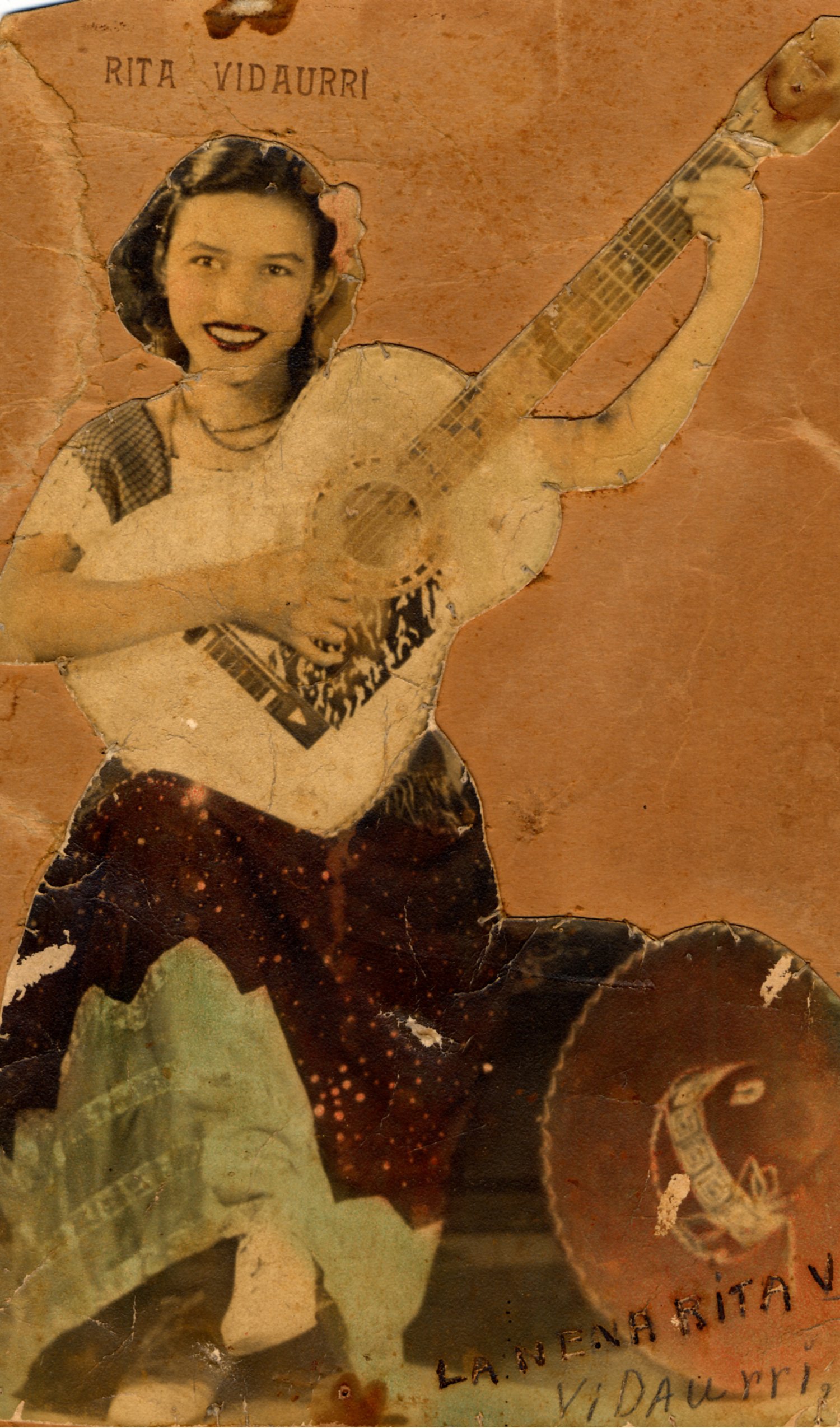
La Nena Rita Vidaurri, Courtesy Esperanza Peace and Justice Center, San Antonio, Texas
-
Courtney, James. “Thriving Treasures: Las Tesoros de San Antonio Are Back in Action After 2 Prestigious Awards.” The Rivard Report, October 26, 2019.
Hurst, Marvin. “'The lark' becomes an angel: Rita Vidaurri dead at 94.” KENS5 News, January 18, 2019.
https://www.kens5.com/article/news/community/the-lark-becomes-an-angel-rita-vidaurri-dead-at-94/273-fc8032db-242a-4aea-abca-dbff9fd70c80
Gurza, Agustín: Strachwitz Frontera Collection Artist Biography: Rita Vidaurri, Treasure of San Antonio.” Thursday, May 2, 2019.
http://frontera.library.ucla.edu/blog/2019/05/artist-biography-rita-vidaurri-treasure-san-antonio
“Las Tesoros de San Antonio” Esperanza Peace and Justice Center. esperanzacenter.org
https://esperanzacenter.org/esperanza-projects/las-tesoros/
“Las Tesoros de San Antonio.” Exhibit of The Wittliff Collections, Texas State University, 2018.
https://www.thewittliffcollections.txstate.edu/exhibitions/past/Las-Tesoros-de-San-Antonio.html
Martinez, Norma and Lauren Terrazas. “Fronteras: 'We're Going To Do It Until The Last Day. Las Tesoros Are Here.' Texas Public Radio, November 1, 2019.
https://www.tpr.org/post/fronteras-were-going-do-it-until-last-day-las-tesoros-are-here
“NEA National Heritage Fellowships: Las Tesoros.” National Endowment for the Arts. https://www.arts.gov/honors/heritage/fellows/las-tesoros-de-san-antonio—beatriz-la-paloma-del-norte-llamas-and-blanquita
Saldaña, Hector. “Beloved San Antonio ranchera singer Rita Vidaurri, ‘La Calandria,’ dies at 94.” San Antonio Express-News, January 17, 2019.
Saldaña, Hector. “San Antonio’s Las Tesoros to receive National Heritage Fellowships in D.C.” San Antonio Express-News, September 12, 2019.
Saldaña, Hector. “Funeral for a friend: Rita Vidaurri.” The Keystone: Behind the Scens at The Wittliff Collections. January 22, 2019.
Sandoval, Jorge, dir. Las Tesoros de San Antonio: A Westside Story. 2016; San Antonio, TX: Cine Studio San Antonio, 3807 Productions, 4Js Cinema.
Pioneer of Mexican women in music
1924–2019
Rita Vidaurri “La Calandria” was an incredibly successful performer in Mexico and throughout Central and South America in the 1940s. She broke barriers for women and was inducted into the National Hispanic Music Hall of Fame in 2004.
Vidaurri was born in a small house in the 600 block of Montezuma Street on May 22, 1924. She was the oldest of three children born to Juan and Jesusita “Susie” Vidaurri. Her father operated a gasoline station, boxing ring and cantina; her mother worked as a housekeeper. Susie Vidaurri encouraged her shy daughter and paid a neighbor to teach her to play the guitar, but she didn’t live to see her success. She died of tuberculosis when Rita was 15. Rita focused on raising her siblings, picking cotton, helping as a mechanic in her father’s garage, and she got a job as a weapons inspector in a military arsenal. She also played softball and took up boxing. She went to night school at Lanier High School. Her father initially discouraged her from singing, but eventually encouraged her career.
In the late 1930s, she performed with her sister Henrietta as Las Hermanitas Vidaurri. Vidaurri’s first record was with the duo. “Alma Angelina” and “Atotonilco” were recorded at Tomás Acuña’s garage studio. In 1942, the year Rita turned 18, she was among the first artists to perform at the new Guadalupe Theater, built on the site of her father’s gas station. She sang at carpas, the traveling Mexican vaudeville tent shows. Her catalog includes the songs “San Antonio Hermoso,” “Por Qué Señor,” “Sacrificio,” “Así Pago Yo,” “Tonto,” “El Dinero Vale Nada,” “La Mula Bronca” and “La Esposa Del Caminante.” She toured Cuba with legends Celia Cruz and Olga Guillot. Over the years, Rita performed with famous artists including Tin Tán, Pedro Vargas, Trío Tariácuri, Lalo ‘El Piporro’ González, Cantinflas, Nat King Cole and many more. In 1957, she was selected as the Jax Beer Poster model.
On stage, Vidaurri projected a self-assured persona, bantering with the audience, making wisecracks, and telling slightly bawdy jokes. She often wore pants when she performed. Yet, her personal life was also filled with hardship and struggle. Most tragically, she endured the death of three grown sons and suffered bouts of depression and illness over the years. Yet, Vidaurri never stopped singing. In 2004 she released a new CD, La Calandria, produced with the assistance of Salomé Gutierrez, owner of another West Side cultural institution, Del Bravo Record Shop.
At the urging of the Esperanza Peace and Justice Center, Vidaurri joined other legendary Ranchera singers Beatriz “La Paloma del Norte” Llamas, Blanca “Blanquita Rosa” Rodríguez and Anita Janet “Perla Tapatía” Cortez to form the group Las Tesoros de San Antonio in 2008. Ten years later, she marked her 90th birthday with another album, Celebrando 90 Años. And she was feted with another tribute concert, again produced by the Esperanza Center. It was held May 23, 2014, at the Guadalupe Theater, where she had performed as a teenager seven decades earlier. Las Tesoros issued a CD in 2017, Qué Cosa Es el Amor, to coincide with the 30th anniversary of the Esperanza Center. Their story was also featured in a 2016 documentary by filmmaker Jorge Sandoval, Las Tesoros de San Antonio: A Westside Story, which debuted at the Mission Marquee Plaza, site of the old Mission Drive-In Theatre in south San Antonio. In 2018, the group was honored with an exhibit at Texas State University.
Vidaurri’s last formal public performance took place at the Esperanza Center on November 1, 2018, with Las Tesoros. Informally, she appeared every Tuesday and Thursday morning at a San Antonio restaurant called Flor de Chiapas. A corner booth was always reserved for her and a small group of fellow musicians who gathered for the friendly sing-alongs, where customers would always give her a standing ovation.
Vidaurri died on January 16, 2019. She was honored posthumously when Las Tesoros was recognized by the San Antonio Arts Commission and the City of San Antonio, in a ceremony at the Tobin Center, as 2019 Distinction in the Arts Honorees, for providing “enduring and effective cultural leadership” and “exceptional artistic accomplishments” in the San Antonio arts community.
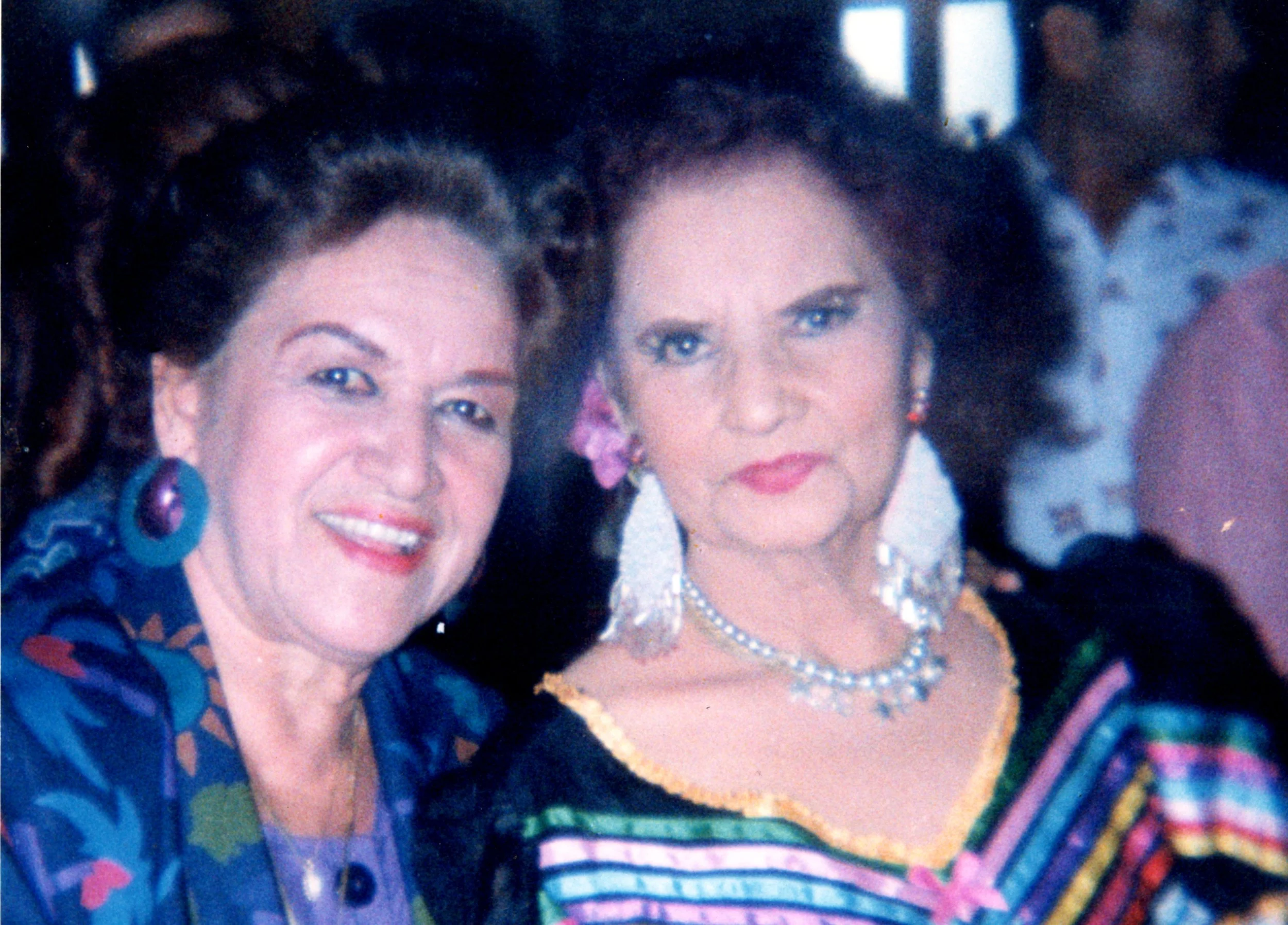
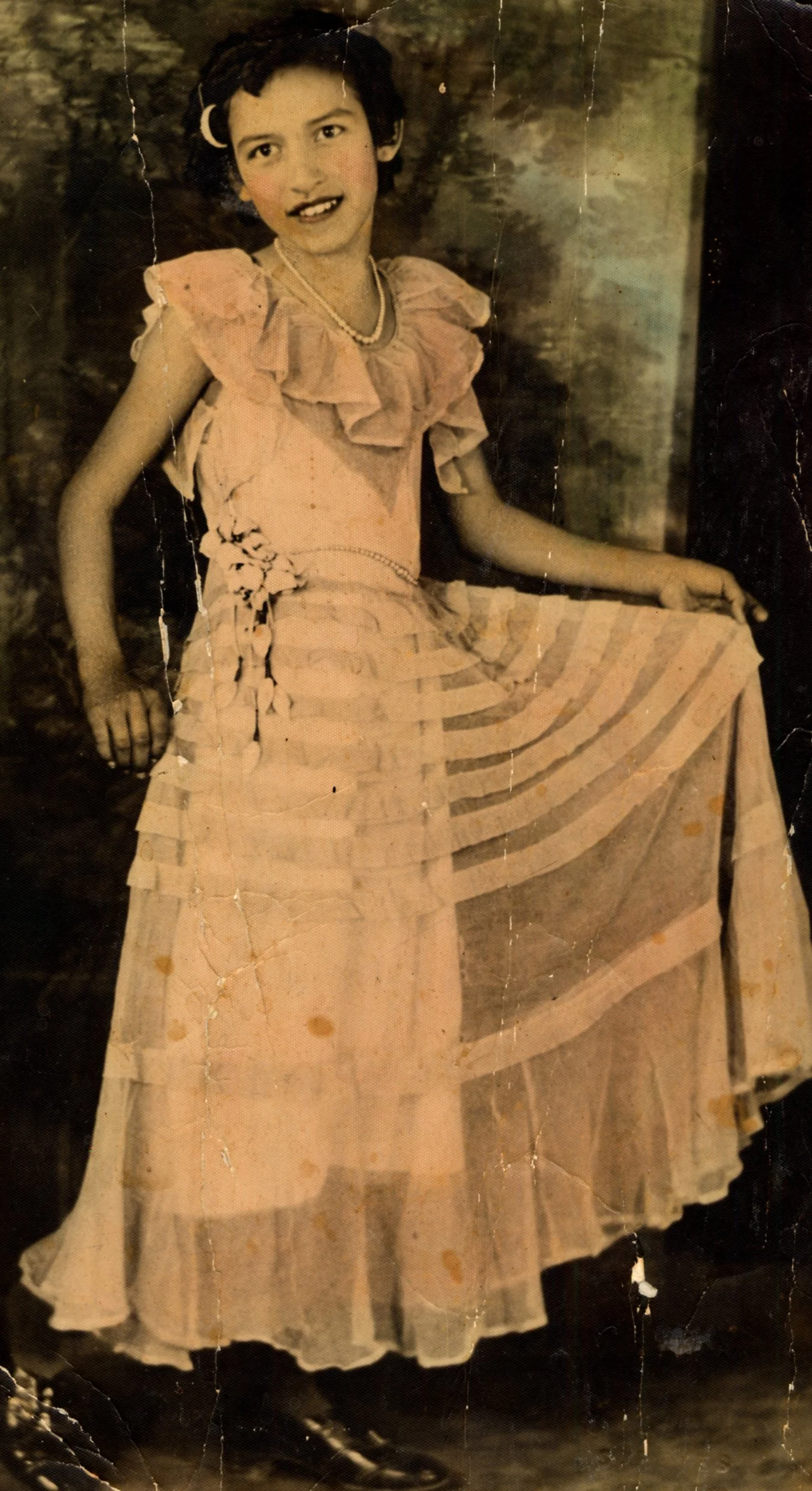
“Their lyrics revealed our stories, contained our dreams, sang our sorrows, and healed our spirits. We came from the same place as they, our parents told us — de la misma mata, not only from South Tejas and San Antonio but from the same poverty. They taught by example — that if they could survive and thrive, so could we.”