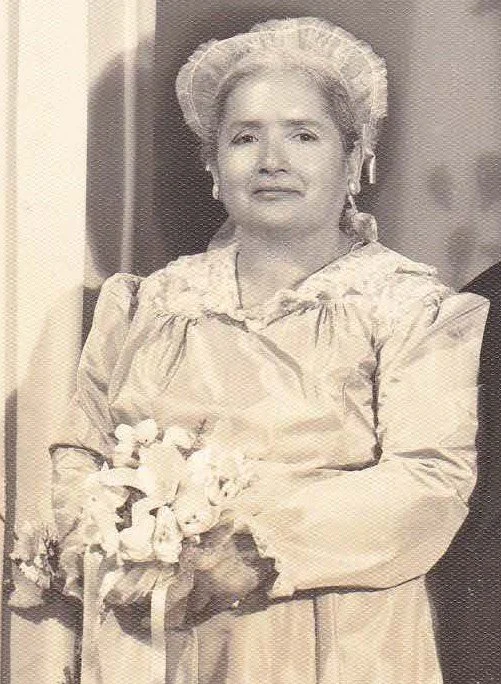
María Rebecca Latigo de Hernández
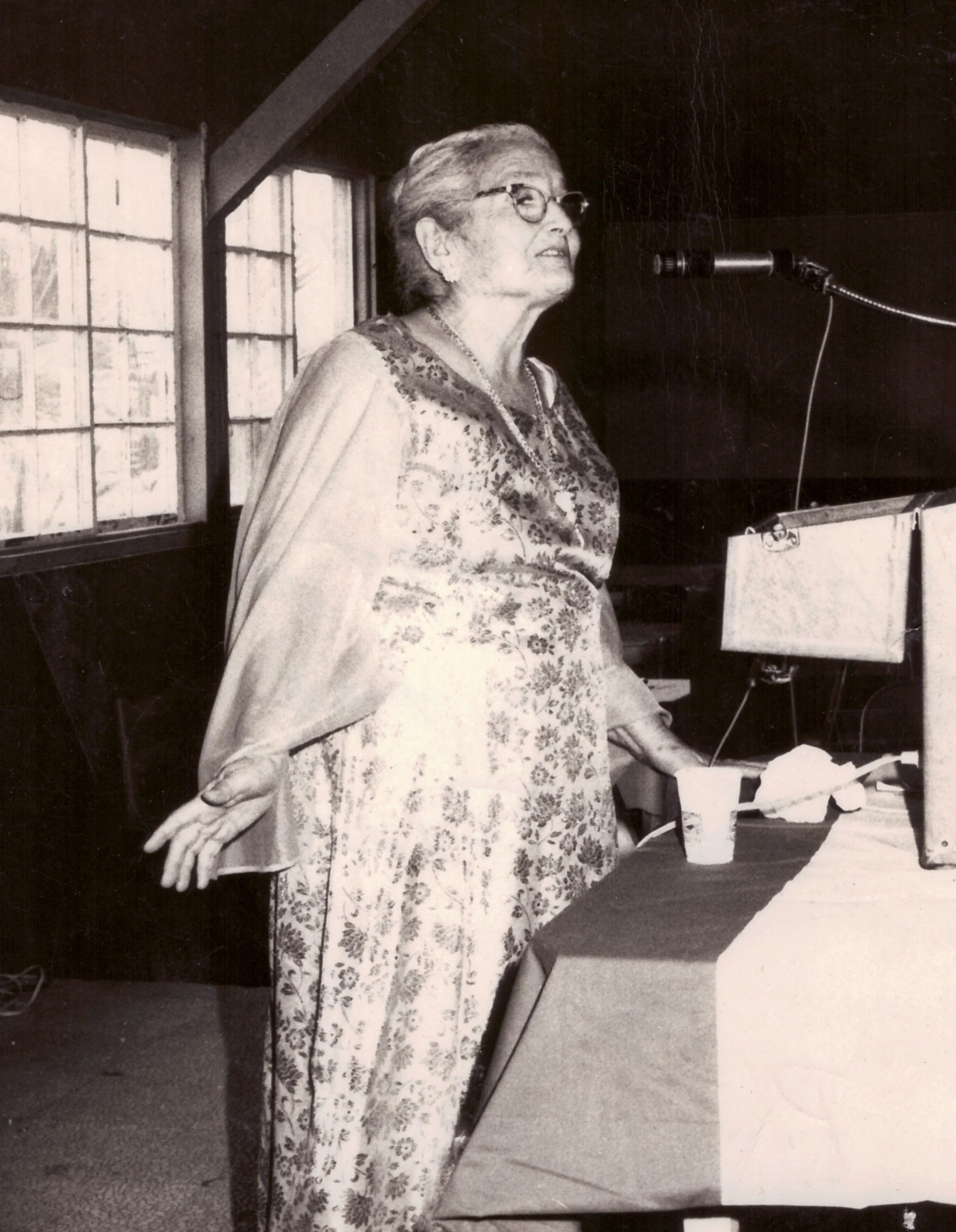
María R. L de Hernández, honoring the heroines of the independence of Mexico, 1975. Courtesy Alice H. Galindo
“Our ancestors were here long before Anglo-Americans. It is they who are the newcomers”
In September of 1945, Maria L. de Hernández published a treatise about the four powers that she defined as guiding the community. It was printed by Munguía Printers, and Romulo Munguía contributed an introduction. Photo courtesy of Alice H. Galindo
1935 advertisement in La Prensa for La Voz de las Americas, January 1, 1935, page 6, "La Voz de las Americas" advertisement
Radio Announcer and Civil Rights activist
1896-1986
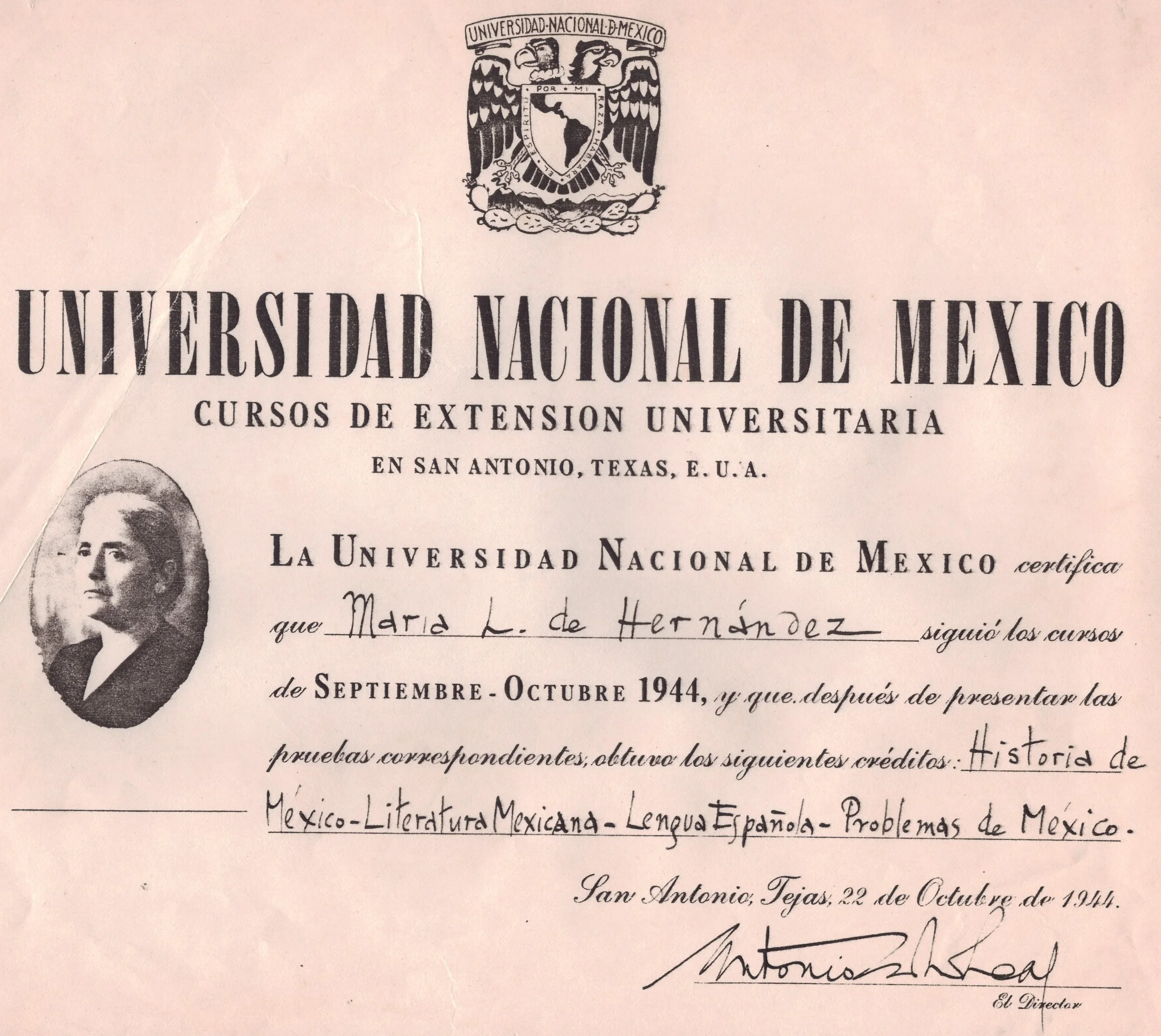
María Rebecca Látigo de Hernández believed that mothers create nations. In her essay "México y Los Cuatro Poderes Que Dirigen al Pueblo," she argued that the domestic sphere is not isolated from the public world, but the foundation of society. As her granddaughter Mary Jo Galindo writes, she “fought tirelessly for the civil rights, healthcare, and education of Mexican Americans in San Antonio, Texas, for more than fifty years. A midwife, orator, radio personality and grocery store owner, Hernández was important to twentieth century San Antonio history in the areas of medicine, education, civil rights and commerce.”
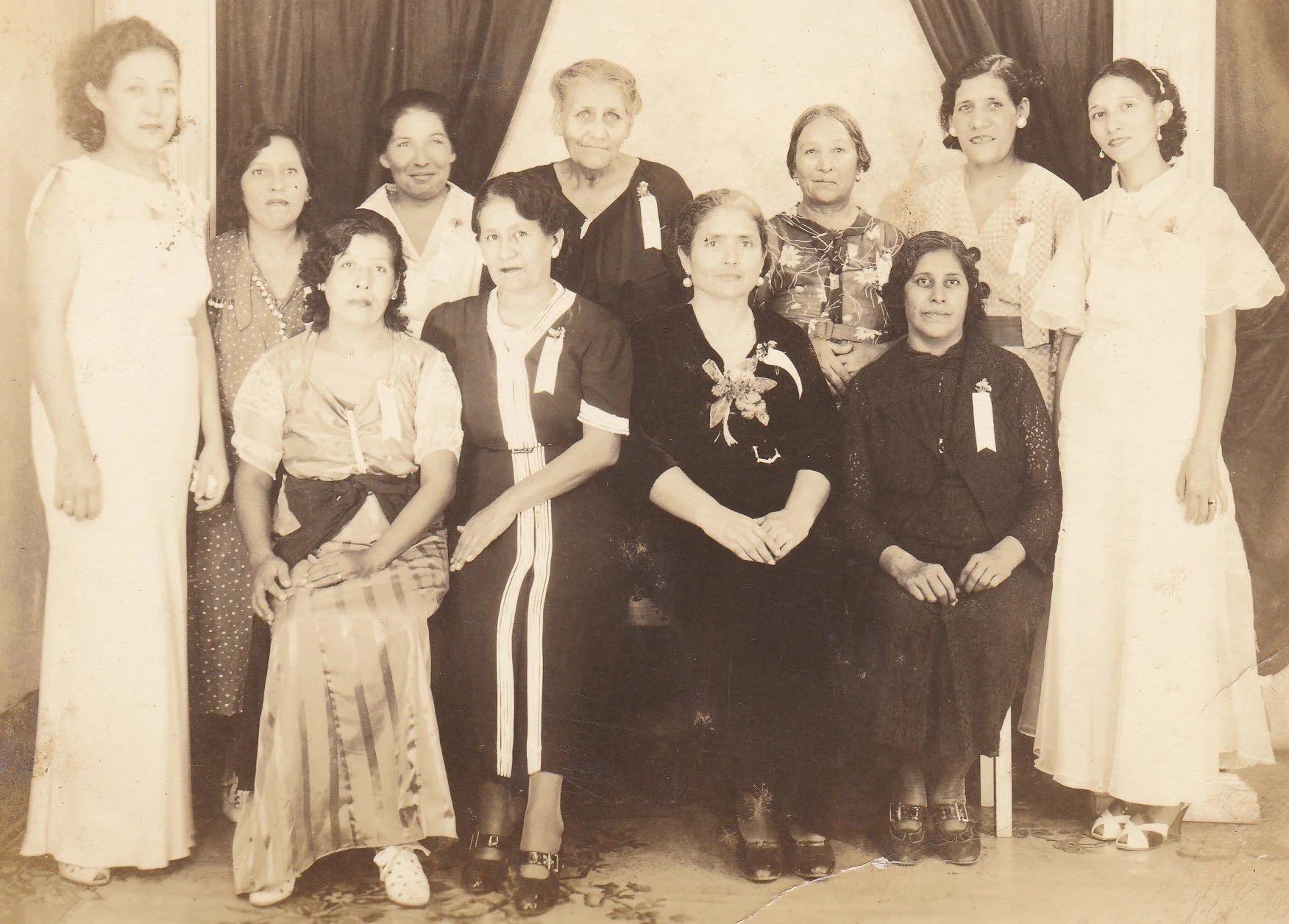
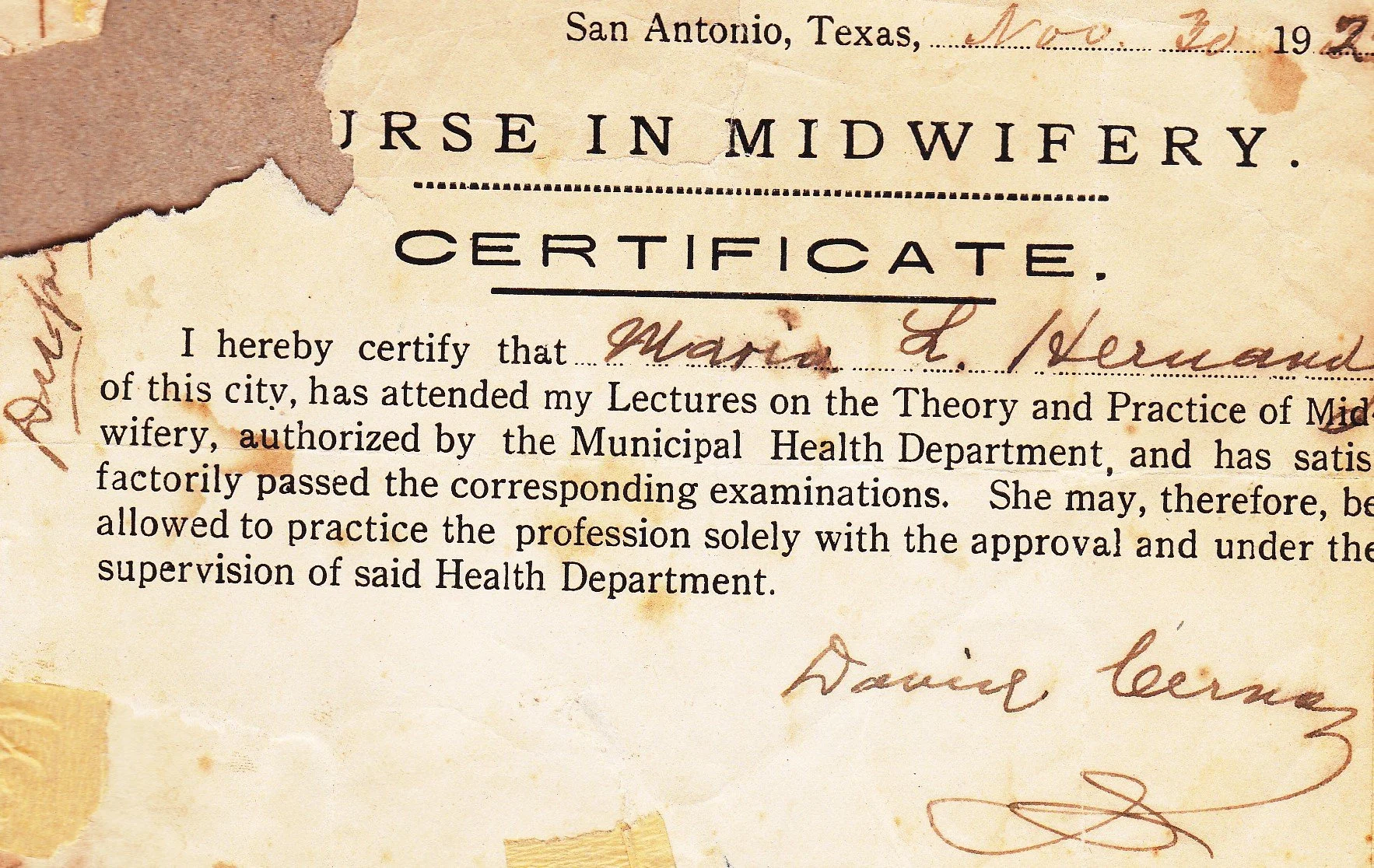
María was born in 1896 in Garza García, outside of Monterrey, Nuevo León, to Eduardo Frausto and Francisca (Medrano) Latigo, She taught elementary school and also worked as a telephone operator in Monterrey when the Mexican Revolution broke out in 1914. She fled with her family to Laredo, Texas, and began to pick cotton in Duval County, where she met her husband Pedro Hernández Barrera. They married in Hebbronville, Texas, and raised ten children. Shortly after the family moved to San Antonio in 1918, she began her twenty year career as a midwife in 1923. She was among the first midwives certified by Bexar County in 1927. She would travel in her horse and buggy to deliver babies, sometimes staying with the family for several days to assist in the birth. As part of her vocation as a midwife, she founded two related organizations, the Asociación Protectora de Madres in 1933, which supported indigent mothers, and the Sociedad Obstétrica Fenareta in 1938, which was for midwives’ professional development.
The Hernández’ also became active in politics and began collaborating with attorney Alonso S. Perales in 1924. In January 1929, they took a leadership role in creating the Orden Caballeros de América, which was one of the three organizations that spawned the League of United Latin American Citizens (LULAC) that same year.
Hernández was particularly invested in improving education. In 1934 she and her husband collaborated with Eleuterio Escobar and La Liga de Defensa ProEscolar, an organization dedicated “to promote the improvement of education in San Antonio’s Spanish-speaking community” and demanding better facilities and educational resources for the Westside. At the time, children of Mexican descent went to schools with inexperienced teachers, inadequate textbooks and outdoor toilets. On October 21, she was the only female speaker at a historic meeting at Lanier High School with the State Superintendent of Public Instruction for the State of Texas. Over seven thousand people showed up to the meeting. Hernández gave a passionate speech, chastising the school system for denying clean water and toilet paper to the children of the Westside, and generally treating them as animals. She received such vocal support from the crowd that the Superintendent felt he needed to be escorted to his car after the meeting. La Liga’s advocacy ultimately resulted in many improvements, including a new gymnasium for the high school.
“My mother…had a school in the summer….We’d be there at 9 in the morning and she’d teach us math, she’d teach us the alphabet in Spanish, and she taught us how to read and write in Spanish….We’d have our recess period and lunch….Somehow I was able to translate the knowledge my mother instilled in me by teaching me how to read and write, and (about) math before I went to (public) school. I was able to translate (the knowledge) into English and that helped me a lot.”
In 1932 Hernández became an orator for civil rights as San Antonio's first Mexican American female radio announcer. On her radio show, "Voz de las Americas," she publicized the efforts of La Liga Pro-Escolar. Mary Jo Galindo notes that “she also used the show to counsel parents about their children’s education and encourage them to complain to the school if they weren’t making regular progress.” In hundreds of speeches over the next several decades she also advocated for workers' rights, supporting the Pecan Shellers Strike in 1938.
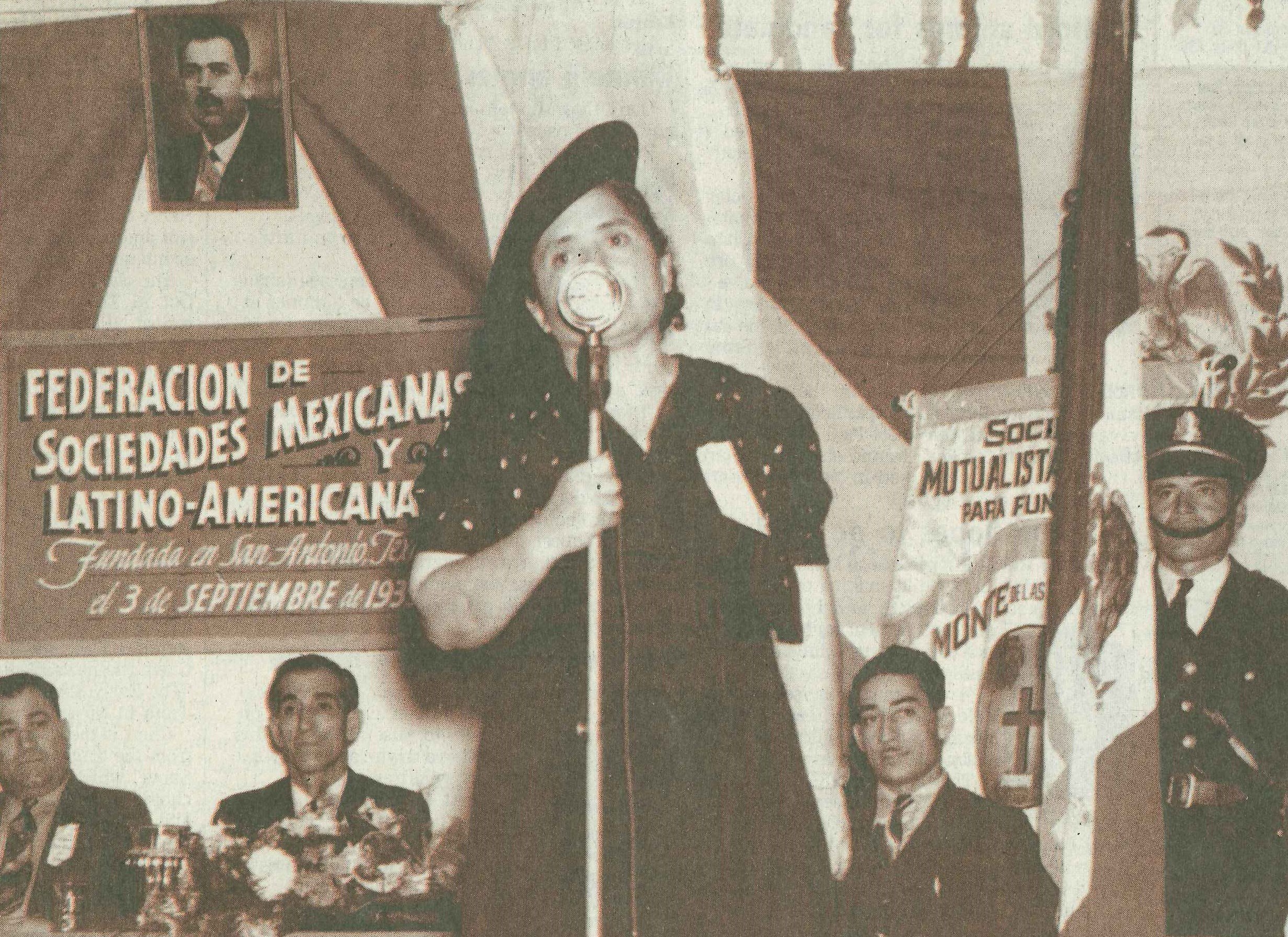
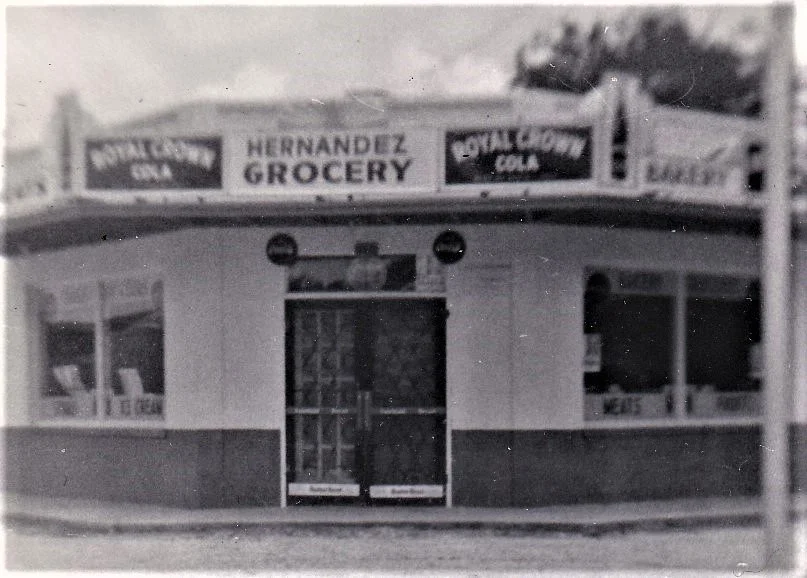
While serving as vice president of the Federación de Sociedades Mexicanas y Latino-Americanas del Estado de Tejas, she was invited by President Lázaro Cárdenas to Mexico City in 1939. Galindo notes that “during World War II, her two sons sent their paychecks home along with pleas for her to stop traveling all over South Texas delivering babies. With this money, her husband Pedro bought a concrete block press, and he manufactured the blocks to construct the Hernández Grocery Store on the northeast corner of White Street (present day Steves Avenue) and Anita Avenue in Sunny Slope in 1946.”
In September 1945 Hernández published her treatise "México y Los Cuatro Poderes Que Dirigen al Pueblo," where she discussed the four powers that guided the community. The treatise was published by Munguía Printers, and publisher Rómulo Munguía wrote an introduction, where he noted: “This is a very small booklet in volume, but very large in its purpose. It is a spontaneous contribution from a woman who came out of the masses, who feels the pain that is felt by her people. A women who tries to help by presenting remedies that according to her will serve to save them from slavery and the spiritual and material misery in which they smother. May her work serve as an example to others.”
Hernández continued to expand educational opportunities for her community. She helped organize the Círculo Estudiantil Universitario on June 19, 1949, at the International Building (Casa de México, 318 W. Houston Street) under the auspices of the Centro Internacional. Hernández served on its Membership and Propaganda Committee. Members of the organization took classes at the Universidad Autónoma de México.
She also continued to be active in civil rights and politics. She advocated for political candidates like Henry B. González. In 1968 she also began to give regular addresses on local television. She spoke about education and social progress. In December of that year she and her husband testified at the San Antonio hearing before the United States Commission on Civil Rights, which was organized to address discrimination against Mexican Americans. In the early 1970s she became active in the Raza Unida party, supporting Ramsey Muñiz’ gubernatorial bid and State Board of Education candidate Marta Cotera. In her speeches to the party, she called on Mexican Americans to recover their indigenous and mestizo heritage. A bilingual education center was named for her in Crystal City.
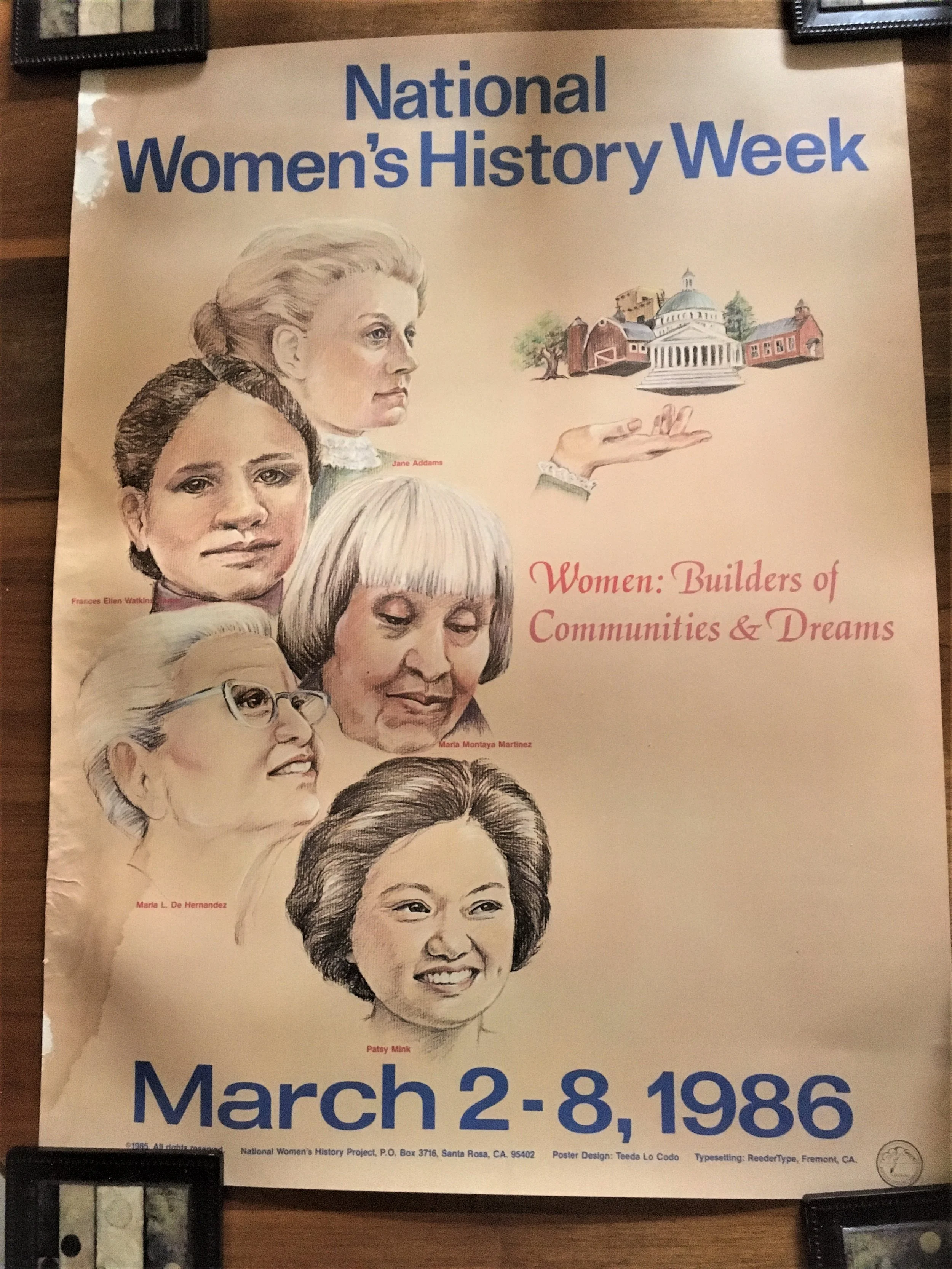
She died in Lytle, Texas, on January 8, 1986, and was buried in the plot of the Orden Caballeros de América outside of Elmendorf. For her lifetime of activism, she was honored by the National Women’s History Project in Santa Rosa, California, that same year. Speaking of her contributions, Henry B. González noted: “She fought a big fight with a little stick.” She was one of those leaders who “came from the people and moved with the people.”
— Mil gracias to Mary Jo Galindo, María Latigo de Hernández' granddaughter, for her significant contributions to both the text and the images in this profile.
“In 1933, our family moved from Sunny Slope back to San Antonio because Mama began to investigate schools….I attended five different elementary schools and five junior high schools….When we lived on Bowie Street in an old adobe house with a dirt floor…(I attended) a segregated school that was way too small. Anglos attended from 7:30 am to noon, while the Mexican children went from 1 pm to 5 pm. It was dark by then during the winter and we had to cross Commerce Street (to get home).”
-
Acosta, Teresa Paloma and Ruthe Winegarten. Las Tejanas: 300 Years of History. Austin: University of Texas Press, 2003.
Acosta, Teresa Palomo, "LA MUJER MODERNA," accessed July 20, 2020, http://www.tshaonline.org/handbook/online/articles/eel09. Uploaded on June 15, 2010. Published by the Texas State Historical Association.
Blackwell, Maylei. ¡Chicana Power! Contested Histories of Feminism in the Chicano Movement. Austin: University of Texas Press, 2011.
Chacón, Justin Akers. “Magonismo and the roots of revolutionary internationalism.” International Socialist Review, Issue 101.
https://isreview.org/issue/101/magonismo-and-roots-revolutionary-internationalism/index.html
Kanellos, Nicolás. American Latino Theme Study: Intellectual Traditions: Envisioning and Re-visioning the Nation: Latino Intellectual Traditions. National Park Service. https://www.nps.gov/articles/latinothemeintellectual.htm)
Lemus, Gustavo Mendoza. “Andrea Villarreal, el rescate de la poeta revolucionaria.” Milenio. Monterrey, Mexico. August 23, 2019.https://www.milenio.com/cultura/historiadora-presenta-su-libro-revolucionarios-en-el-exilio
Lomas, Clara, “Discurso transfronterizo. La articulación del género en la frontera en los primeros años del siglo XX”, en Dimensión Antropológica, vol. 25, mayo-agosto, 2002, pp. 91-116. Disponible en:http://www.dimensionantropologica.inah.gob.mx/?p=828
Magón, Ricardo Flores. “A la mujer” quoted in Martha P. Cotera, Diosa y Hembra: The History and Heritage of Chicanas in the U.S. (Austin: Information Systems Development, 1976), 67.
Marino, Katherine M. “The International History of the U.S. Suffrage Movement.” Origins: Current Events in Historical Perspective. Vol 13, Issue 7, April 2020.
http://origins.osu.edu/article/19th-amendment-suffrage-women-vote
McArthur, Judith N. and Harold L. Smith. Texas Through Women’s Eyes: The Twentieth-Century Experience. Austin, University of Texas Press, 2010.
The Missoulian, March 19, 1911.
“El Partido Anti-Reeleccionista.”El Obrero, San Antonio, Texas. December 15, 1910.
Pérez, Emma. The Decolonial Imaginary: Writing Chicanas into History. Bloomington: Indiana University Press, 1999.
“¡Pueblo Rebelde, Adelante!” El Progreso, San Antonio, Texas, November 1908.
Raat, William Dirk. “The Diplomacy of Suppression: Los Revoltosos, Mexico, and the United States, 1906-1911.” Hispanic American Historical Review (1976) 56 (4): 529–550. November 1, 1976.
Regeneración, Los Angeles, California. January 21, 1911.
Regeneración, Los Angeles, California. February 25, 1911.
St. Louis Dispatch, St. Louis, Missouri. September 10, 1905.
“Mexicans Brought here for Trial.” St. Louis Dispatch, St. Louis, Missouri. November 22, 1906.
St. Louis Republic, St. Louis, Missouri. November 19, 1906.
“Women will Plead Cause of Refugees,” San Antonio Light and Gazette, August 18, 1909, p.1.
Zárate, Griselda.“Dos Hermanas Revolucionarias: Andrea y Teresa Villarreal.” Bicentenario: El Ayer y Hoy in Mexico. Instituto Mora. Vol 3, No. 10, 2010.
https://www.institutomora.edu.mx/Documentos/BiC-10RevistaCompleta2.pdf