Maria del Refugio Martinez Ernst
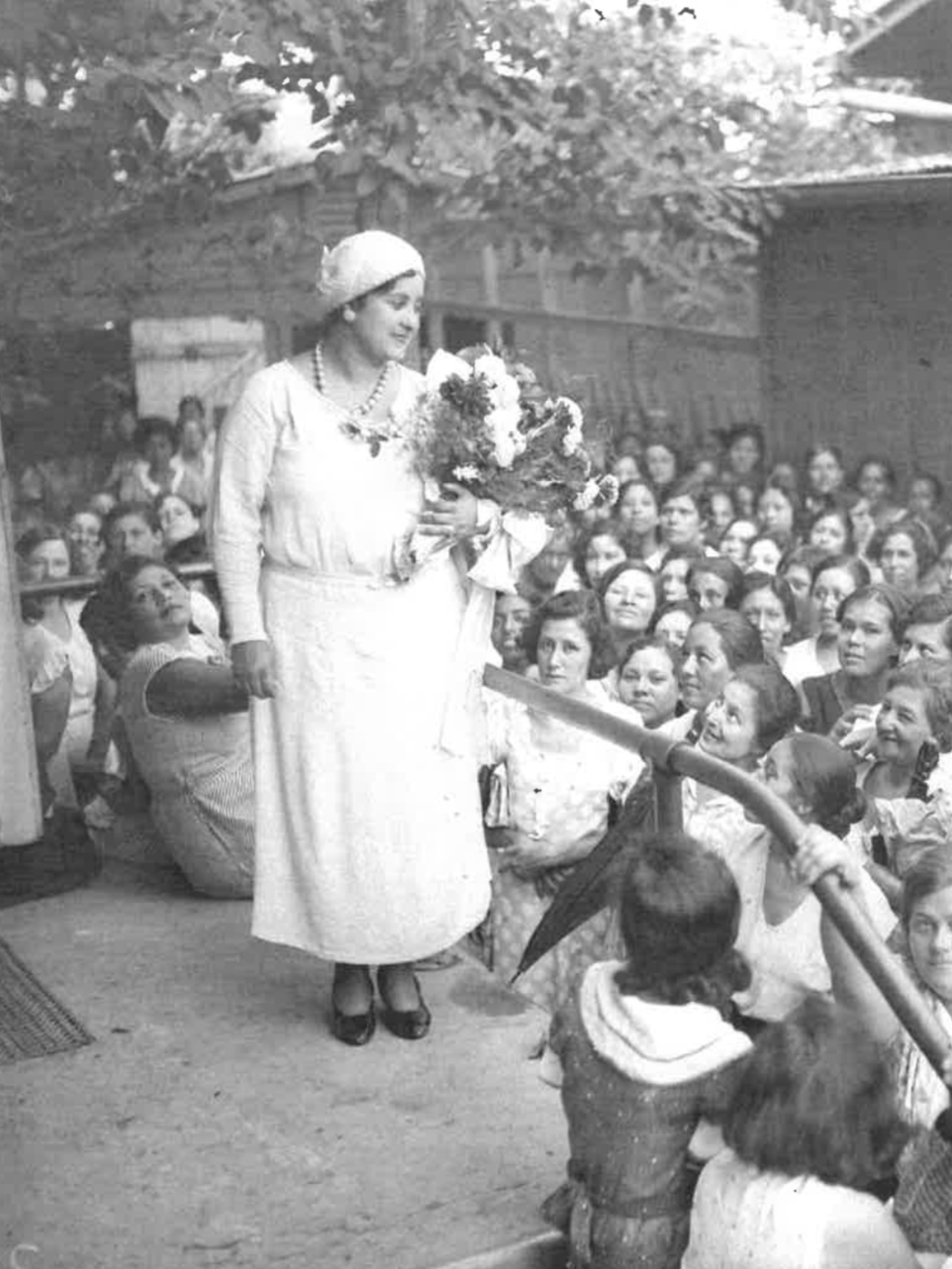
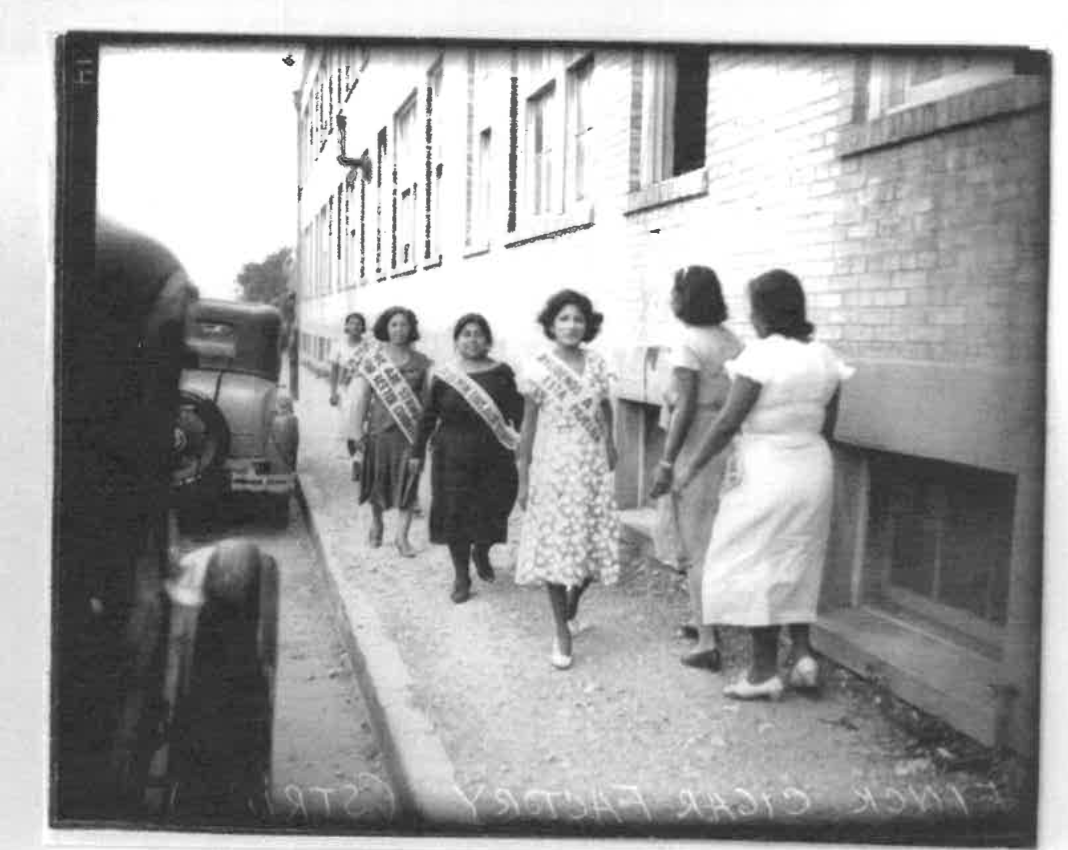
Maria Ernst standing on the steps of cigar factory after succesful settlement of strike. August 25, 1933. San Antonio Light Collection, Courtesy of the University of Texas at San Antonio Libraries Special Collections
“We refuse to go to lunch in our work clothes; we do not want to be on the job when there is no work to be done; we refuse to sweep up the place–somebody else should be hired to do it; and we want another supervisor–someone who will treat us with respect and consideration that employees deserve.”
Leader of Cigar Makers Strike
1900–1950
When more than 300 workers for the Finck Cigar Company went on strike in August 1933, San Antonio journalists interviewed their leader, who was described only as “Mrs. W.H. Ernst.” In the previous months, Mrs. Ernst had led the strike of cigar workers, formed a union and served as spokesperson in negotiations with regional and national labor boards. The Finck Cigar strike was one of the most significant efforts of Mexican American women to rally for better wages and working conditions during the Great Depression, and would influence future labor movements. During this time, Mrs. Ernst is quoted frequently in local newspapers, but not much else has been documented about her life on the Westside. This profile is an effort to uncover more of Mrs. Ernst’s story.
Maria del Refugio Martinez was born around 1900 in Mexico. She immigrated with her family to the United States in 1913. In 1921 she married Henry Ernst, a son of German immigrants. In 1927 she purchased a home at 244 Oriental Avenue. She and her husband would be listed in several city directories at the same address during the next decade. By looking at the 1930 census, we know that they are also living with her two younger brothers: Arcenio Lenar, Abdiaz and his wife Emilia, and her nephew Jesus. Her husband was listed as a sheet metal engineer at an ice factory, but he was unemployed at the time. Maria was listed as a cigar maker. Another interesting thing to note from the 1930 census is that Maria and her siblings’ race is initially listed as white (with a “W”), but the census enumerator (presumably) crossed this out for “MEX” for “Mexican”. This was the one decade that the federal government racialized Mexican identity, noting that anyone born in Mexico or with parents born in Mexico, “who are not definitely white, Negro, Indian, Chinese or Japanese” should be designated as a separate racial category.

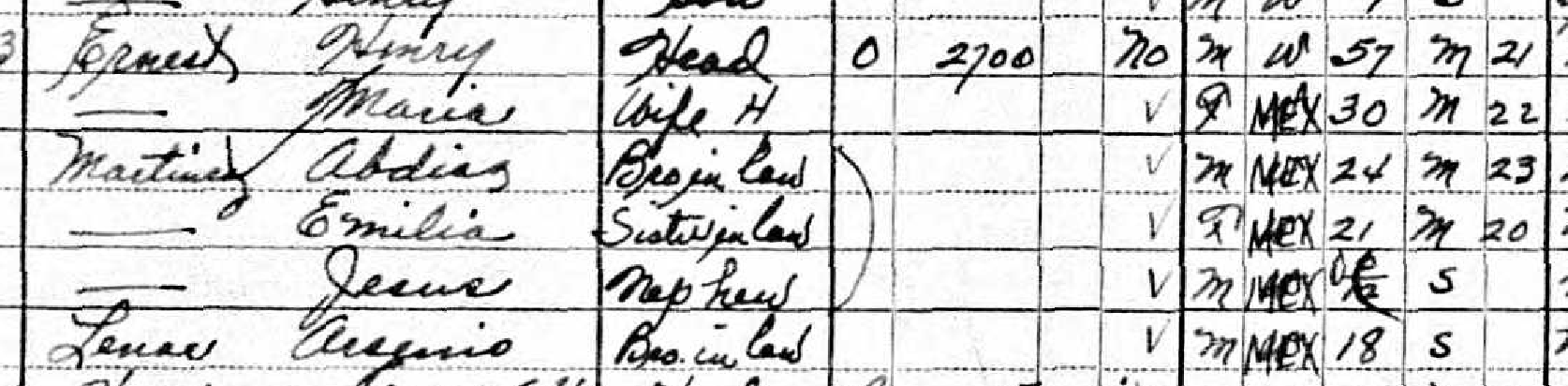
Maria and her family as they appear on the 1930 census. Note how her racial designation was switched from "W" (white) to "Mex" (Mexican)
In 1933 Maria was still working as a cigar maker. At the time, the cigar industry was transitioning from small single-owner plants with cigars made by hand by skilled workers to become larger, more mechanized, and relying more on “unskilled” labor. The overall number of cigar plants was decreasing, as factories were hiring fewer workers and union membership was declining. Maria worked for the Finck Cigar Factory, named for its founder, Henry William Finck, who had started the company in 1893. In the early years of the company, he had lived in a rented house just south of Fort Sam Houston, and made and sold the cigars himself. By the 1930s the Finck Cigar Company had grown to employ more than 500 workers, most of them women of Mexican descent. The Finck factory paid some of the lowest wages of any industry in the city; working conditions were poor, with badly lit and poorly ventilated packing rooms where most women had to stand while they worked. Washing rooms had no hot water or towels. Most of the women working there were under the age of 25 and unmarried, so at 33 years old, Maria was probably one of the more experienced workers at the factory. The company was located at 602 Buena Vista Street. In January of 1933 Henry William Finck died, and his son Ed took over management of the company. By the summer of that year, his workers were making major complaints. By the end of the summer, they were organizing to challenge the low pay and poor working conditions of the factory.
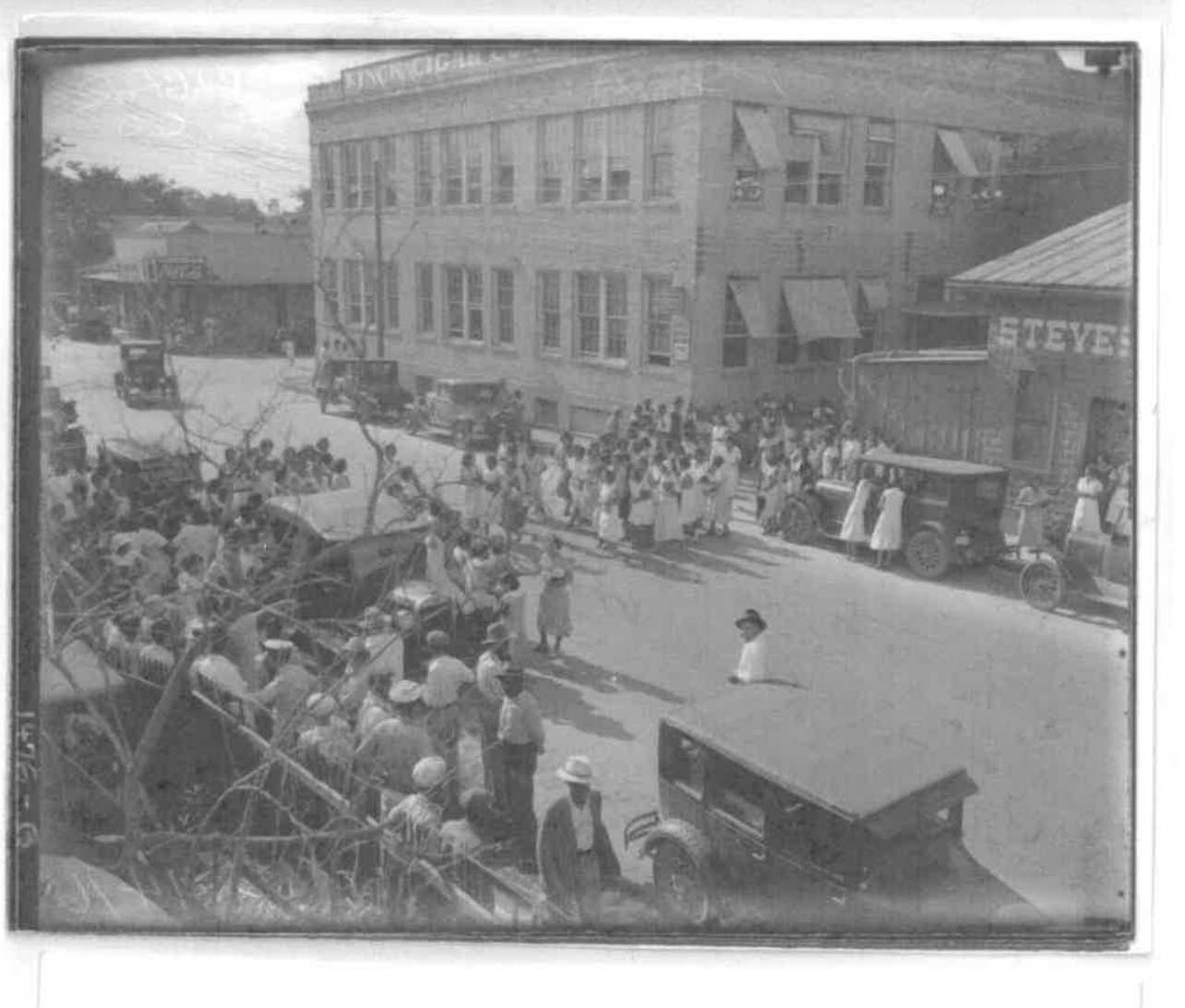
The first reports in the local news of labor unrest at the Finck Company came on August 4, 1933, when the San Antonio Light reported “GIRLS AT CIGAR FACTORY GO ON STRIKE”. The article noted that approximately 400 women, mostly of Mexican descent, went on strike. When the factory doors opened at 6 am they refused to enter, and instead congregated across the street. The leader of the strike was noted as Mrs. W.H. Ernst, who demanded to meet with Ed Finck, in order to present the workers’ demands. Later testimony indicates what triggered the walkout; a man representing the women workers at a regional labor board meeting said; “I am told that on August 3 about noontime that some lady who was passing through change of life was ill. Mrs. Ernst was rendering first aid to this lady. I am told that she was ordered out regardless of her ill condition. I am told this lady left the restroom partly dressed. This, I believe, is the primary reason for the ladies not going back to work the following morning.” Maria and her fellow strikers were protesting not only the poor working conditions, but the inhumane treatment by management.
Maria also sent a letter to Ed Finck outlining the women’s demands. She said “we refuse to go to lunch in our work clothes; we do not want to be on the job when there is no work to be done; we refuse to sweep up the place–somebody else should be hired to do it; and we want another supervisor–someone who will treat us with respect and consideration that employees deserve; we don’t want to be treated like slaves.” La Prensa also covered the strike, noting that the women wanted justice, improvement of their work situation, and appreciation for their work. Maria and other leaders of the strike described one of their major complaints, linked to the piece work system that they had to follow. The factory had begun penalizing workers three good cigars for each “unsatisfactory” cigar rolled. Previously the penalty had been two good cigars for a single bad one. Maria said that they were only permitted to leave four minutes at a time.
Maria also noted that workers were paid about $2 to $7 per week, because Finck controlled production to keep wages low– once they finished rolling 500 cigars, they weren’t allowed to make more. She was essentially charging Finck with undercutting the NRA codes. Comparatively, white women cigar makers had a median weekly wage of $16.65 and bunchmakers $17.25. Finck was paying wages below the national average and below NRA code stipulations.
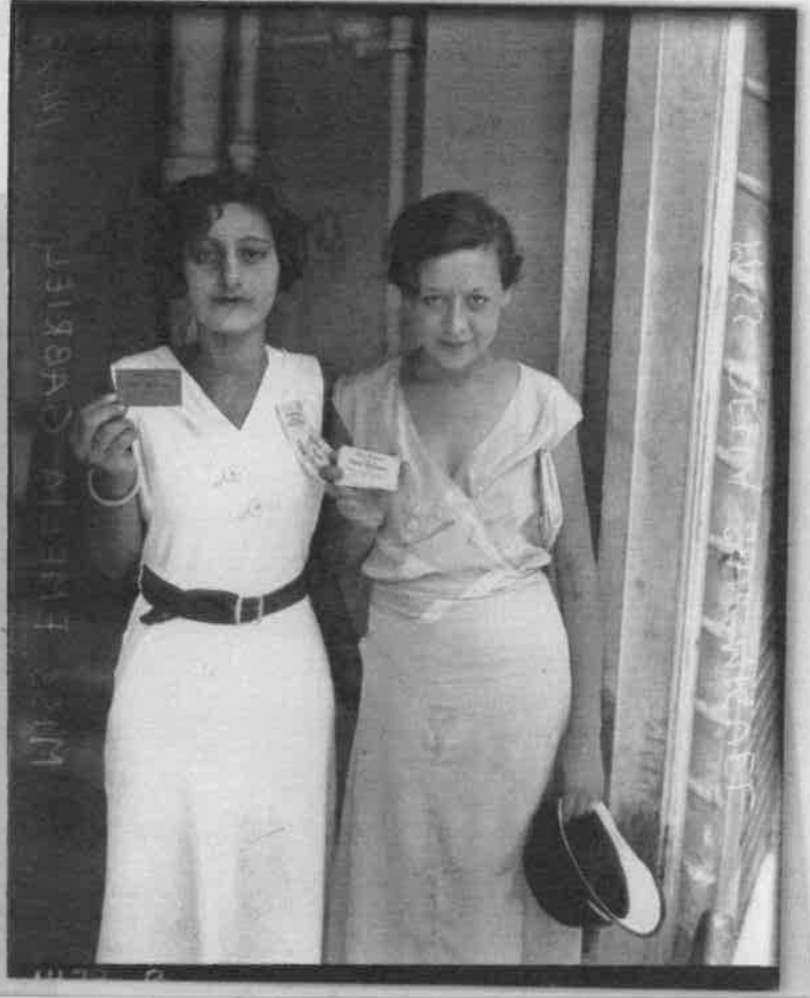
To sustain the strike, Maria and three other leaders: Modesta Herrera, Adela Hernandez and Mrs. E. J. Padilla, organized the striking women into crews of four. Wearing badges and holding signs describing conditions at Finck’s, they picketed the plant daily. They also raised funds to hold a carnival at a local school; Maria and a committee of five presented a demand to city officials that the Finck plant be inspected for health violations as well. They used all the tactics they could to call greater attention to their grievances.
About two weeks later it looked as if the company and the striking workers might reach an accord. On August 20, the San Antonio Light reported that the women had formed a union. San Antonio Mayor C. K. Quin tried to mediate, meeting with both groups at different times. Maria Ernst was the spokesperson for the strikers, requesting permission to continue picketing without interference from police. He granted permission to continue picketing, on the condition that the strike remained nonviolent and didn’t block traffic. Maria wanted the company to recognize the union. The next day, picketing temporarily ceased, as the company signed a certificate of compliance with an NRA code. On August 25, 1933 the local press reported that the strike was over. Workers had achieved a raise in their wages to a minimum wage of $9 a week (for rollers). The company claimed that they had improved sanitary conditions as well. For the most part, however, the company refused to recognize the strikers’ grievances. They did not re-employ many of the striking workers, and they had secured special dispensation to allow them to maintain some workers’ salaries below industry codes.
Less than a week after this announcement, more troubles were reported in the Light. The mayor decided he would no longer attempt to be involved. Maria Ernst appeared at city hall to complain of continuing problems– a shortage of brooms for cleaning the shop, causing the women to work overtime. In early September Maria was arrested along with Margarita Martinez by police, after a confrontation with Finck. They had been charged with “disturbing the peace” and making threats. From her jail cell, Maria said that Finck had shoved her off the sidewalk.
In February of 1934 Ed Finck was called to testify at the Regional Labor Board meeting. Maria and other workers said that they had been discharged because they belonged to the union, and that their daily work quotas were increased. At the time, Maria was the president of the union, though she noted that she was never allowed to return to work after the strike. Finck said that this was because she was not an American citizen, and he wished to give American citizens the preference. Maria said that she was born in Mexico, but had resided in the United States nearly all her life, and that her husband was an American citizen. The Regional Labor board found that the workers were subject to “gross discrimination” and “doubly in need of protection.”, noting that 100 workers should be reinstated; they also provided a plan which would include collective bargaining with a committee of employees, but Finck noted that he would appeal the board’s decision.
In April the National Labor Board heard the case. Maria and the other strike leaders had still not been re-hired, and the other regional board’s decisions had not been implemented. The Finck Cigar company continued to refuse to bargain with the union. During the national hearings Maria also testified to other forms of harassment, done by Finck himself. She said that he “had a habit of coming into the dressing room while the girls were dressing”; as another witness said, Finck was “one of the baddest bosses in San Antonio.”
In May the Finck Cigar Company was found to be in violation of the National Industrial Recovery Act, and the NLB ordered that Maria and others be given their jobs back “at once.” They ordered Ed Finck to enter into collective bargaining on matters of wages and working conditions. By this time, they had organized as local 346 of the International Cigar Makers Union, with Maria Ernst as president. However, the company refused to comply. By September the National Labor Board ordered removal of the “Blue Eagle'' from the Finck factory. This was a symbol used by American companies to show their compliance with the National Industrial Recovery Act, and consumers were urged to buy from companies that posted a blue eagle. The Finck company became the first company in San Antonio to have to surrender its Blue Eagle. Finck did not relent, though. He declared that he had no intention of reinstating Maria Ernst or the other three workers, and said that he’d rather close the plant than hire “agitators.” He said “The Finck Cigar Company plant will not be turned over to the Reds.”
After over a year without a change in working conditions, many cigar makers again chose to go on strike. Only about 100 of the 350 employees remained working when the strike resumed. In March of 1935 there were new accounts of mass arrests at the plant, after strikers tore the dresses and pulled the hair of strikebreakers. The Express News on March 24 noted that 58 workers were arrested, including Maria. The newspaper account also makes clear that they were being targeted by immigration authorities. The arrested strikers were held for investigation. Reflecting some of the racist language of the time, the Expressnoted that “a quick check by the Federals revealed none ‘wet’ enough to hold, officers said.” In the following weeks there were more confrontations between strikers, non-strikers and police. After a six week strike, police chief Owen W. Kilday also broke up an independent march of 50 men through the Finck cigar factory and arrested their leader, George Murphy, who said he was a representative of the unemployed council. They carried banners expressing sympathy for the strikers.
Afterward, police kept the strike area cleared and workers were brought through the picket lines in cars. Here again Maria is a spokesperson for the striking workers. She notes that 150 women were still out on strike and that they intended to carry on their fight for improved conditions through peaceful picketing. On April 23, Mayor Quin re-enters efforts to find a settlement. Maria met with regional labor leaders to negotiate. Meanwhile the summer brought continuing confrontations, with the police acting mainly to break the strike and disrupt legal picketing. Sometimes the confrontations were violent, including brick throwing, fist fights, ripped clothing and brawls. Both the strikers and Finck seemed willing to continue the strike indefinitely.
In November Texas Governor James Allred became involved. He ordered an investigation by the Texas Industrial Commission. In December the Commission heard testimony, and Maria Ernst was their principal witness. She said that many women were staying on their jobs because they feared Sheriff West, because he came to the factory and told them that he would deport anyone who joined the strike. She quoted him as saying “After all you are only Mexicans, and ought to be proud of conditions at the factory.” She said that she had been mistreated and beaten with a blackjack.
Maria also noted that the strikers had some support from the community: the Methodist Church and the YWCA had helped in early meetings; after they had formed a local of the Cigarmakers International Union, many San Antonio unionists also supported the strike; the Mexican consul had supported by securing an early meeting with Finck, and they received support from local musicians and Mexican American business owners.
On December 3, 1935, both the Light and Express reported that Ed Finck refused to attend the hearings and thus did not provide any testimony. The commission decided not to hold him in contempt, and so he was allowed to ignore the hearing without consequence. Dr. Jacobs noted “We could have Finck jailed for disregarding our subpoena, but if he doesn’t want to answer the subpoena and present his side, all right,” That effectively ended the investigation by the Texas Industrial Commission. The Finck Cigar Company continued to produce cigars, although by 1940 a large part of the operation was done by machines and the need for workers was greatly reduced. Maria was never rehired at the plant.
Although the cigar makers strike ended, this would not be the last time that Maria Ernst was involved in advocating for workers rights. In 1936, 1937 and 1938 there were a series of garment workers’ strikes. In 1936, workers picketed the Dorothy Frocks Company (on Commerce and Navarro). Maria Ernst was one of the arrested strikers. The Dorothy Frocks strike lasted several months. The owner of the plant decided to move the operation to Dallas, as city officials there boasted of their anti-unionism. However, two months later local union officials heard that the company had agreed to sign a contract with the union and was contemplating a move back to San Antonio.
Not much is known about Maria’s life outside of her labor activism. Government records show that she was naturalized as a U.S. citizen in 1938. In the 1940 census it shows that she was still living at her home on Oriental Avenue with her husband, and that she was working for the W.P.A. We also know that she died in 1950, leaving her property and her estate to her brother Arcenio Lenar Martinez. It’s quite likely that her husband had already passed away, as he was twenty-seven years older than she was, and there is no record of the couple having children.
While much of Maria del Refugio Martinez Ernst’s life remains unknown, her courage in advocating for women’s rights was remarkable. Her persistent challenges to the Finck Cigar Company for exploitation and sexual harassment, along with her willingness to speak out against police brutality and racist attacks on immigrants, makes her a woman who should be named and remembered.
-
Flores, Lori A. “An Unladylike Strike, Fashionably Clothed: Mexicana and Anglo Women Garment Workers Against Tex-Son, 1959-1963.” Pacific Historical Review, Vol 78, No.3 (2009), pp. 367-402.
Ledesma, Irene. “Gonzáles, Sophie,” Handbook of Texas Online, accessed May 05, 2022, https://www.tshaonline.org/handbook/entries/gonzales-sophie.
Ledesma, Irene. “Unlikely strikers: Mexican-American women in strike activity in Texas, 1919-1974. Dissertation, Ohio State University, 1992.
Ledesma, Irene. Texas Newspapers and Chicana Workers’ Activism, 1919-1974. Western Historical Quarterly, Vol 26, No. 3 (1995), pp. 309-331.
Ruiz, Vicki L. From out of the Shadows: Mexican Women in Twentieth-Century America. Oxford: Oxford UP, 2008.
WBAP-TV (Television station : Fort Worth, Tex.). [News Script: Strike], item,February 27, 1959; University of North Texas Libraries, The Portal to Texas History, https://texashistory.unt.edu; crediting UNT Libraries Special Collections.