Los Courts
AN online digital ExhibItion
We hope this exhibit inspires memories of Los Courts and the Westside, as well as support of the residents who call Los Courts home and of public housing as a vitally important social service that promotes wellbeing, reduces poverty, and prevents homelessness.
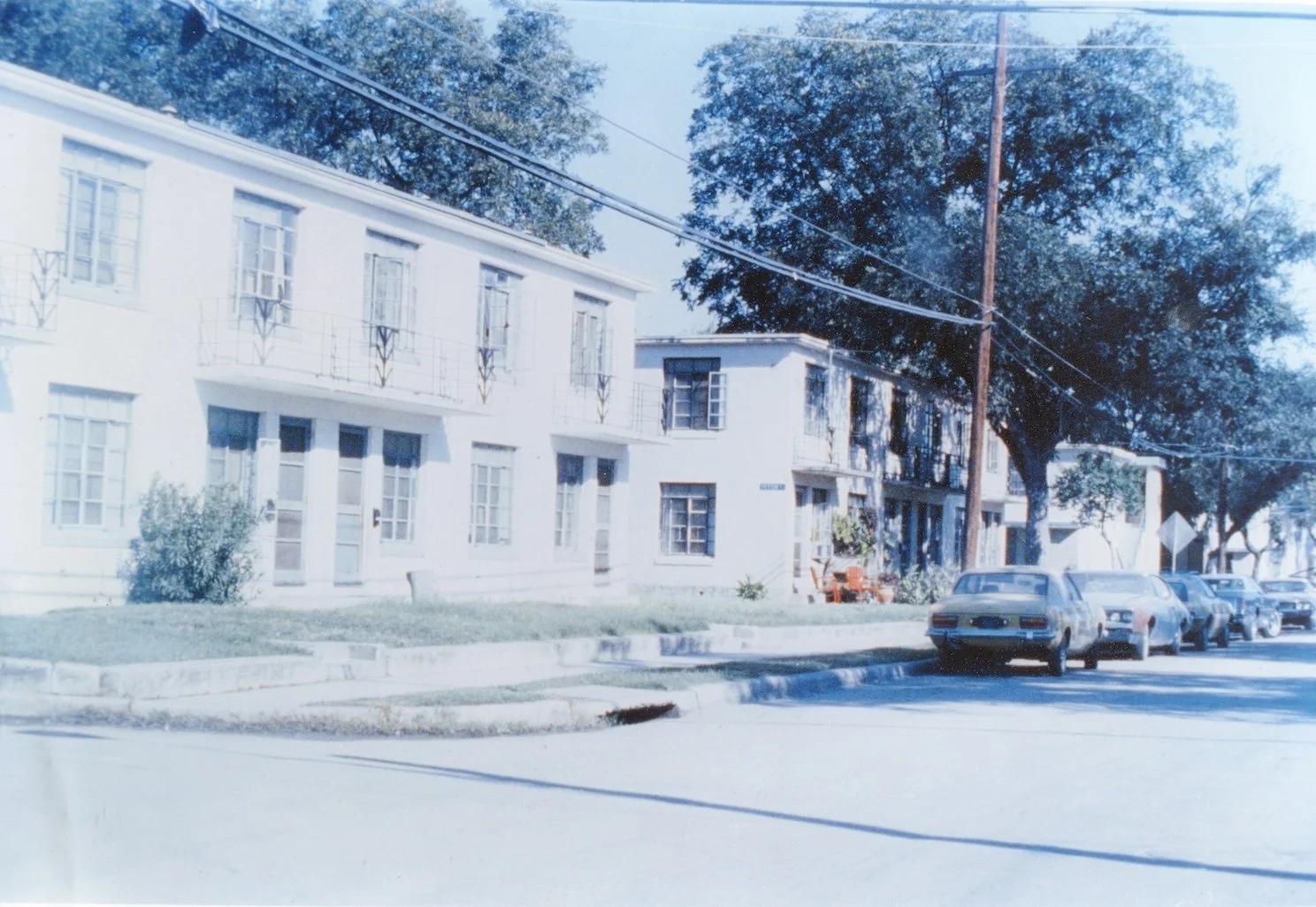
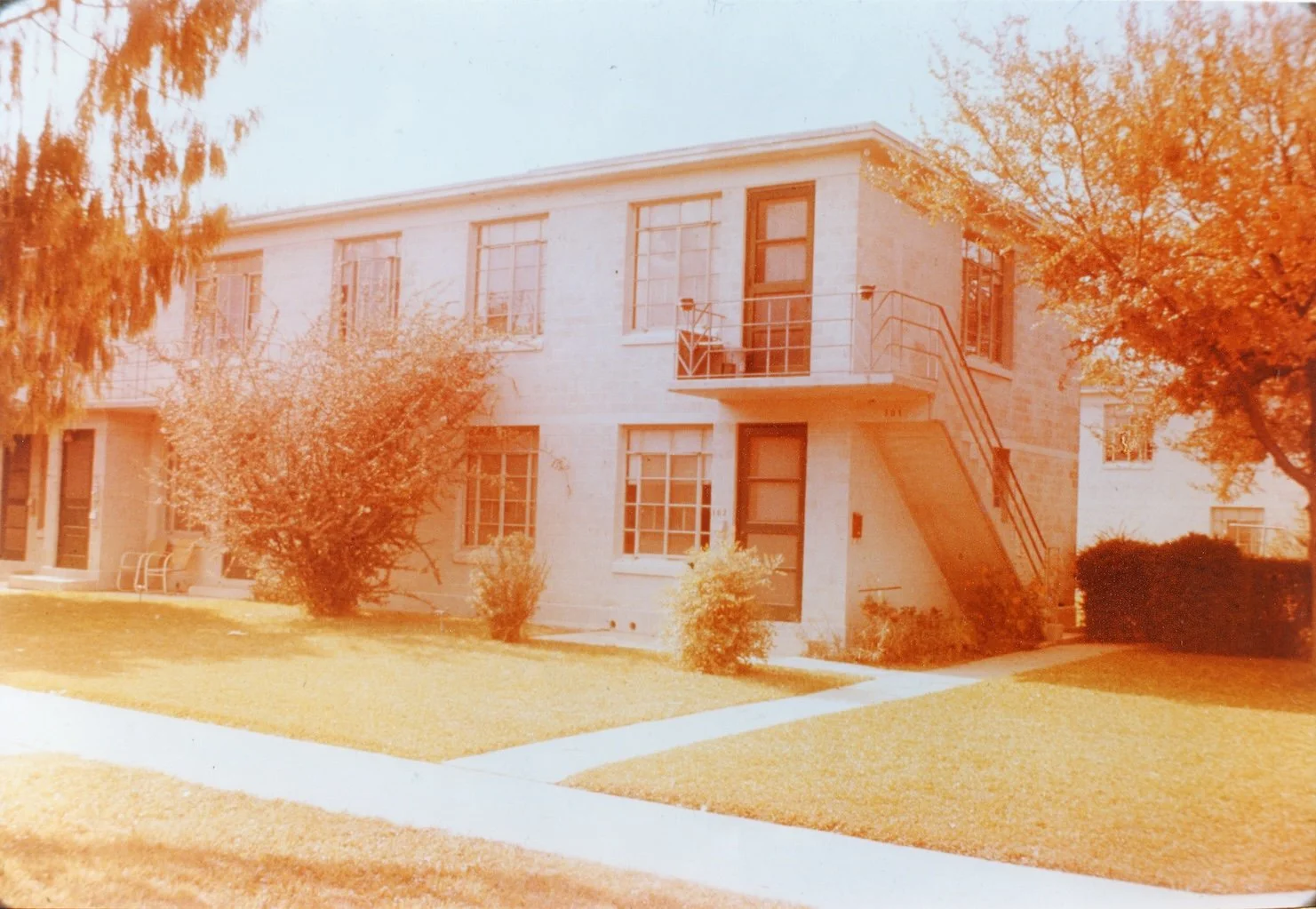
Conceived at a time when housing, schools, and public facilities were legally segregated, Los Courts were built to provide affordable housing for San Antonio’s majority Mexican American Westside. Providing modern amenities along with social and recreational activities, Los Courts were a welcome change from the overcrowded and often poorly built row houses, called corrales, that were common along the Alazan and Apache Creeks in the early 20th century.
Los Courts
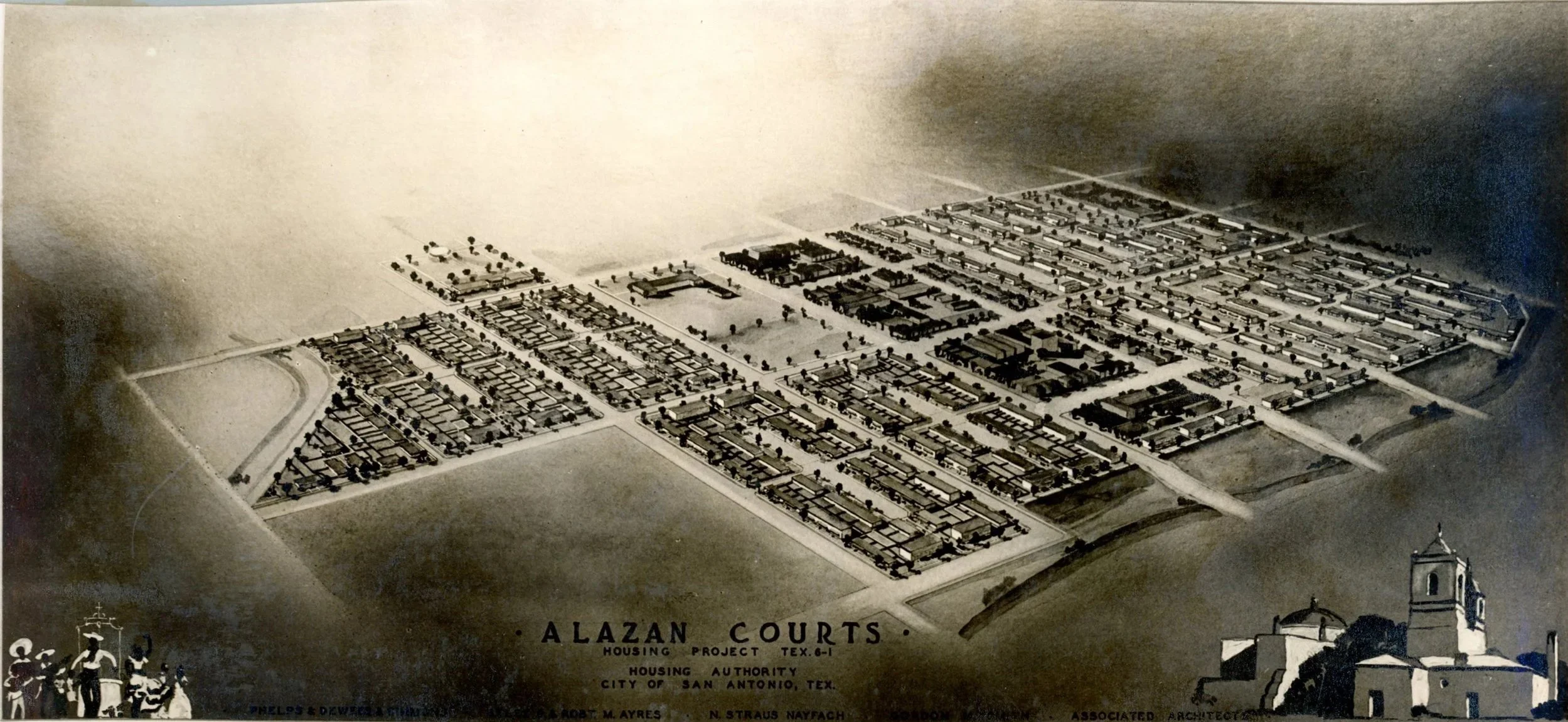
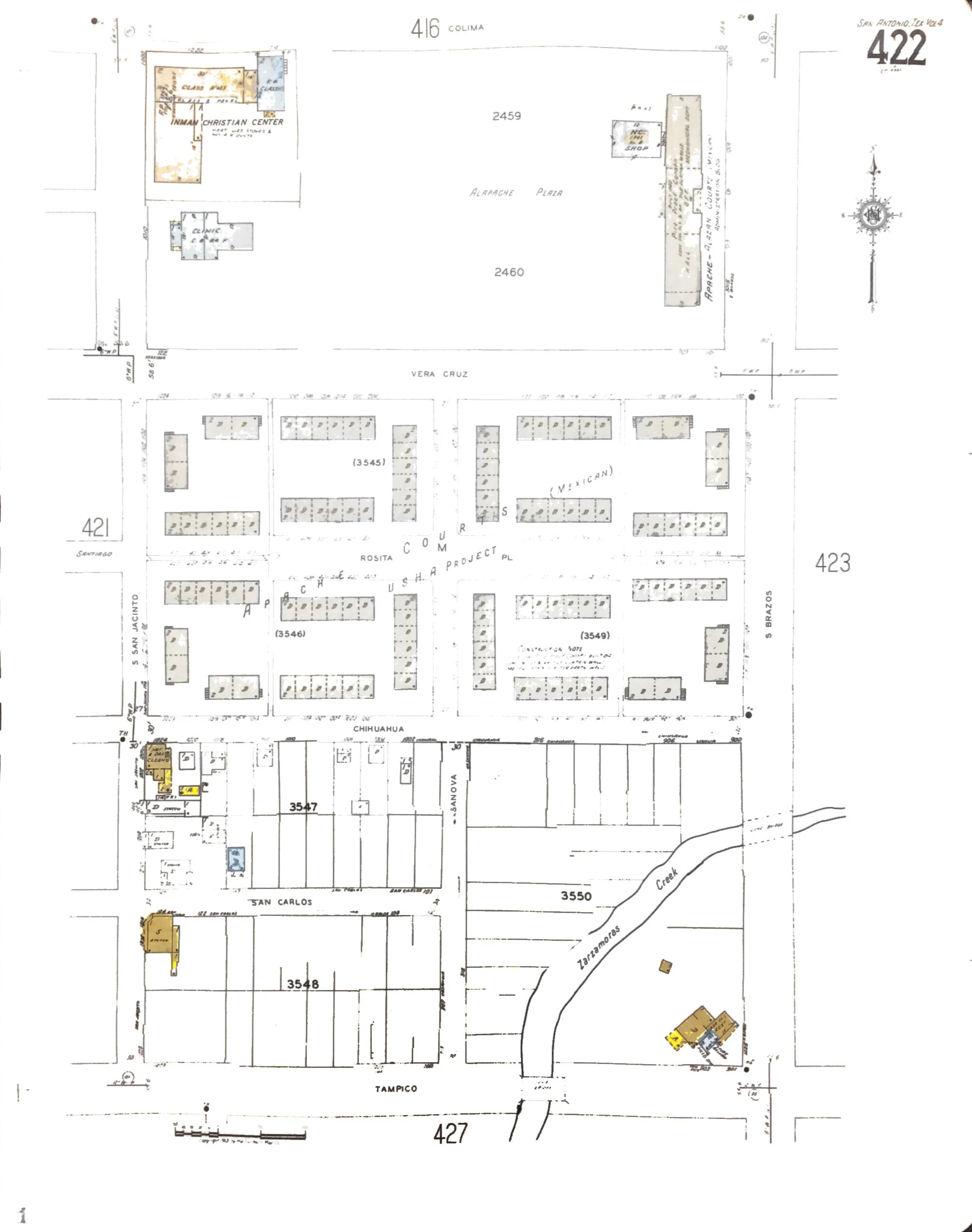
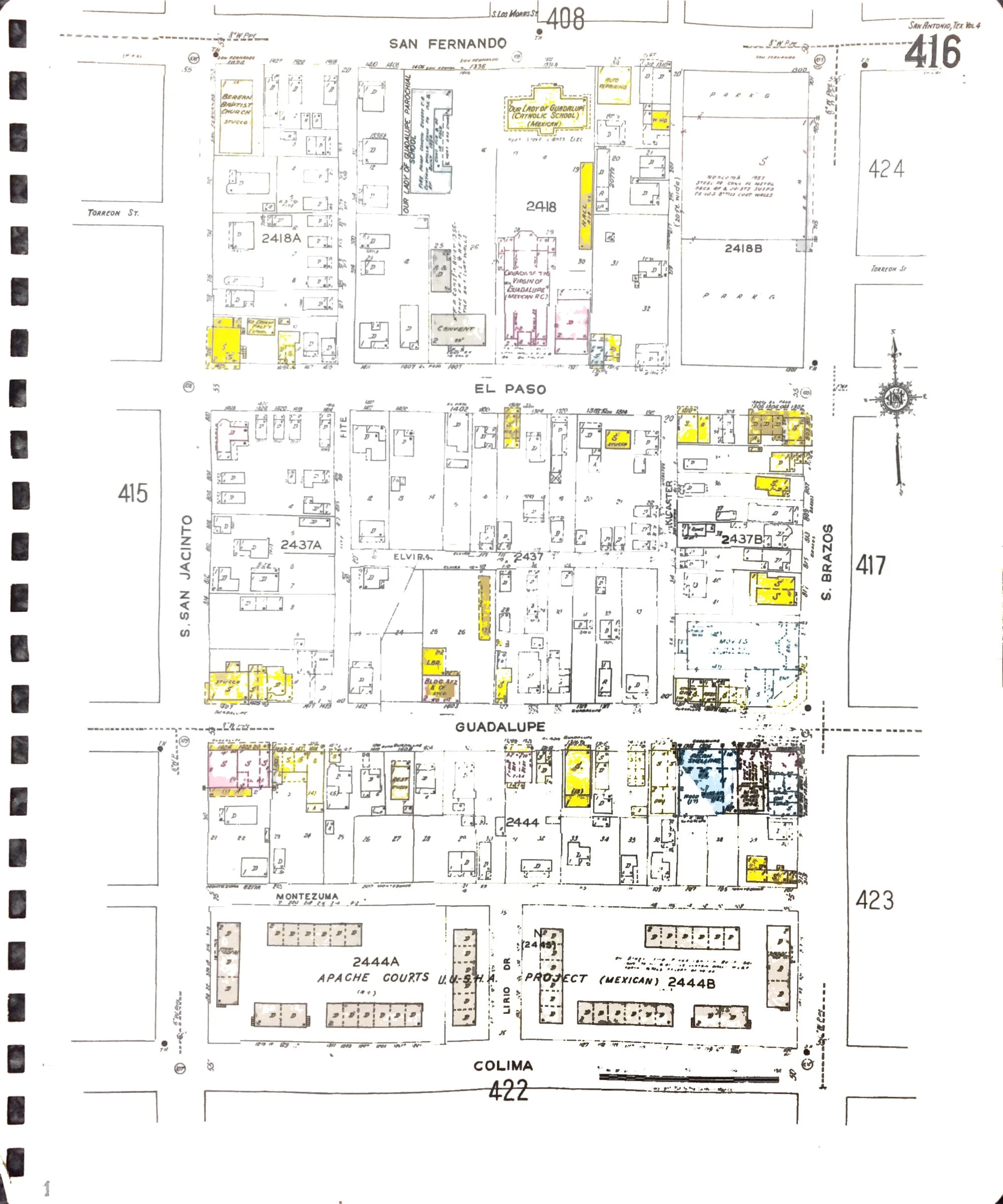
The Alazan-Apache Courts, also known as Los Courts, were the first and largest public housing development approved in San Antonio.
Today, the Alazan-Apache Courts continue to provide much needed affordable housing for hundreds of San Antonio families.
With housing security, residents can focus on other goals like education, health and wellness, and viable employment.
Public housing is a need that has not diminished in the decades since Los Courts opened.
Need Caption
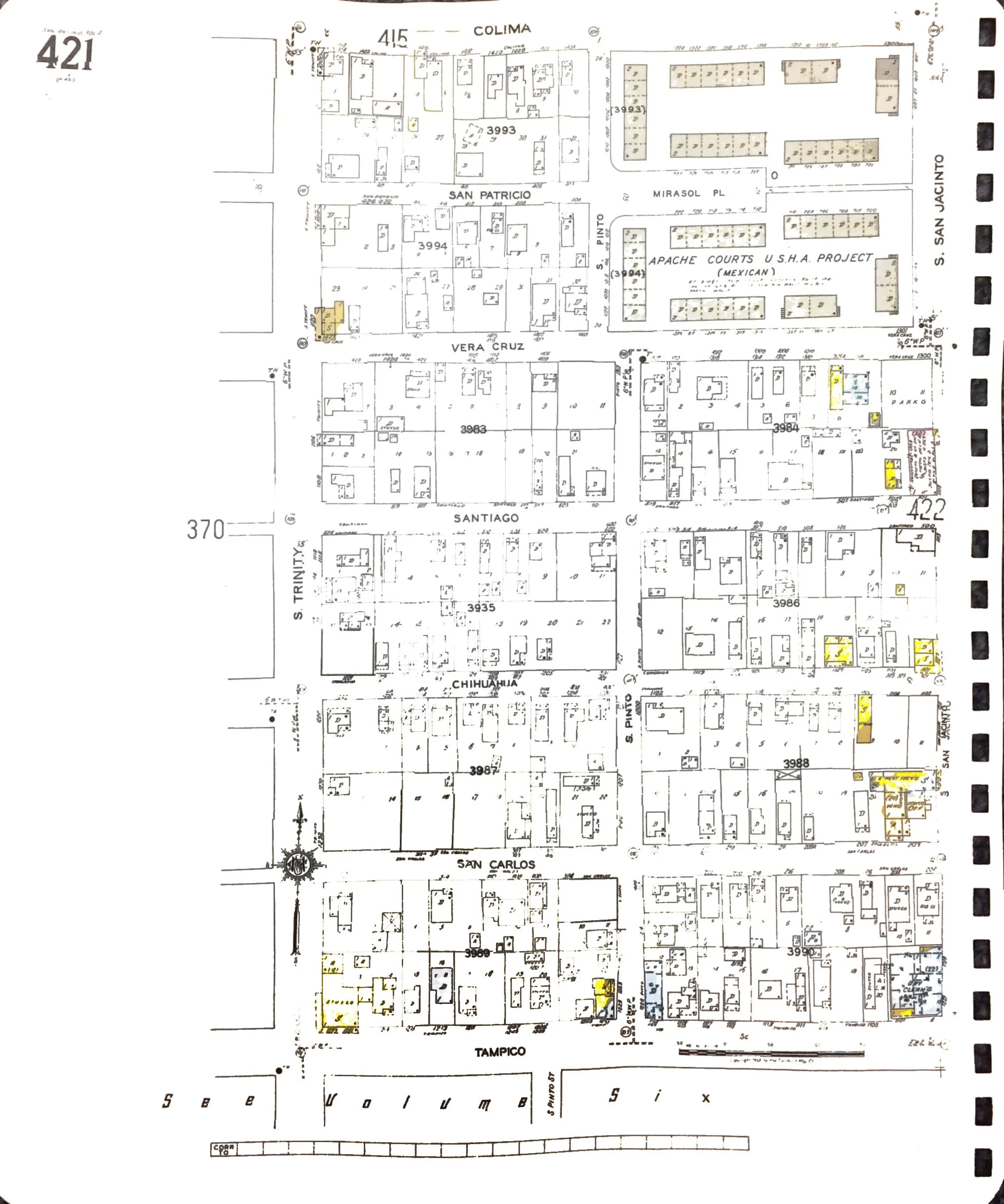
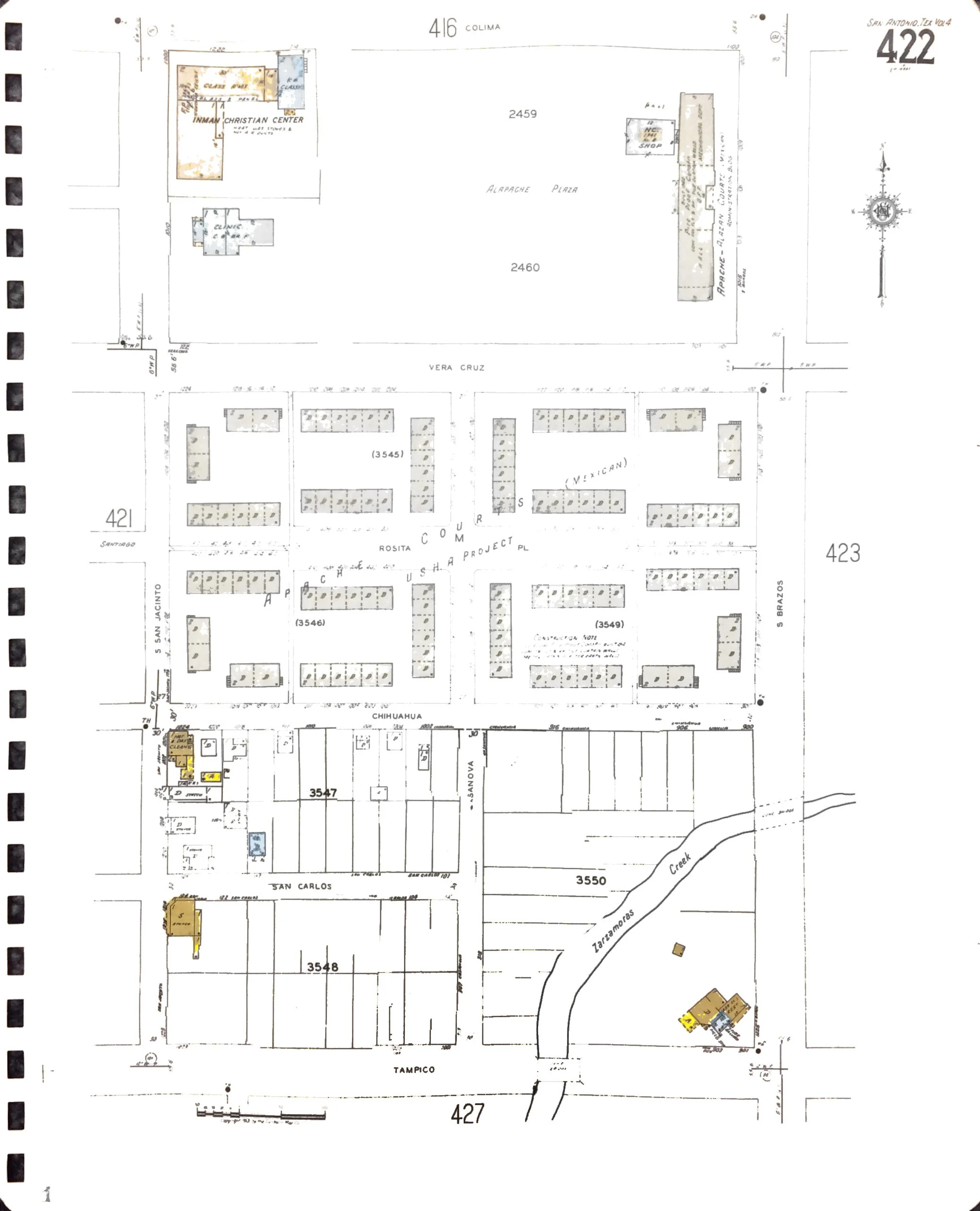
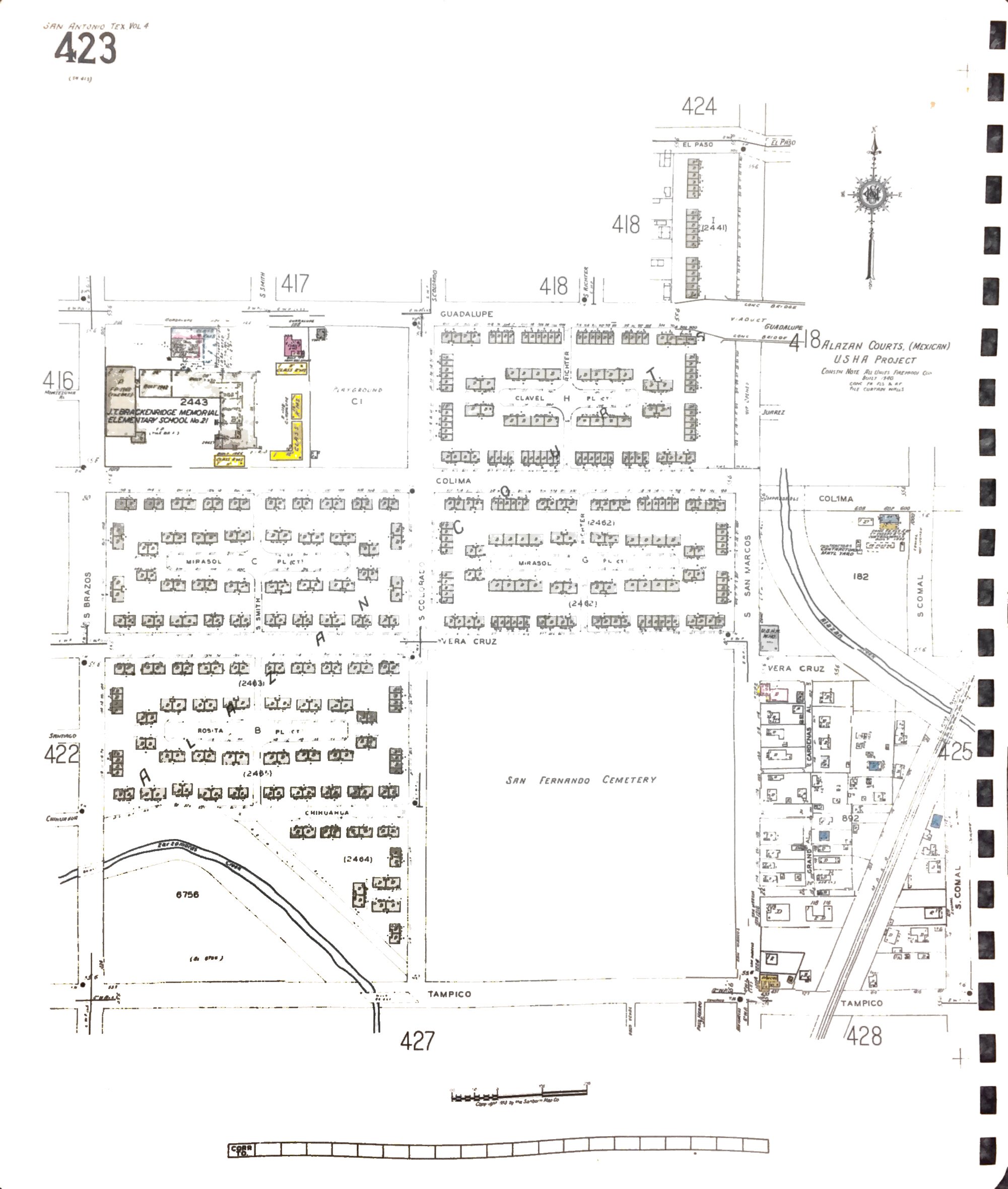
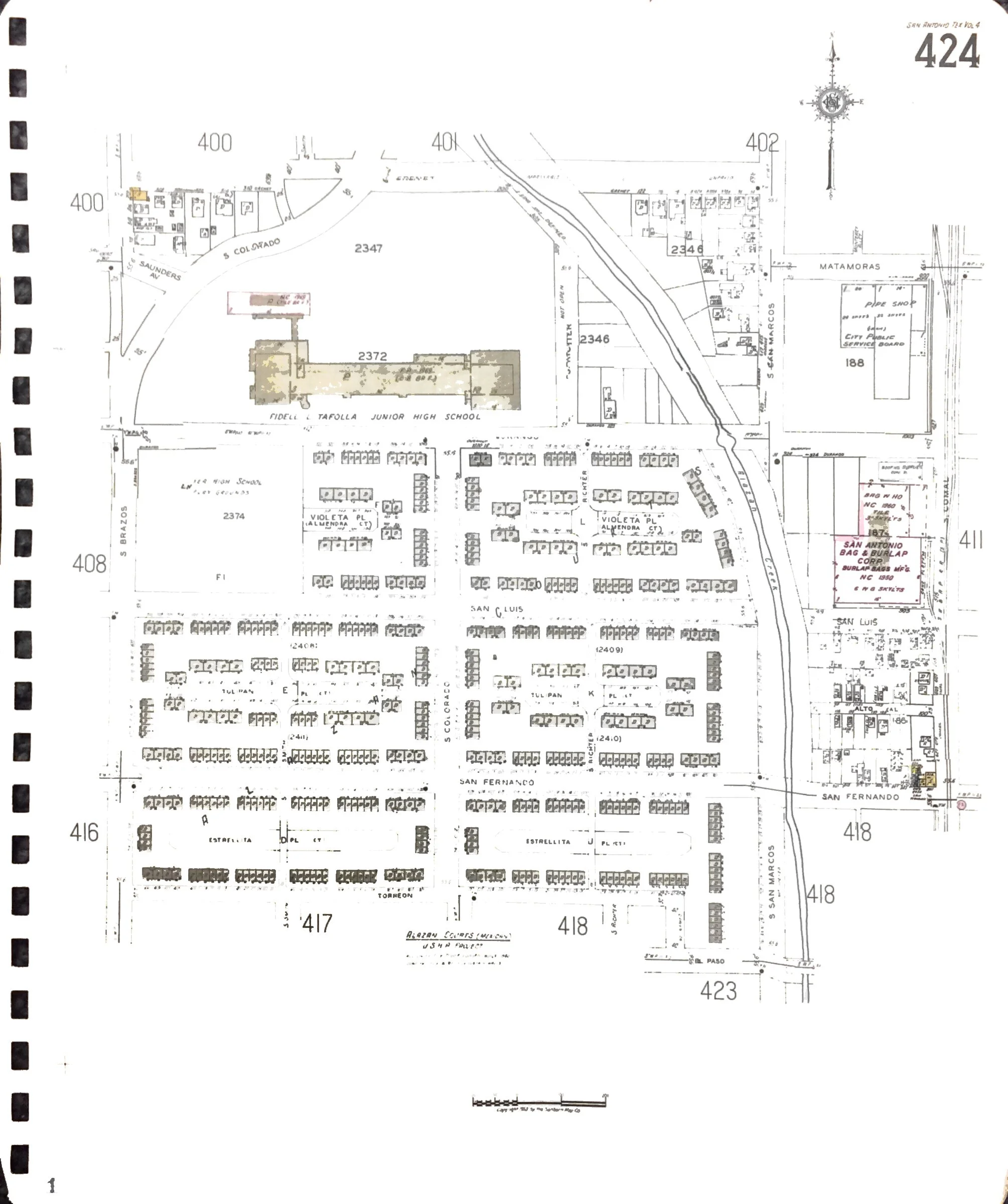
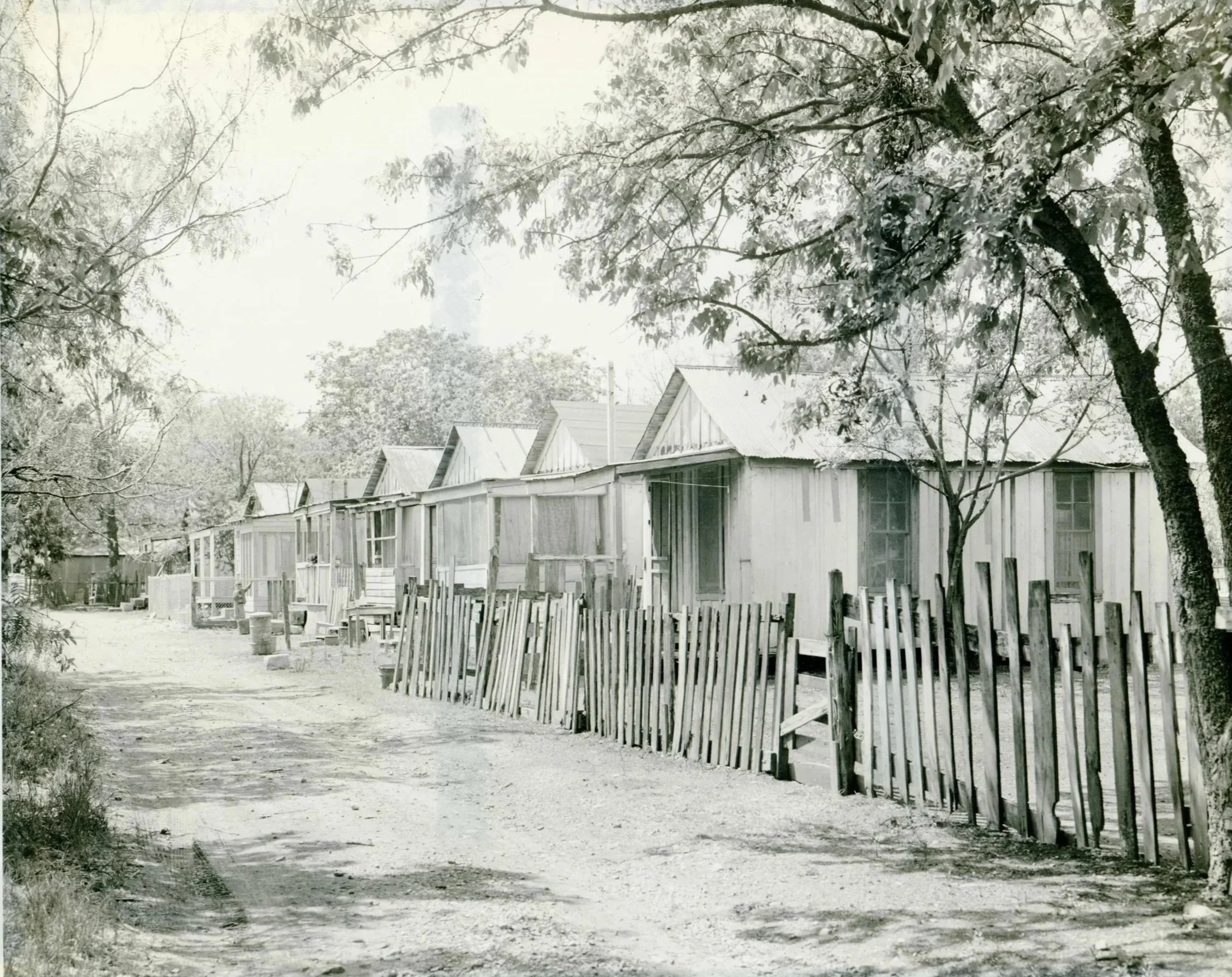
Twice in the 1920s the department of health recommended creating new housing units to replace the corrales, but it would take another decade for the city to take responsibility to turn the idea into reality.
Before the Courts
In the early 20th century, the Westside’s longstanding Mexican American population swelled with the arrival of thousands of refugees from the Mexican Revolution.
Small houses, some more solidly built and some built with what materials could be found harbored the newcomers.
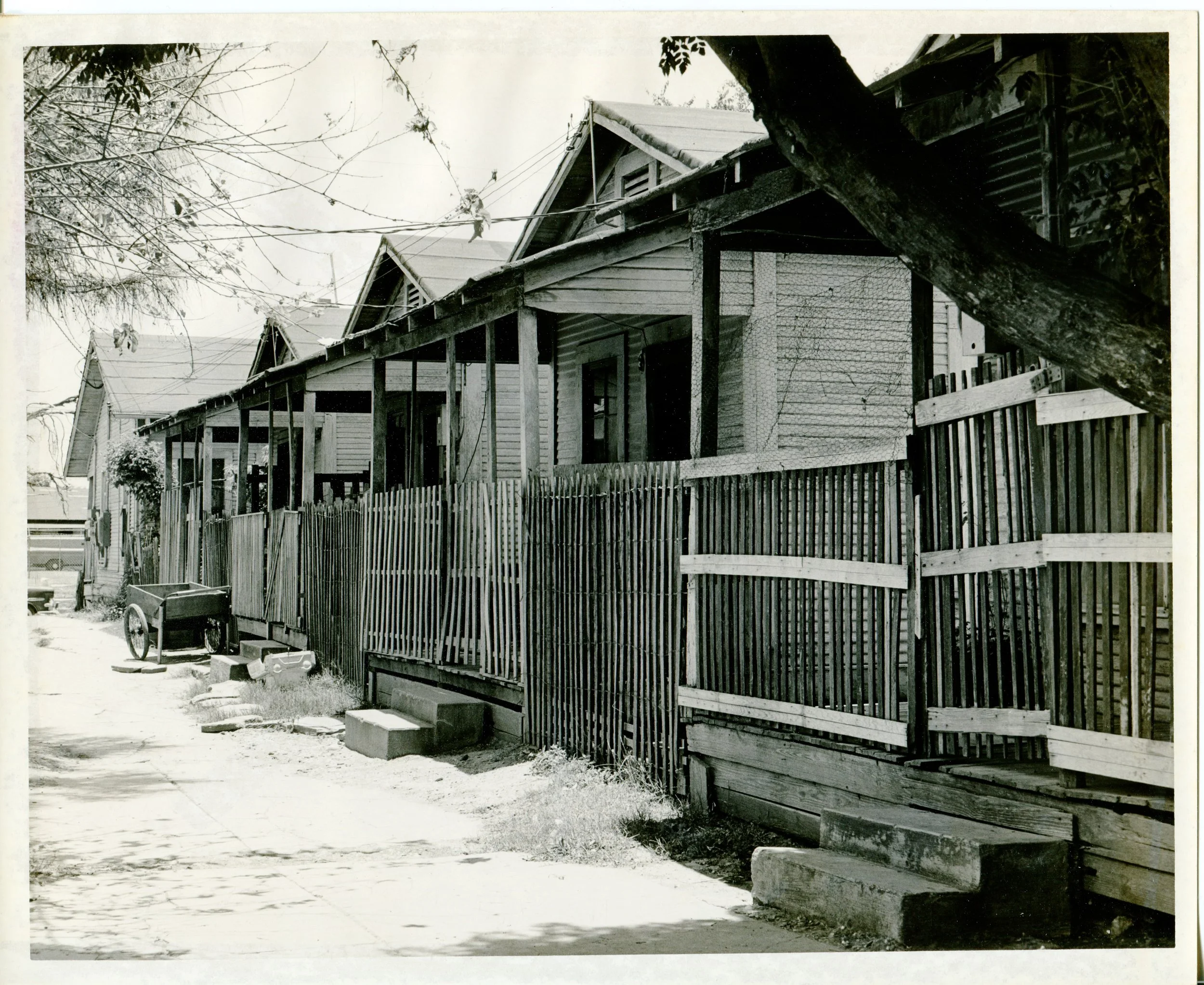
Corrales were typically built in rows along all sides of a property creating a central courtyard with a shared outhouse, water pump, and clothes lines for laundry. Often simple wooden boxes with a tin roof and dirt floor, they lacked adequate light and ventilation.
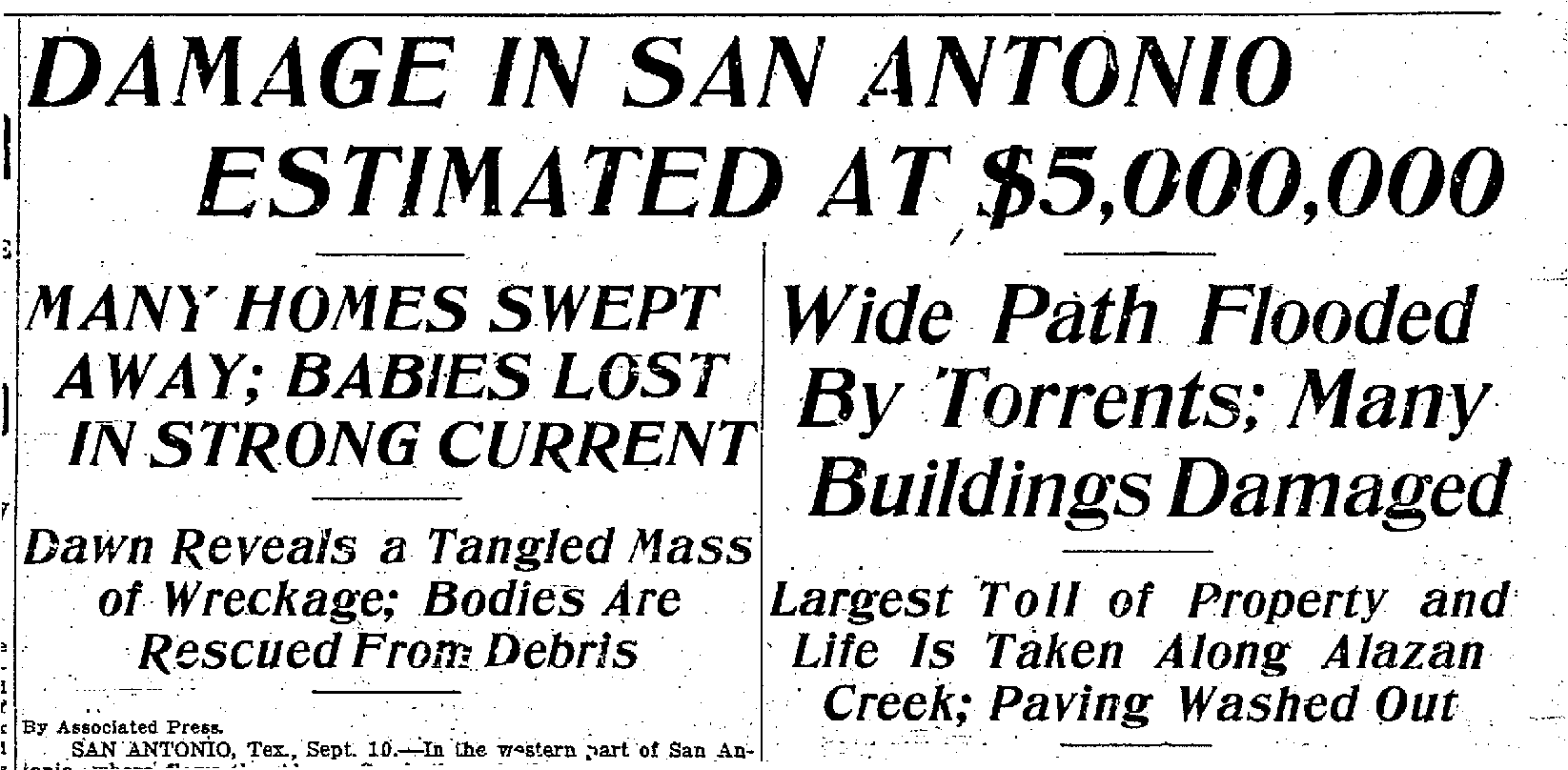
When a tragic flood hit San Antonio on September 8th and 9th of 1921, the Westside suffered the greatest losses. Of the 51 lives lost across the city, 47 were Westside residents – including many young children. The powerful flood washed away houses from W. Commerce to S. Laredo along both sides of the Alazan Creek, leaving thousands of Westside residents homeless. Soon after more corrales appeared along the creek.
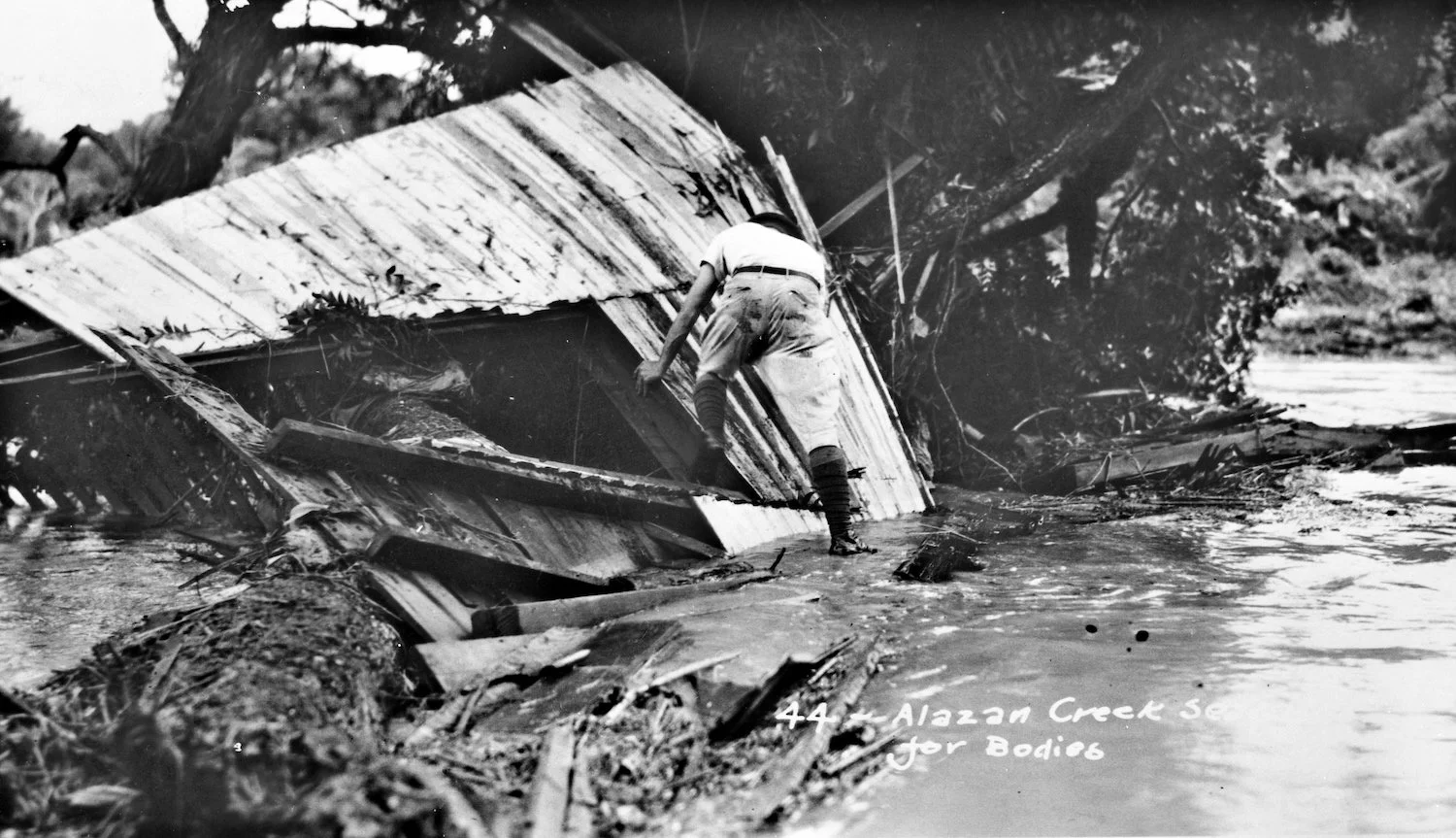
Man looking through the flood debris for bodies along the Alazan Creek, September 1921. Courtesy UTSA Special Collections - Institute of Texas Cultures.
Corrales, named after the horse stalls from which some were converted, generally lacked indoor plumbing, electricity, paved roads, and connections to the city’s sewage system. Tuberculosis, diarrhea, and other health issues associated with a lack of adequate sanitation, as well as house fires due to lack of adequate heating, and seasonal flooding due to lack of flood abatement on the Westside were all too common threats to the safety of local families. Twice in the 1920s the department of health recommended creating new housing units to replace the corrales, but it would take another decade for the city to take responsibility to turn the idea into reality.
City department of health nurse Agatha Cuellar visits a Westside family, September 1936. Courtesy UTSA Special Collections - Institute of Texas Cultures.
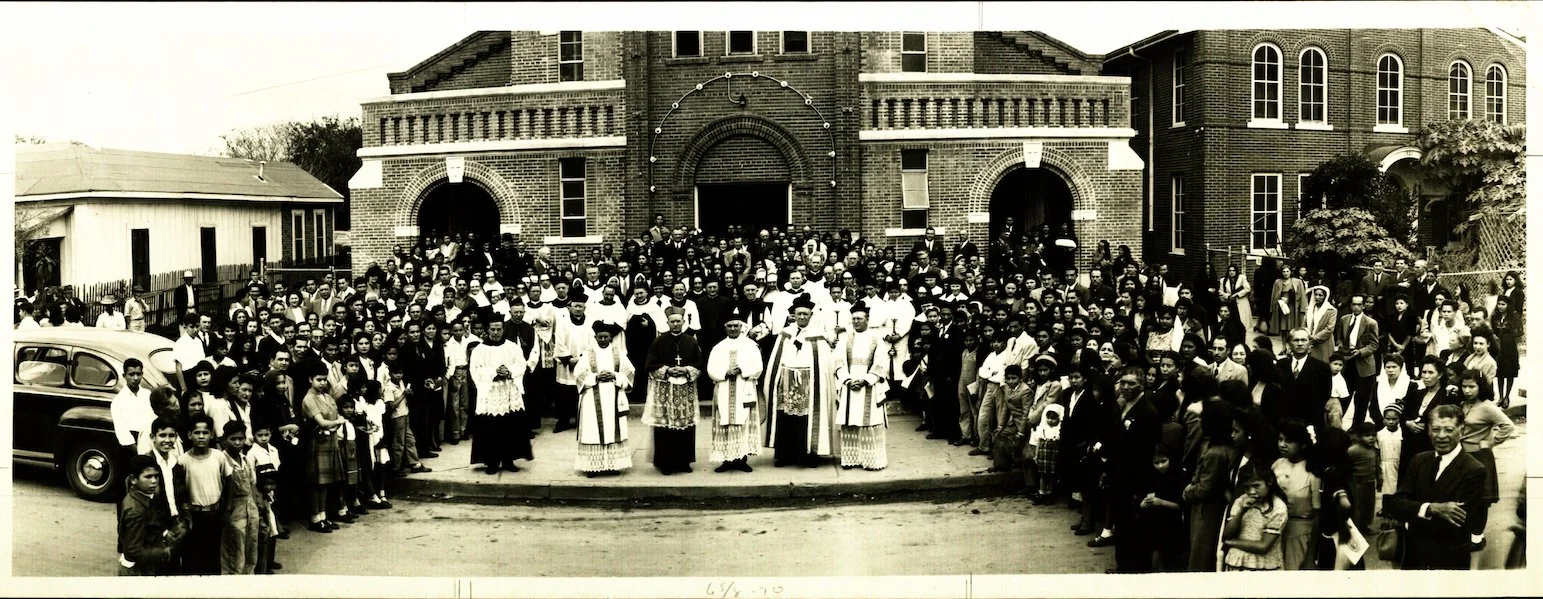
Father Tranchese (center) with his parish in front of Our Lady of Guadalupe Church. Courtesy Texana/Genealogy, San Antonio Public Library.
EL PADRECITO
Father Carmelo Tranchese (1882-1956), a Jesuit priest, was appointed to Our Lady of Guadalupe Church on El Paso Street in the heart of the Westside in 1932.
Struck by the area’s poverty, alleviating the substandard living and working conditions of his parishioners became part of his labor. He supported striking pecan shellers, rallied to fight tuberculosis, and most importantly began a years long fight to bring better housing to Guadalupe parish.
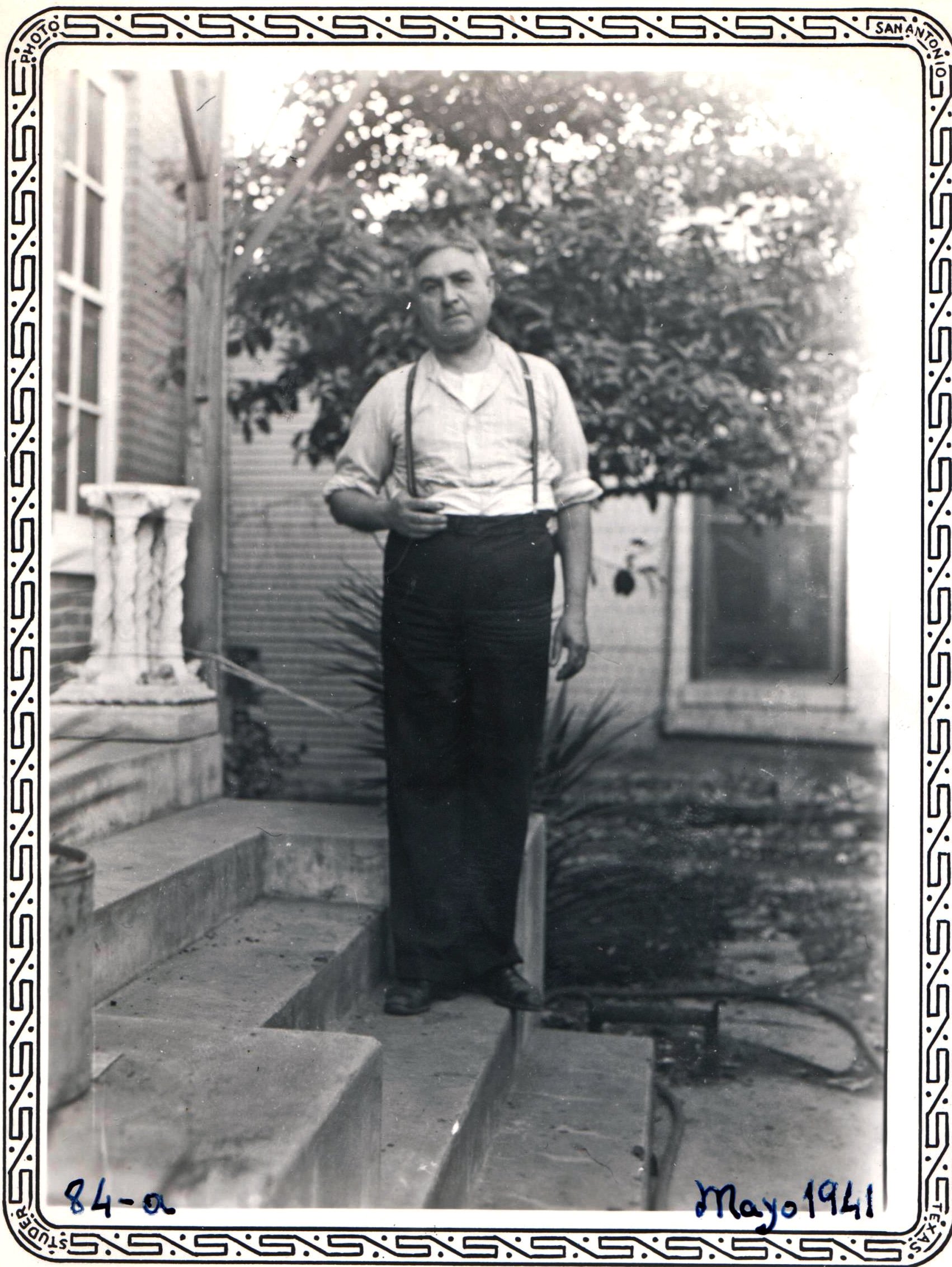
Rev. Carmelo A. Tranchese, S.J., pastor of Our Lady of Guadalupe Catholic Church and the “Father of Public Housing” in San Antonio. Courtesy Sisters of Charity of the Incarnate Word Congregational Archives
- First Lady Eleanor Roosevelt on her tour of San Antonio’s Westside on March 17, 1939
“[It is] the government’s duty to see that the people live well, if they must be called upon to build the prosperity of the Nation, and to defend it in the hour of danger.”
-Rev. Carmelo Tranchese, S.J.
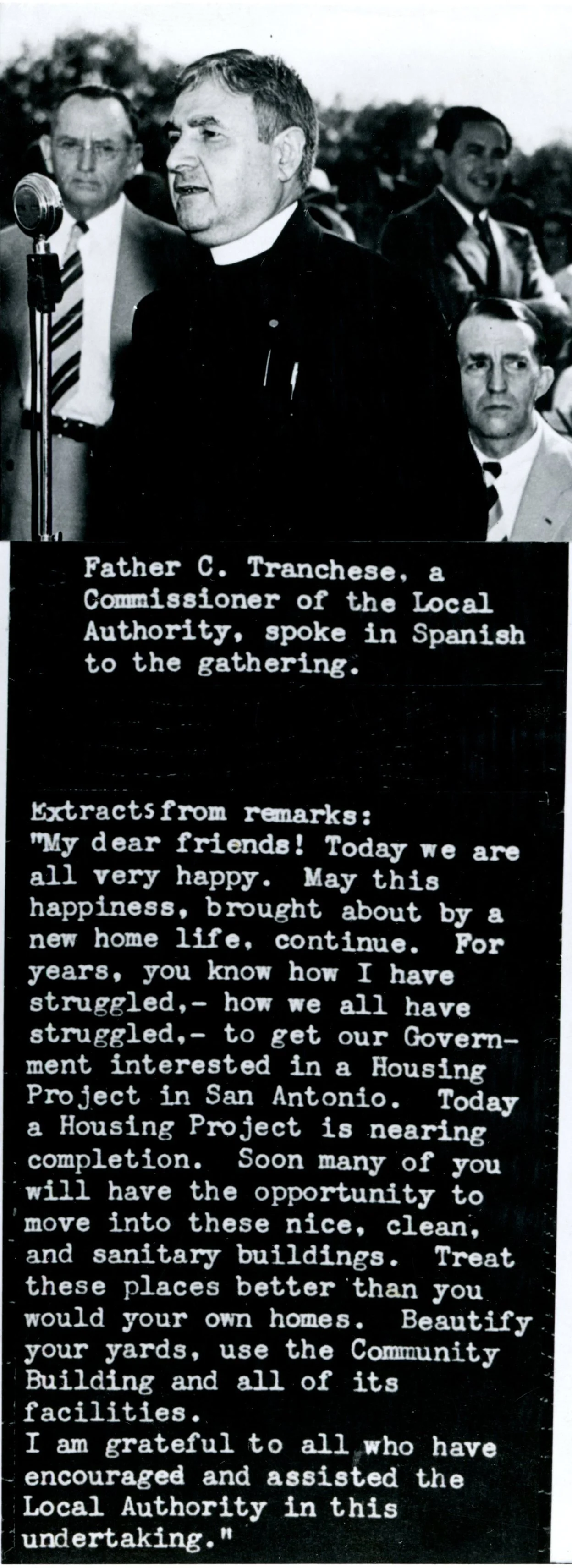
Father Tranchese speaks at the June 28, 1940 Alazan Courts progress ceremony.
Delivering speeches to civic groups and city council and writing letters to government officials, he relentlessly advocated for his flock eventually capturing the attention of President Franklin D. Roosevelt and particularly of First Lady, Eleanor Roosevelt.
“The moving spirit in this housing project is Father Tranchese, who shows his deep interest in the real social question of his people by his determination to see a change in the surroundings in which they live.”
Father Tranchese wrote this poem for President Roosevelt and had it illustrated in Italy. Courtesy FDR Presidential Museum & Library
For years after the Alazan-Apache Courts were finally built, Father Tranchese continued to advocate for more public housing on the Westside as the need was far from met. Today, Father Tranchese remains a beloved Westside figure for his unceasing efforts to affirm the dignity of the Mexicanos of his parish and of the entire community.
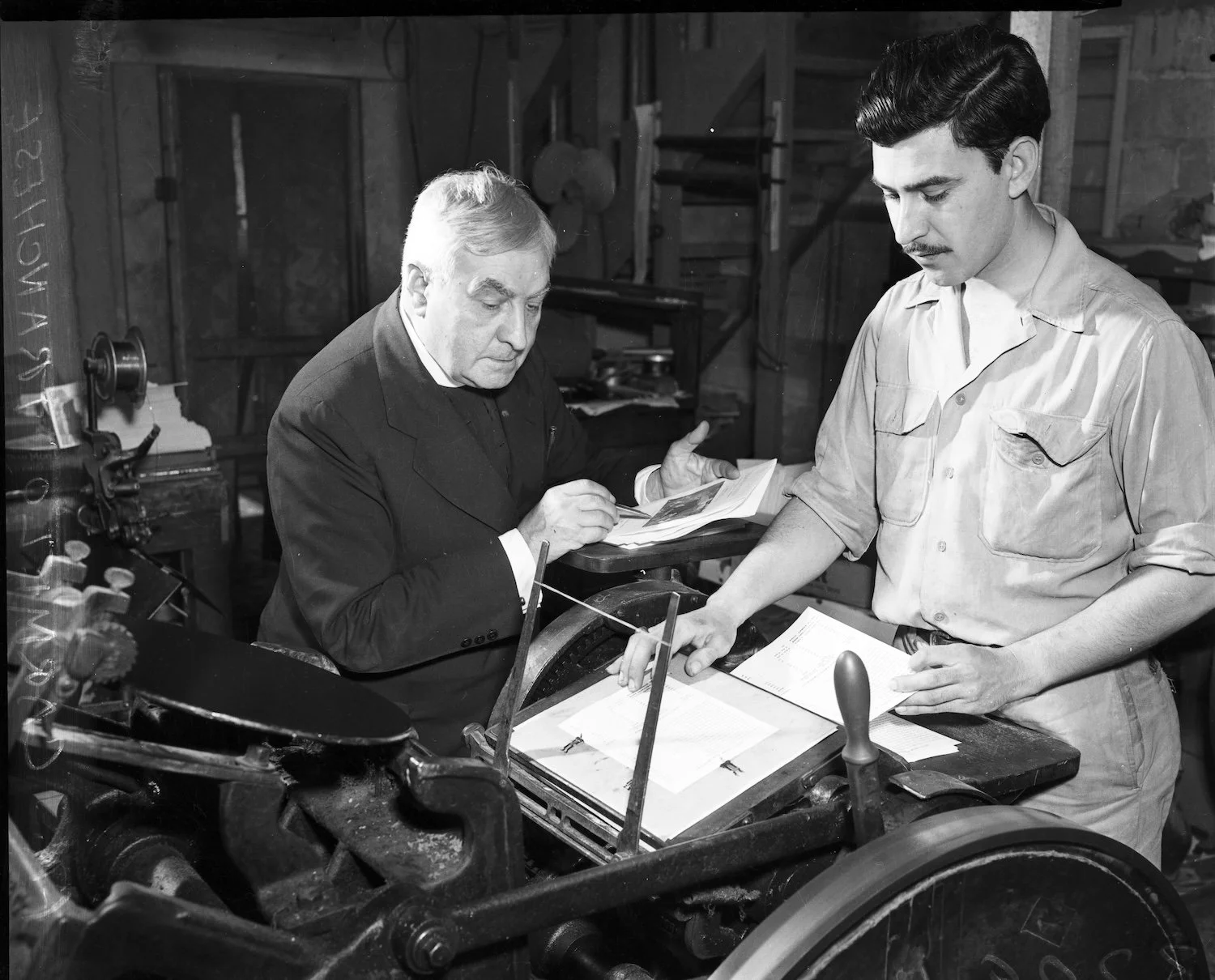
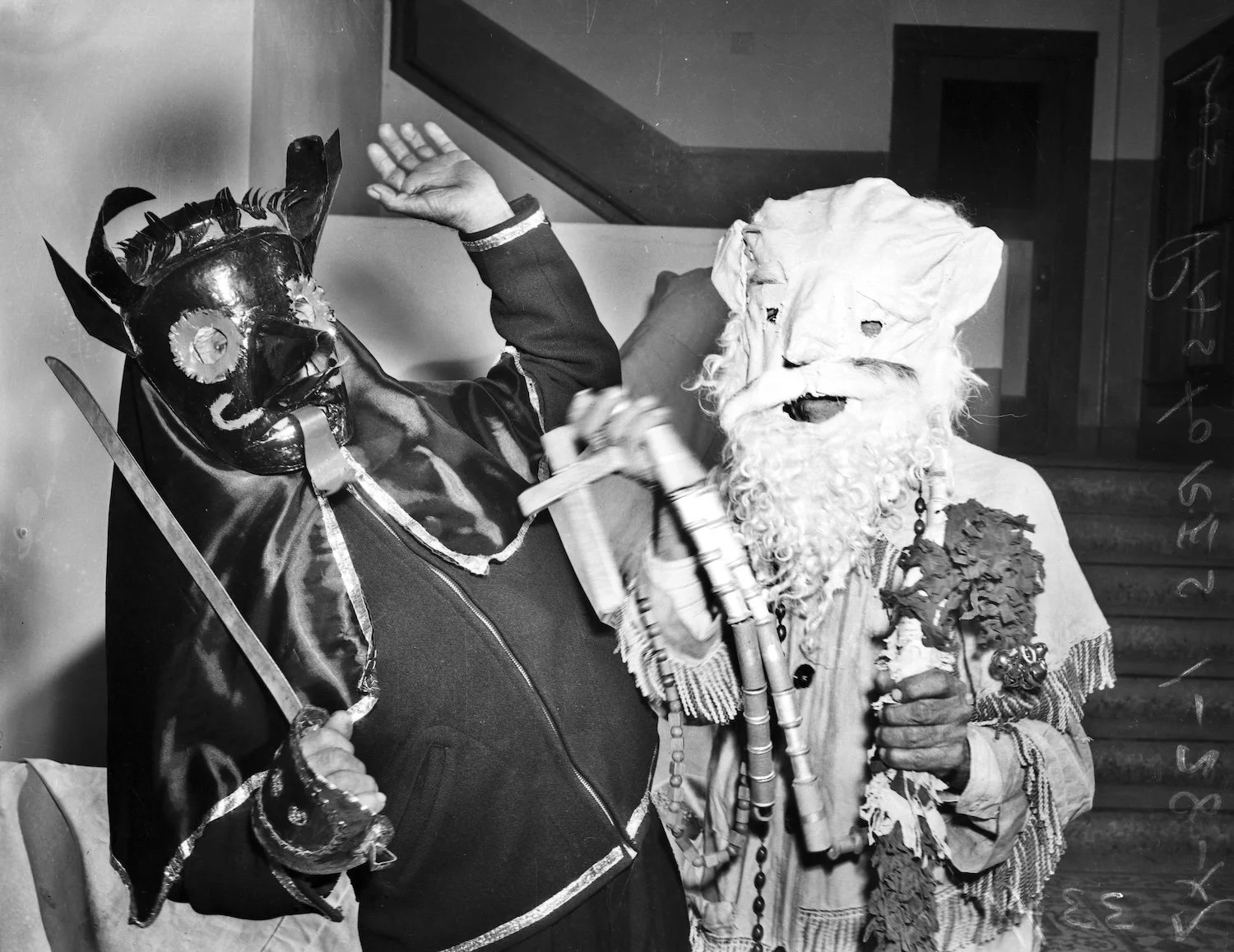
Father Tranchese supported his parishioners’ folk customs, particularly those associated with Catholic religious cycles like Christmas, Easter, and All Saints and All Souls Day. He is noted for his interest in Los Pastores, a traditional play that Our Lady of Guadalupe Church continues to perform.
In 1949, Tranchese collaborated with Felix Treviño on a printed version of Los Pastores.
Los Pastores characters Lucifer and the Hermit depicted by C. Zavala and Juan Arellano.
Courtesy UTSA Special Collections – Institute of Texan Cultures.
SAVE LOS COURTS!
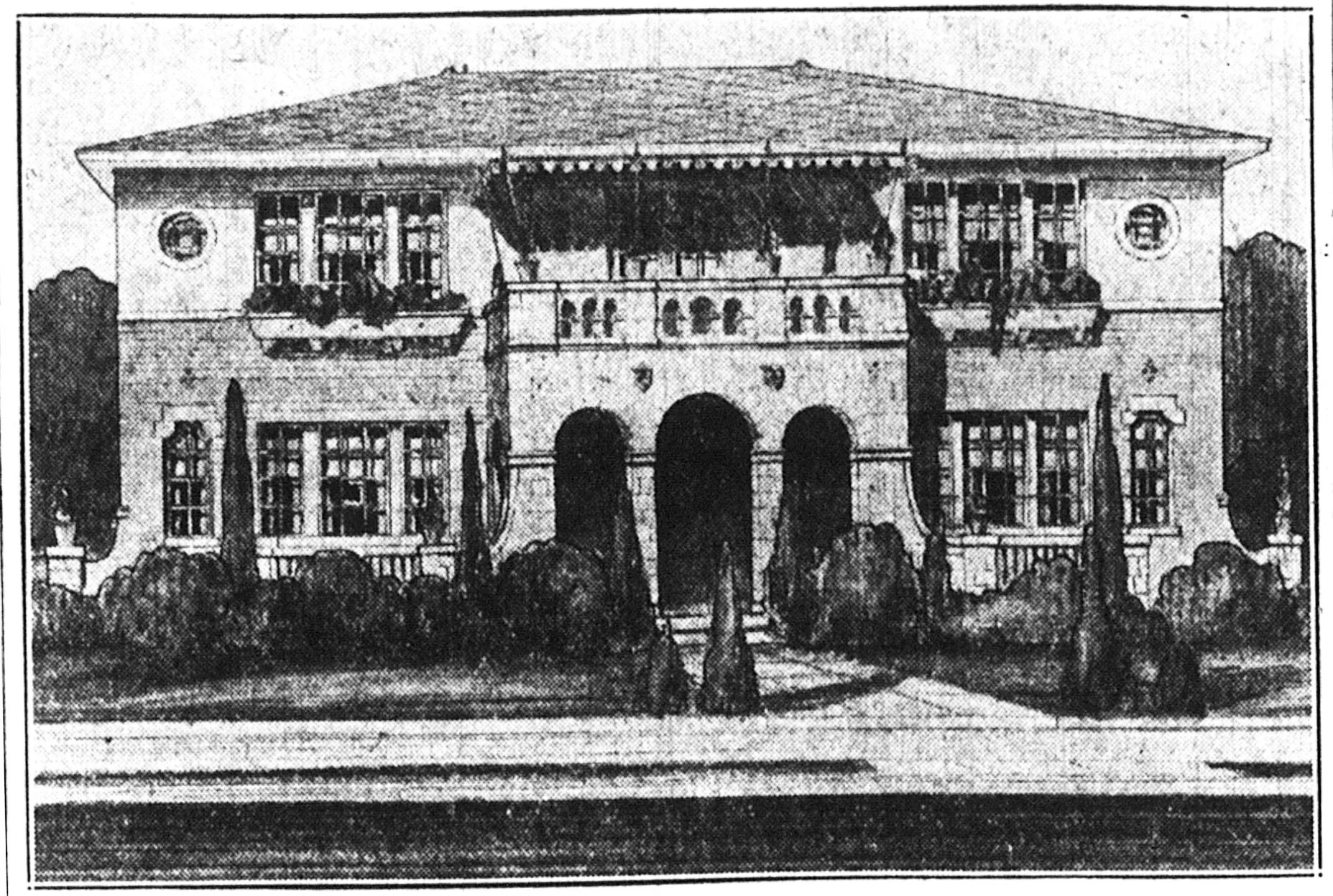
One of Nayfach’s Monticello Park designs. He strived to make good architecture accessible to everyone, from the middle class to the poor.
The Architect
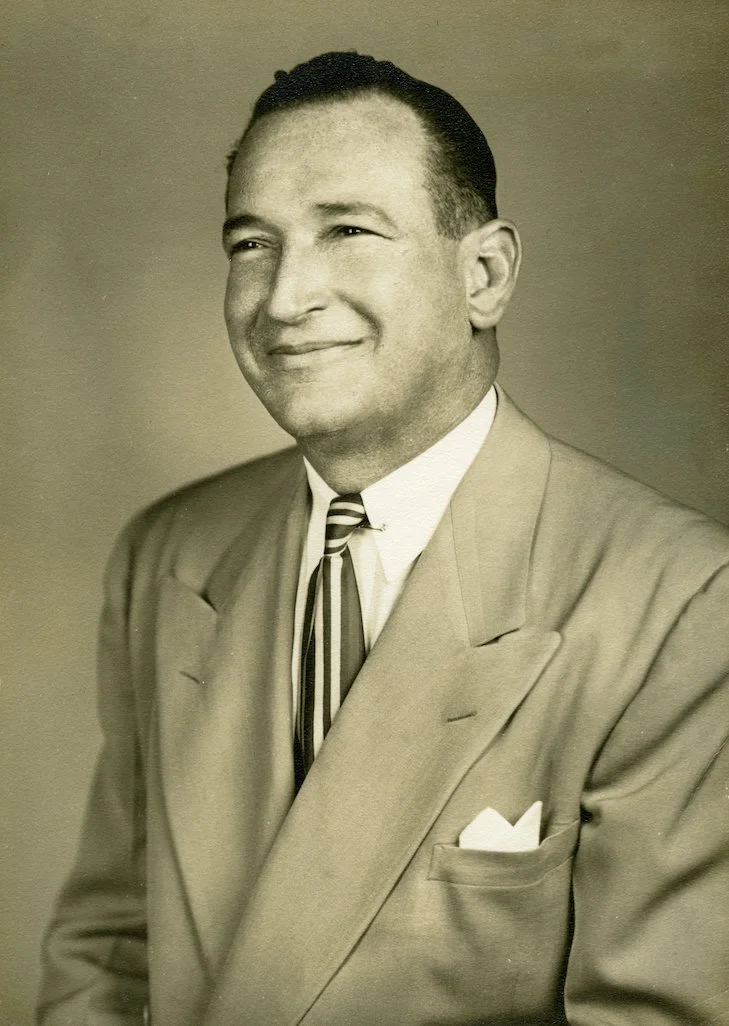
Nathan Straus Nayfach (1908-1948) was the primary architect of the Alazan-Apache Courts.
The son of Russian Jewish immigrants, he graduated from Brackenridge High School before heading to the University of Texas to study architecture. Perhaps best known for designing numerous houses in Monticello Park, Nayfach was also sensitive to the struggles of the Mexican American community. He chaired the local Junior Chamber of Commerce’s so named “Slum Clearance Committee” and gave lectures around town to rally support for improved housing on the Westside. Close friends with Father Carmelo Tranchese, they traveled to Washington, DC to promote the cause of public housing. When federal funding was finally secured in 1937, Nayfach was one of the architects selected to design Los Courts.
Nathan Straus Nayfach, primary architect of the Alazan-Apache Courts as well as the now demolished Victoria Courts, which were for white residents. Courtesy Ruth Fagin-Wilen
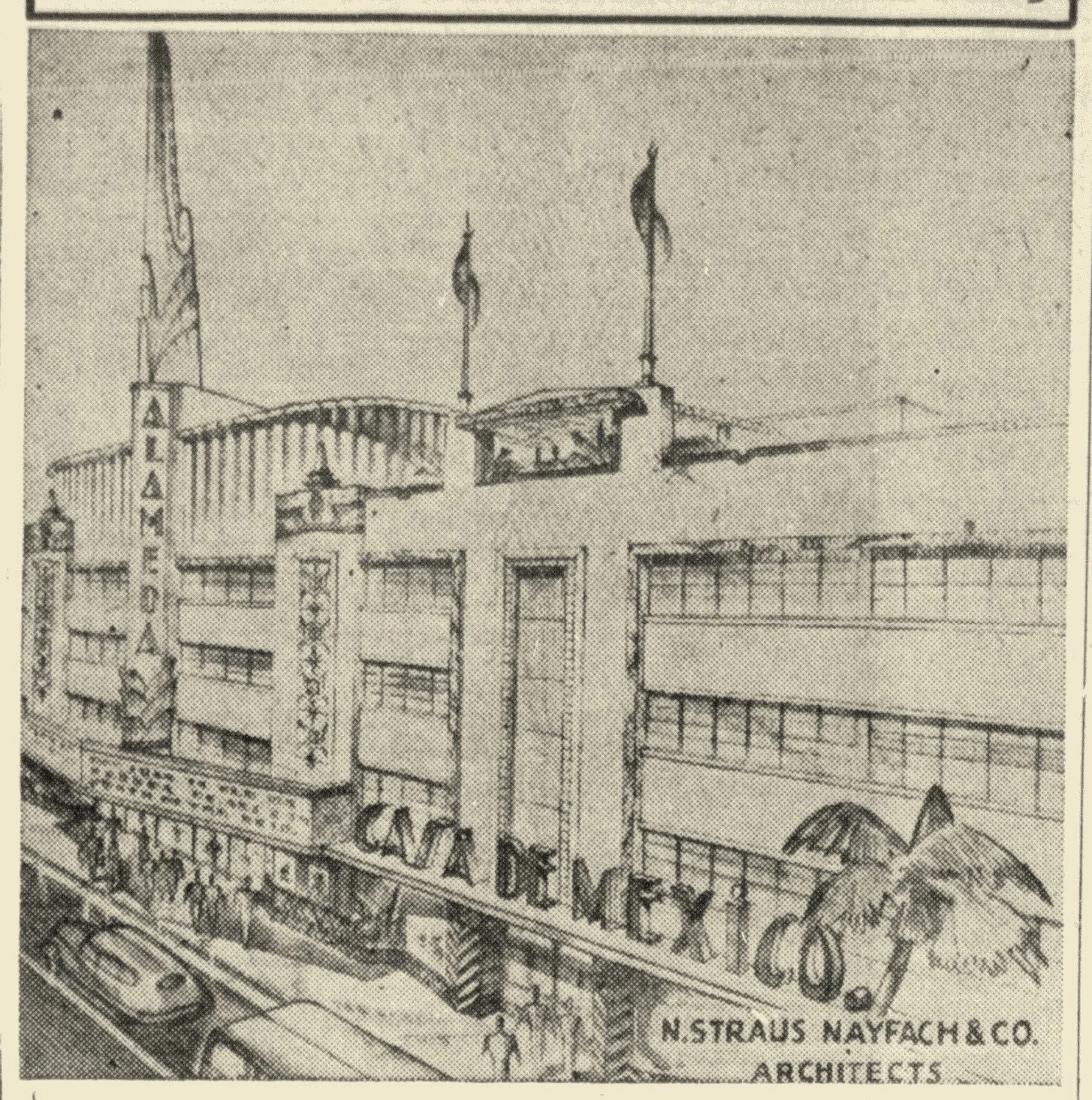
Artist’s sketch of the Teatro Alameda.
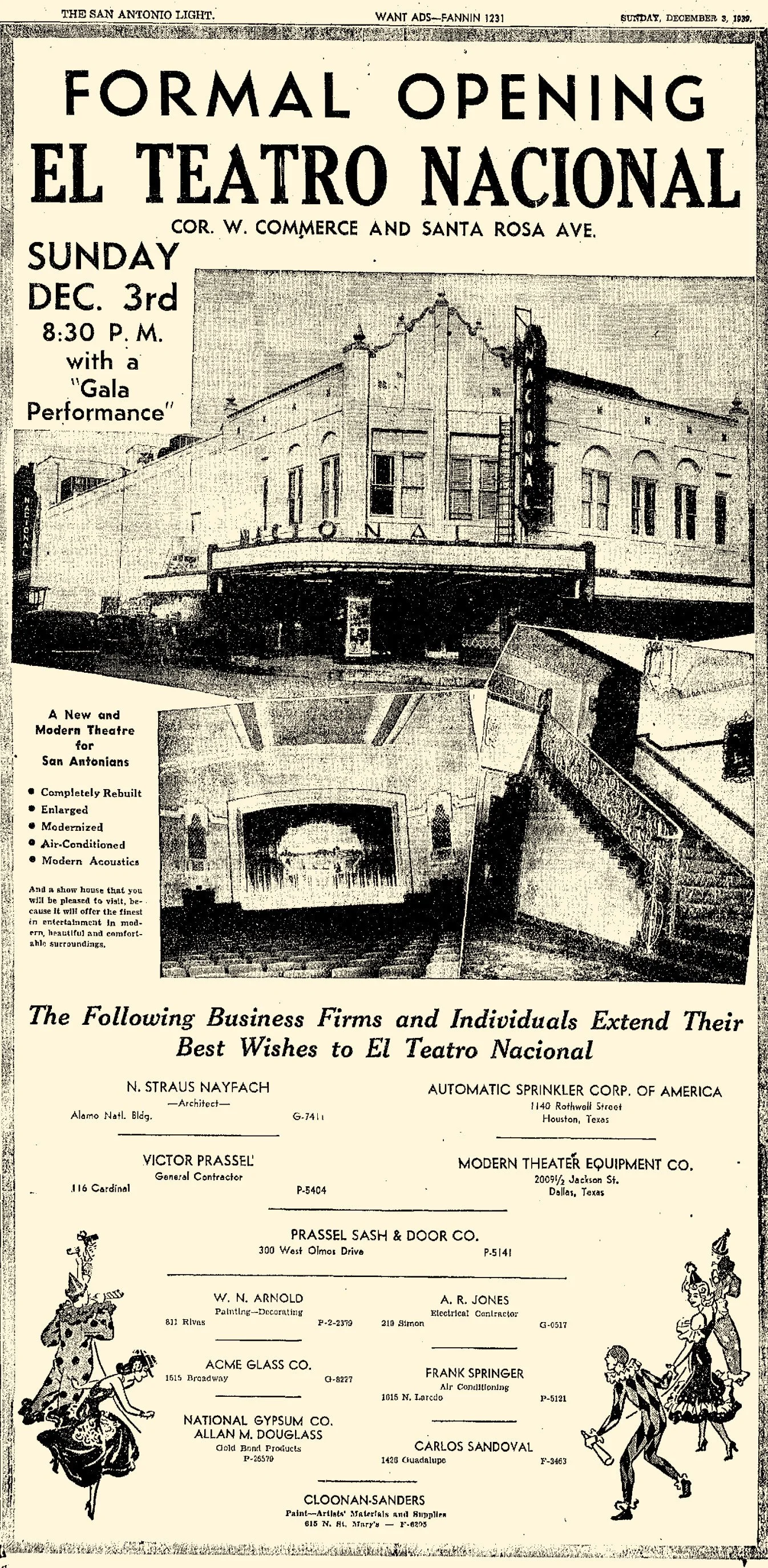
To develop his design Nayfach studied public housing in Mexico City, which pre-dated the U.S. public housing system. Building public housing for low-income Mexican Americans was one of his greatest prides, but so was designing Spanish language theaters. He remodeled the Teatro Guadalupe and the now demolished Teatro Nacional, and designed the spectacular Teatro Alameda and Casa de Mexico on Houston Street. Sadly, he passed away before the Alameda’s completion, but his compassion for San Antonio’s Mexican American population lives on through the structures he created.
Advertisement for the Teatro Nacional
Have a story to tell?
Did you grow up in the Alazan-Apache Courts or have memories of times spent there?
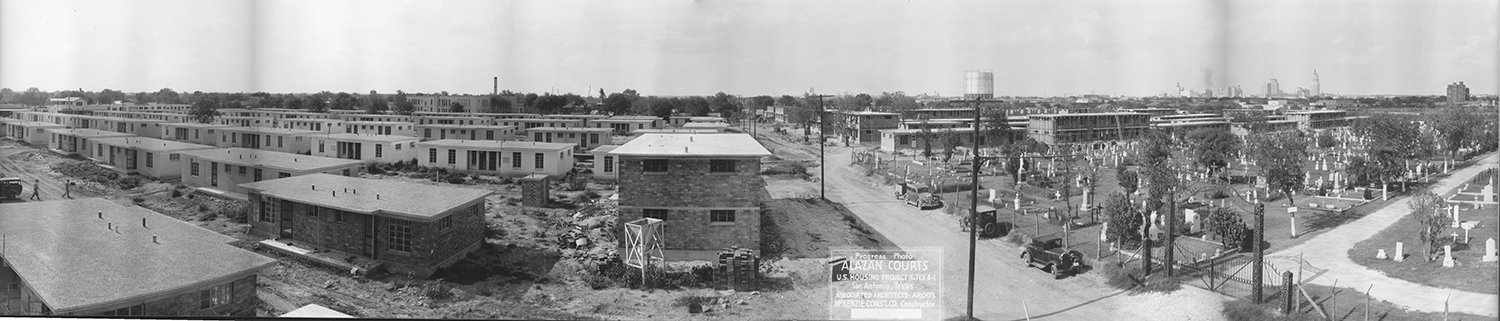
Panoramic view of the Alazan construction site. Courtesy June McKenzie Eubank.
Building
the Courts
The Junior Chamber of Commerce (Jaycees) spearheaded an initial attempt to clear the Westside of substandard housing and build adequate housing in 1935 with a “Slum Clearance Committee” chaired by N. Straus Nayfach.
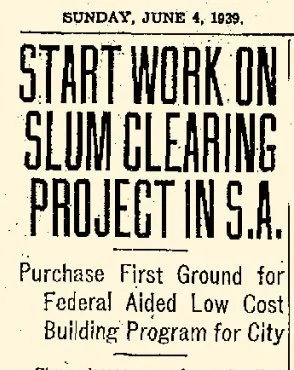
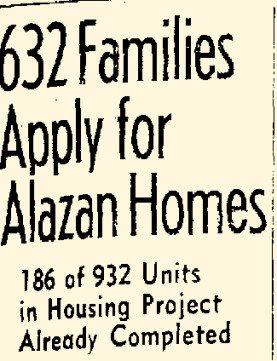

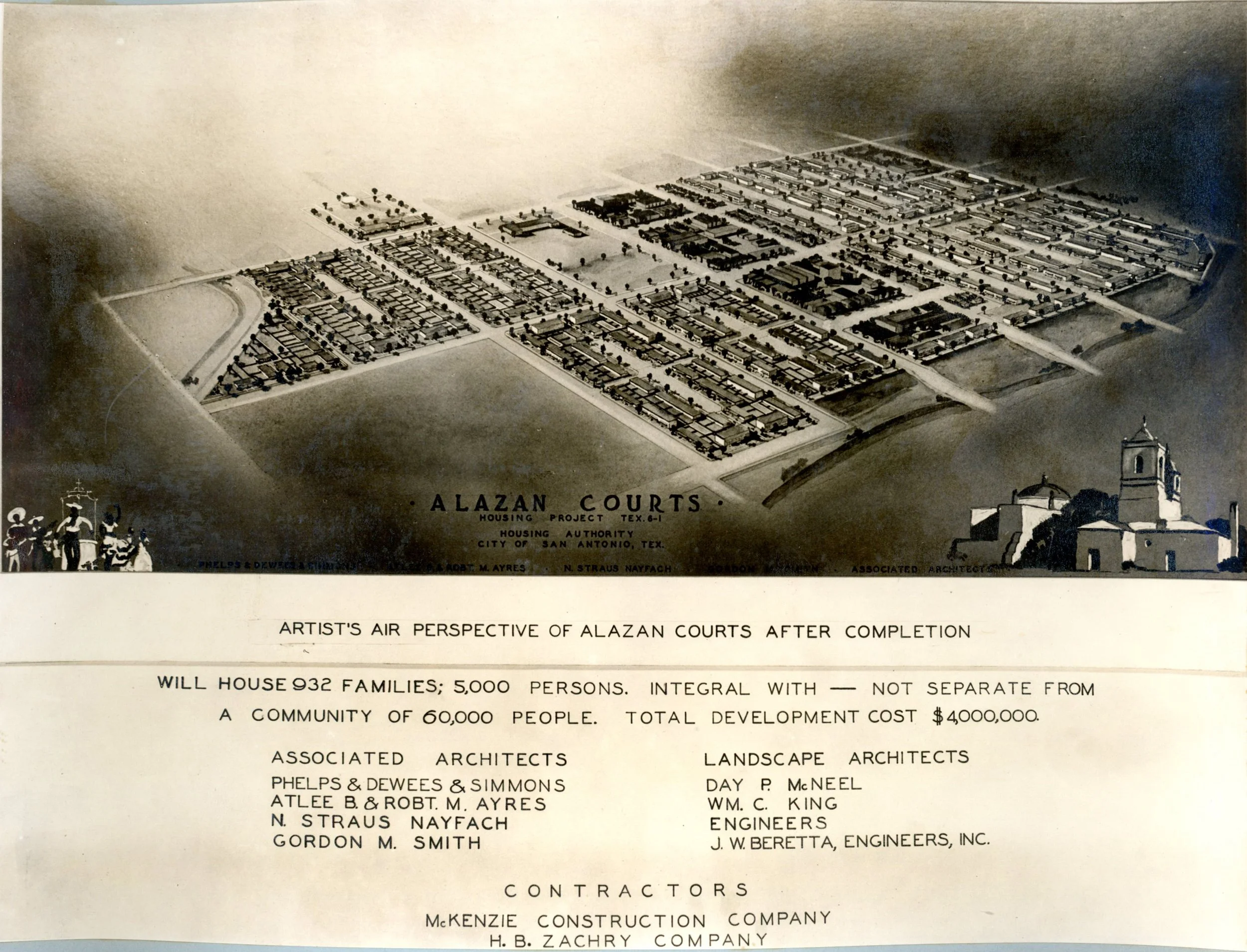
The Public Works Administration committed $4 million to the endeavor, but the property owners were resistant to lose their rental incomes and the project fell apart. Not to be deterred Father Tranchese, the Jaycees, and the Liga de Leales Latinoamericanos continued to lobby the city and federal government until funding for public housing in San Antonio was finally approved in September 1937, just a few months after the creation of the federal United States Housing Authority and the local San Antonio Housing Authority. Thirty acres were cleared to make way for the Alazan-Apache Courts, which when fully completed in 1942, housed nearly 5,000 residents.
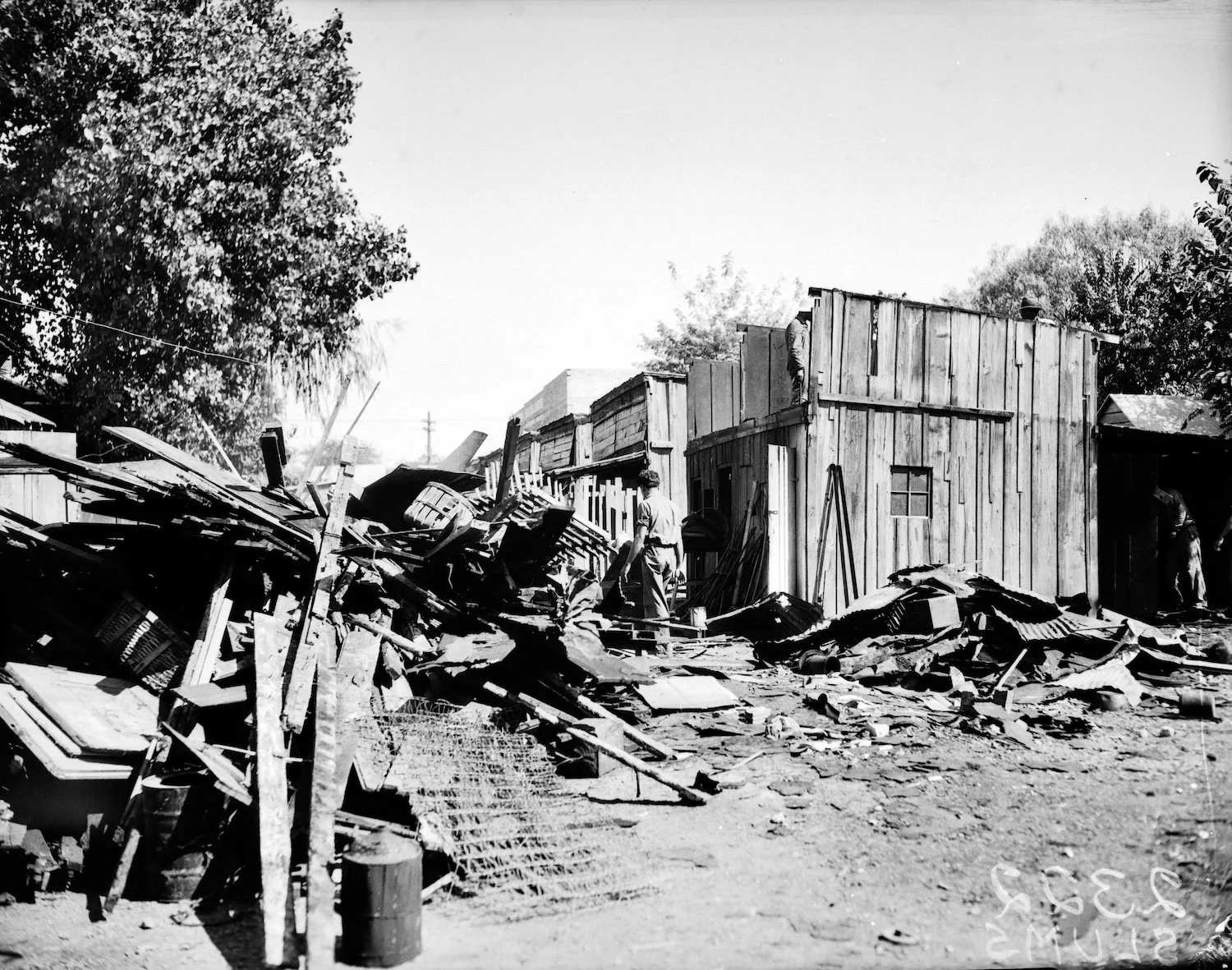
Demolition of houses near Veracruz and San Jacinto Streets to make way for the Alazan-Apache Courts, September 1939. Courtesy UTSA Special Collections – Institute of Texan Cultures.
June 17, 1937 -
San Antonio Housing Authority (SAHA) is created
September 1, 1937 - Wagner Steagall Act creates the United States Housing Authority (USHA)
September 1937 -
USHA approves funding for San Antonio’s housing program
July 20, 1938 – President Roosevelt approves San Antonio’s application to build the Alazan-Apache Courts
July 28, 1938 – Contracts and loans for the project are secured
March 17, 1939 – First Lady Eleanor Roosevelt visits San Antonio and tours the Westside with Father Tranchese
April 28, 1939 – After many delays due to stalled land price negotiations, construction is authorized to begin on the Alazan-Apache Courts
August 1940 – First units completed
March 15, 1941 – Remaining units open to residents
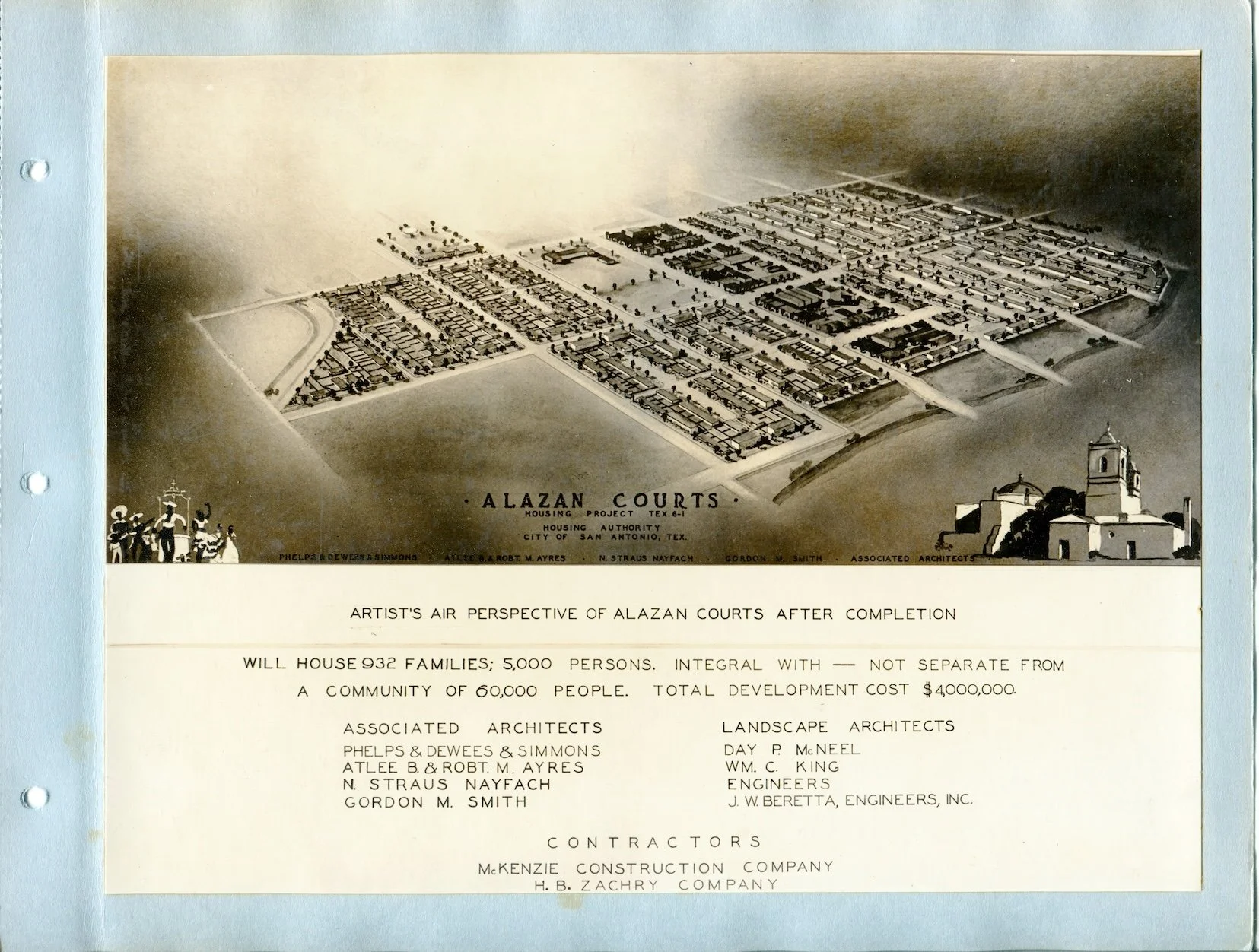
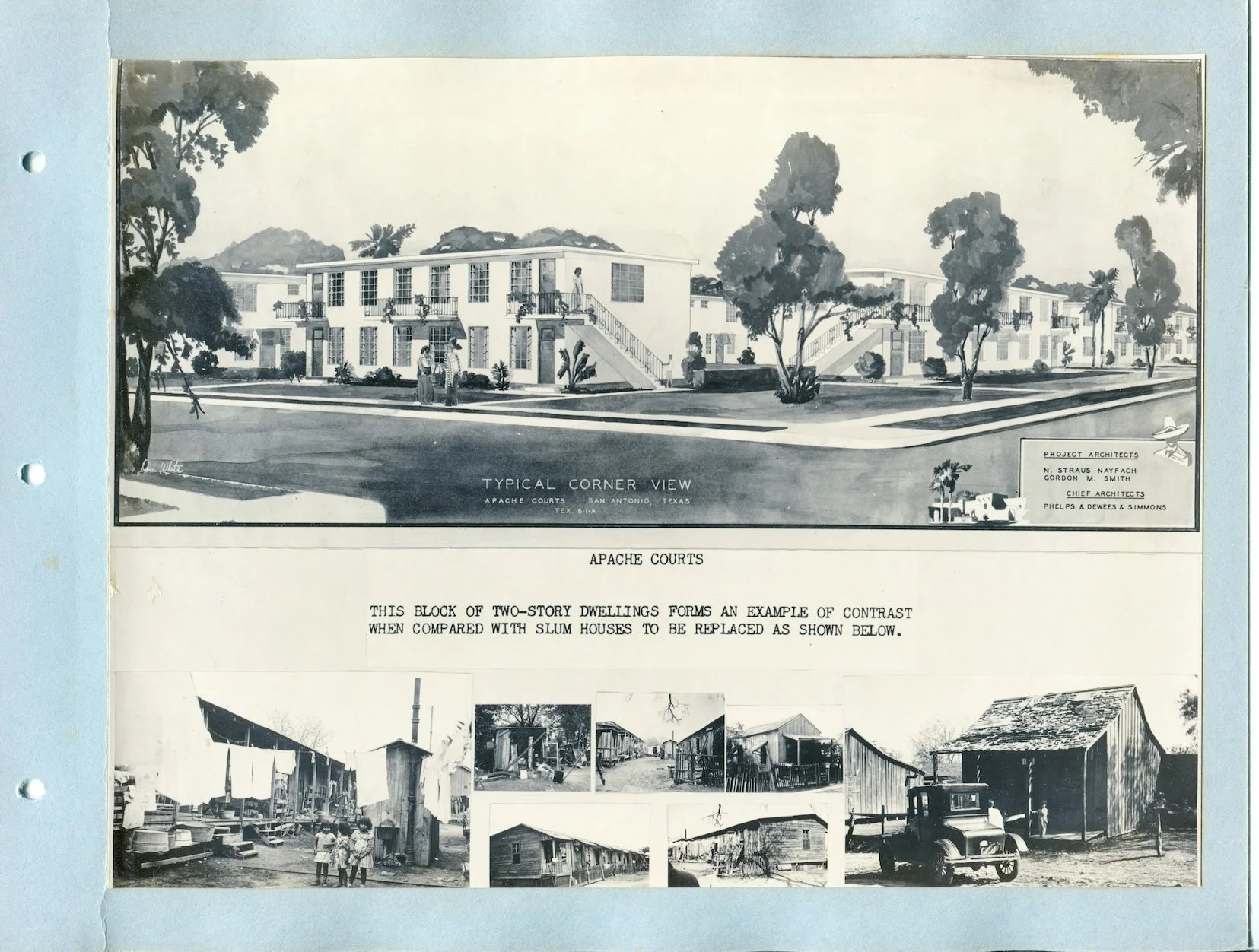
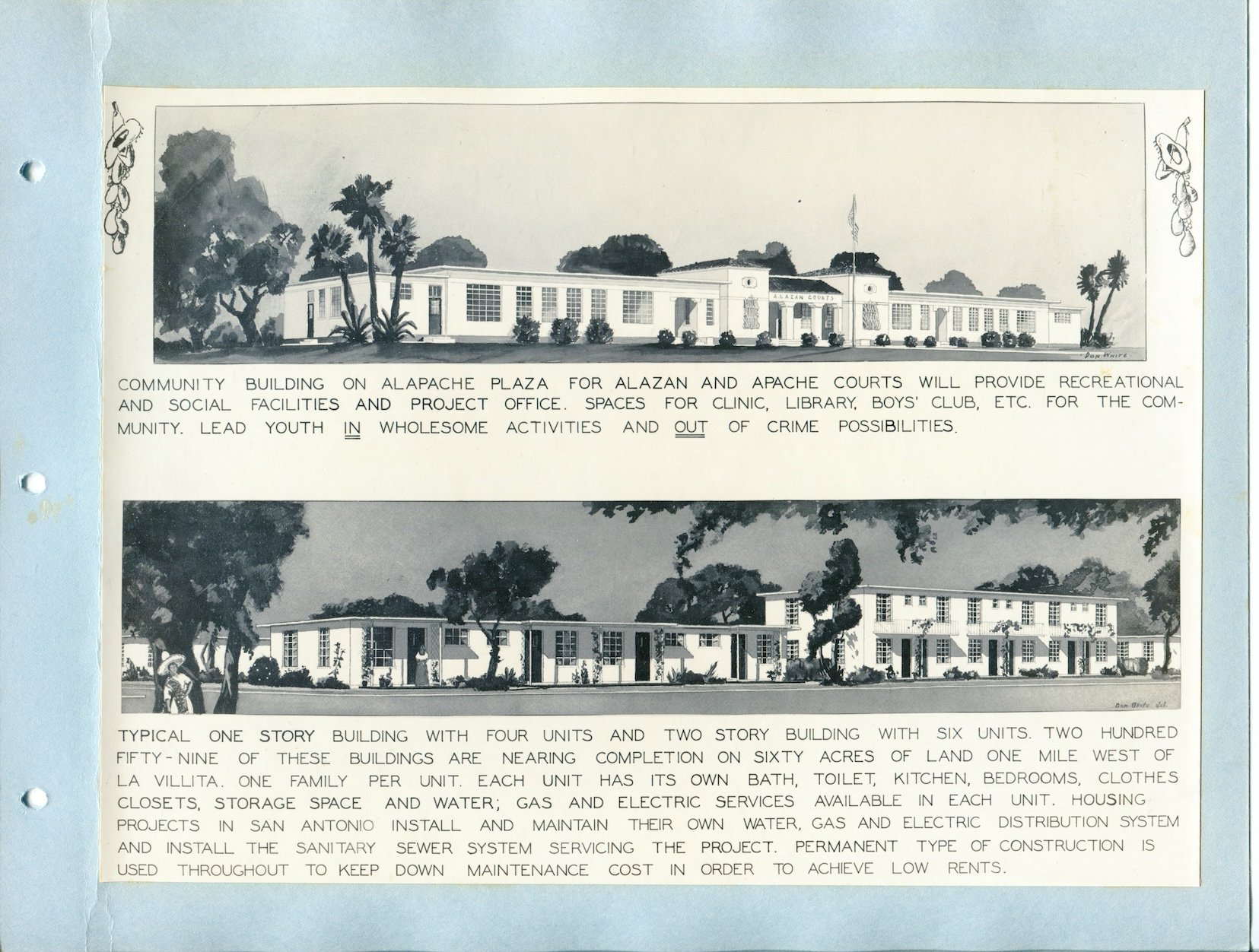
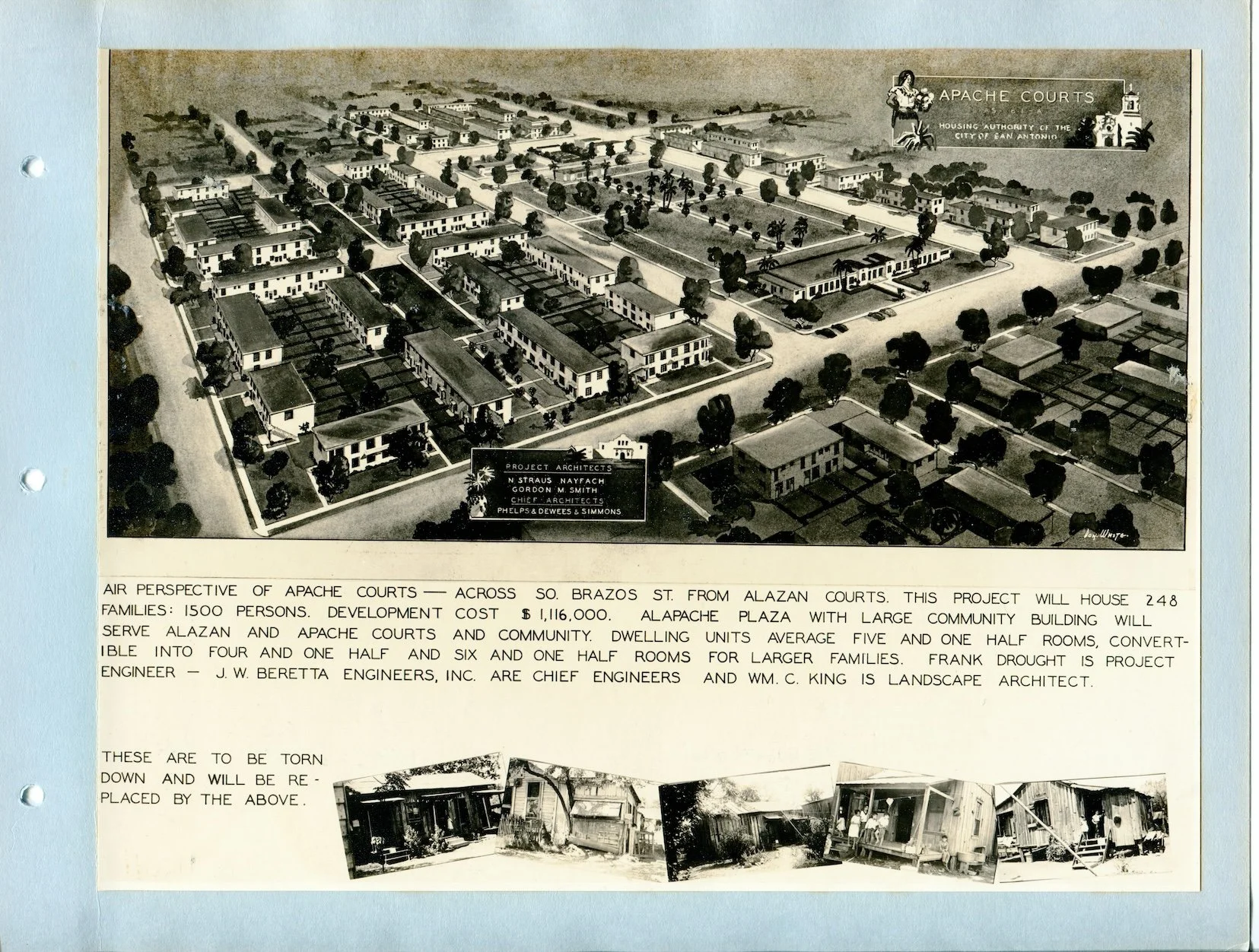
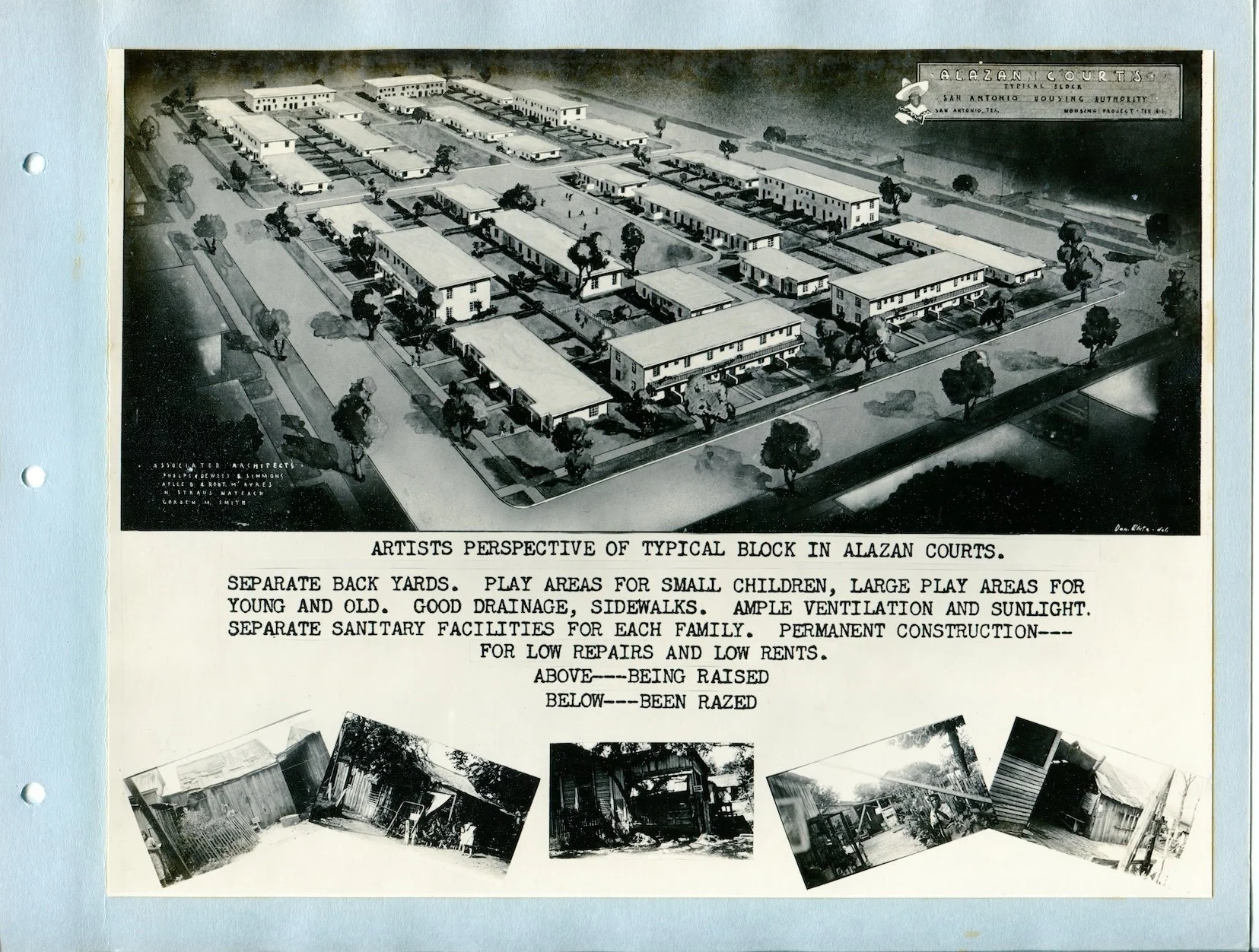
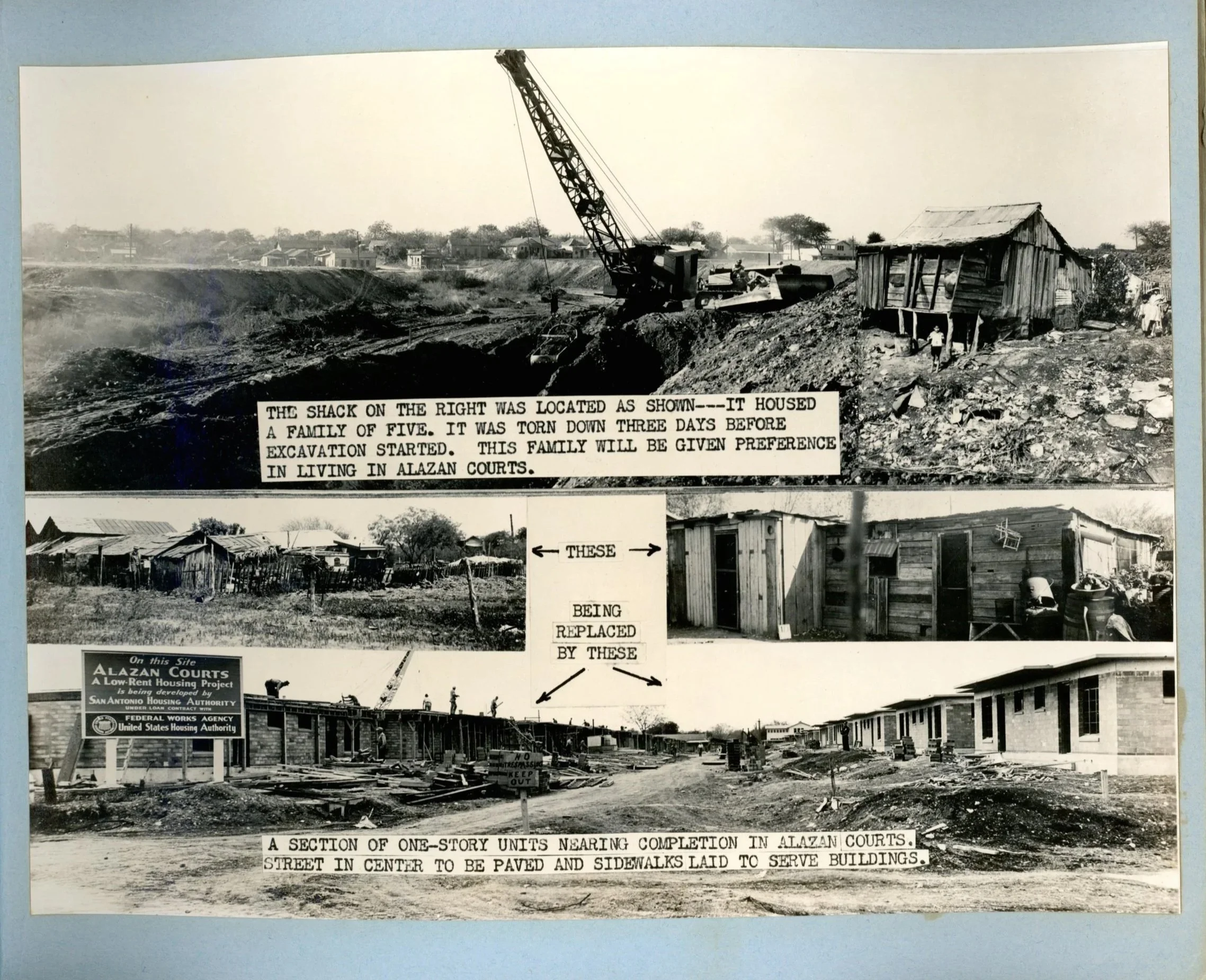
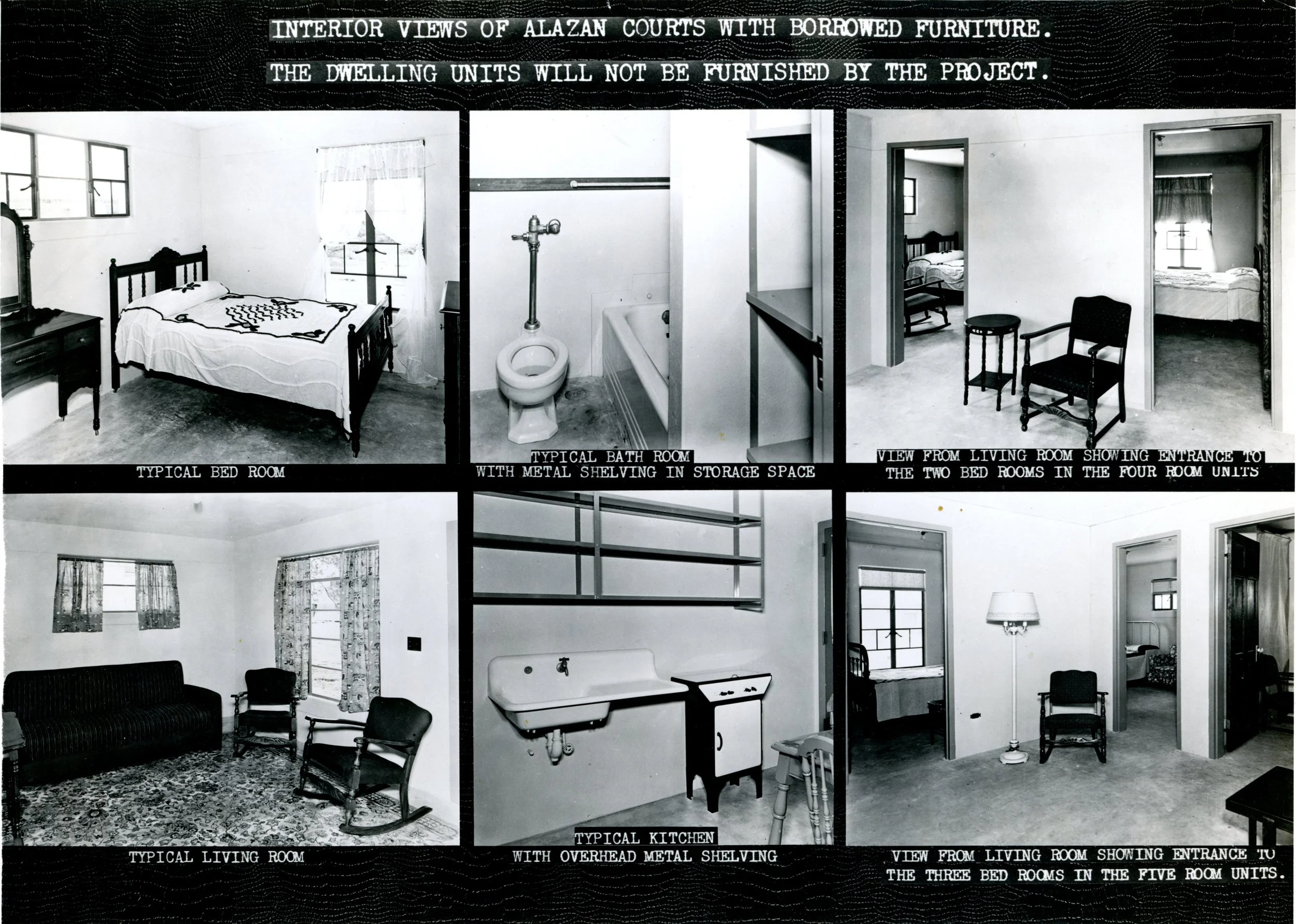
Illustrations and images from USHA’s Pictorial Supplement to the 1939 Annual Report showing the Alazan-Apache Courts.
Illustrations and images from USHA’s Pictorial Supplement to the 1939 Annual Report showing the Alazan-Apache Courts.
Illustrations and images from USHA’s Pictorial Supplement to the 1939 Annual Report showing the Alazan-Apache Courts.
Life At the Courts
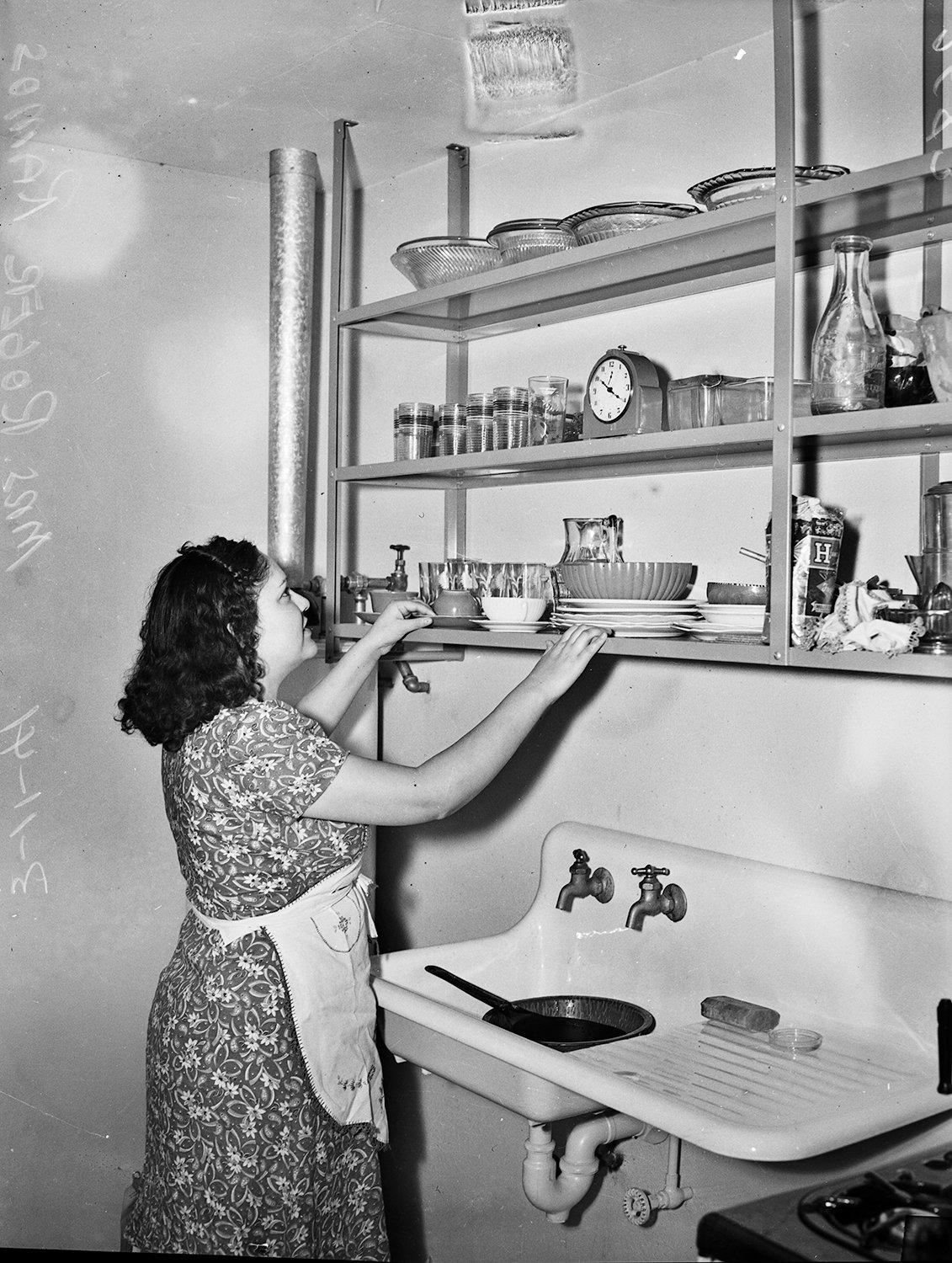
Mrs. Roger Ramos shows off her new kitchen in the Alazan Courts, 1941. Courtesy UTSA Special Collections – Institute of Texan Cultures.
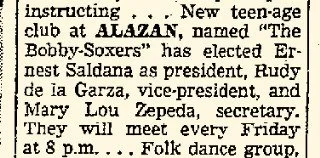
Excerpt from San Antonio Express-News, January 7, 1952
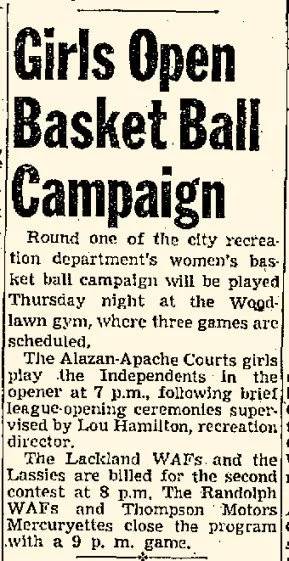
Excerpt from SA Light, January 5, 1950
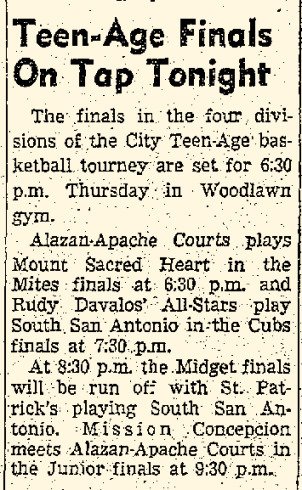
Excerpt from San Antonio Express-News,
March 3, 1952
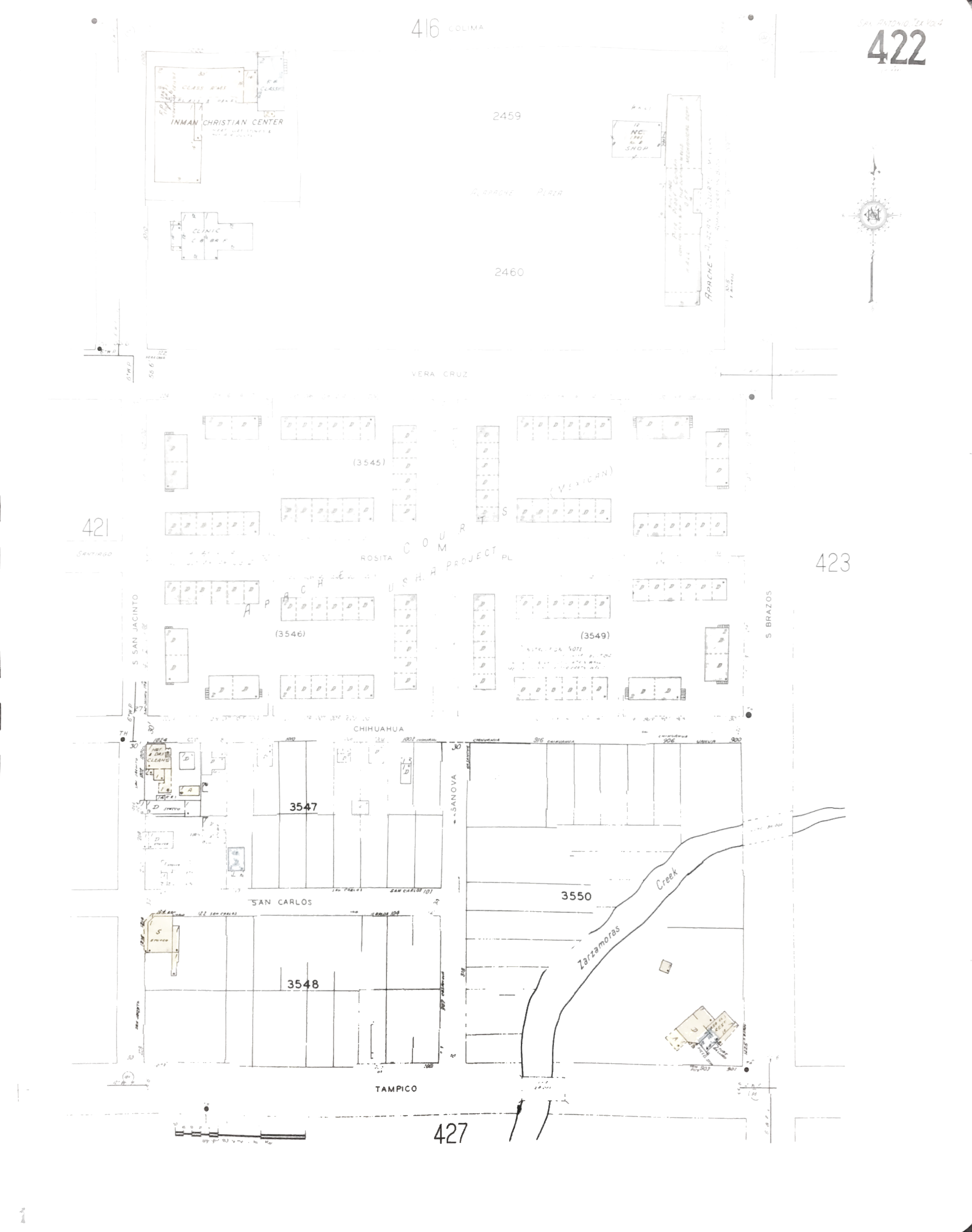
The first residents of the Alazan-Apache Courts were required to have an income of between $350 and $850 a year. This left many Westside residents who made less money ineligible. Additionally, families with heads of household who were not citizens and those with more than 8 members were disqualified. Still, there were also far more qualified applicants than there were available units. The lucky 4,994 people selected to fill the 1,180 housing units at Los Courts experienced a new life with modern amenities as well as on-site social and recreation services including a library, health clinic, nursery school, and adult education classes for rent ranging from $8.75 to $14 per month.
The Courts were equipped with modern amenities that were hard to find in the homes they replaced. Private bathrooms, closets, and kitchens with gas and electric appliances such as water heaters and cooking ranges vastly improved the residents’ quality of life.
As early as 1945 a study showed that the improved living conditions at the Alazan-Apache Courts had a positive impact on residents’ health.
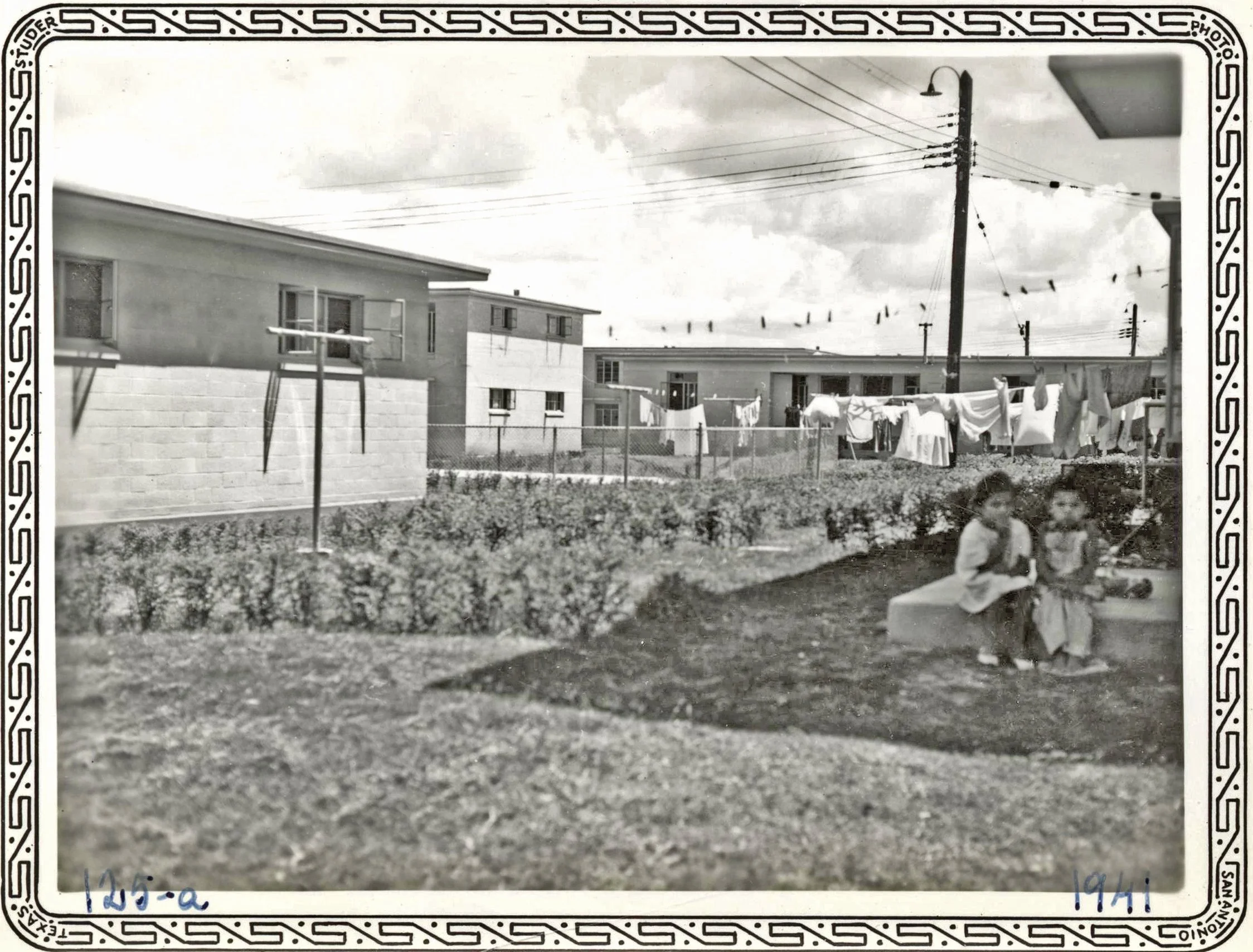
Children sitting on a porch at the Alazan-Apache Courts, 1941. Courtesy Sisters of Charity of the Incarnate Word Congregational Archives.
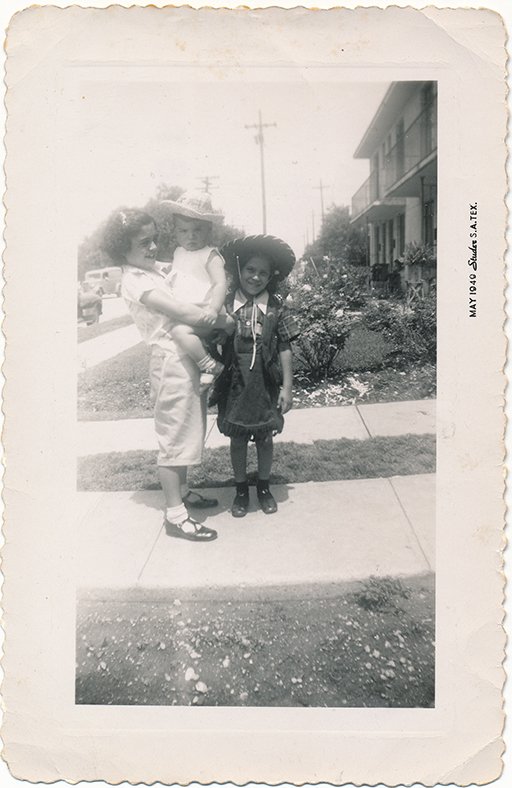
Irma Arellano Carreon with two siblings in front of their home at Los Courts. Courtesy Irma Carreon. Courtesy of Esperanza Peace and Justice Center.
Irma Arellano Carreon was the first baby born at the Alazan-Apache Courts. Courtesy Irma Carreon.
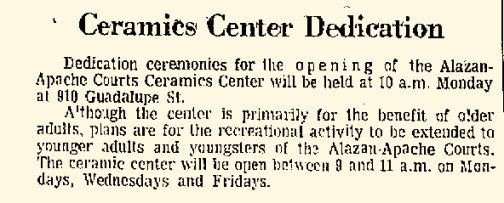
Excerpt from San Antonio Express-News, March 6, 1972
The Westside had long been home to the city’s highest tuberculosis rates, but the death rate at the Alazan-Apache Courts was consistently less than in adjoining blocks – areas that continued to struggle with inadequate housing and basic sanitation due to a lack of municipal services through the 1960s.
SAVE LOS COURTS!
Community & Recreation
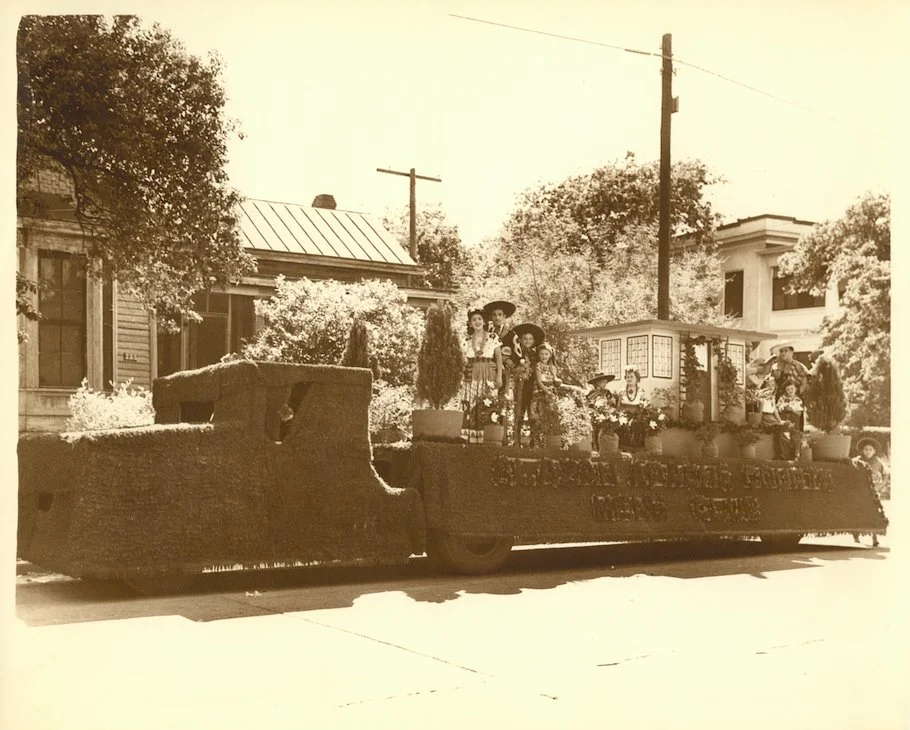
Alazan-Apache Courts parade float.
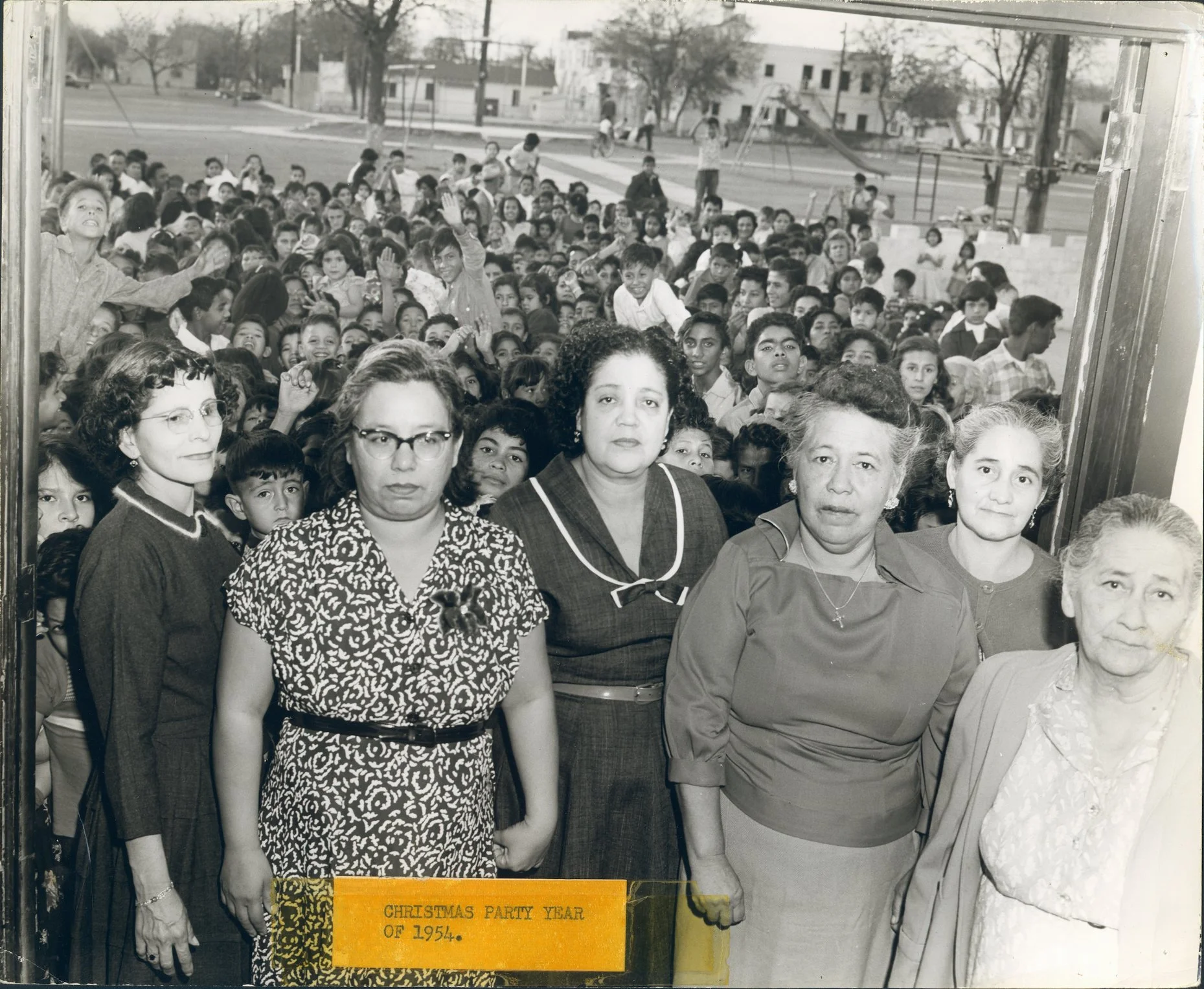
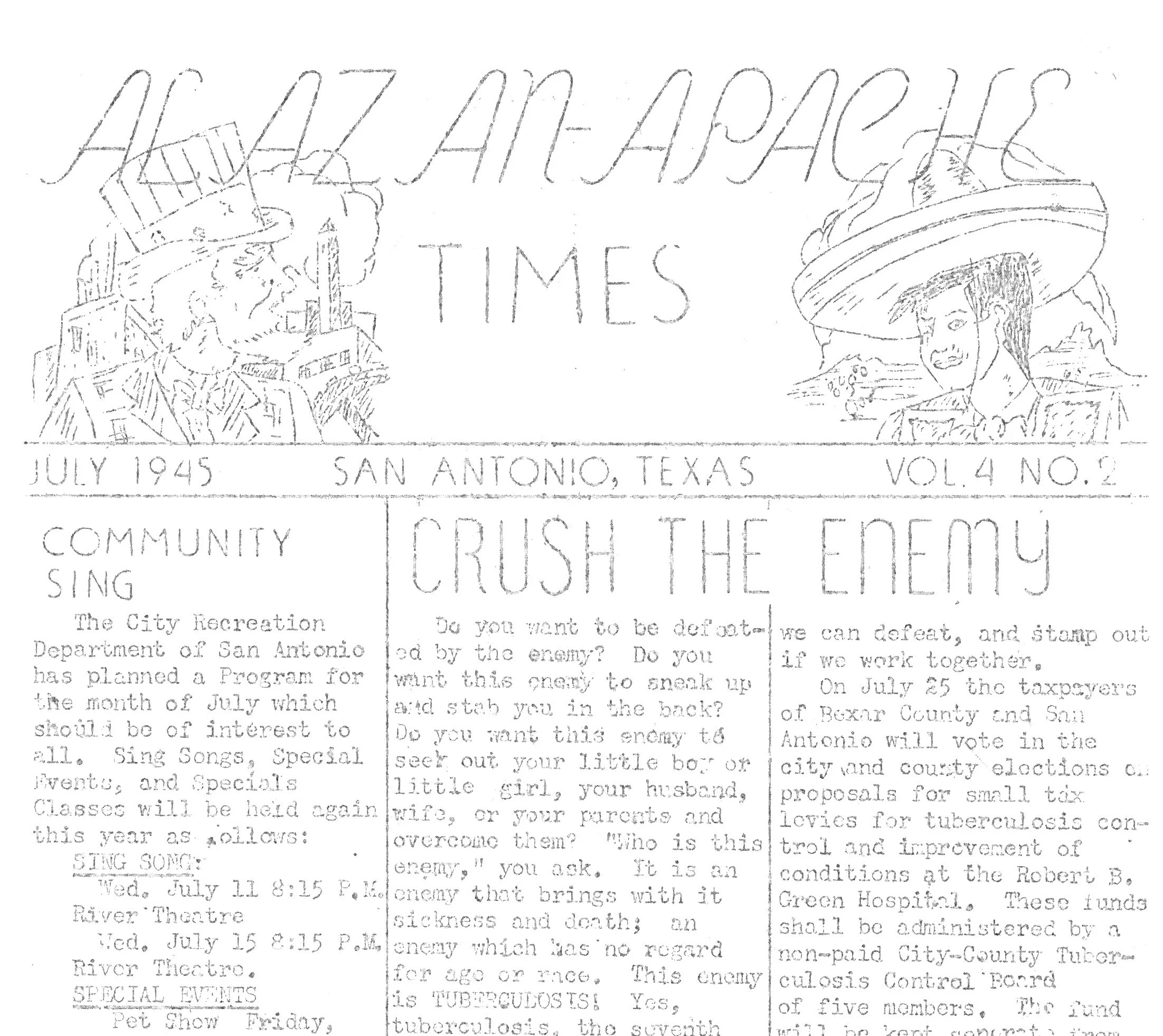
One idea behind the coordination of these activities was to make good citizens of public housing tenants, but residents also pursued their own interests and initiated community projects like the Alazan-Apache Courts Times, a newsletter; organized dances; planted gardens; and elected officers to a residents’ association, a practice that continues to this day.
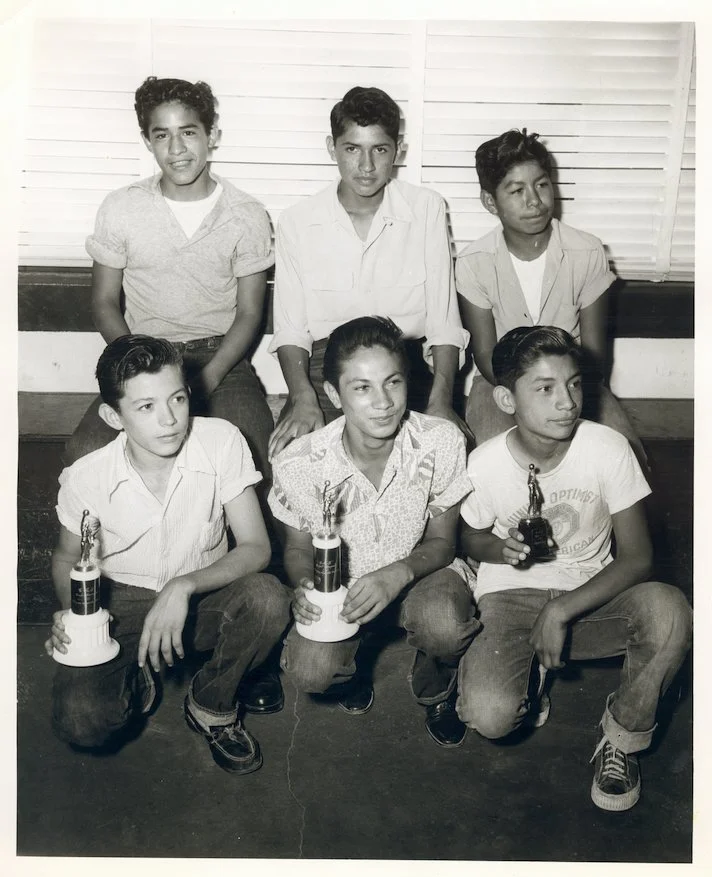
Residents of Los Courts participated in a wide variety of clubs, classes, and sports.
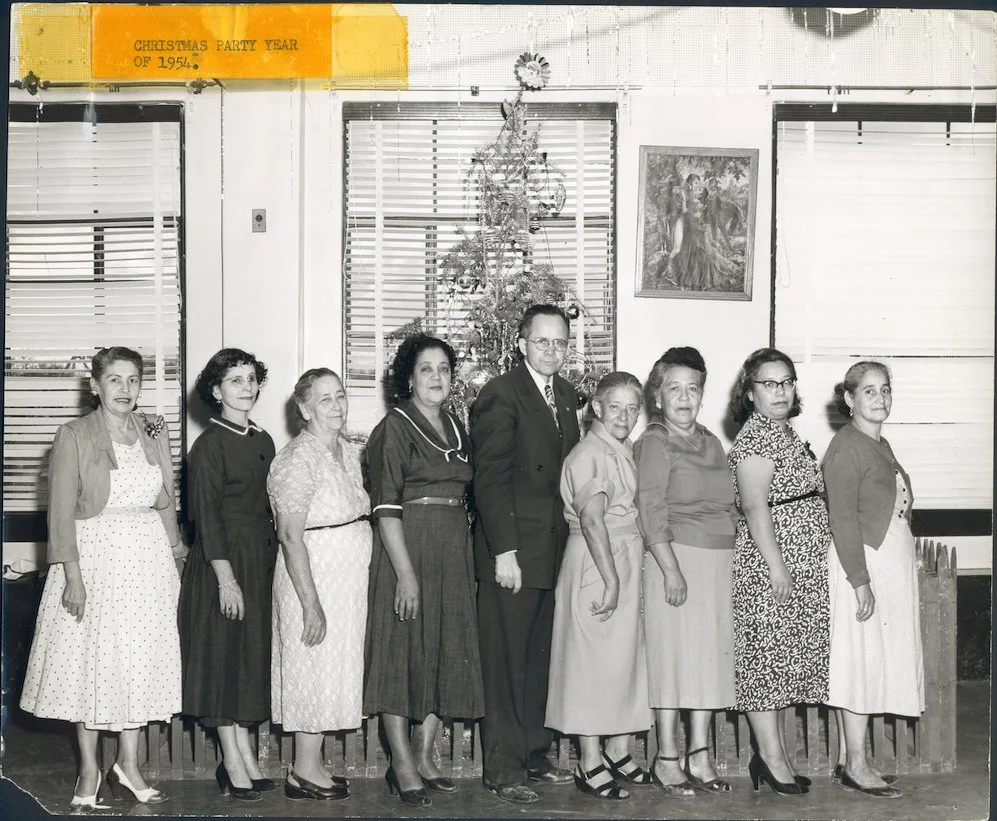
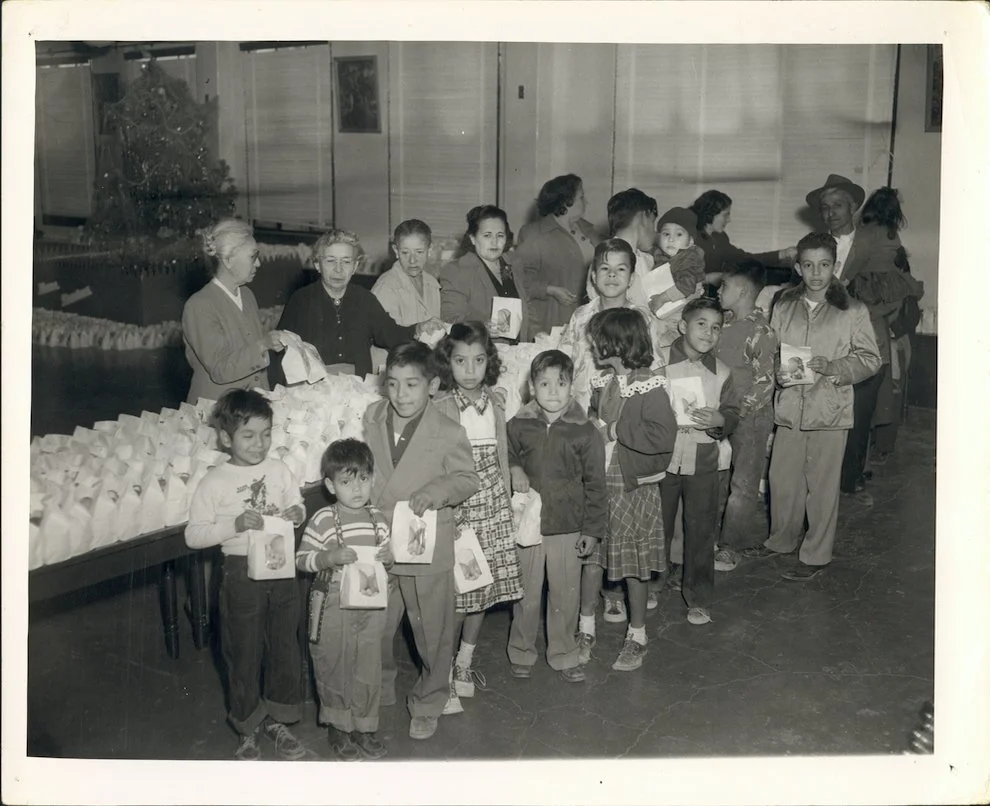
Holiday celebrations at Alazan-Apache Courts. Undated.
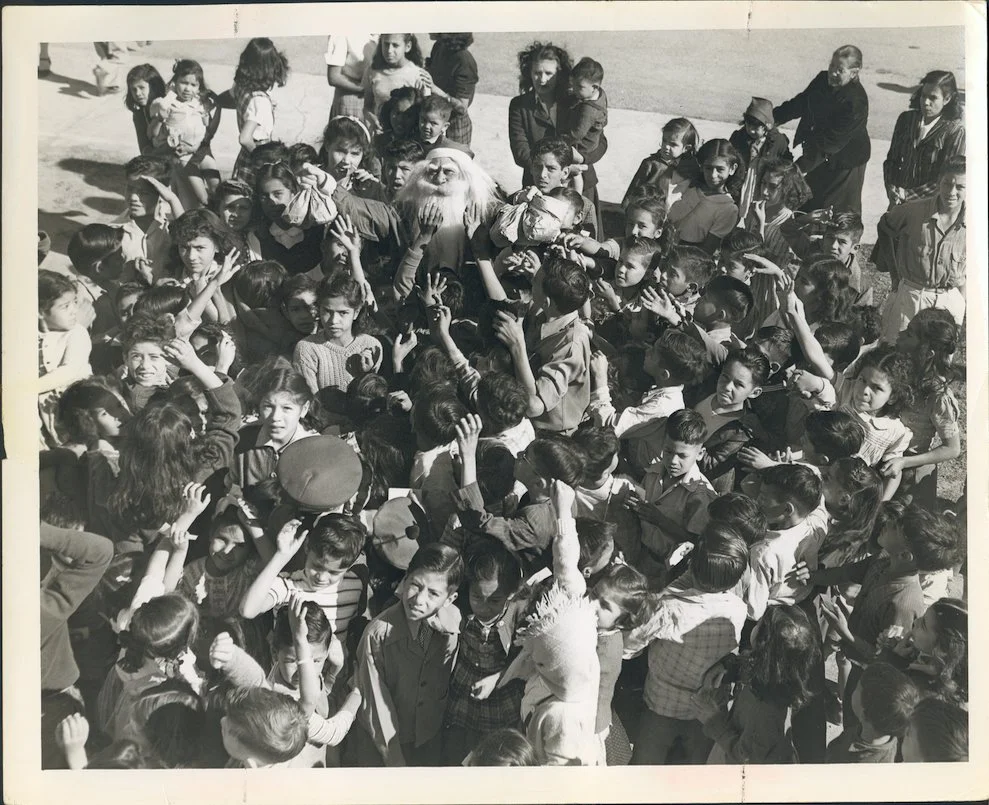
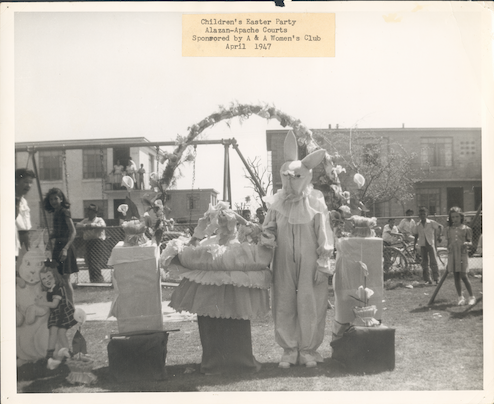
Children’s Easter Party. Alazan-Apache Courts. Sponsored by A & A Women’s Club. April 1947.
Holiday celebrations at Alazan-Apache Courts. Undated.
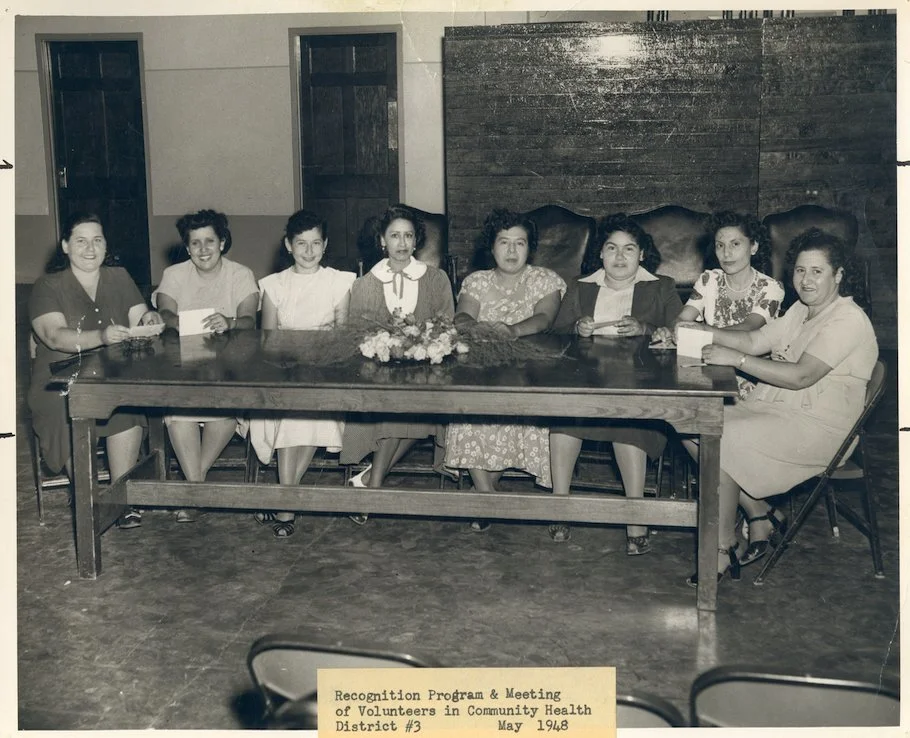
Community health volunteers
Recognition Program & Meeting of Volunteers in Community Health District #3, May 1948
Clubs, CLasses & Sports
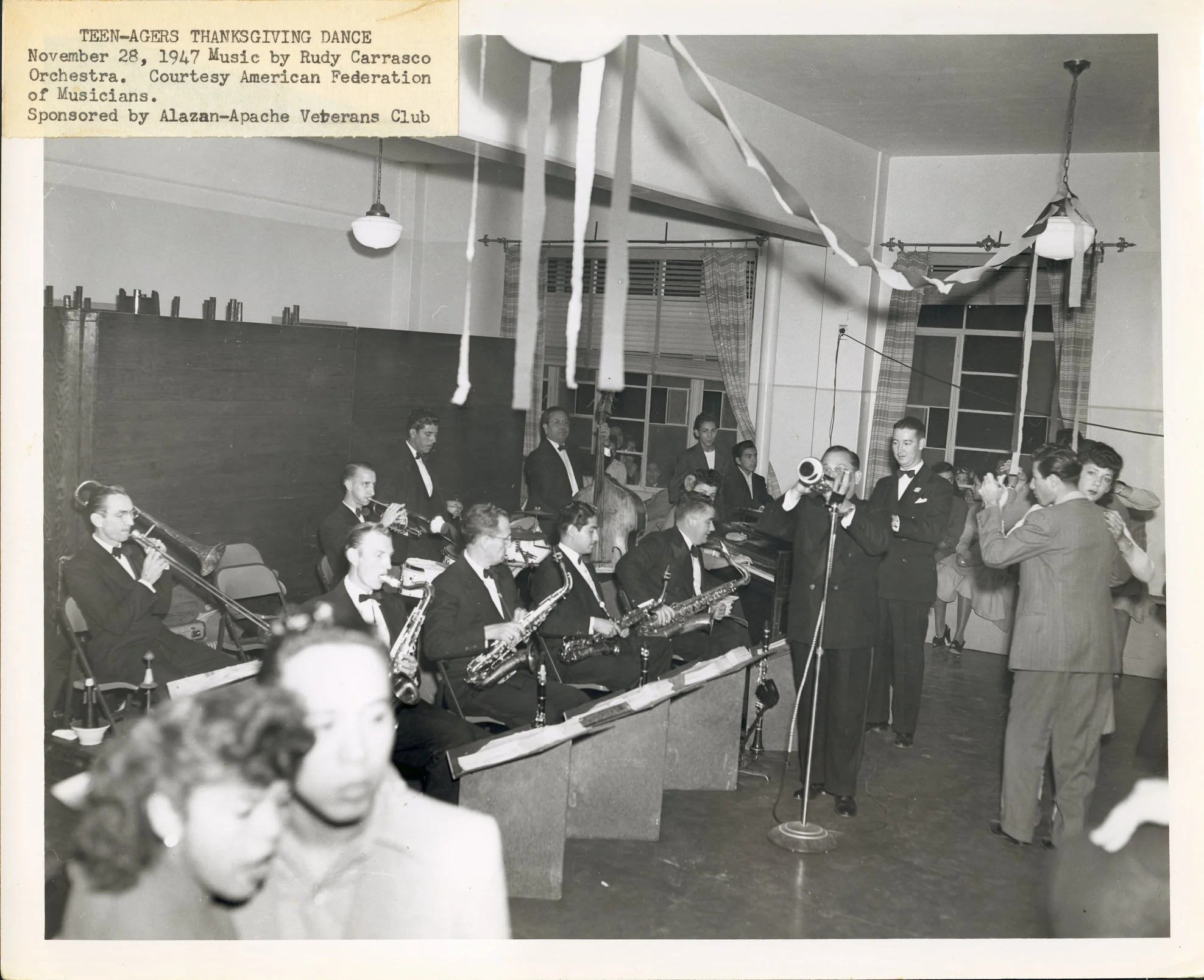
Teen-agers Thanksgiving Dance. Music by Rudy Carrasco Orchestra. Courtesy American Federation of Musicians. Sponsored by Alazan-Apache Veterans Club. November 28, 1947
Holiday Celebrations
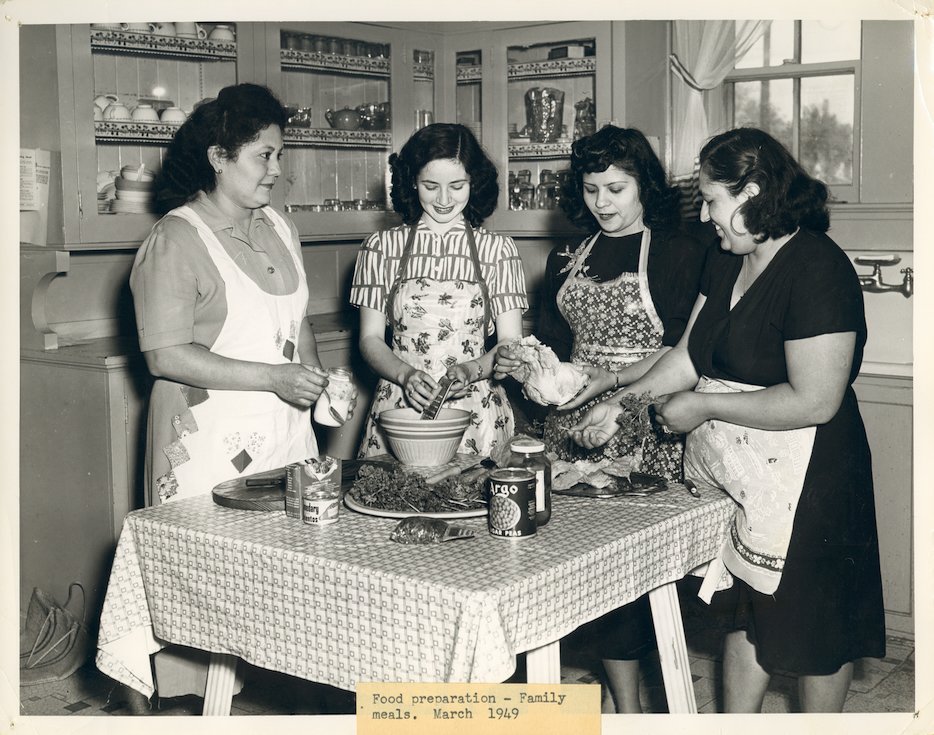
Food preparation class — Family meals. March 1949
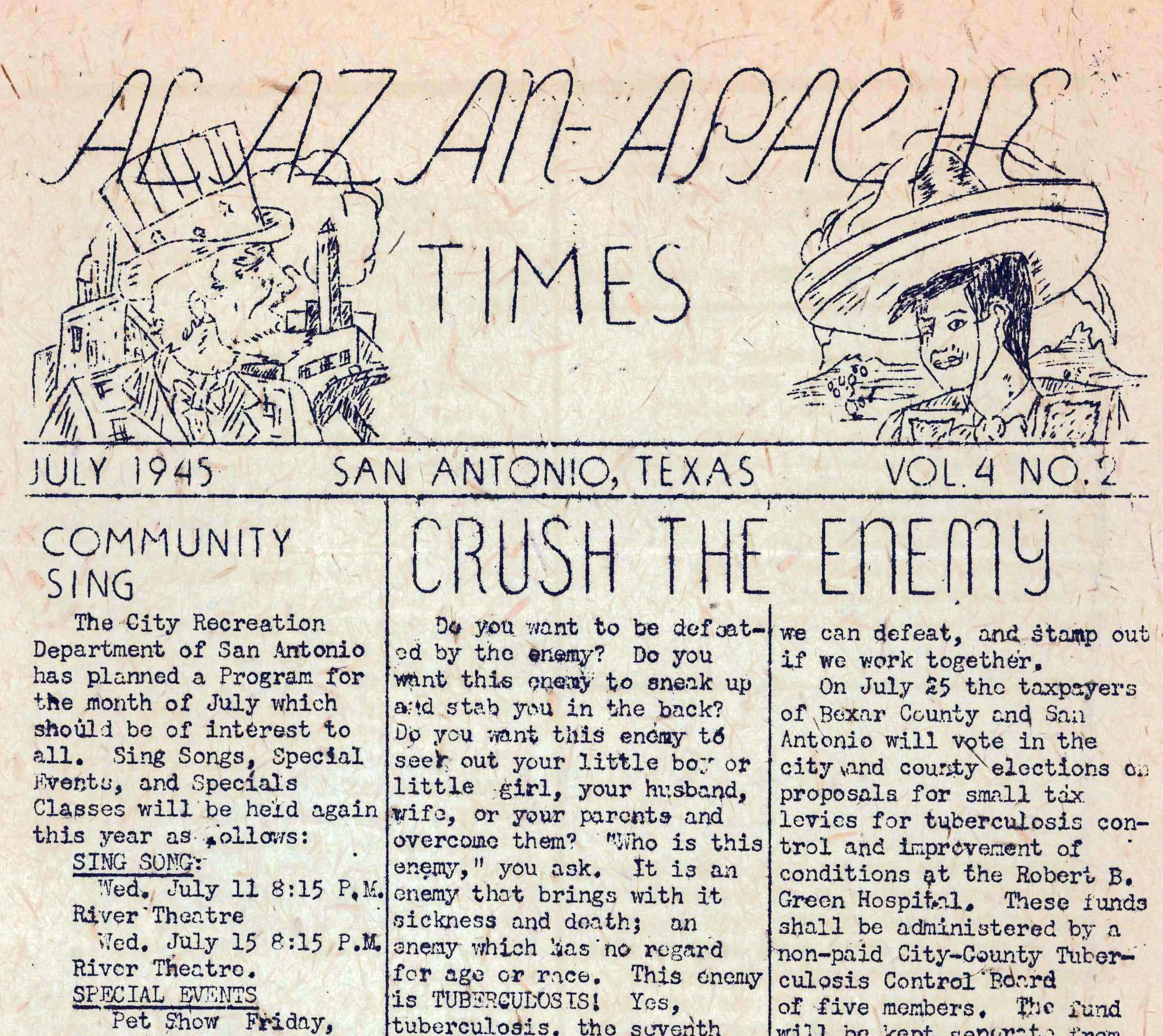
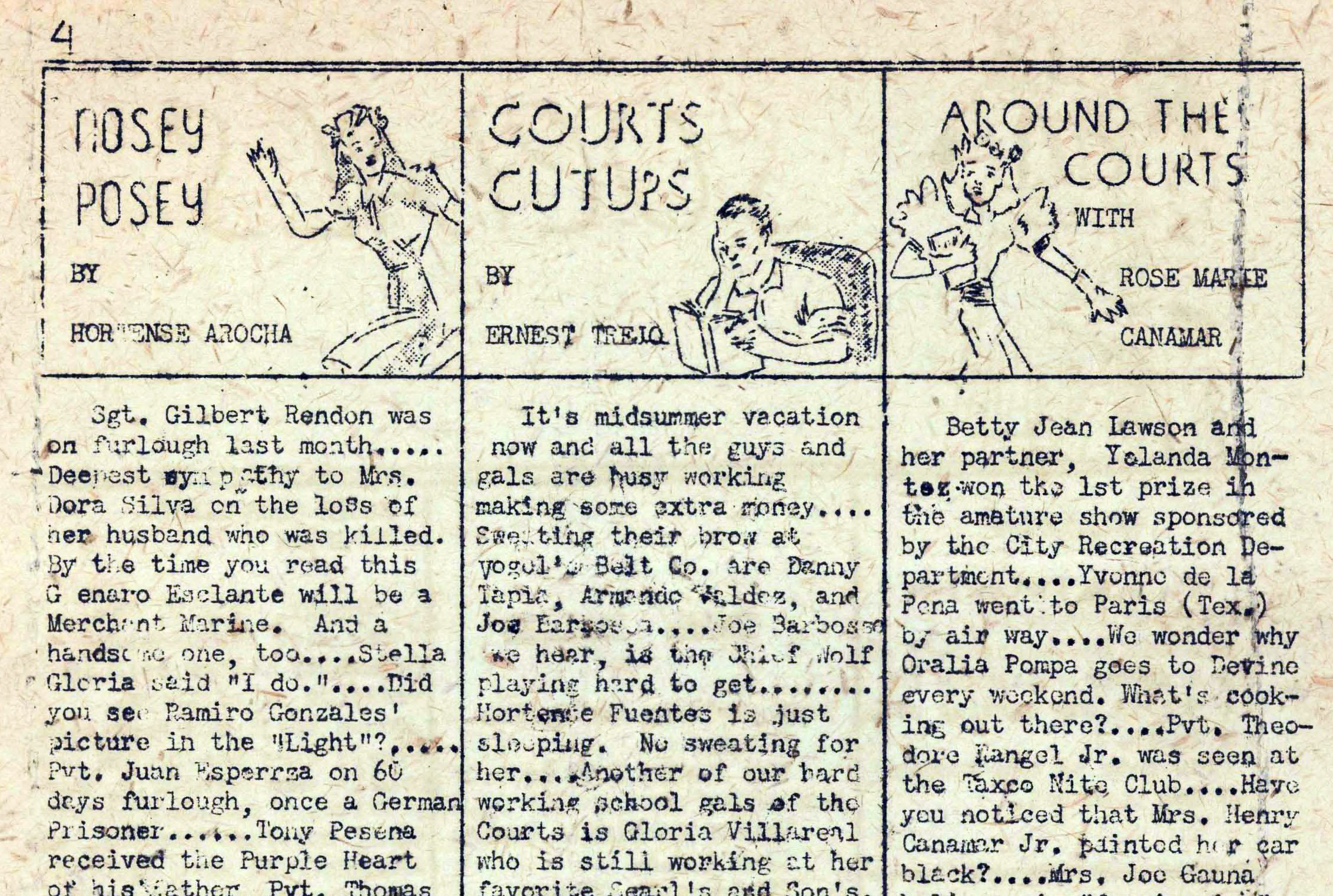
Alazan-Apache Times, July 1945
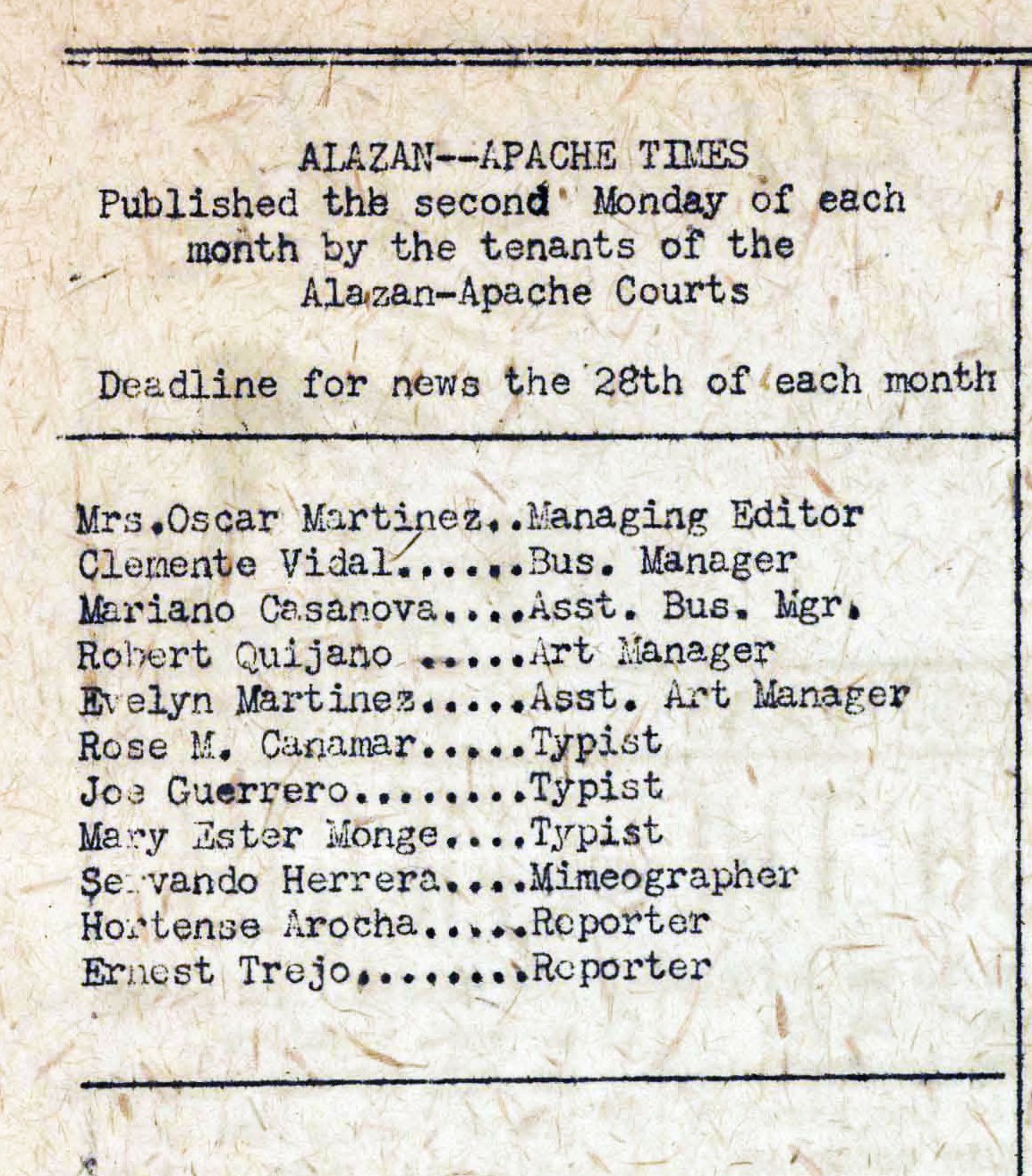
Alazan-Apache Times, Published the second Monday of each month by the tenants of the Alazan-Apache Courts
Have a story to tell?
Did you grow up in the Alazan-Apache Courts or have memories of times spent there?
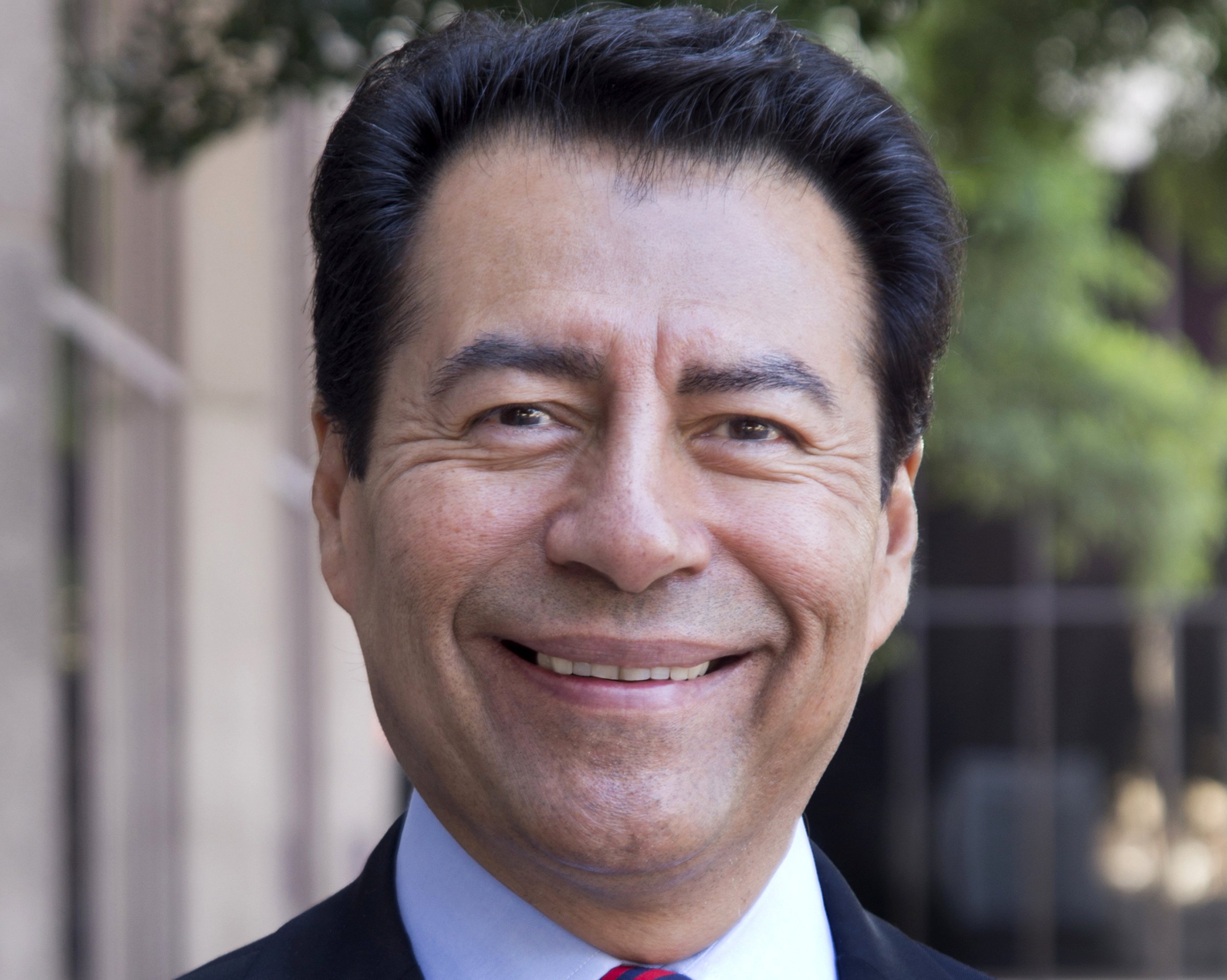
Los Courts have produced a number of notable San Antonians, including teachers, musicians, and politicians.
Luminaries of Los Courts
1917 - 1966
International Singer
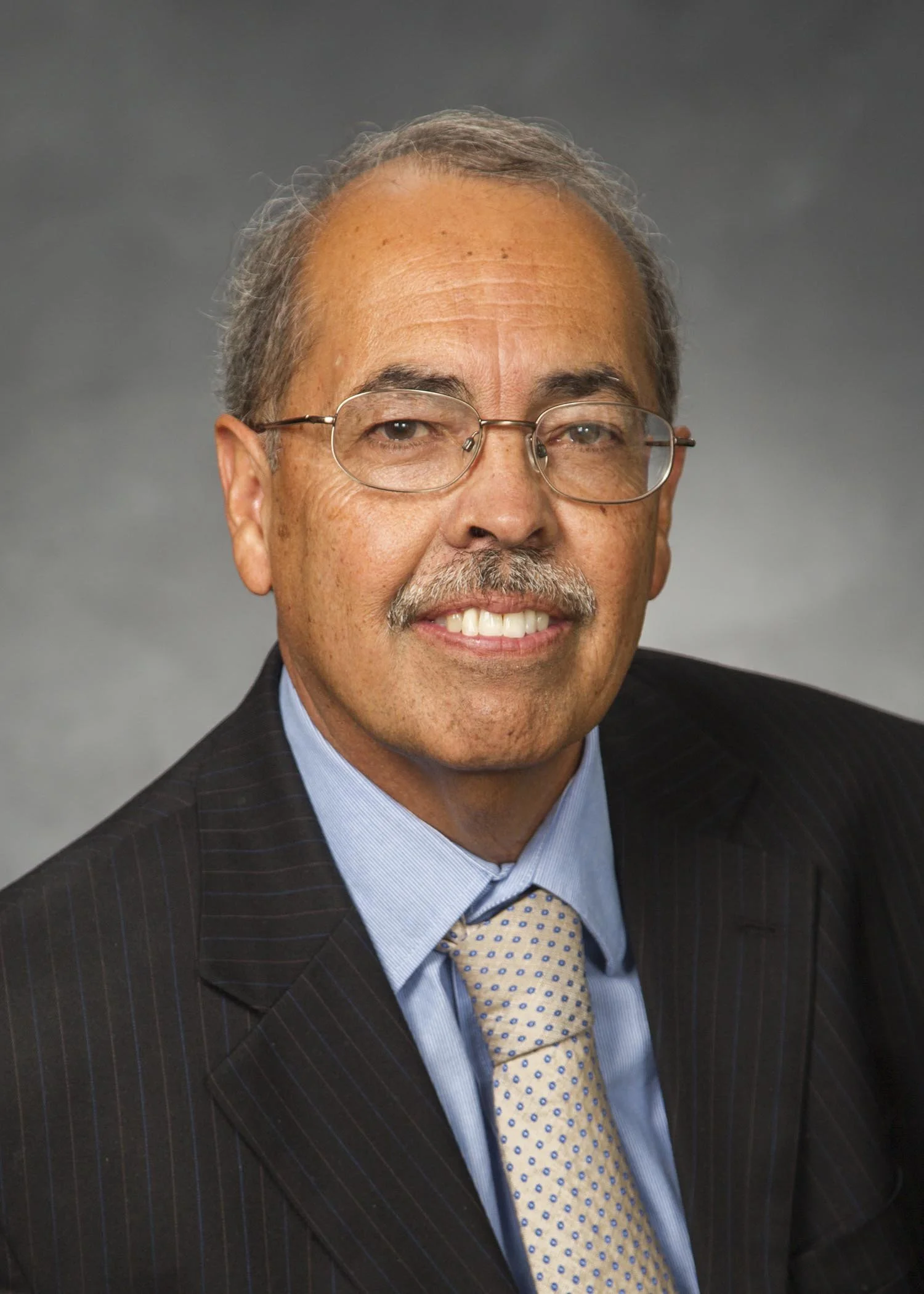
1937 - 2012
Dr. Ignacio García
Author and Educator
Eva Garza
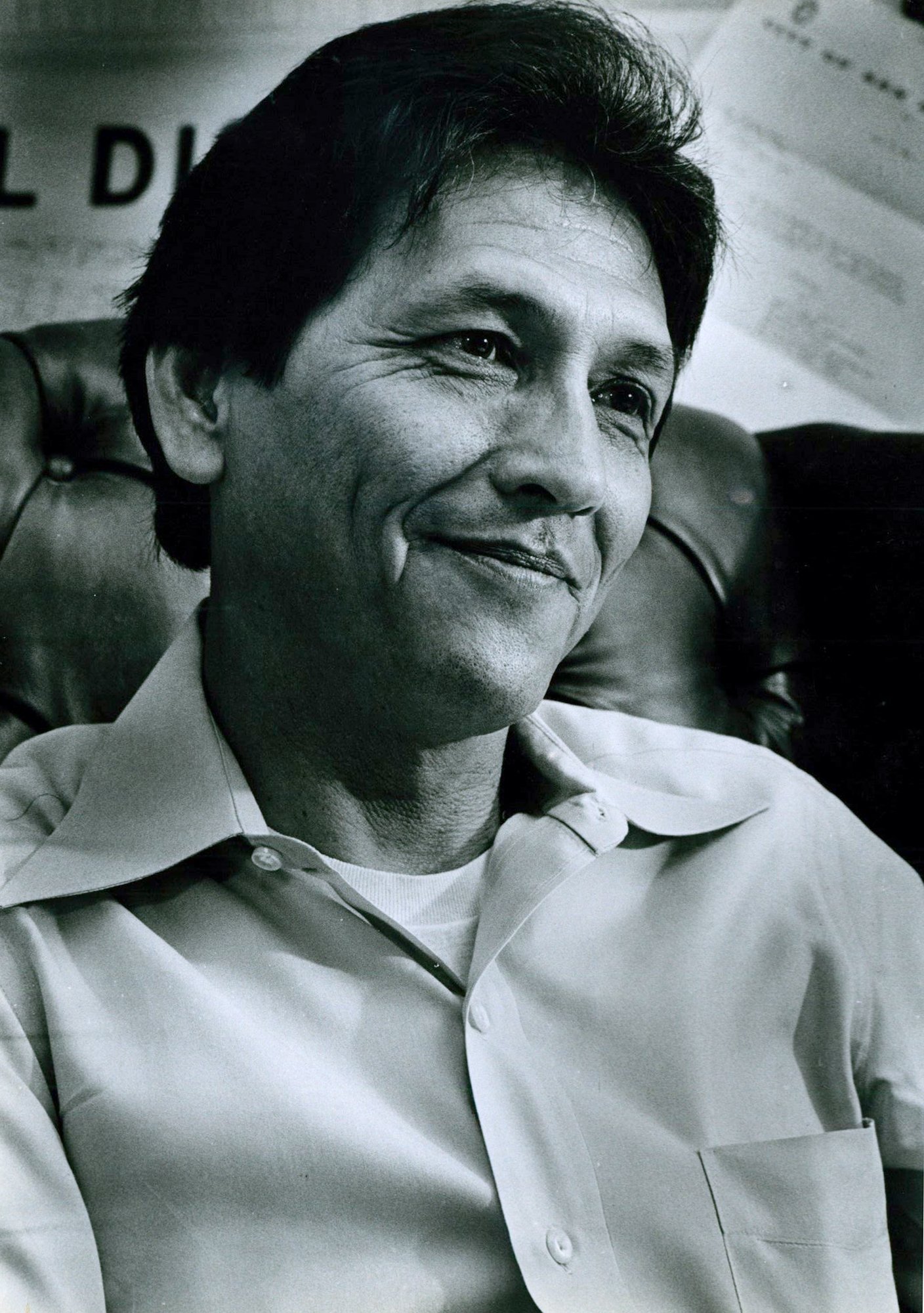
International Singer
Gloria Rios
1929 - 2002
International Singer
Gilbert F. Vasquez
Frank D. Wing
San Antonio City Councilman
Blanca ROdriguez


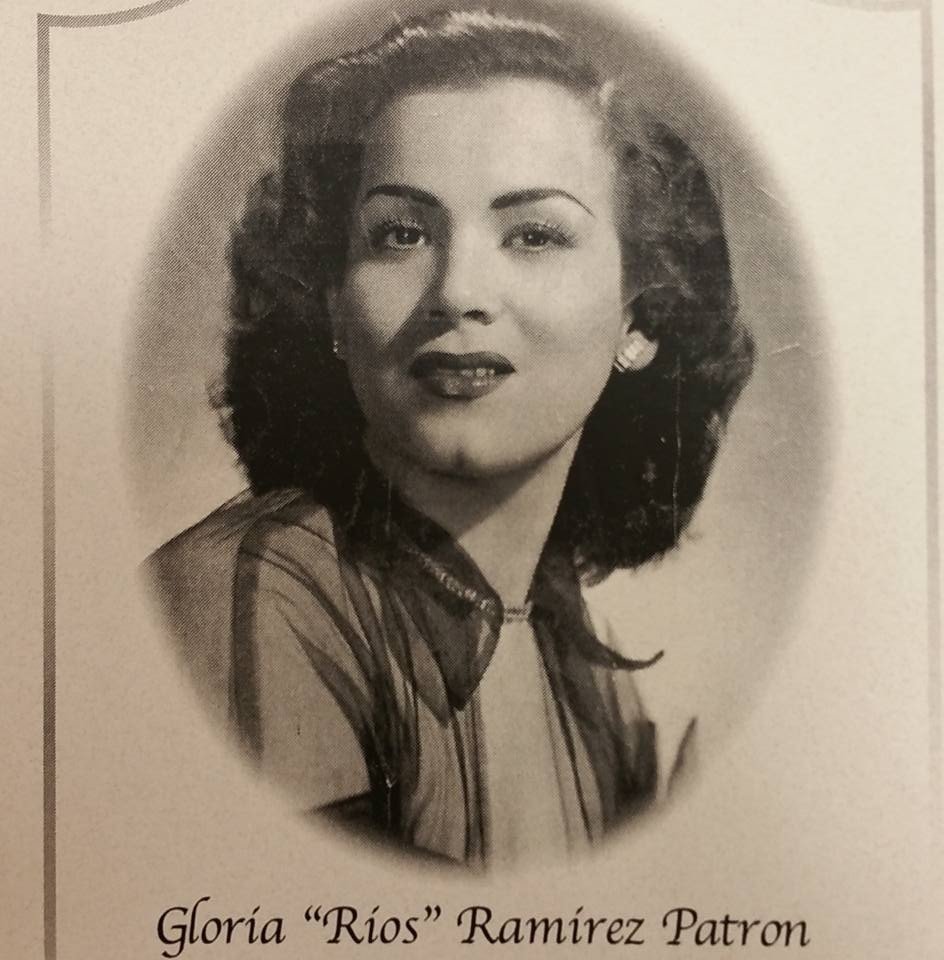
Retired Judge
lawyer

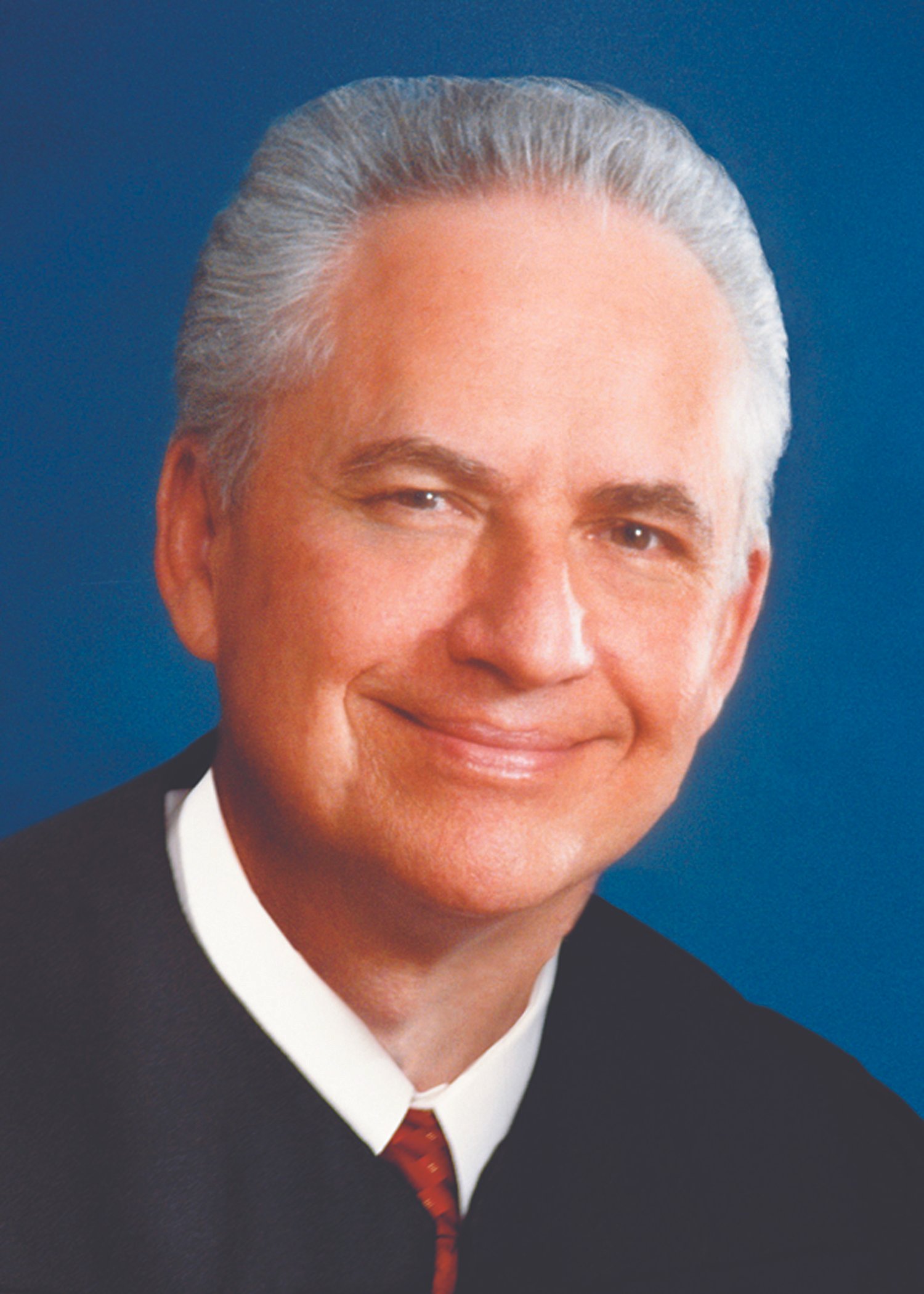
“As an attorney, I interviewed for a job working for Legal Aid. I was asked why I wanted to work at Legal Aid. I told them I wanted to help the less fortunate people in our community where I grew up. I was blessed to obtain the job asan attorney in the Legal Aid office just one block from where I had lived in the Alazan - Apache Courts - 207 Montezuma Alley.
Later in my legal career, I was elected as a Judge, and I still had the passion for helping people. I established the first Drug Courts in Bexar County helping to treat people with addictions, instead of punishing them. Also known as "Specialty Courts," these Courts take treatment approach to addressing the criminal behavior that is so often fueled by drug addiction, or mental issues.
After 16 years as a judge, Drug Courts have been the most successful and productive work I have done in my 51 year legal career.”
Judge Al Alonso
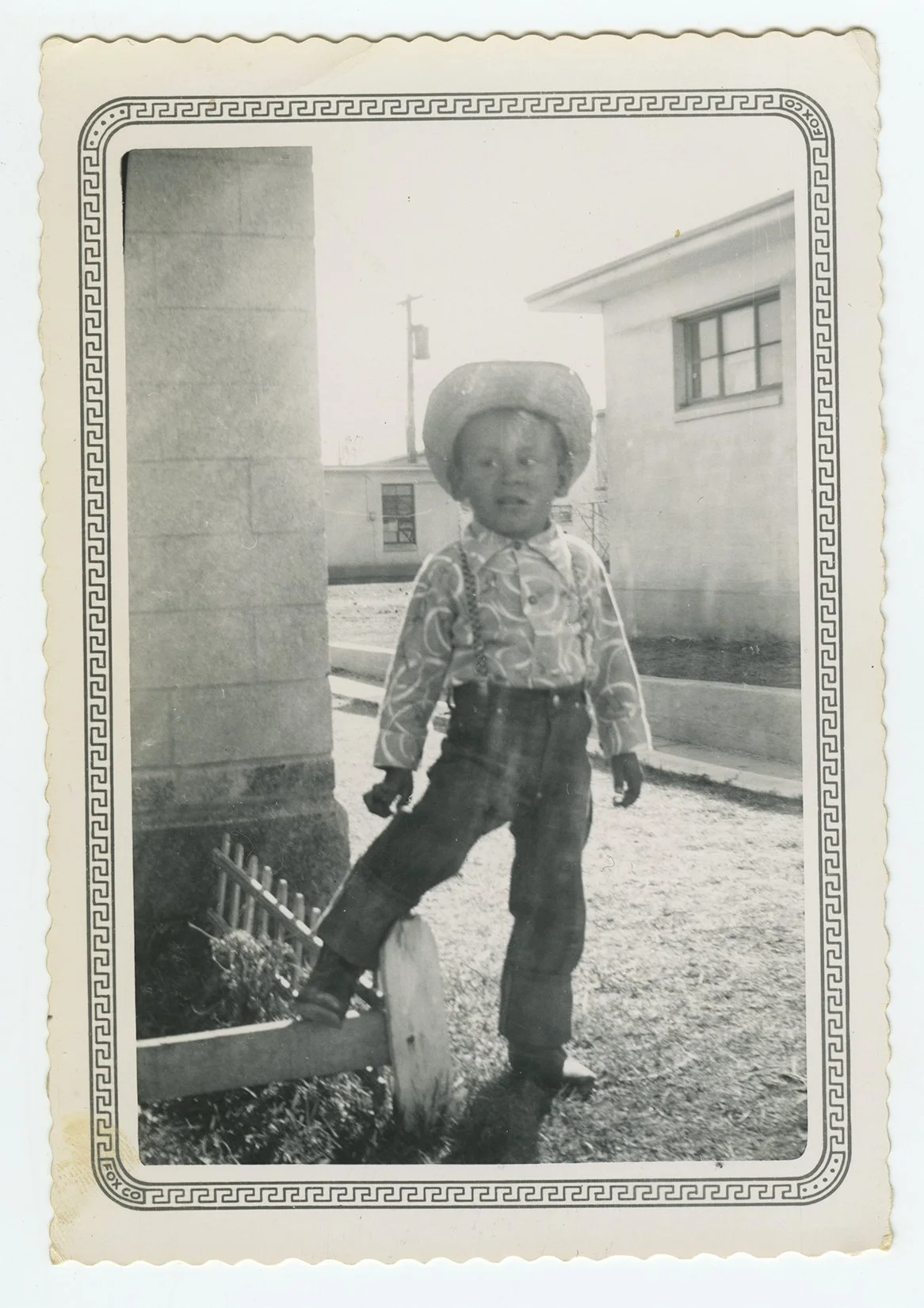
Snapshots
Scenes from Los Courts
If you recognize anyone from these photos please let us know at 210-228-0201 or museo@esperanzacenter.org!
If you recognize anyone from these photos please let us know at 210-228-0201 or museo@esperanzacenter.org!
If you recognize anyone from these photos please let us know at 210-228-0201 or museo@esperanzacenter.org!
If you recognize anyone from these photos please let us know at 210-228-0201 or museo@esperanzacenter.org!
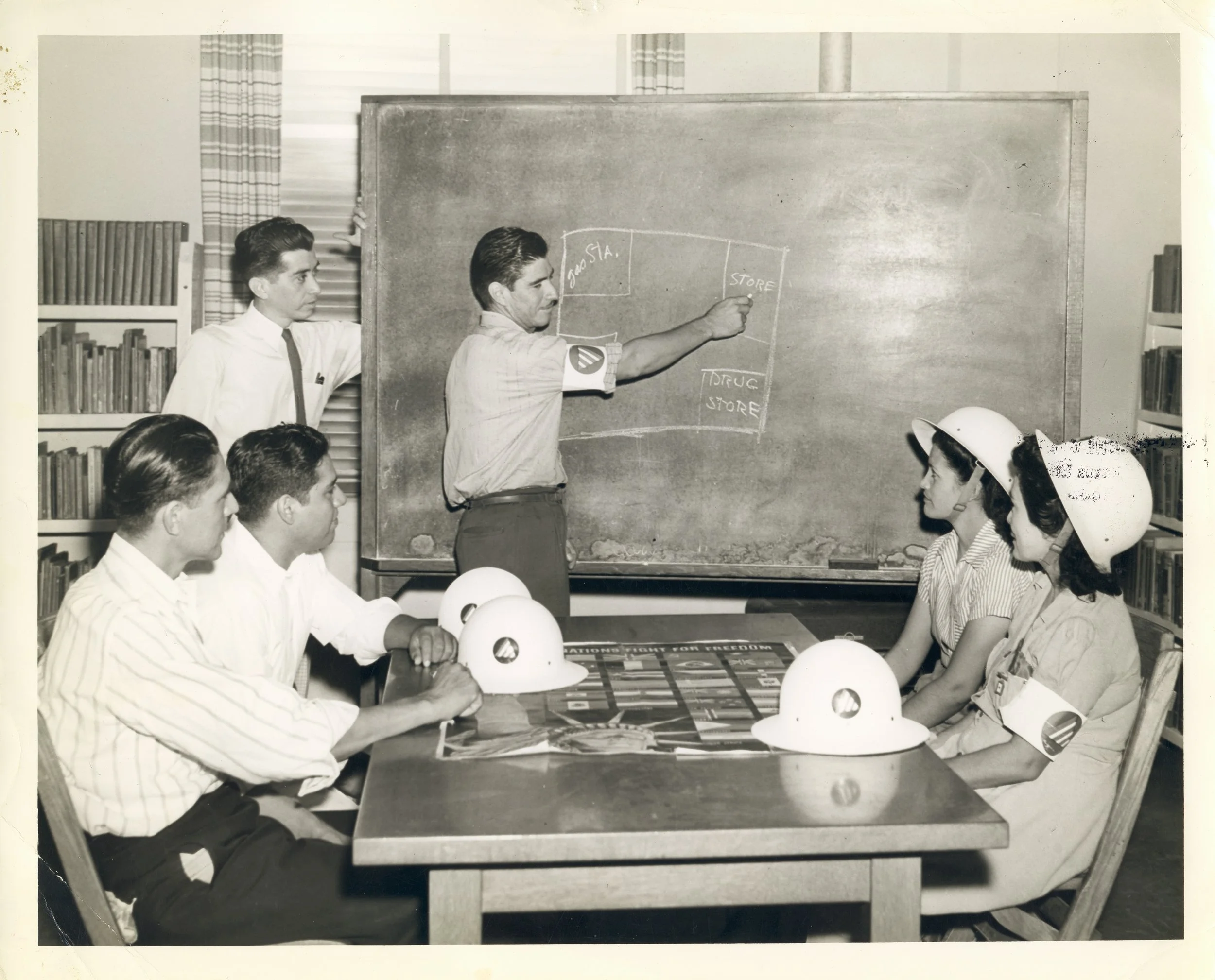
If you recognize anyone from these photos please let us know at 210-228-0201 or museo@esperanzacenter.org!
Though housing is a basic human need, across the country only one in four eligible households receives rental assistance such as placement in public housing.

It provides low-income households with stable affordable housing while freeing up income to meet other expenses such as transportation, education, and health. The Housing Act of 1937 first authorized public housing, including Los Courts, during the Great Depression, and Lyndon B. Johnson created the U.S. Department of Housing and Urban Development (HUD) in 1965 to oversee federal housing programs including public housing.
Today, the need for public housing continues to grow as increasing rents and stagnating wages have made it harder for many Americans to keep a roof over their heads. Meanwhile federal funding for public housing has fallen by $1.6 billion (21 percent) since 2010. Due to this underfunding, fewer families in need have been able to find placement in public housing, and money to maintain existing public housing and to provide services for residents has significantly dropped.
Source of Statistics: Center on Budget and Policy Priorities, 2016, 2017, & 2018
public housing today
Public housing is part of a safety net that promotes wellbeing, reduces poverty, and prevents homelessness in the United States.
Nearly 90 percent of public housing residents are working, elderly, or disabled and without public housing, most HUD-assisted households could not afford rent.
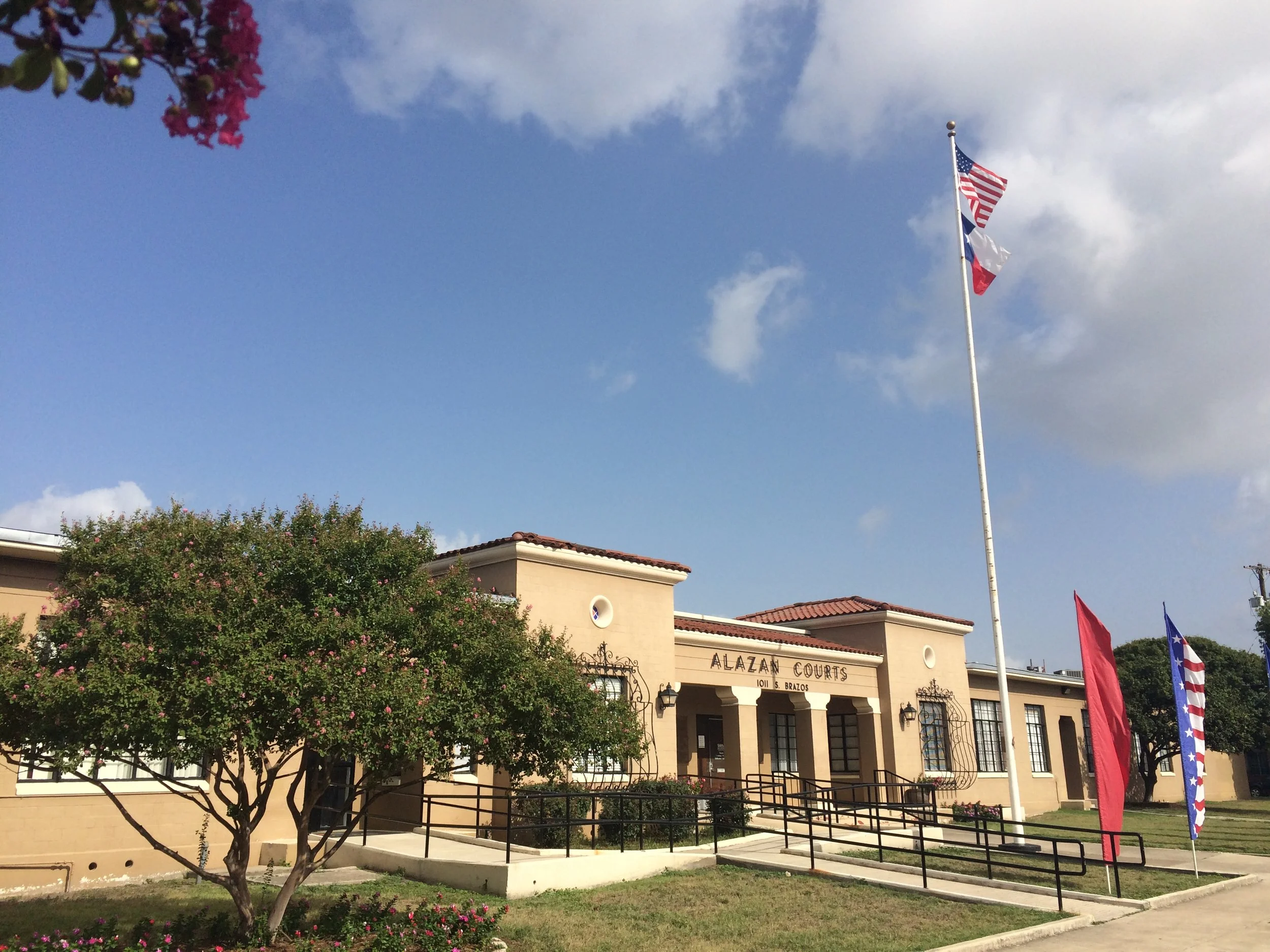
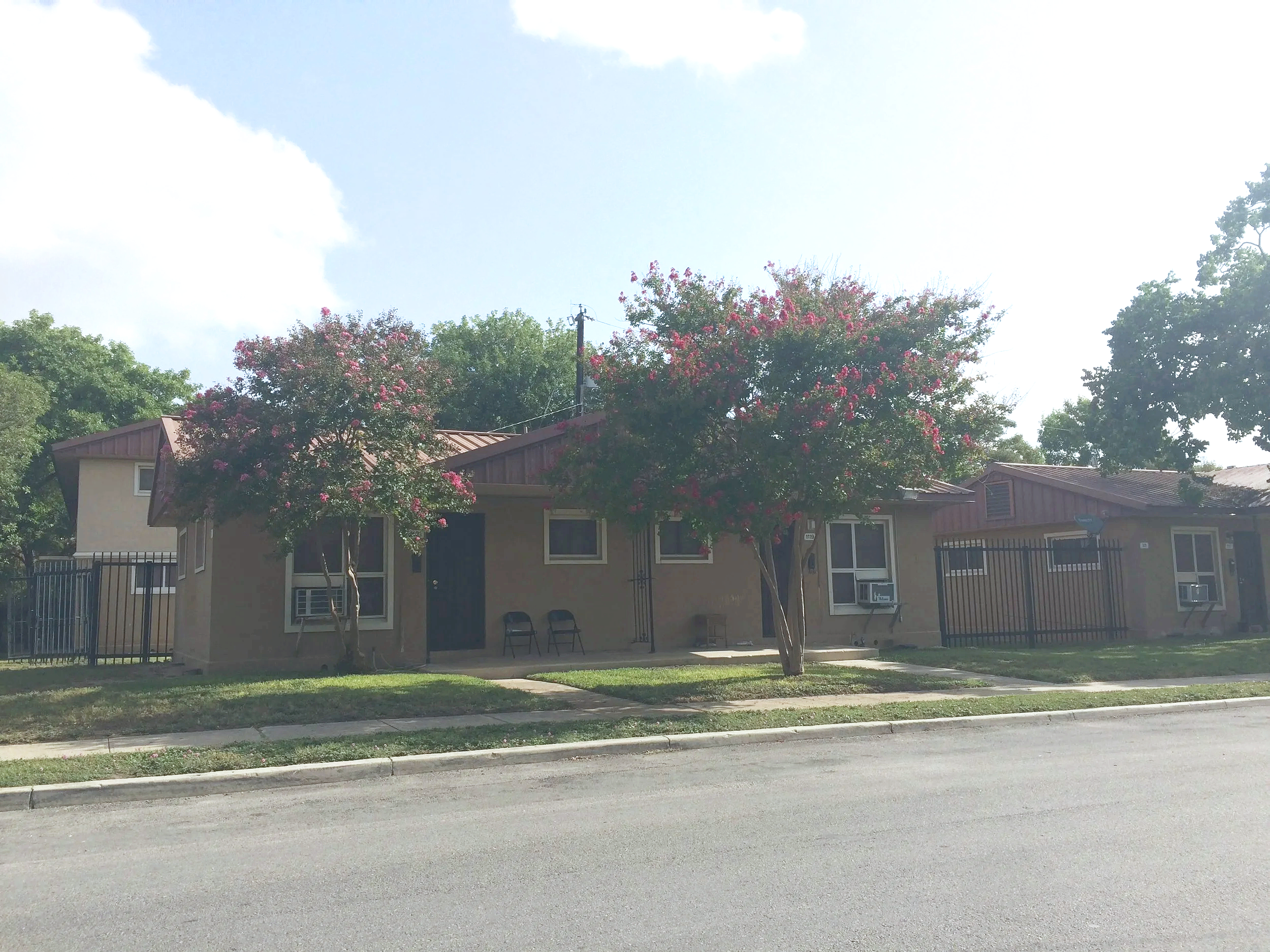
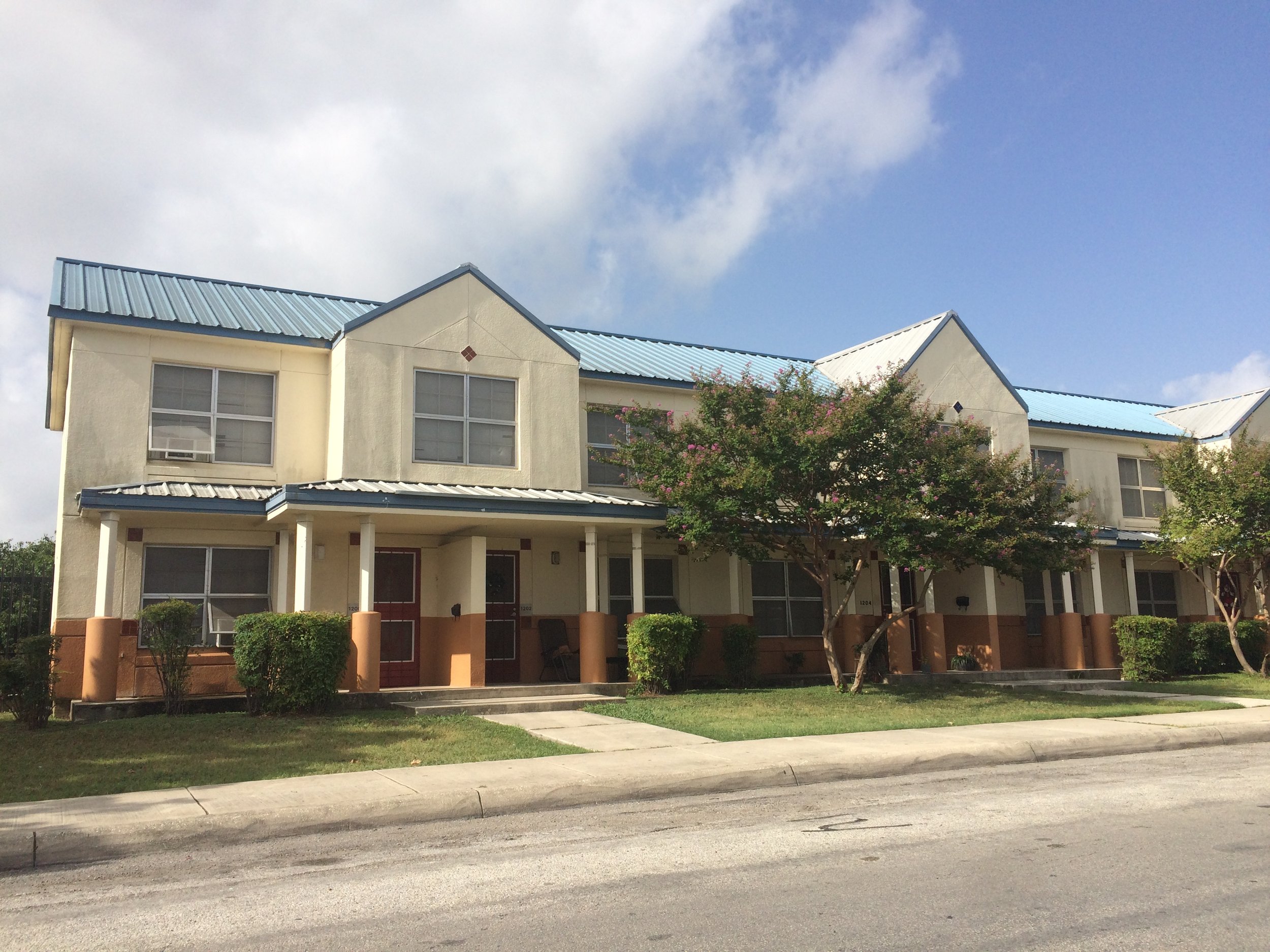
The Alazan-Apache Courts is home to over 1,800 residents in 685 units.
The majority of households in the Alazan-Apache Courts have children, with over half of Los Courts’ population under the age of 18.
Los Courts today
A waiting list remains in place for people interested in moving to Los Courts.
Source of Statistics: San Antonio Housing Authority, 2017
Have a story to tell?
Did you grow up in the Alazan-Apache Courts or have memories of times spent there?