Margarita Electra Rivas Huantes
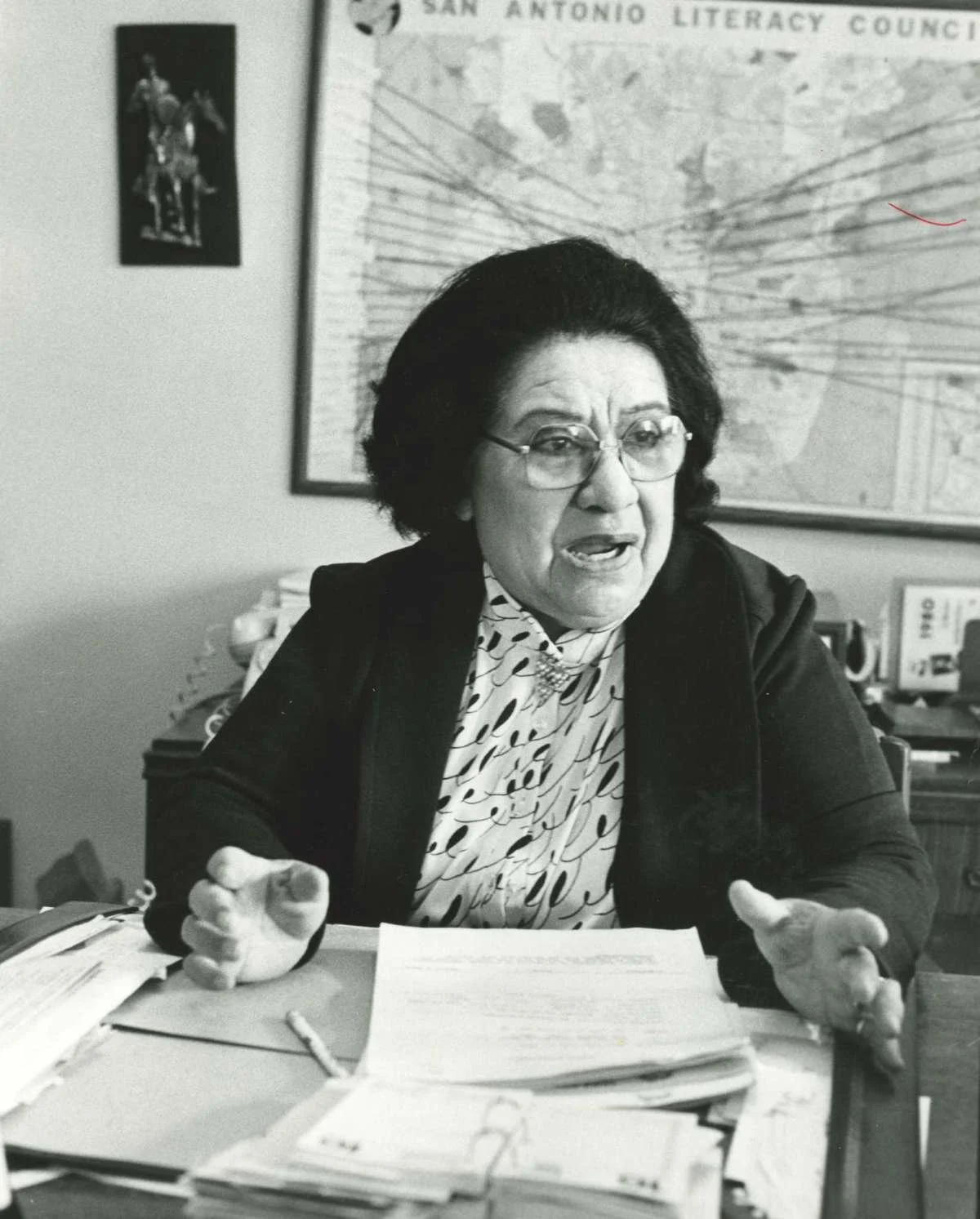
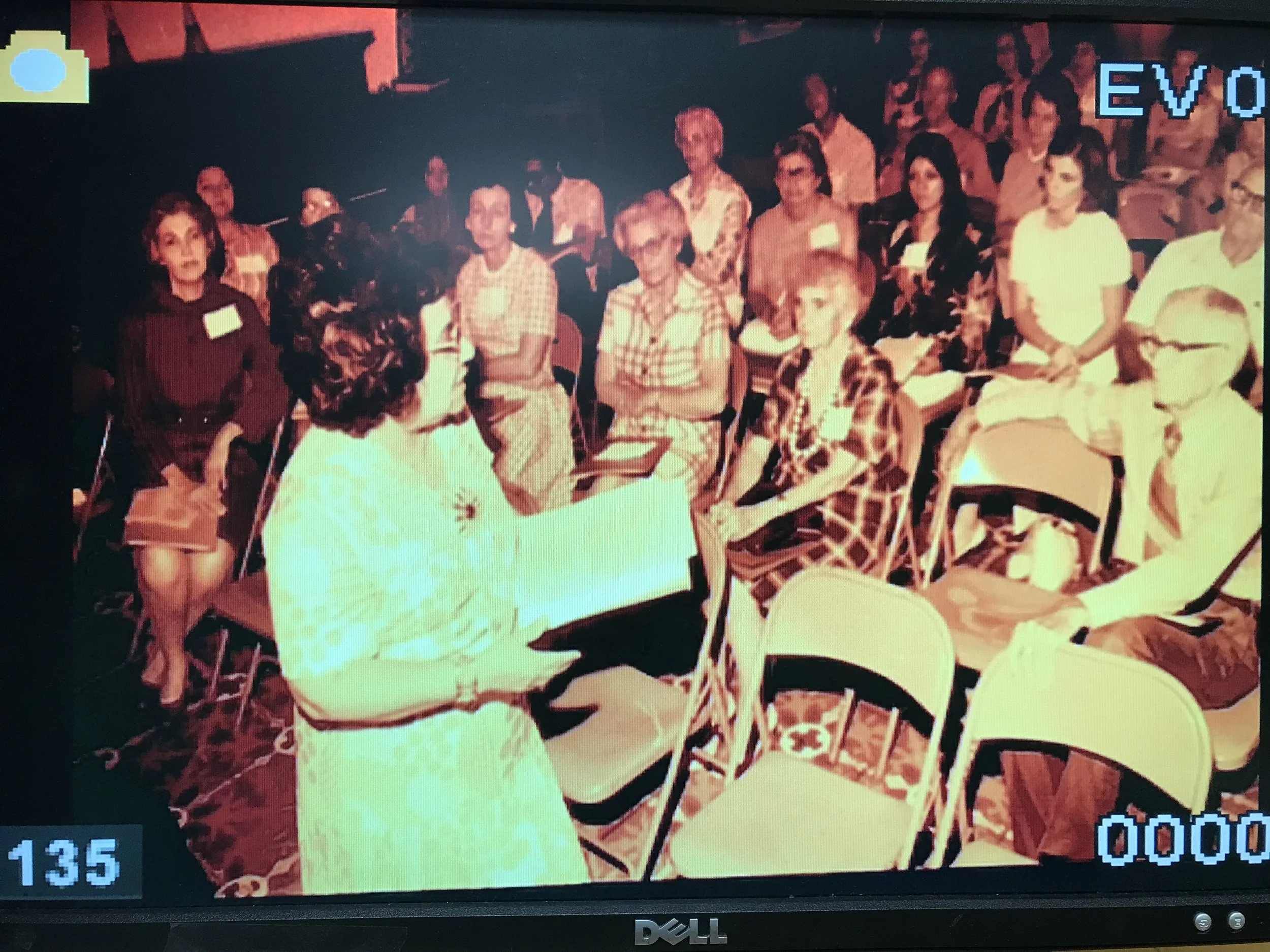
Margarita Huantes, as executive director of the San Antonio Literacy Council. Express-News file photo
“The day an illiterate adult decides he is going to school; that’s the day we better take him.”
Pioneer in Literacy Education
1912-1994
Margarita Huantes was an educator, a social worker and powerful literacy advocate. As the founder of the San Antonio Literacy Center, she worked tirelessly to provide access to literacy programs, especially among Mexican Americans living in the Westside.
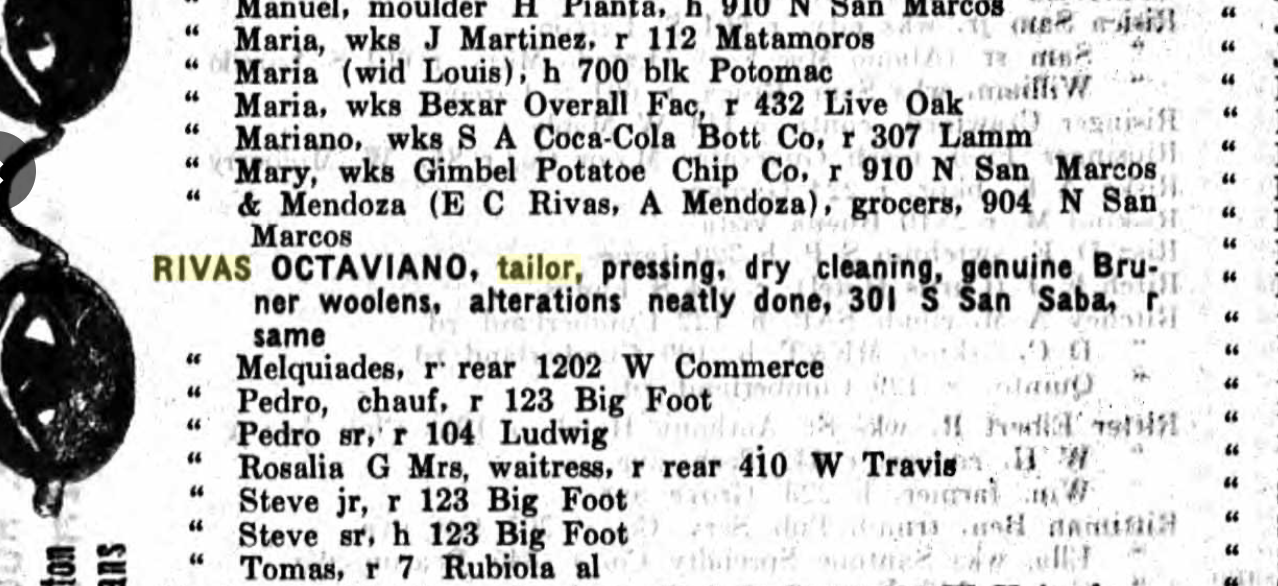
She was born Margarita Electra Rivas on March 21, 1912, in Nueva Rosita, Coahuila, Mexico. Her parents were Octaviano Rivas and Maria Reyes. Her family named her Margarita because March 21 was also the birthday of celebrated Mexican President Benito Juárez. However, her father didn’t want to name her Benita, so he decided to name her after Juárez’s wife Margarita.
Margarita was the fourth of five girls: her older sisters were Aida, Magnolia, and Angelica; her younger sister Oralia was born in Texas. Her family moved to San Antonio when Margarita was an infant and settled in the westside. Her father worked as a tailor and music teacher, and they lived at a few different locations on South San Saba street. Margarita attended Navarro elementary, where she became close friends with another future educator, Arcadia Hernández López. She then went on to Lanier Junior High and Main Avenue High School (now Fox Tech). After high school graduation in 1929, she enrolled at Westmooreland College, a junior woman’s college that was part of the West Texas Conference of the Methodist Episcopal Church.
Margarita earned a degree in education. She taught briefly at an elementary school in Martindale, Texas, then at the Presbyterian School for Mexican Girls (called Pres-Mex) in Taft, Texas, in about 1933. Margarita taught Spanish, mathematics and history, and served as first director of the school’s kindergarten program. She also became active in the Presbyterian church, supervising youth groups and directing bible schools in area churches. While she was teaching, she earned a bachelor of arts from the University of Texas at Austin in 1939, and she became a U.S. citizen in 1941.
In 1943 Margarita moved to Austin to work as director of religious education activities at the Austin Presbyterian Theological Seminary. Then she moved back to San Antonio in 1946 to teach at St. Mary’s Hall, and to attend graduate school at Our Lady of the Lake University. While at the university she met her future husband Santos Huantes at a local dance. She then transferred to Western Reserve University (now Case Western Reserve University) in Ohio, where she earned a master of science degree in social administration in 1948. That same year she and Santos married on September 30.
After graduate school Margarita once again returned to San Antonio to work at the Girls Club. She then became program director at the Mexican Christian Institute (now the Inman Christian Center) at 1214 Colima Street. Here she organized educational and extracurricular activities for at-risk youth, along with English language and citizenship classes for adults. She and Santos lived above the center. Margarita served as a social worker and case director at the same time as she directed the program, and many young people remember her influence. Her niece, Josephine Arredondo Holden, remembers when her friend Ernesto Gomez said that if it wasn’t for Margarita, he would have been in jail. Bob Garcia, who would later lead Head Start and Communities in Schools in Brazoria County, also credited Margarita with changing his life, saying he was inspired “to be like Margarita Huantes, to give back to kids in the way that I was.”
“My biggest accomplishment is that I think I have been able to keep the problems of illiteracy in front of the public for years.”
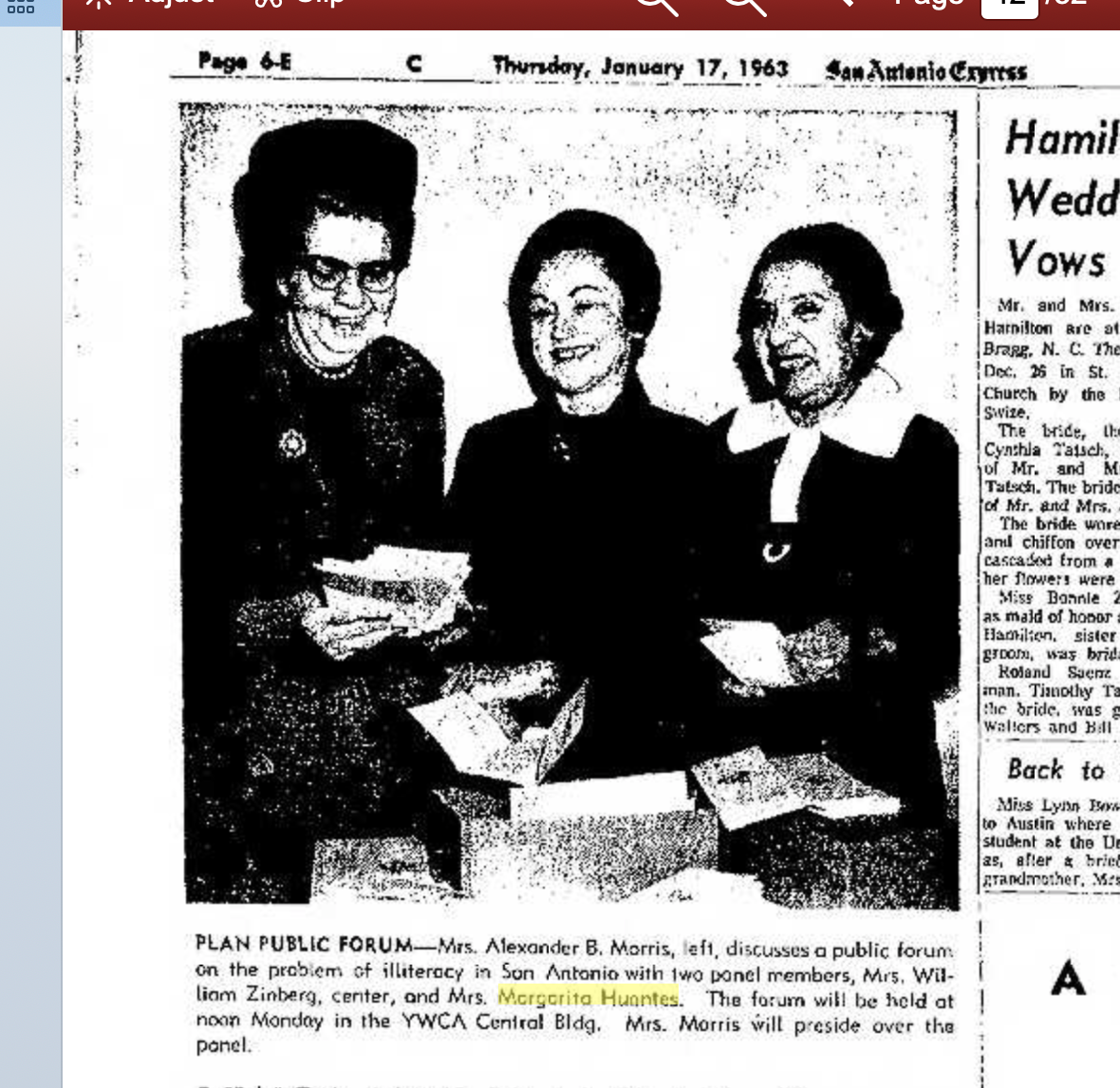
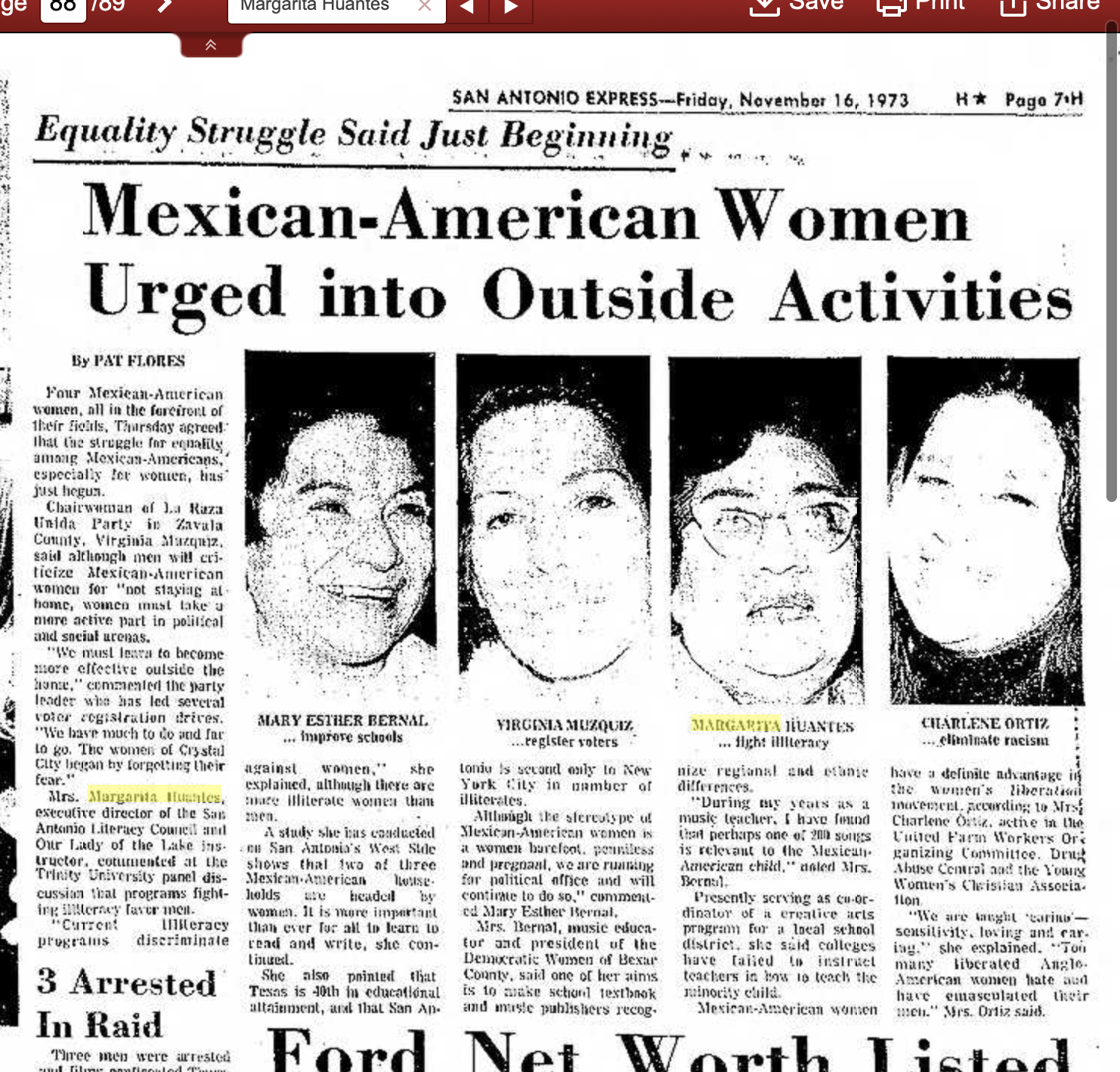
Margarita’s work at the Institute also led her to become particularly aware of the problem of adult illiteracy. One incident made a deep impression: a baby died because the mother could not read the instructions on the medicine label. This event helped push Margarita to leave the Institute in order to establish a separate San Antonio Literacy Council (SALC) in 1960, an organization which focused on reducing illiteracy within the Mexican American community. Their first literacy center was at the First Presbytarian Church at the corner of Alamo and Fourth streets. They also eventually established centers at the Presbytarian Church on Woodlawn and the Zion Lutheran Church on Cincinnati street. The SALC was funded by the United Way. It offered ESL classes, along with reading, writing and civics. The organization also helped immigrants complete the paperwork for their legal residency in the United States. Eventually Margarita was elected as the program’s first full-time executive director in 1965. By 1971 the SALC had established fifty centers across the city, at churches and community centers. In 1974 she also helped establish a prison literacy program at the Bexar County Jail. Margarita made the classes open to anyone. In an article in the San Antonio Light on May 30, 1971 she said: “The day an illiterate adult decides he is going to school; that’s the day we better take him.” She devoted particular attention to the needs of Mexican American women, who she said were discriminated against in many literacy programs. In 1973 she conducted a study of Westside, and found that two out of three households were headed by women, which demonstrated the importance of reaching out to this population.
However, Margarita also faced many challenges during her time at SALC. When the United Way stopped funding the center, she worked without pay, only getting travel money when necessary. The center also struggled with a general lack of resources. Her niece remembers that Margarita and Santos would go to Sears and Joske’s to pick up catalogs to use to help teach reading and become familiar with particular English words and phrases. Margarita also faced direct challenges to her leadership. In 1977 she was fired for opening three new centers without getting clearance from the board. Margarita challenged the decision, noting that she felt her civil and employee rights were violated. Three months later, however, she was reinstated.
In the 1970s Margarita also served on the faculty of the Worden School of Social Service at Our Lady of the Lake, and published several works on bilingual instruction between 1963-1980. She wrote The First Lessons in English, published in 1965. Manual de Ciudad/ANUA was published in 1963, and I Want to Learn English and Spanish, was published in 1980. Margarita was a member of several prominent organizations, including the Academy of Certified Social Workers, the National Association of Public School Educators, the Adult Education Association, and the Council of Social Work Education. She served as chairman of the South Texas chapter of the National Association of Social Workers, second vice president of Texans for the Educational Advancement of Mexican Americans, vice president of the U.N. Commission on the Status of Women, and a board member of the National Multimedia Center for Adult Basic Education. In 1986 she was appointed to serve on Texas Governor Mark White’s literacy task force. She also became an Elder in the Presbytarian church, the highest honor for a lay person.
Her niece also noted that Margarita had many hobbies she enjoyed. She loved to collect African violets so much that Santos created a greenhouse just to store them. She also collected angels; she had almost a thousand from all over the world. She loved books of all kinds– government, citizenship, world affairs, literature, novels, both in English and Spanish, and would frequently give these as gifts with her family and friends. She also particularly enjoyed classical music.
Over the course of her career, Margarita received numerous honors and awards, including the Hidalgo Award for Community Service from the Bexar County Commissioner’s Office in 1976 and 1987; the National Association of Social Workers Social Worker of the Year in 1985; the League of United Latin American Citizens (LULAC) Educator of the Year in 1986; the San Antonio Chamber of Commerce Educator of the Year in 1991, and the U.S. Department of Health and Human Services Literacy Partnership Award in 1993. Margarita was inducted into the San Antonio Women’s Hall of Fame in 1984.
Margarita was known for graciously accepting support for the SALC, but also challenging corporations to offer more. When she turned 75, her niece notes that SALC benefactors gave her a party at the Plaza Nacional, and the Coors Foundation awarded her a check for $5000. When Margarita accepted the award, she said: “You know, I want to thank you for this money, but how much more money could we be receiving?”
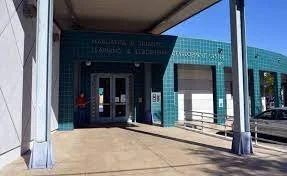
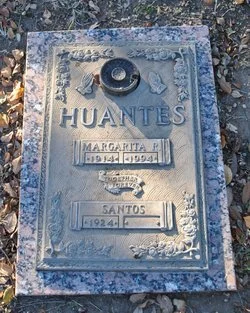
Margarita Huantes died in San Antonio on January 3, 1994, and was buried at Sunset Memorial Park. At the time of her death, she was still working, serving on the San Antonio Commission on Literacy, the San Antonio 2000 board of advisors, and the San Antonio 2000 Lifelong Learning Council. The Margarita R. Huantes Learning and Leadership Development Center at 1411 Guadalupe Street is named in her honor. While the city of San Antonio has cut back on its support of adult literacy programs in the past several years, the center continues to offer free ESL, GED and other adult education classes to the community.
-
Express-News Editorial Board. “In literacy cuts, city ignores past.” San Antonio Express-News, January 10, 2014.
Flores, Pat. “Mexican American Women Urged into Outside Activities.” San Antonio Express November 17, 1973.
Formet-Heath, Linda. “Changing Hats: Garcia Moves from Head Start to CIS.” Brazosport Facts. Clute, Texas, March 16, 1998.
Hernández, Santos H. “Huantes, Margarita R.,” Encyclopedia of Social Work(http://socialwork.oxfordre.com/view/10.1093/acrefore/9780199975839.001.0001/acrefore-9780199975839-e-718), accessed January 20, 2018. La Prensa, June 14, 1931; January 7, 1994.
“Literacy Council Head is Reinstated.” San Antonio Express News. February 26, 1977.
McLemore, David. “Gardner to head Literacy Council.” San Antonio Express, December 18, 1976.
Olivarez, Maria Nora, Interview by Josephine Arredondo-Holden, Santos Huantes, and Arcadia López, October 12, 1994, Institute of Texan Cultures Oral History Program, University of Texas at San Antonio Libraries Digital Collections. San Antonio Express-News, August 12, 1973; June 29, 1994.
“Prison Literacy Program May Get $10,000.” San Antonio Express News Dec 14, 1974
Quintanilla, Michael. “Literacy Council board fires chief.” San Antonio Express-News. December 5, 1976.
Schoolenberg, Julia and R. Matt Abigail, “Huantes, Margarita Electra Rivas,”
Handbook of Texas Online, accessed January 06, 2022, https://www.tshaonline.org/handbook/entries/huantes-margarita-electra-rivas. Published by the Texas State Historical Association.
Watkins, Sharon. “Volunteers Help Literacy Fight.” San Antonio Light, May 30, 1971.