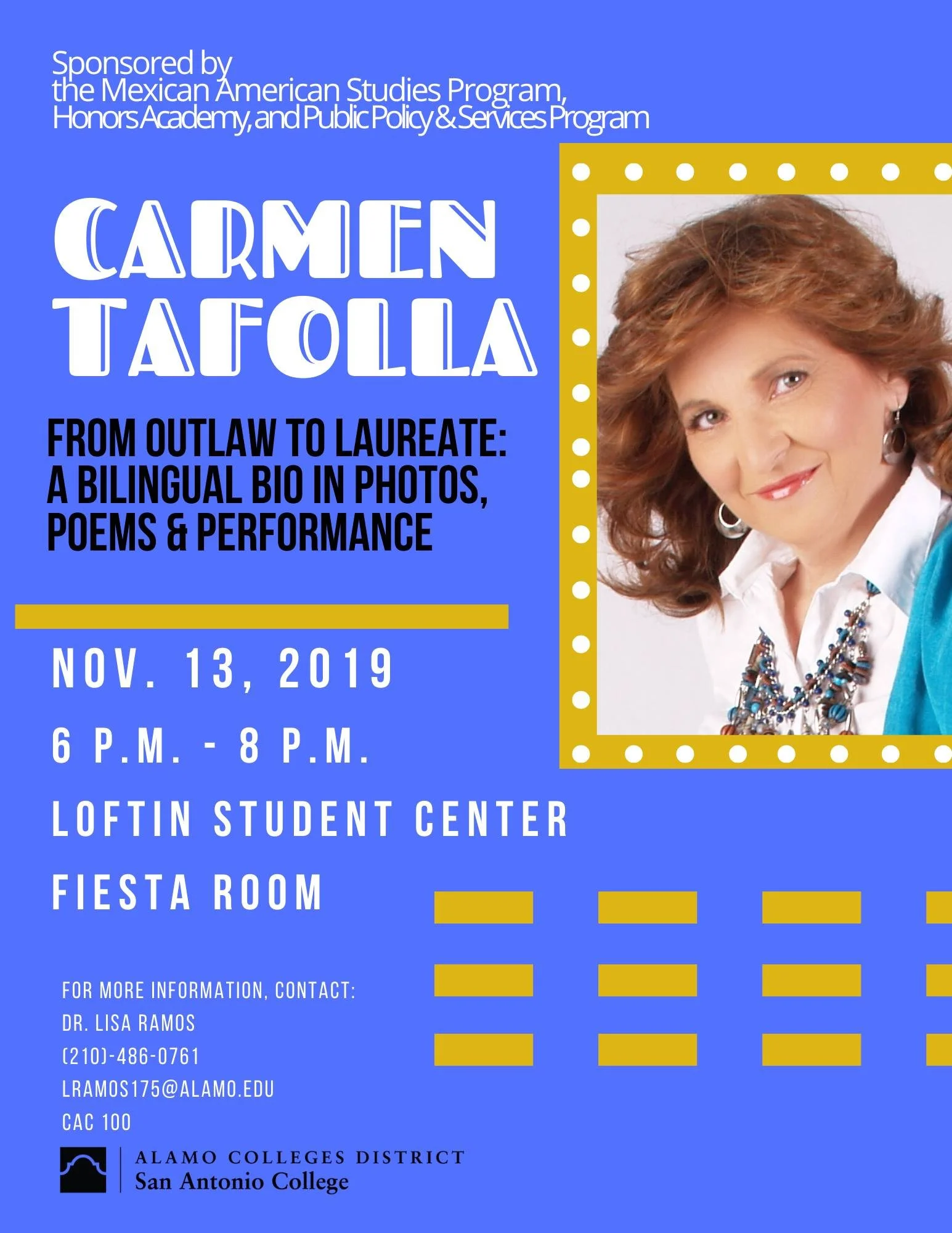
Carmen Tafolla
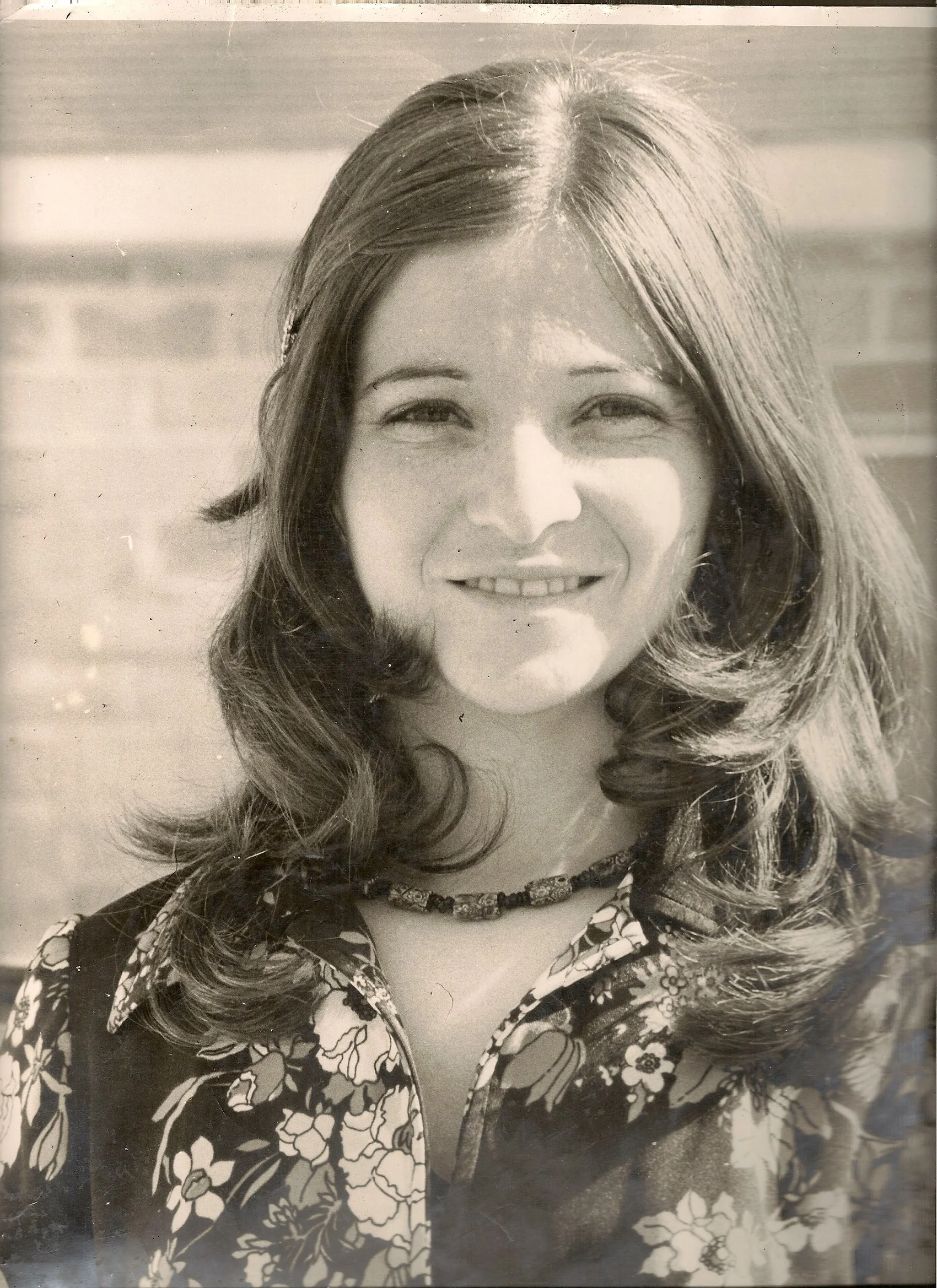
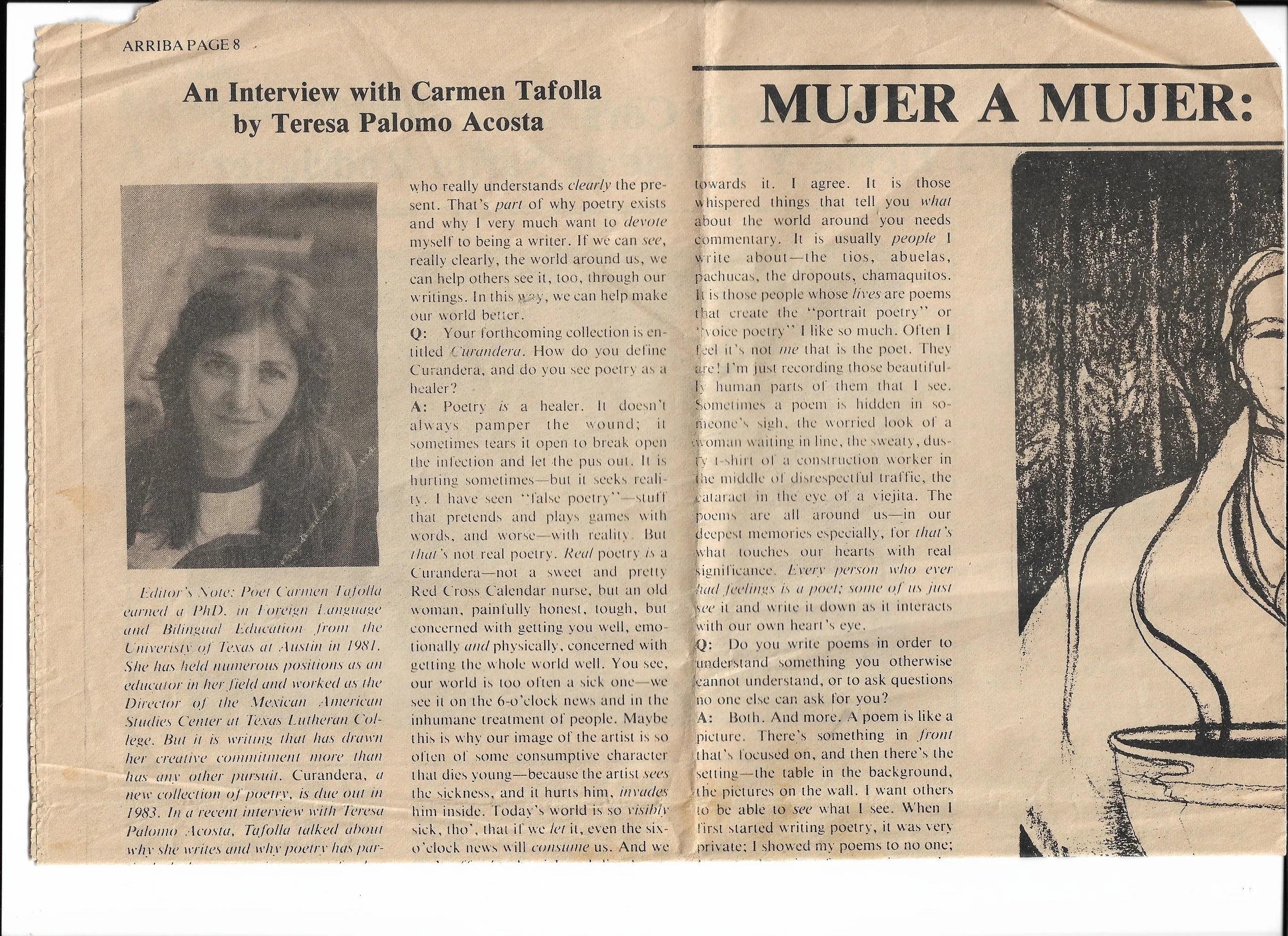
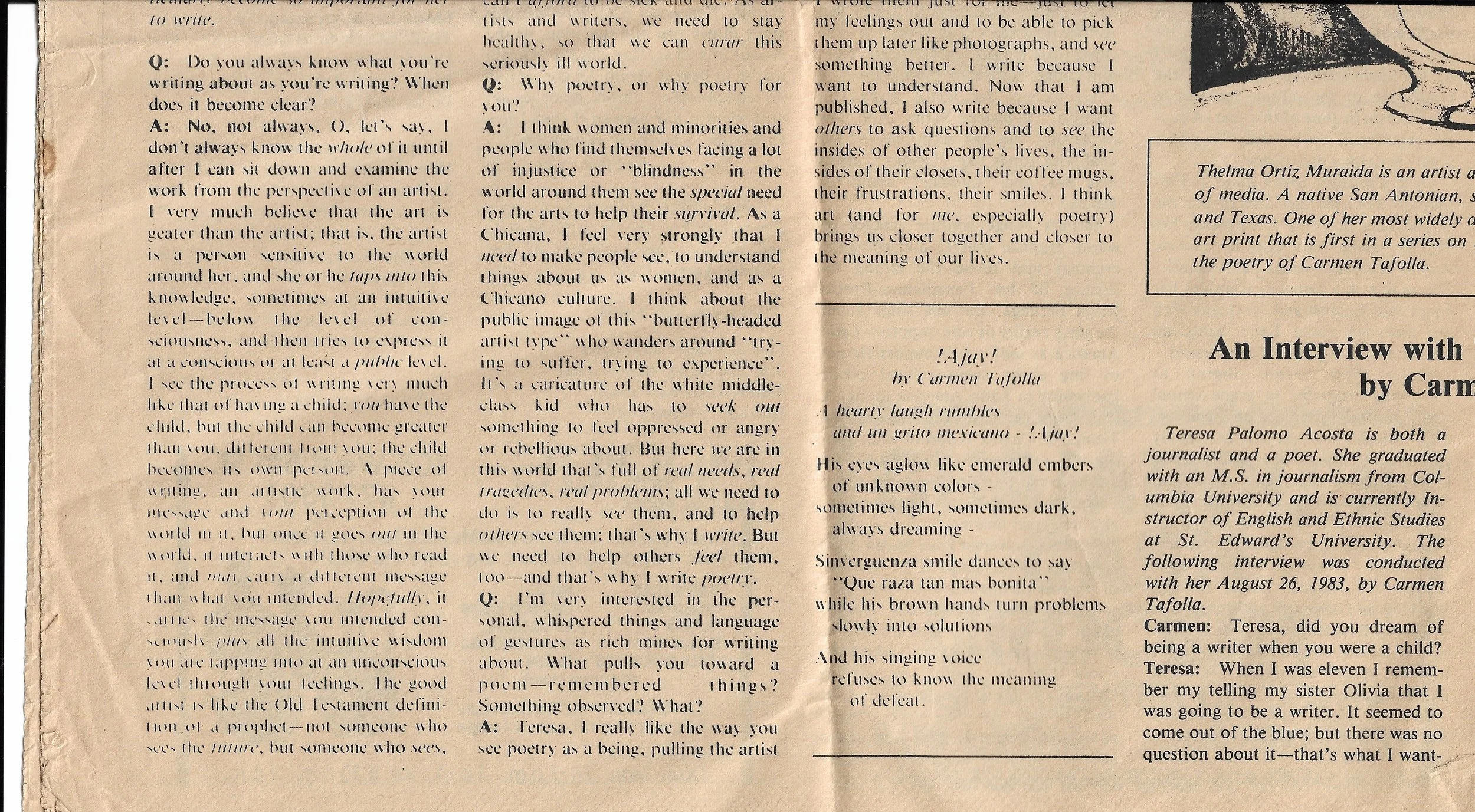
Carmen as the new Director of the Mexican American Studies Center at Texas Lutheran University, 1973 (also in series), Courtesy Carmen Tafolla
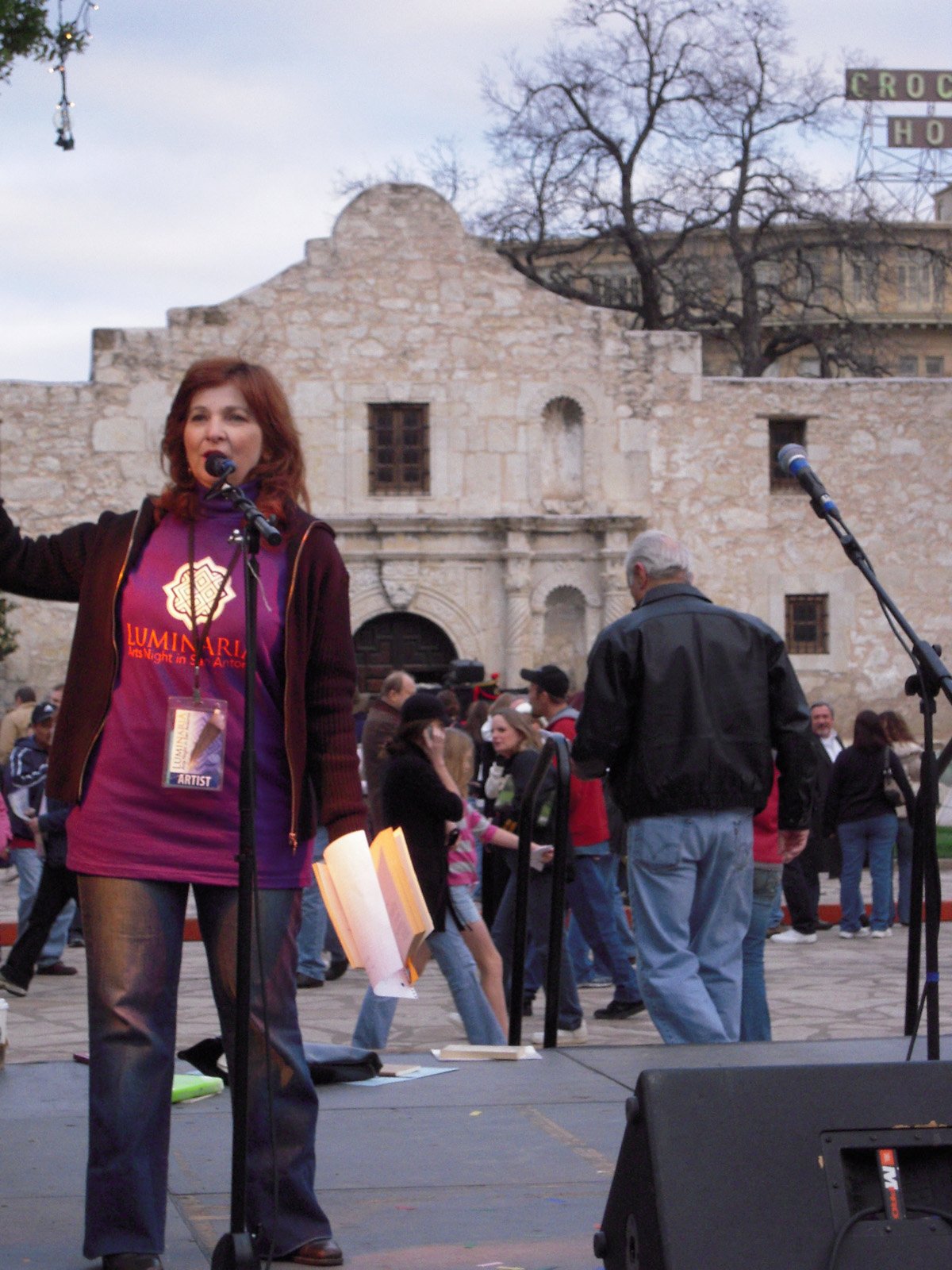
“I will try and make poetry a two-way street, not a one-way street. Not something we ‘give’ others. Not, ‘I’m here to share elegant poetry with you’ and you’re there to just sit and receive it. No, we’re here to make it a communication. And I want that two-way street to connect to all the highways, footpaths and rivers of this great pueblo connecting the different languages, the cultures, the time periods and the neighborhoods in one empowering poetic affirmation of our potential and our future. I want these projects to focus not only on sharing poetry with the community but hearing the poetry that is coming from our community, hearing the voices of San Antonio and allowing our citizens, young and old to be co-creators in the act and the performance of poetry.”
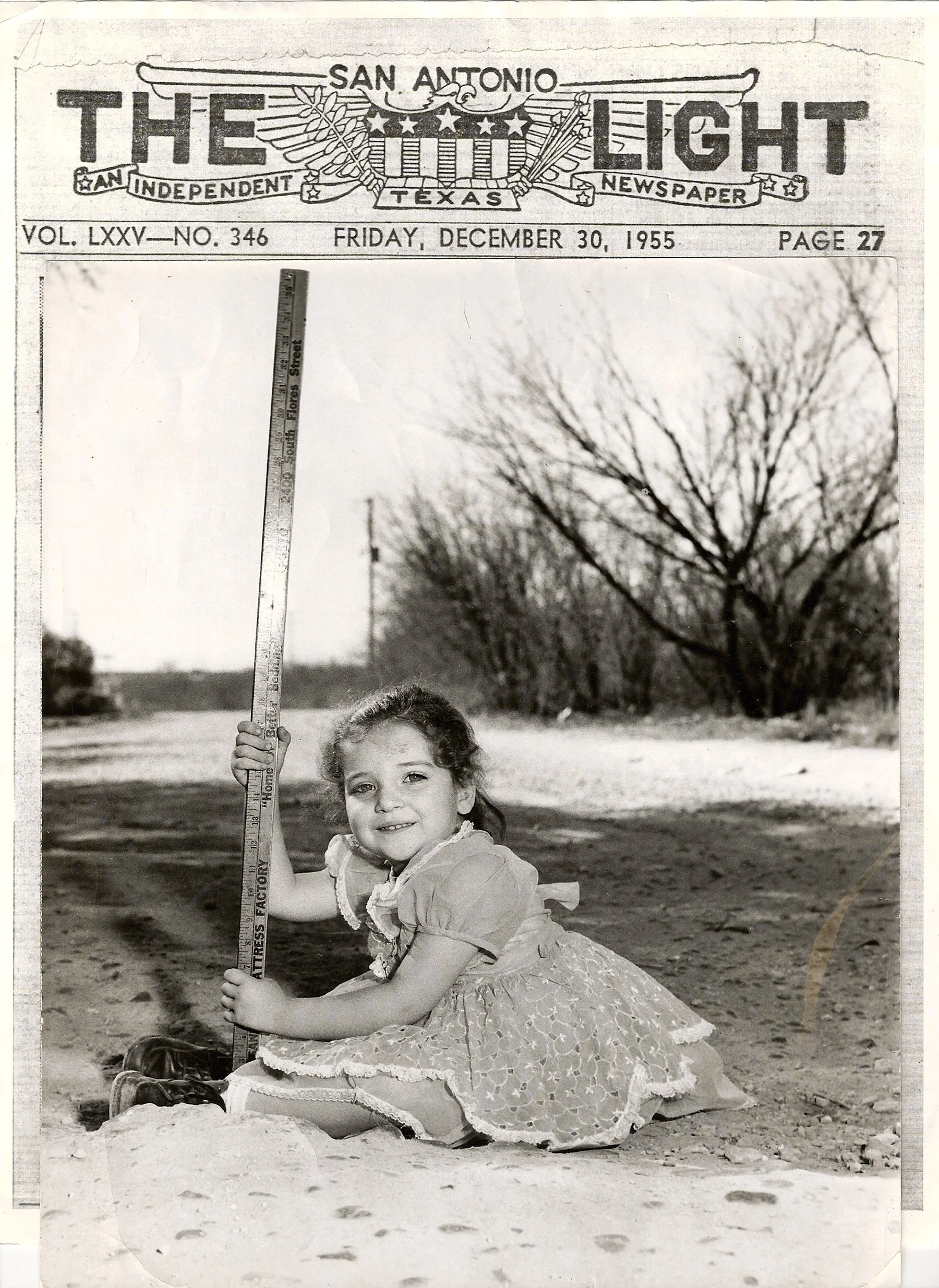
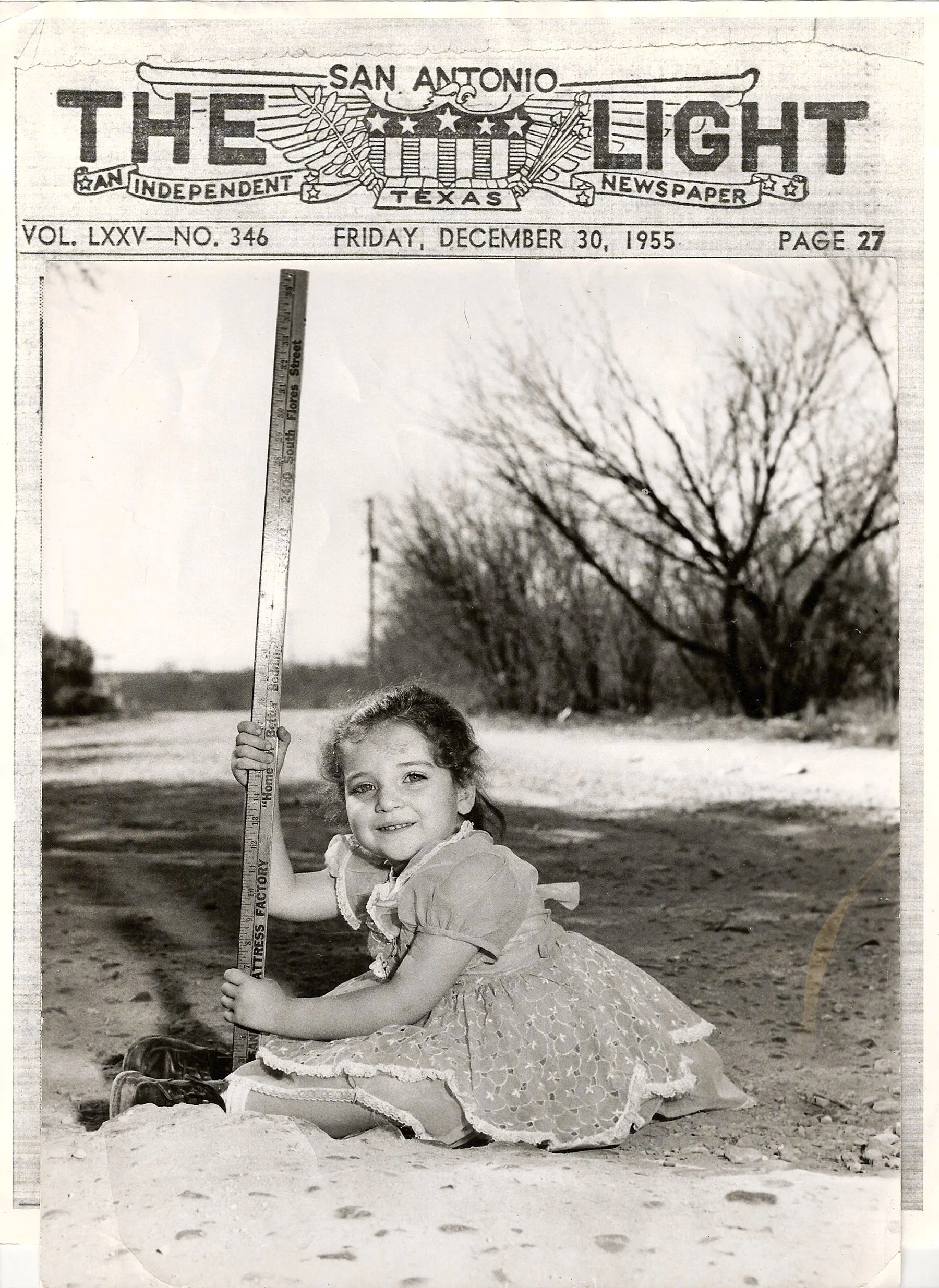
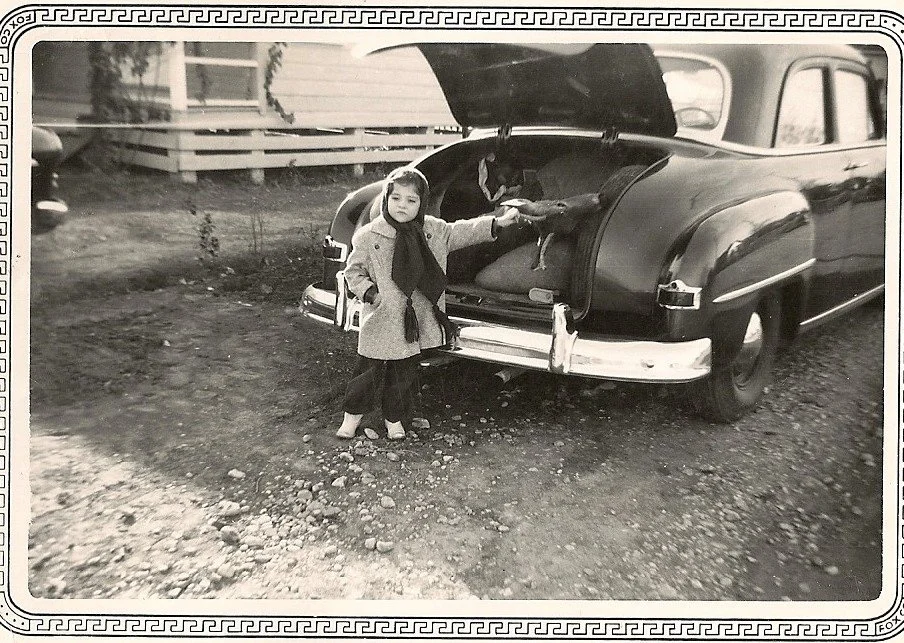
Carmen measures a chughole in front of her home on San Fernando St., an all-dirt street with huge chugholes. The people complained, embarrassed the City Council, and finally were victorious. San Antonio Light newspaper, December 30, 1966
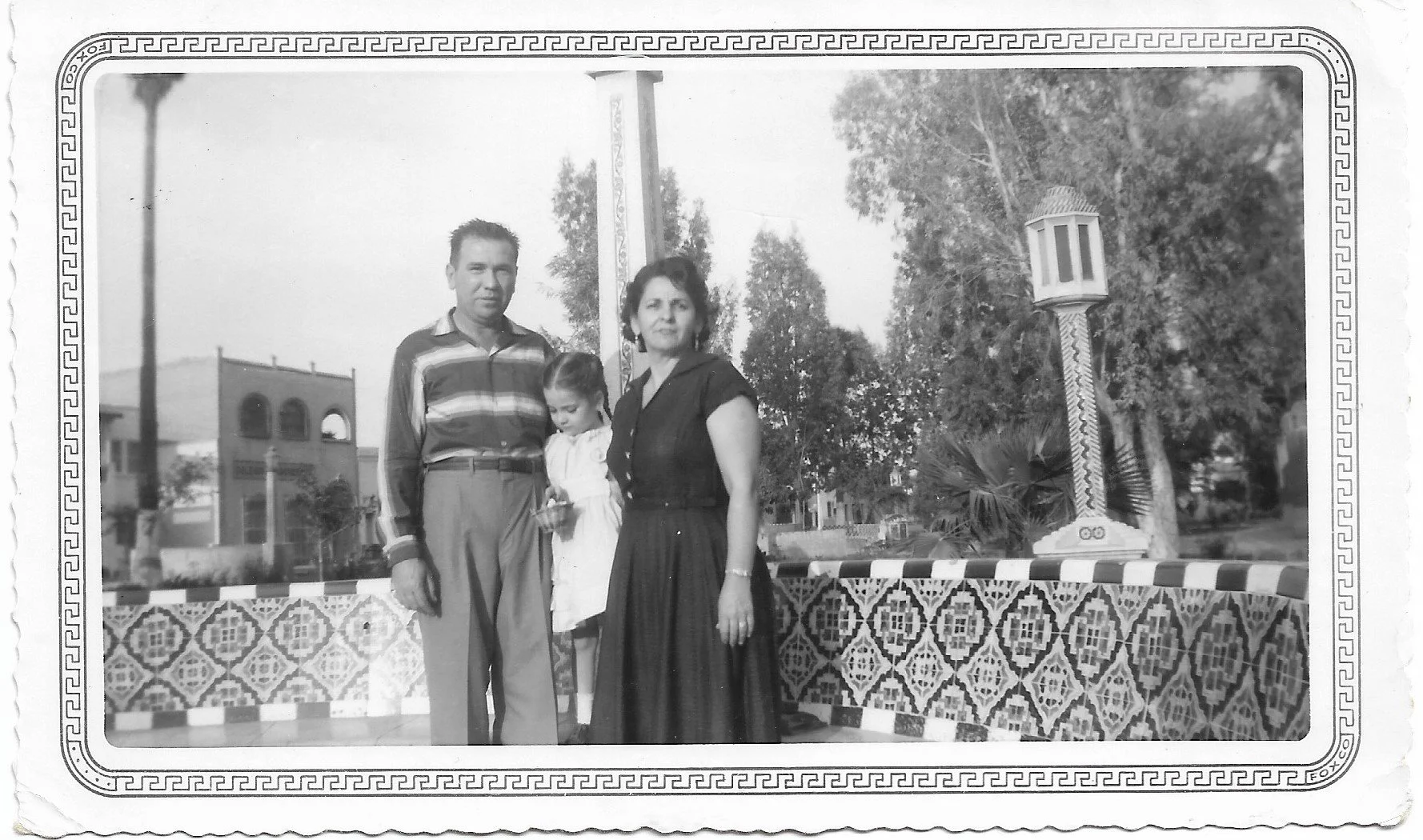
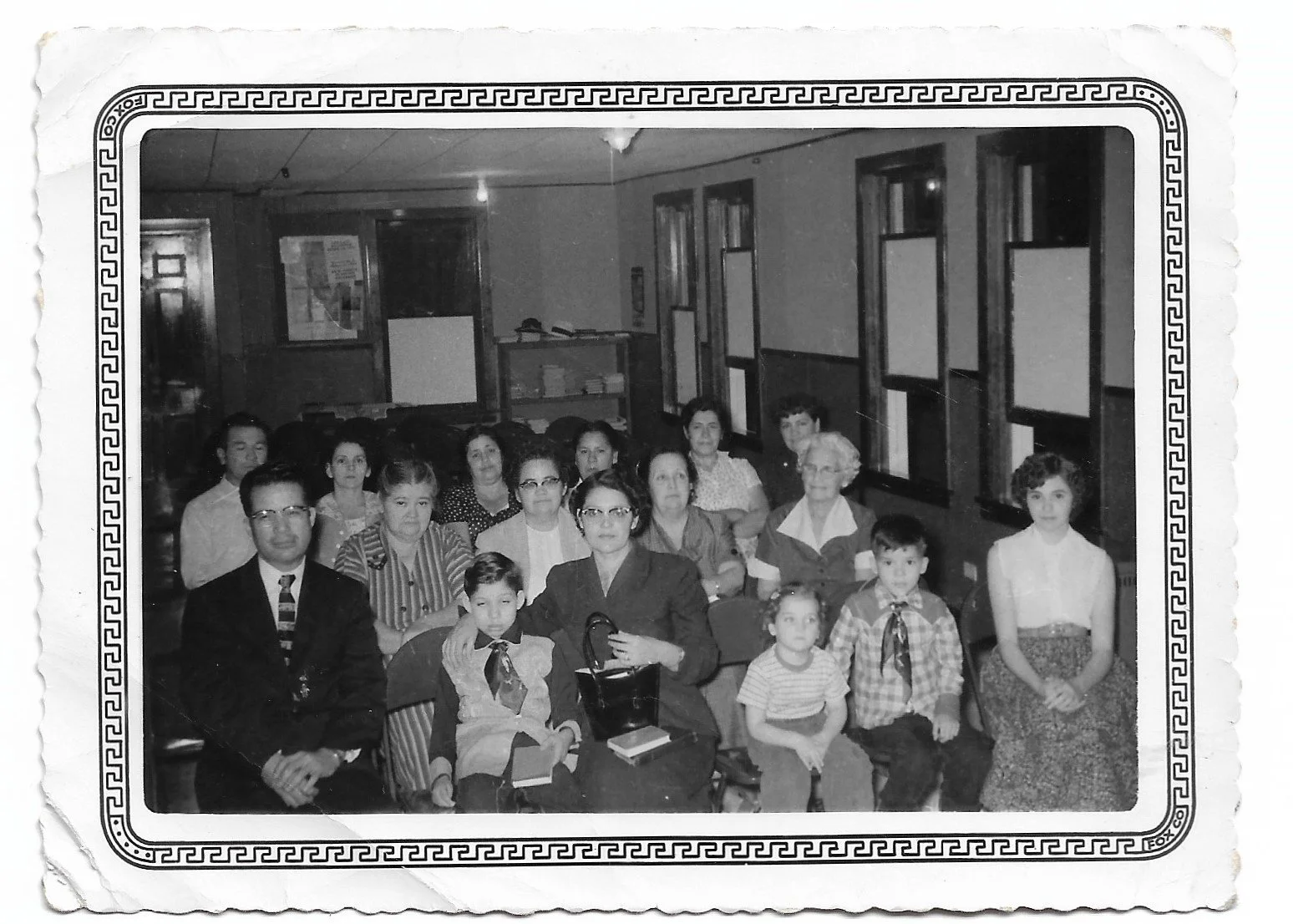
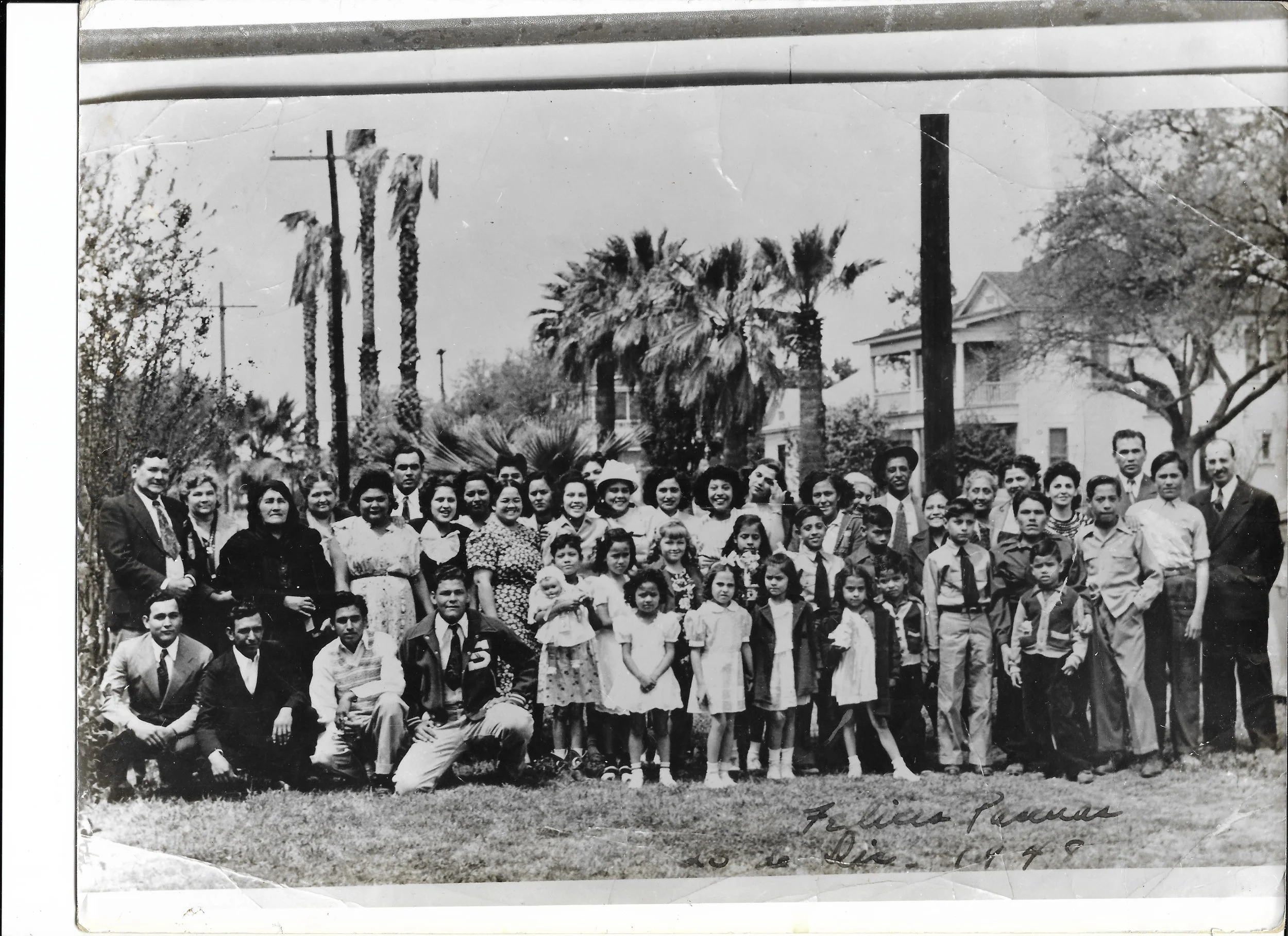
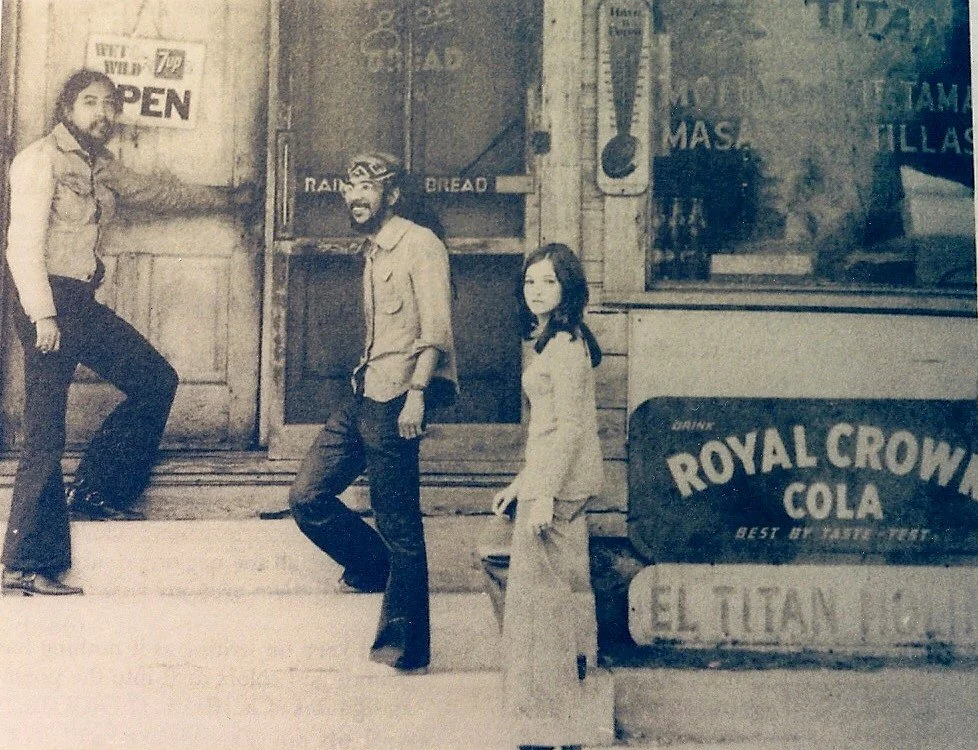
“The b&w portrait of some of my family members in a tiny shotgun house built on the half-lot on the West Side represents one of the things I’m proudest of: preserving as much of the history, and as many of the images and voices of our West-Side history. Many of the old fotos and documents would have been lost or discarded had I not insisted on digging through countless boxes of old papers others were carrying out to the alley for the trash to take; and, spending a good amount of my life from age 13 on talking to and writing notes down from the voices of the elderly people in my community that I considered priceless treasures.”
Author, Speaker, Performance Artist
1951–Present
Special thanks to Dr. Celeste Guzmán Mendoza for writing this profile.
Dr. Carmen Tafolla was born on the Westside of San Antonio. She attended Rhodes Middle School and was told by the school’s principal that graduating from high school would be her penultimate personal achievement. Dr. Tafolla did graduate from high school, and went on to complete a B.A., M.A., and Ph.D. She has published more than 30 books, including poetry, children’s books, and prose. She also has performed her one-woman shows, which relay the stories of women and children from the Westside, to national and international audiences. Her awards include the Americas Award, five International Latino Book Awards, and two Tomás Rivera Awards, among others. She was named the first Poet Laureate of San Antonio, as well as the State Poet Laureate of Texas.
Tafolla’s parents emphasized their Mexican heritage frequently, and they visited Mexico about once a year. She was also immersed in Spanish in her Westside community. She learned to read the Bible in Spanish in her Spanish-speaking church. “Three long services a week, so there was no way to escape becoming literate in Spanish.”
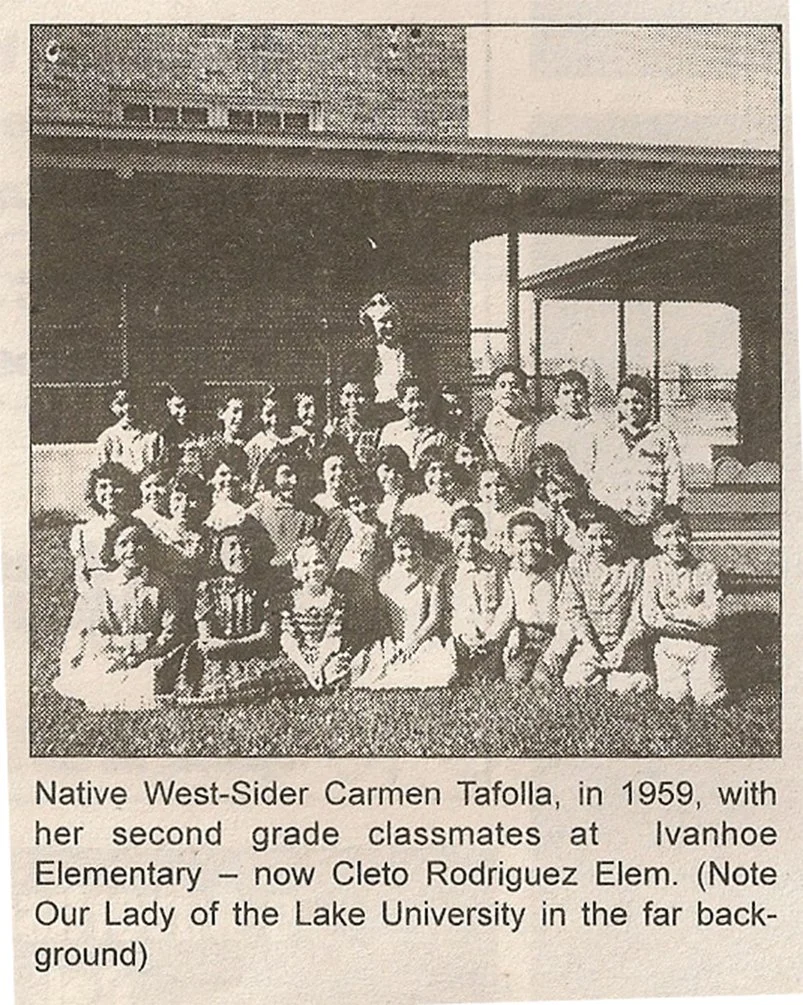
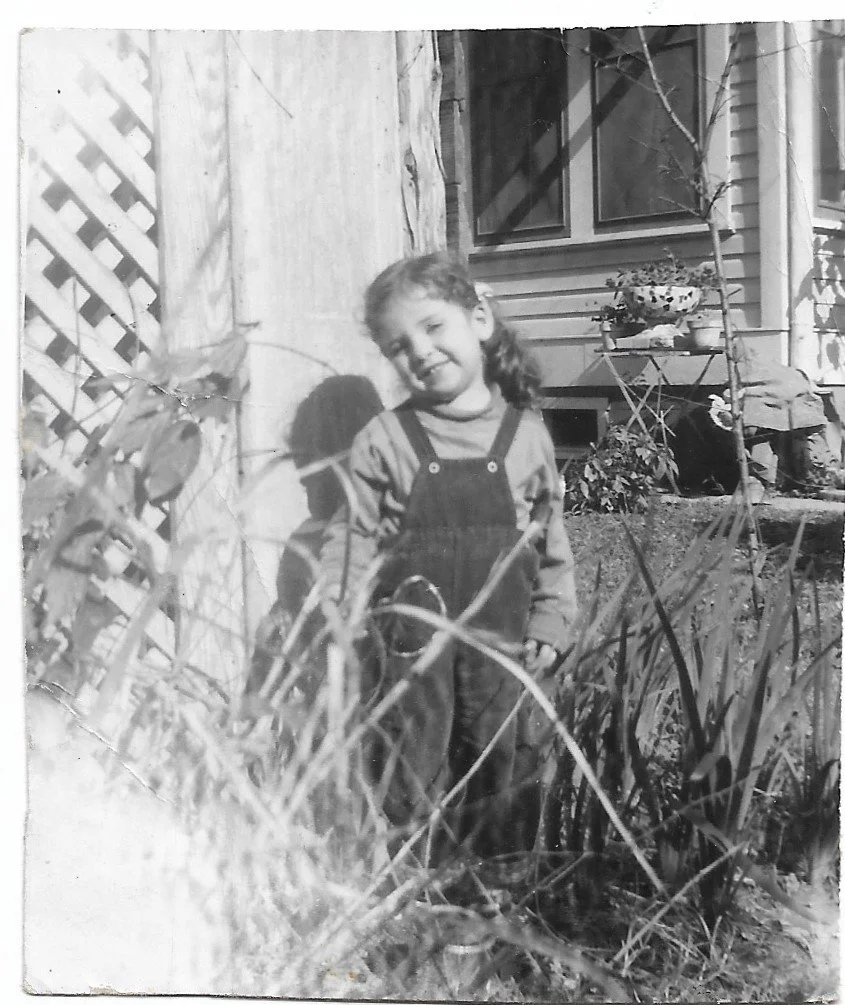
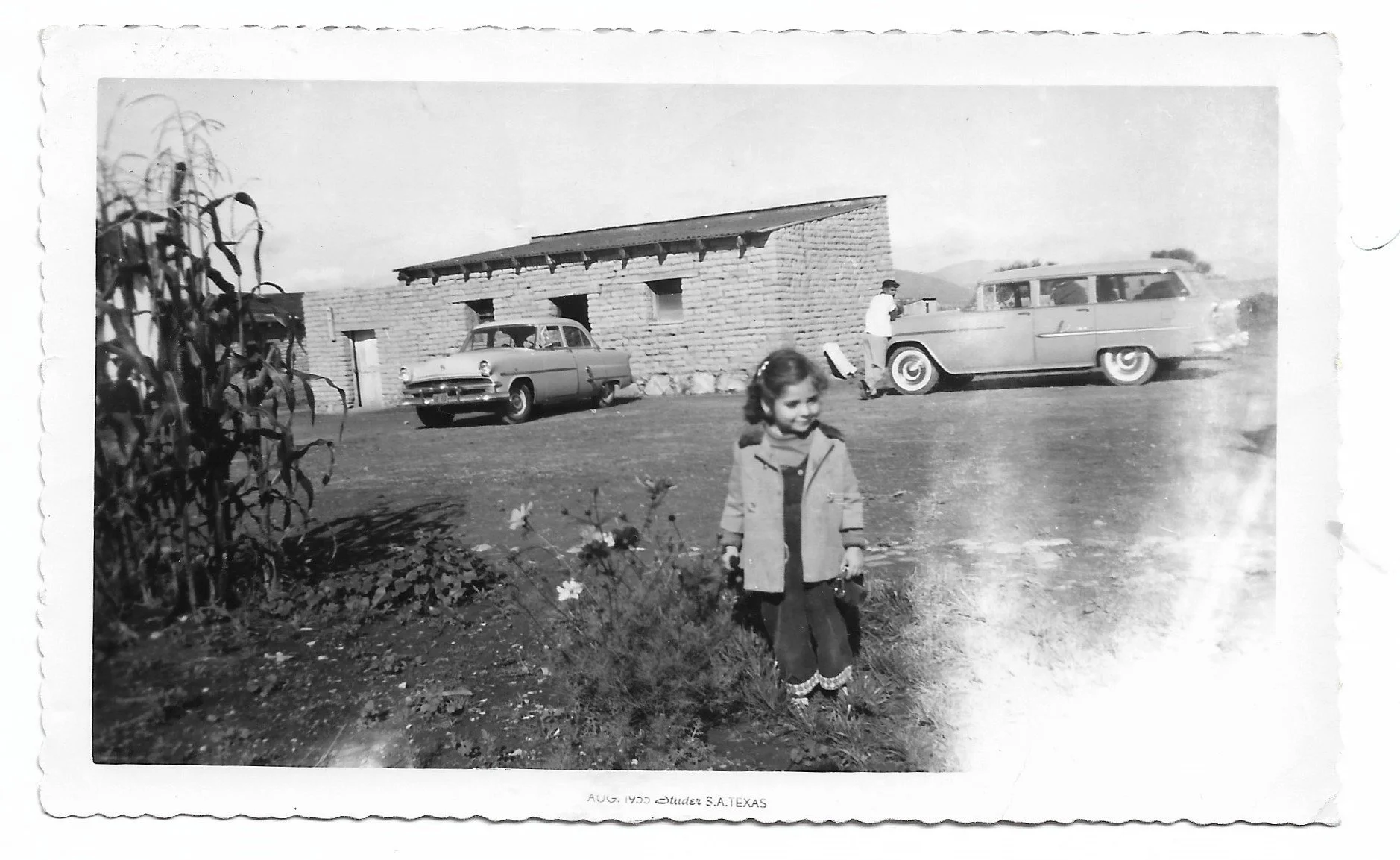
Tafolla notes that she “lived on the Westside from birth through age 14, then again all the summers while I was in college. I lived on San Fernando Street all that time, near Barclay, and with the spires of Our Lady of the Lake visible from my backyard.” Her grandparents lived on Buena Vista. “I loved my grandparents' home,” she said. “It's where I was taught to ‘declamar’ long poemas en español.” Reflecting on her childhood, Tafolla writes, “the family and friends community I grew up in – de todos colores, cuerpos, lugares de nacimiento, niveles de escuela o pobreza, these people were mi gente, and I loved them.”
She attended Ivanhoe Elementary, “the last school in SAISD to have a fence put up around it, or playground equipment, through 6th grade. My second grade classroom had forty-three kids in it, except after folks left for la pisca, when it would drop to only 32. Ivanhoe was renamed for Cleto Rodríguez in the '70s or '80s, and then was closed last year by SAISD because of low test scores. I then went to Rhodes Jr. High, which was then called the worst school in San Antonio, though I didn't know that.”
Dr. Tafolla then went to Keystone School for high school, after earning a scholarship. This was her first school experience in a school that wasn't 99% Mexican-American. Tafolla writes, “Because my poverty-trained financial concerns told me I couldn't afford more than 4 years in college, and because Keystone's preparation, and my family's bilingualism, allowed me to advance place 23 credit hours of college work (1 year each of Spanish, French, English, & Biology), I was able to compact my BA into 3 years and do a Masters in the 4th year. That allowed me to finish my MA in May 1973. I attended TLC (now TLU, Texas Lutheran University) in Seguin 1969-1971, then attended Austin College (in Sherman, TX) from 1971-1973 (BA, 1972, MA 1973). I started my doctoral program coursework in 1976, and finished the PhD in 1981, from University of Texas at Austin.
Dr. Tafolla’s career includes numerous accomplishments. Those achievements for which she is most proud embody what she calls “good medicine,” or social justice. In a recent plática with me she shared that her commitment to social justice began when she was a child. Her parents raised her with an understanding and awareness of prejudice. She knew at a young age that if one person is hurting then “we are all hurting.”
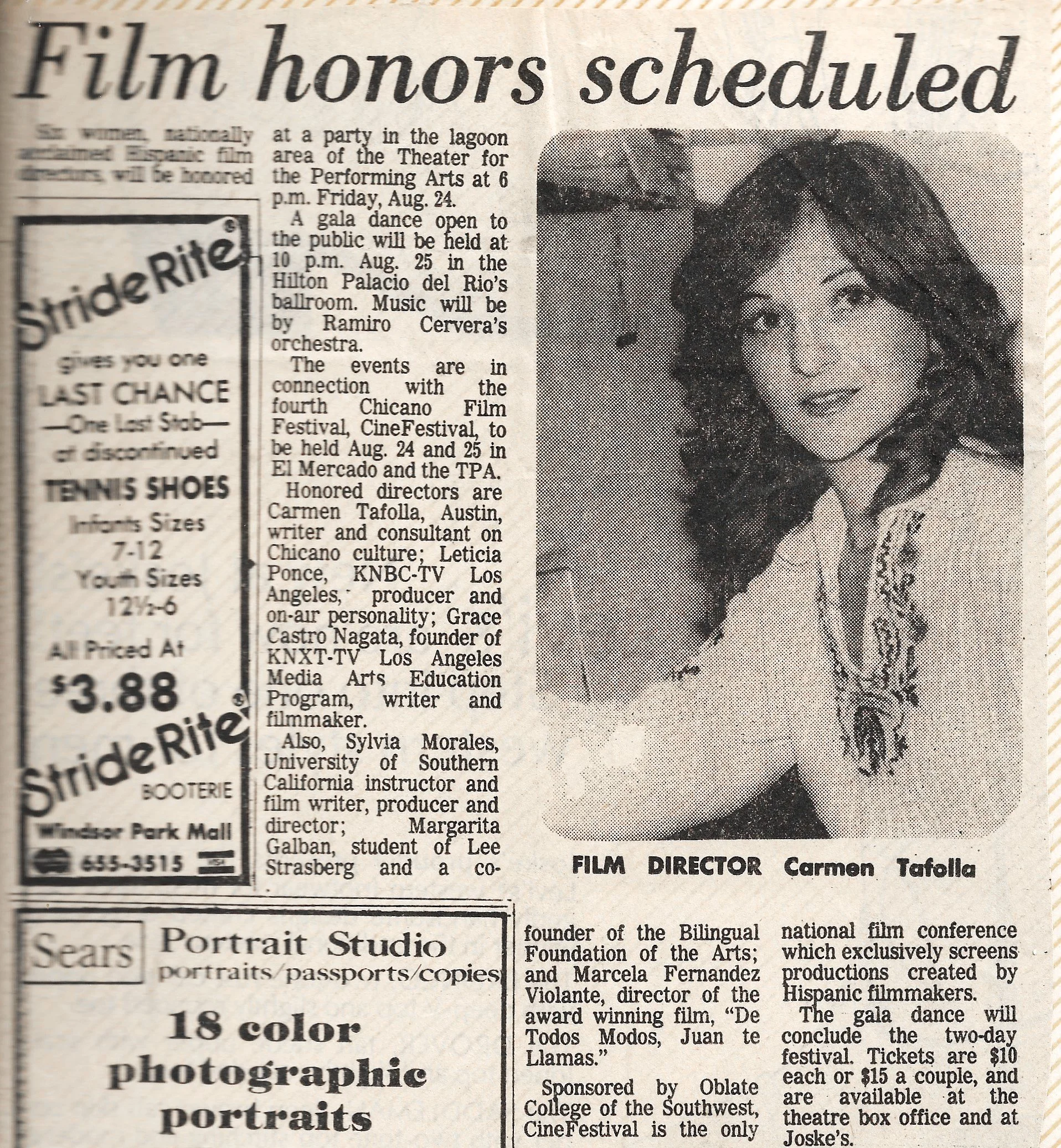
Though she has become well known for her literary and theatrical work, one accomplishment that has received less attention is her work to preserve the history of the Westside. She began this work as she preserved her own family and community history, saving fotos “from a rat-nibbled box of old papers headed to the trash” and writing down the stories of her elders, and collecting folklore from her parish. As she writes, “In 1972, in the summer between my bachelors and masters degree, I even got a tiny part-time salary from Father Edmundo Rodriguez, S.J., at Our Lady of Guadalupe Church for collecting the folklore, the songs, verses, and history of the Westside from the elderly residents there. The collection was titled ‘Herencia de Oro: Tradiciones Orales de los Mexicoamericanos de San Antonio, Texas,’ and appeared in small booklet form.”
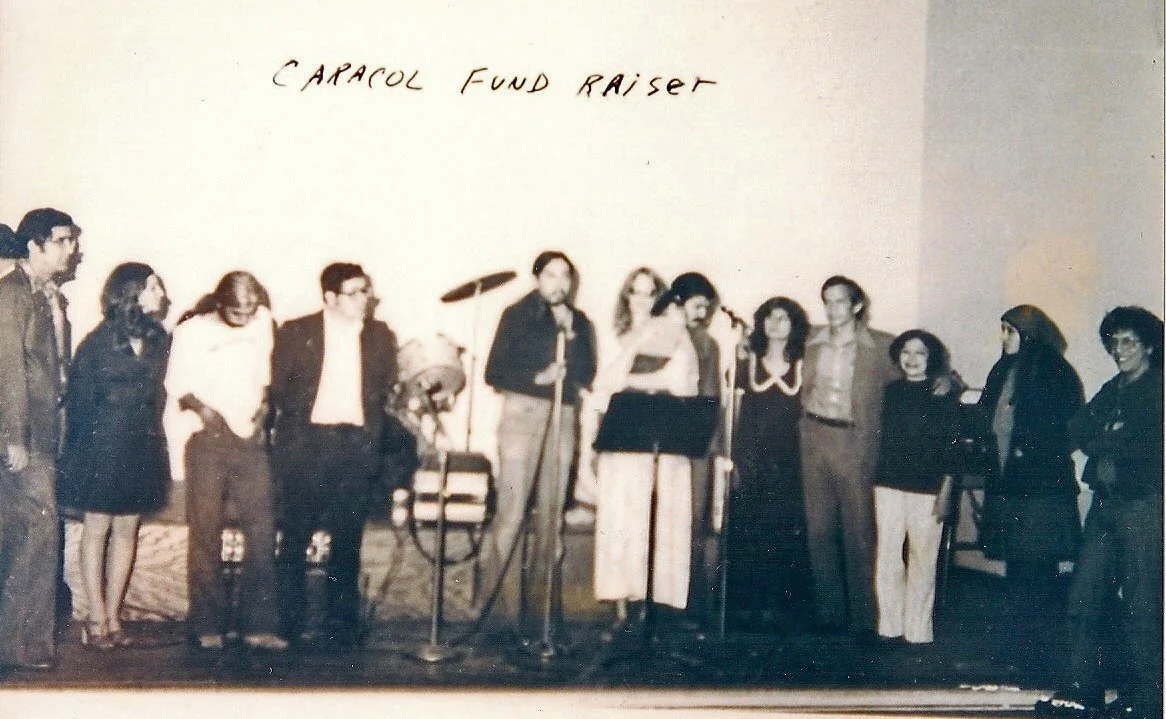
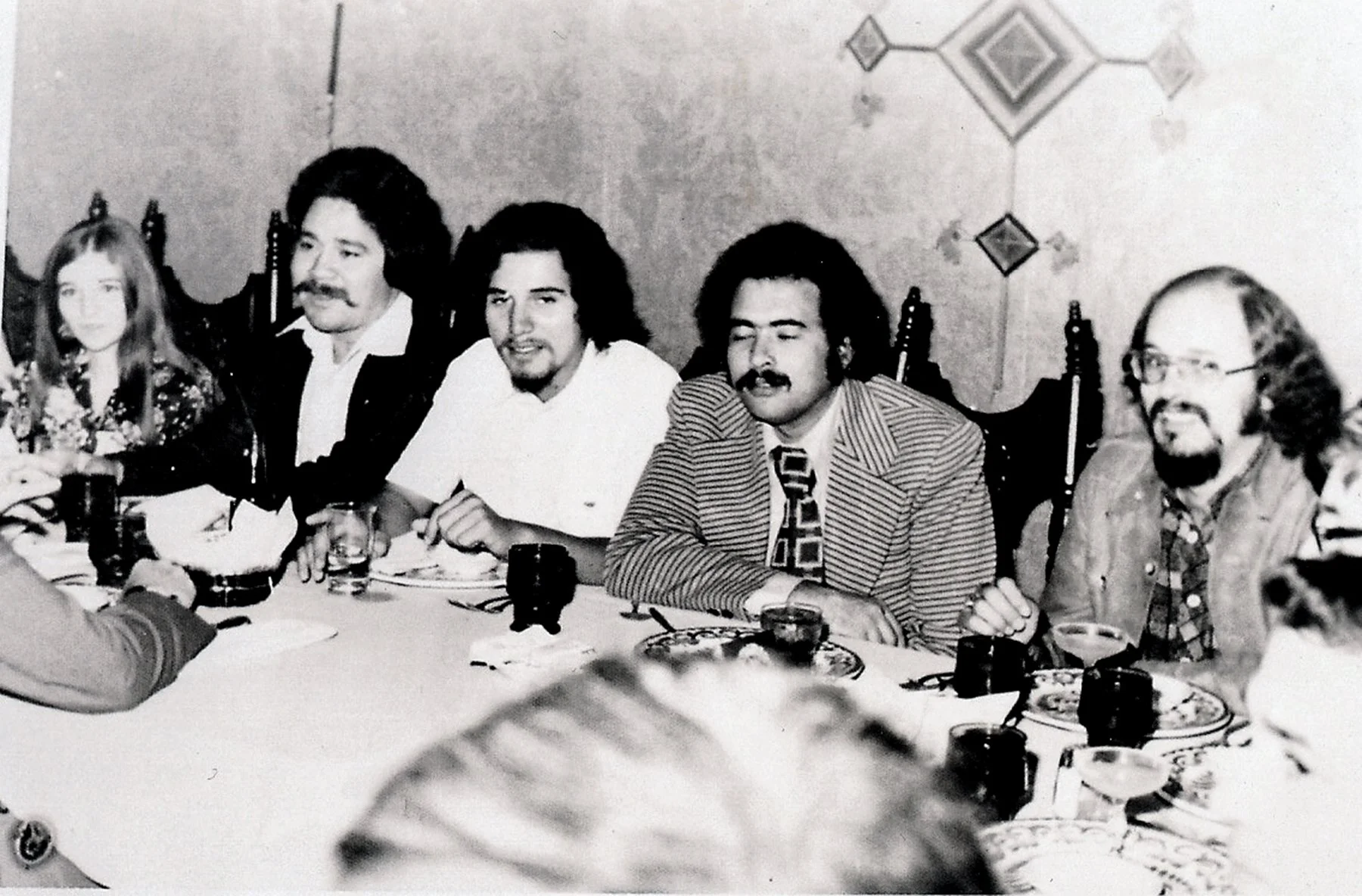
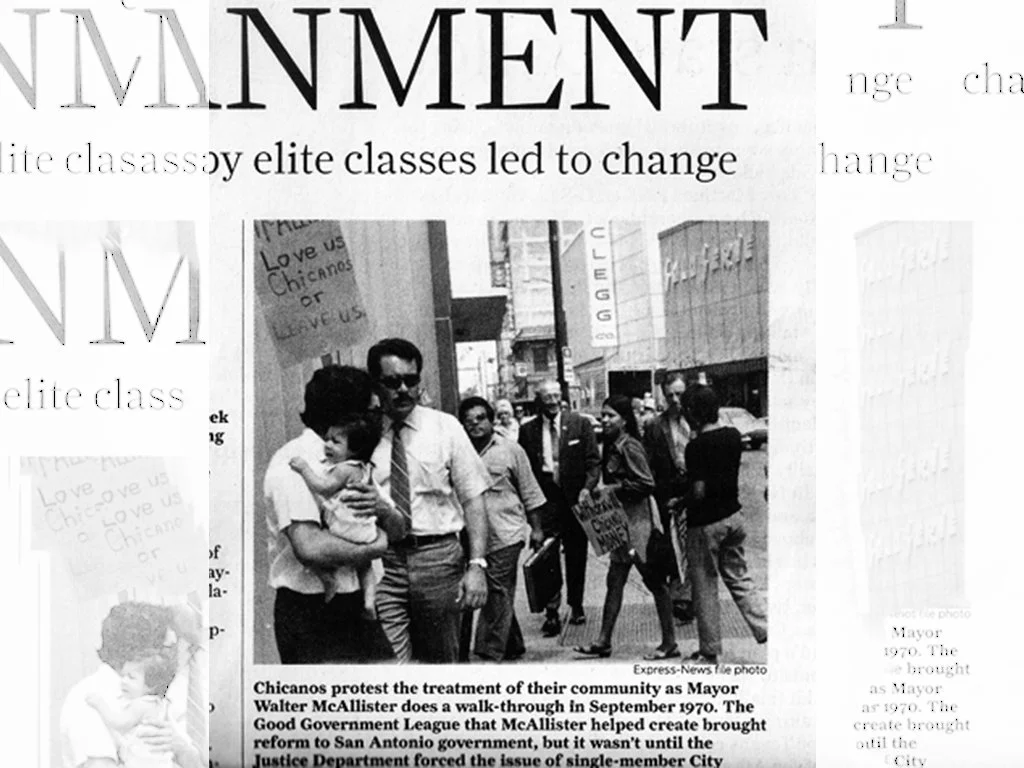
Tafolla's consciousness of shared responsibility and accountability to one another led her to participate in the first Earth Day in the U.S. During this time, she also was active in the Chicano Movement. She read her poetry at various Floricantos (literary and music festivals) and published the magazine Caracol, a Chicano literary, political, and arts magazine which sold for 25 cents a copy in the late 1970s. She did this work to raise the consciousness and awareness of “las abuelas y las tías” about their and their families’ civil and human rights. Tafolla writes about these events, where: “many young Chicanas y Chicanos (in '76 or '77)...[held] a Caracol Fundraiser, in which we gathered poets and singers, including Juan Tejeda, Angela de Hoyos, Max Martínez, Cecilio García Camarillo, Vangie Vigil, Reyes Cardenas and myself, to gather funds to keep Caracol going on its usual shoestring budget. Cesar Martínez was also a frequent supporter at these events.”
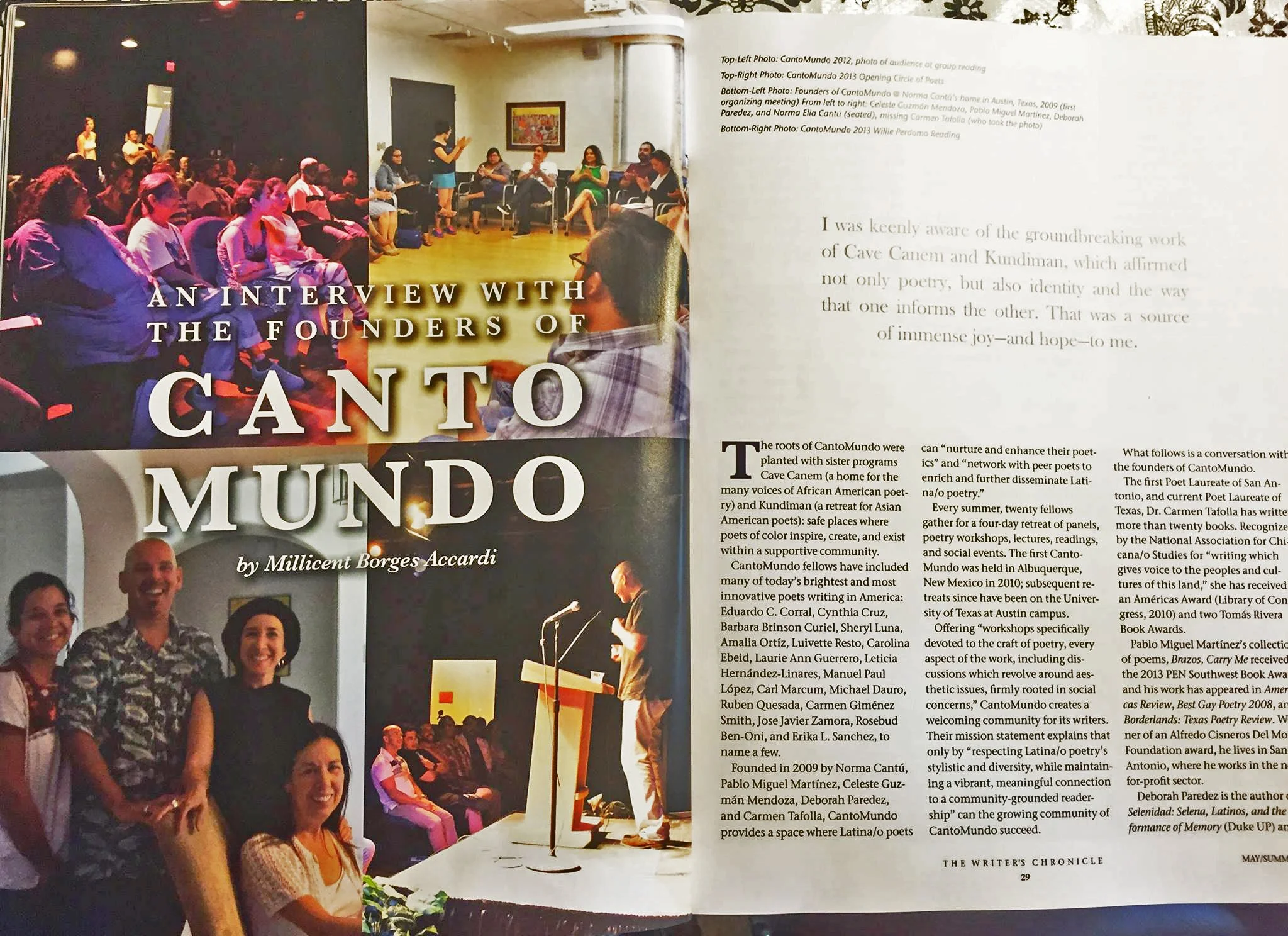
Her passion for educating others about their rights, as well as affirming the Latino culture and history, led her to initiate a Chicano organization at Texas Lutheran College when she was a student, and then later to direct the Mexican American Studies Center at the college when she returned as an assistant professor. She became the first Chicana to head a Chicano Studies Program in the nation. She also has co-founded CantoMundo, a national literary organization for Latinx poets, and has led various conferences, panels and symposia across the U.S. and the world that center U.S. Latinx identity, culture, history and traditions.
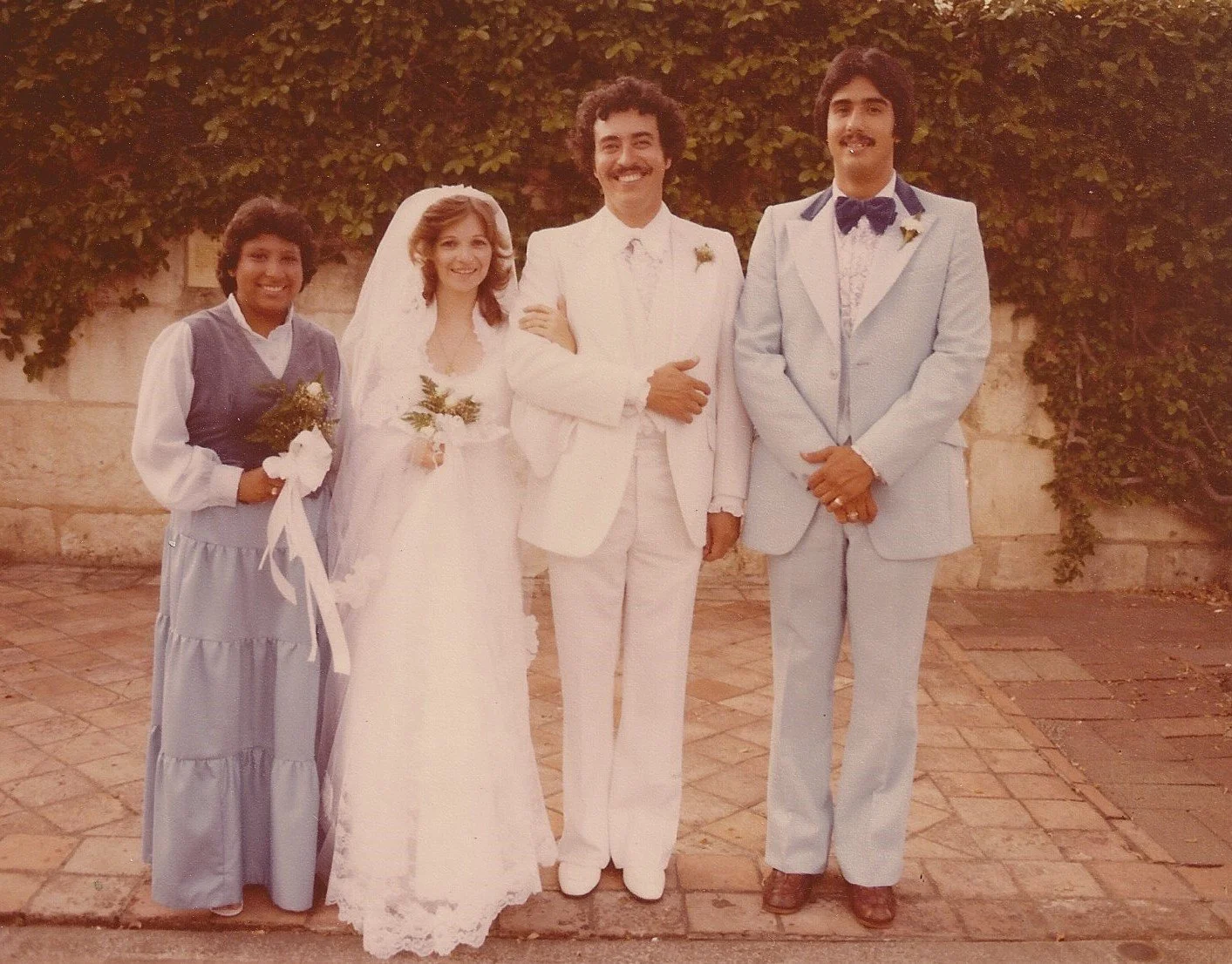
Tafolla shared her social justice work with her soulmate and life partner, Ernesto Bernal, who she married in 1979. As she writes, “[we] vowed to have as non-sexist a marriage as we could manage in this very sexist society. I kept my professional name and he kept his. We vowed our children would carry both our names, would wear all colors, from nursery on, and would be raised to follow their own dreams and desires, con mucho respeto a las diferencias en nuestra sociedad... wherever I was not welcome, he did not go, and wherever he was not welcome, I would not go.”
Tafolla and Bernal collaborated on “many brave projects together, including founding Camino, a bilingual school for the gifted and creative child; Creative Educational Enterprises, to consult and support educational projects in bilingual bicultural settings; [we adopted] two children and [raised] three more, plus spiritually mentoring many young people and young professionals. He died in 2017, and I continue publishing and speaking, consulting, supporting, whenever I can.”
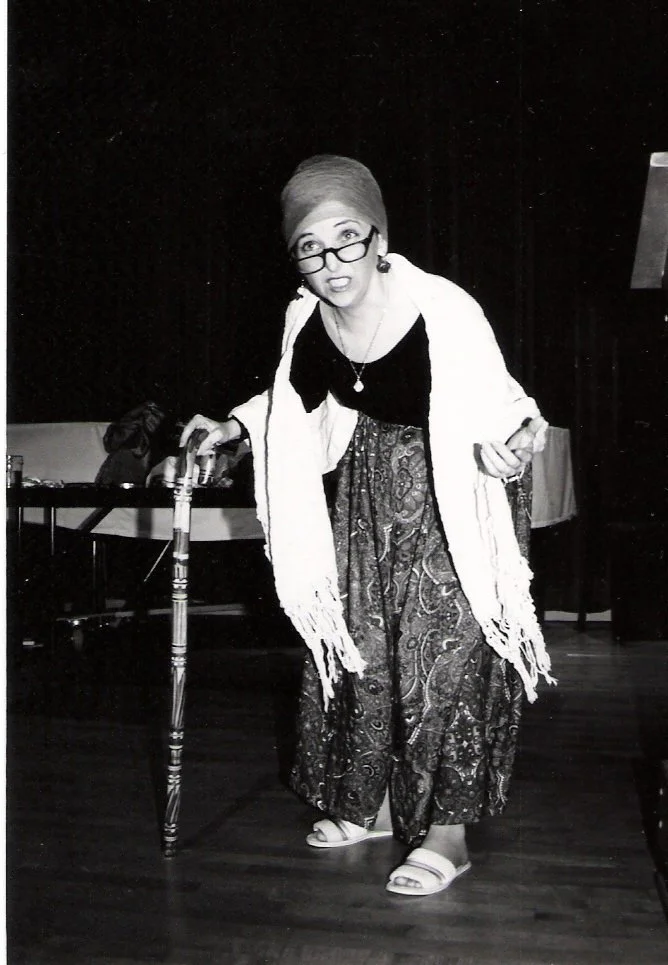
Carmen Tafolla, award-winning poet, speaker, scholar, professor, performance artist, and motivational speaker has incorporated social justice into all of her endeavors. Her work—both on and off the page—examines how to make society more just for all, or what she calls creating “good medicine for everyone.” This medicine can be in the form of poetry that weaves together Spanish and English, or performances in which she relays the stories of residents of the Westside, or texts she creates that integrate the city’s indigenous history. Dr. Tafolla embodies social justice in action and word.
--Dr. Celeste Guzmán Mendoza was born and raised in San Antonio. She is a published poet and playwright as well as an actor and singer. Co-founder and co-director for ten years of CantoMundo, she received her PhD in Education Leadership and Policy in 2019 from the University of Texas in Austin.
-
Tafolla, Carmen. Interview with Celeste Guzmán Mendoza, October, 2020.
Tafolla, Carmen. Email correspondence with Donna Guerra. October 21 and November 5, 2020.
!["[My tio Roseando] and family members in a tiny shotgun house built on the half-lot on the West Side, it represents one of the things I'm proudest of: preserving as much of the history, and as many of the images and voices of our West-Side history.](https://images.squarespace-cdn.com/content/v1/69dd549121ae6770e37a5ad0/1782498110576-WDGD2NRNF8DHJW14ELH9/Rosendo.jpg)